
 Gardening is for all seasons
Green Councillor Kevin Pressland is a passionate campaigner for nature and the natural environment. His understanding of the threats faced by the natural world is based on expertise gained from a 40-year career in horticulture, garden design and sustainable land management:
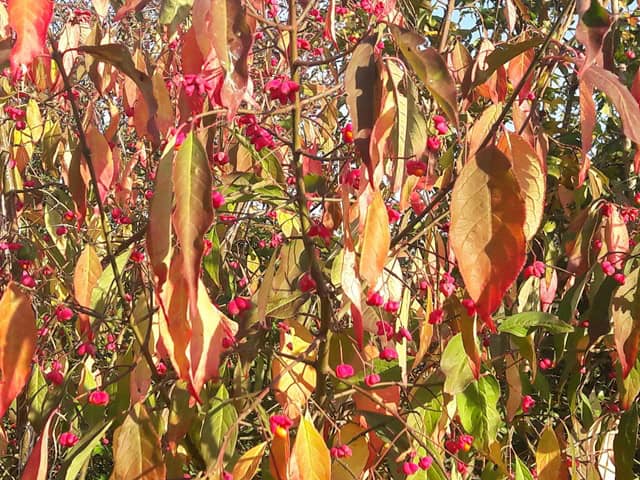
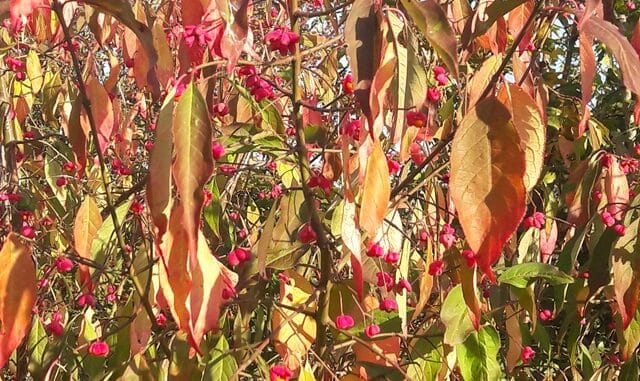
This time of the year need not be dull; it can be lifted by foliage, berry, stem and bark and flower interest in the garden. Combining textures and different habits of plants in swathes can further accentuate interest and a wow factor.
Vertical elements are often poorly used and can really lift a garden whatever size.
House walls are underused assets for this purpose; they will soften hard surfaces and in some cases aid house insulation.
Boundaries can be aided by pleaching (training of tree laterals, horizontally to create a raised hedge (with the lowest horizontally trained branches approx 1.25metres from the ground). The underneath can be planted with berrying evergreen shrubs or even productive plants such as gooseberries, blackcurrents and redcurrants
It’s well known in the horticulture industry, winter is a great time for planting having a multiplicity of benefits including increasing plant’s ability to get through summers like the one we have just had, but they will still need watering the first growing season particularly to aid establishment.
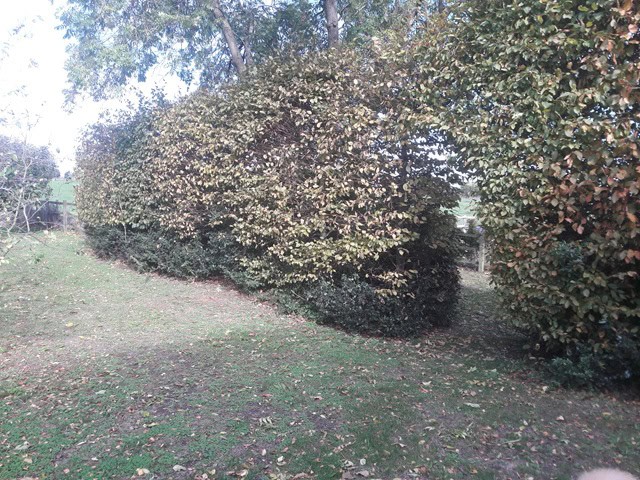 Euonymus europeous (spindle tree) a native used in diverse native species hedges. Can also be a wonderful multi-stemmed specimen plant.
The dormant season November to late February is the ideal time to plant as long as plants are hardy to UK weather or near to hardy. With weather patterns changing the plants that achieve these criteria are increasing and plants 15 years ago that were deemed tender often go through the winter largely unscathed bar a little dieback, ideally these should however be planted in more sheltered spots.
Deciduous plants, those that drop their leaves in the autumn are best planted during the winter. Good preparation before planting is important for long term success.
Trees and some shrubs including hedging can be bare rooted stock in the dormant season rather than containerised plants and be cheaper to purchase. Also younger trees and shrubs establish more quickly than specimen plants and generally require less maintenance in establishing.
Removing leaves from all borders and beds removes winter cover for overwintering insects and a source of food for birds; it also acts as protection for various plants and will in time increase soil fertility and moisture holding capacity of soils. Where leaves are removed these can be decomposed in leaf piles or chicken mesh clamps and this can often give hibernating places for hedgehogs.
Over tidy gardens can also make trees more vulnerable to predation by parasitic fungus like honey fungus, leaving twigger material can enable other friendly fungus thus enabling natures balance to act.
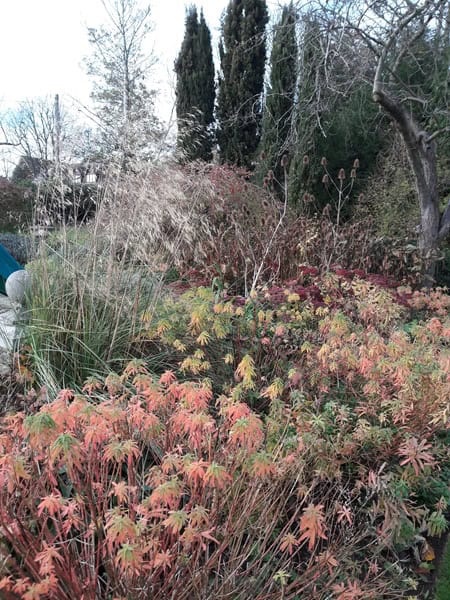
The planting photo above shows how good shape and form can be achieved with the background fastigiate Cupressus sempervirens’Stricta’, domed trained Kowkwitzia amabalis with rusty peeling bark with the Stipa gigantea in front with feathery plumes and grassy dome hummocks with interjections of Teasals (Dipsacis sylvestris) with great seed heads and Euphorbia polychroma whorled groups of leaves in flashes of yellow and pinky orange.
Comments are closed.