
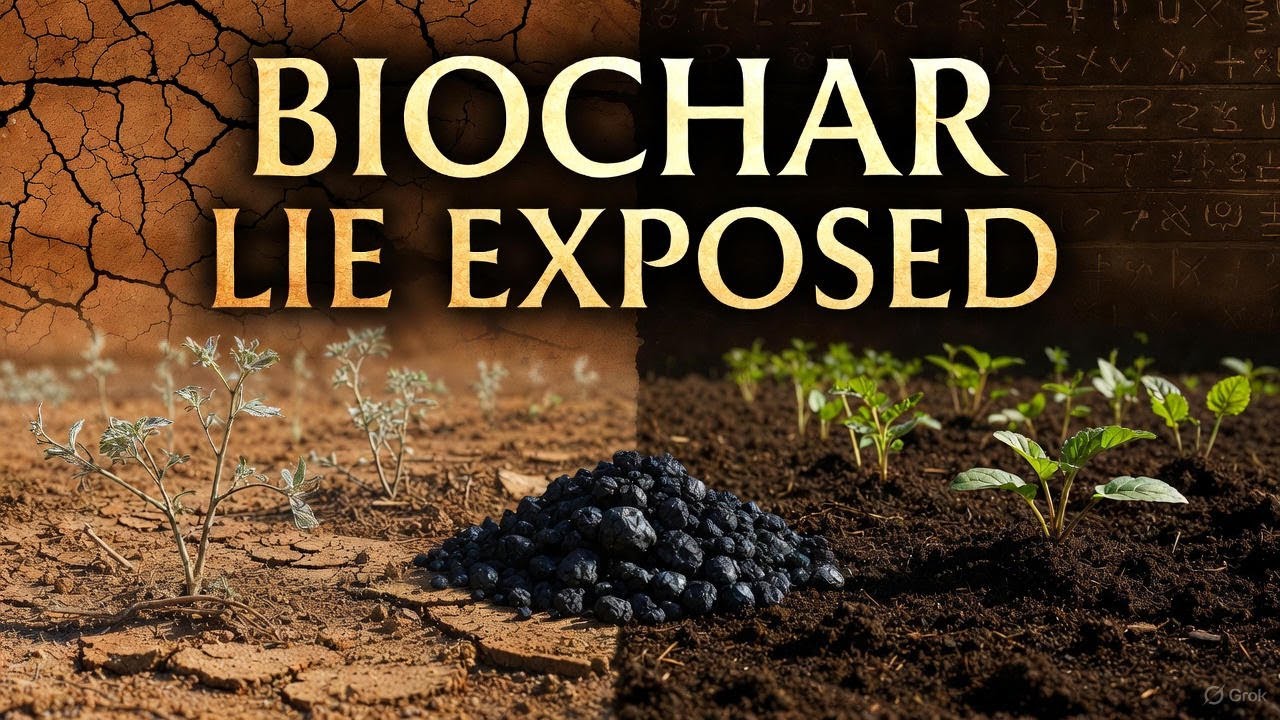
In this video on Soil & Crops Central, we expose the hidden truth behind biochar, why so many gardeners fail with it, and the ancient soil-building wisdom modern gardening forgot. If your plants stall, your beds dry out, or your soil never seems alive—this video will completely change how you garden.
🌱 Inside this video, you’ll discover:
🟢 Why raw biochar drains nutrients instead of feeding plants
🟤 The ancient soil system that made land fertile for centuries
💧 The exact biochar charging ratios using compost and water
🌿 How to prepare biochar so it becomes a nutrient reservoir
⏳ Why soil health is built over seasons, not weekends
🧠 The real reason garden “experts” never explain this step
🌱 How to use biochar correctly in garden beds, raised beds, and containers
This isn’t about trends. It’s about understanding soil as a living system. You’ll learn how ancient growers built fertility slowly, how biochar was meant to function as soil infrastructure, and how to stop wasting time and effort on quick fixes that never last.
If you care about rebuilding dead soil, improving moisture retention, strengthening roots, and creating resilient gardens that thrive year after year, this video is essential viewing.
👉 Subscribe to Soil & Crops Central for real, long-term soil wisdom
👉 Share this video with a gardener who’s frustrated with biochar
👉 Start building soil that actually lasts, not soil that disappoints
You know, there’s this ancient soil truth that garden experts just never seem to explain. The promise that sounds way too good to be true. If someone tells you that just one bag of some black material can permanently fix your soil, save water, boost your yields, and basically end all your fertilizer problems forever, well, your instincts should already be firing. So today’s urgent problem is actually pretty simple. Gardeners are adding biochar and honestly they’re watching their soil get worse, not better. Plants stall out, beds dry up faster, and nothing really looks alive. Now, the bold promise I’m making right now is this. Biochar isn’t the scam you might think it is, but the way it’s taught almost guarantees failure. By the end of this video, you’ll know exactly why it fails, how ancient growers naturally avoided that failure, and how you can use biochar the right way so it actually strengthens your soil for years instead of just draining it. The biggest reason biochar gets called a scam is because folks expect it to behave like compost or fertilizer. They just mix it straight into the soil and then wait around for some visible improvement. What folks don’t realize is that well raw biochar contains structure but honestly no life at all. It’s got this enormous internal surface area kind of like millions of tiny rooms. And when those rooms are empty, biochar just starts pulling nutrients and moisture right out of the surrounding soil in already weak beds or containers. That can feel a bit like sabotage. Plants slow down, leaves fade, and the soil itself feels drier. But, you know, this isn’t because biochar is harmful. It’s simply because it was introduced unfinished. ancient growers, they never added clean, dry char directly into planting soil. Instead, char lived for months or even years, mixed in with waste, moisture, ash, food scraps, and all sorts of decay. By the time it reached growing areas, it was already soaked through with nutrients and microbes. What modern gardening tends to skip is this whole preparation phase. Ancient soil wasn’t built with just single applications. It was layered slowly, repeatedly, and patiently. You see, biochar was never really the star. It was more like infrastructure, quietly supporting everything else. You know, healthy soil does contain carbon, but carbon by itself does nothing for plants. Fertility really comes from carbon that’s filled with nutrients and life. When biochar is added raw, it behaves kind of like an empty sponge. It just absorbs nitrogen, potassium, trace minerals, and even moisture. Until those pores are filled, plants end up competing with biochar for resources. That’s actually why folks often see worse growth after applying it. Ancient growers, well, they understood instinctively that soil materials must be fed before they can feed plants. Here’s the missing step that changes everything. Biochar must be charged before it ever touches your garden. Scene two. What charging means. Charging simply means saturating it with nutrients and microbes so it enters the soil ready to give instead of take. This is not optional. Honestly, this is the difference between failure and long-term success. Start with one part biochar by volume. For a small garden bed of about 10 square ft, one gallon of biochar is plenty for a single season. Place that biochar into a bucket or container. Add two gallons of finished compost. Then add water slowly until the mixture is fully moist but not soupy. You are looking for the texture of a rungout sponge. This usually takes about 1 to one and 1/2 gallons of water. Once mixed, let this sit for a minimum of 7 days. During this time, microbes move in and nutrients fill the pores of the biochar. If you can wait 2 to 4 weeks, even better. Stir the mixture every few days to keep it evenly moist. This waiting period is not wasted time. This is where biochar becomes useful. After charging, biochar should never be dumped in thick layers. Ancient soil building was slow and layered. And modern gardens, well, they respond the same way. For a 10 square ft garden bed, spread the charged mixture evenly across the surface. Gently work it into the top four to 6 in of soil. Do not dig deep and do not disturb soil layers unnecessarily. Water the bed thoroughly after application using about 2 gall of water per 10 square ft to settle everything in place. For raised beds, use the same ratio, but reduce frequency. One application per season is enough. For containers, you’ll want to use no more than 10% charged biochar by volume in your potting mix. For example, in a 10gon container, one gallon of charged biochar mixed with nine gallons of compostrich soil is just about ideal. Anything more than that, well, it risks drying the container out too quickly. This is where, you know, expectations need to shift a bit. Biochar doesn’t give dramatic results in just a few weeks. What you’ll notice instead is stability. Soil holds moisture longer between watering. Fertilizer needs go down. Plants, well, they handle stress better. By the second and third seasons, roots start to explore deeper. The soil smells richer, and those beds get easier to manage. Biochar doesn’t disappear. It keeps supporting soil life year after year, actually becoming more effective over time. You know, the ancient truth modern gardening tends to avoid is pace. Soil just cannot be repaired in one weekend, no matter how much we wish it could. Each season really just builds on the last. Instead of adding more and more products, ancient systems relied on accumulation. Small amounts repeated consistently created depth and resilience over time. Biochar honestly fits perfectly into this approach. When used correctly, it should be added gradually, always charged, always paired with organic matter, and well, never expected to act alone. When used properly, biochar helps where gardeners struggle the most. In fast draining soil, it slows water loss and keeps nutrients accessible. In compacted soil, it creates permanent structure where microbes and roots can move. in containers. It extends the life of potting mixes and reduces constant feeding. But, you know, it will never replace compost, mulch, or good management. It supports them. You know, the real scam isn’t biochar. The real scam is actually the idea that soil can be fixed by just adding isolated ingredients without really understanding the biology behind it. soil. Well, it works as a living system. When you introduce materials at the wrong time or in the wrong condition, disappointment is pretty much guaranteed. Ancient growers, they didn’t rush soil. They respected it. And honestly, that mindset is exactly what Soil and Crop Central stands for. You know, biochar isn’t magic, and it isn’t useless either. It’s patient. When you treat it as infrastructure instead of well instant plant food, it becomes one of the most reliable tools you can use. The real lesson here is actually bigger than biochar. Healthy soil is built slowly, layered with care, and supported over time. If you stop chasing shortcuts and start building systems, your garden will reward you season after season. If this video helped you see biochar and soil differently, make sure you subscribe to Soil and Crop Central. Share this video with another gardener who’s struggling and stay with us as we continue uncovering real, long-asting soil wisdom that actually works.
Comments are closed.