
Svetlana-cherruty/Getty Images
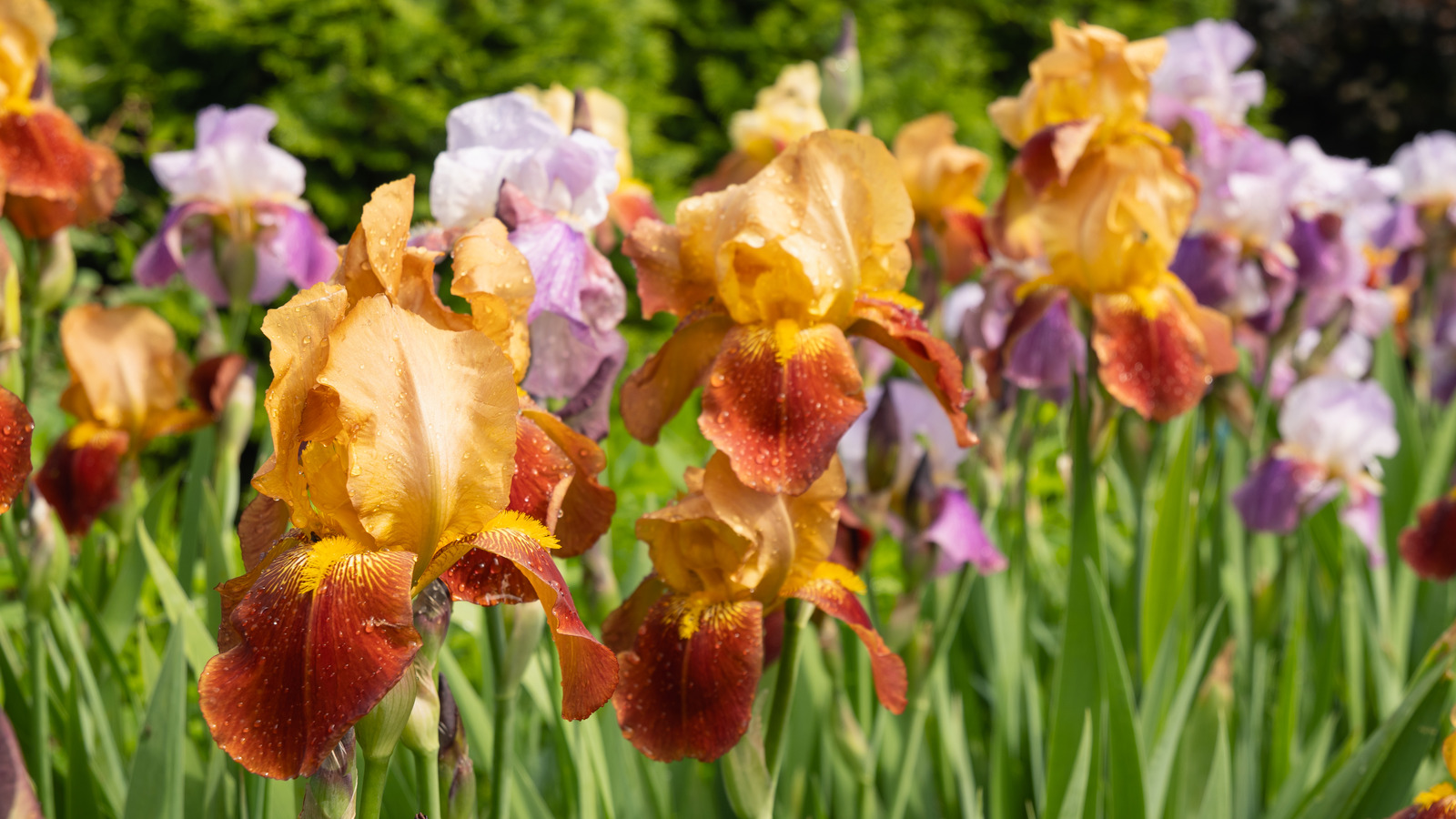
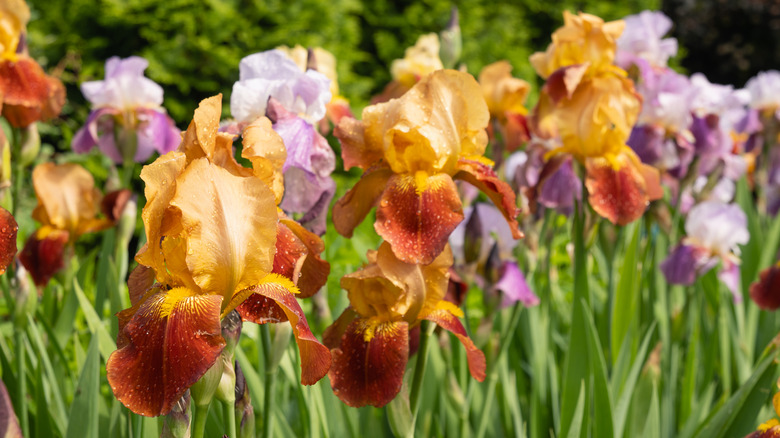
I’ve always loved bearded irises, ever since I stumbled upon a neighborhood garden with at least 20 different kinds of irises blooming. The rainbow of colors was mesmerizing, and I knew one day I’d want to have my own iris garden. As a professional garden designer, I often include bearded irises in new garden plantings for their glorious spring color. There are so many bearded iris varieties that it’s impossible to grow them all. I’ve selected some beautiful favorites, including dwarf, intermediate, and tall irises, for you to try growing in your garden.
Irises are fairly easy to care for, requiring only a bit of deadheading and regular dividing every two to three years. Irises prefer full sun, but aren’t too fussy about soil, as long as the top surface of the rhizome is exposed so they get enough sunlight. The strappy foliage stays fresh all season, and can be trimmed back neatly in the fall. Bearded irises (Iris germanica) are cold-hardy, thriving in USDA Hardiness Zones 3 to 9.
There are many reblooming irises in this list, but the majority of bearded irises don’t rebloom unless the weather is unusually warm in autumn. Caring for bearded irises in August usually includes dividing and replanting, but rebloomers can wait until autumn when the second set of blooms has started to fade. If you divide and replant irises between late summer and early autumn, they will usually start blooming again the following spring.
‘Dusky Challenger’
Peg Aloi / House Digest
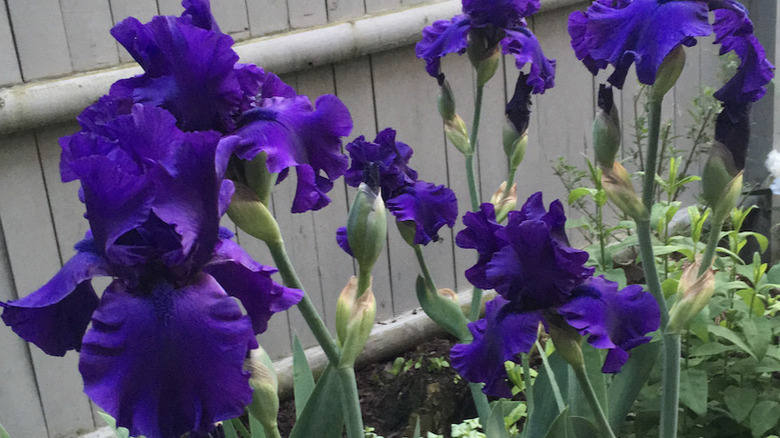
This royal purple stunner is a “self” iris, which means the standards and falls are the same color. ‘Dusky Challenger’ has navy blue beards, intensifying the jewel tone effect. At nearly 40 inches tall and with huge flowers, this bearded iris commands real attention in the mid- to late-spring garden. Trim the spent blooms to show off the nearly perfect form of these majestic beauties. I love these planted with lavender or pale blue spring flowers like ‘Valerie Finnis’ grape hyacinths, ‘Violet Beauty’ single late tulips, or ‘Delft Blue’ Dutch hyacinths.
‘Immortality’
Nancy J. Ondra/Shutterstock
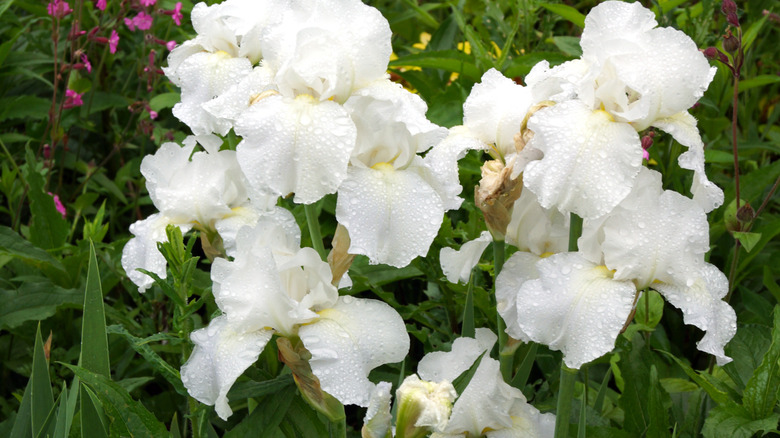
The ‘Immortality’ iris is a frilly snow-white iris with creamy pale ivory beards. Its vigorous reblooming nature does indeed make it seem immortal, bursting forth in mid-spring and making a reappearance in late summer, adding cool beauty to the garden as well as enticing fragrance. White irises go well with both pastel and bright colors; I love them planted near pale pink and hot pink flowers.
‘Indian Chief’
Peg Aloi / House Digest
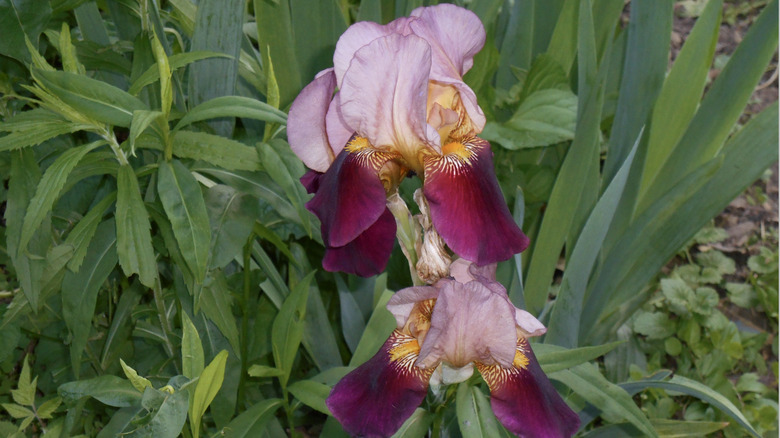
This gorgeous heirloom looks similar to some newer hybrid introductions, but ‘Indian Chief’ is a prolific bloomer seen in many older iris gardens. The mauve-pink standards contrast nicely with the wine-colored falls, brightened by the vivid golden-yellow beards and white plicata touched with gold. This is a strikingly beautiful iris that increases assertively each year, yet it’s not very easy to find it for sale these days. If you’re lucky enough to have some, be sure to share divisions with your iris-loving friends.
‘Many Mahalos’
Anna Richard/Getty Images
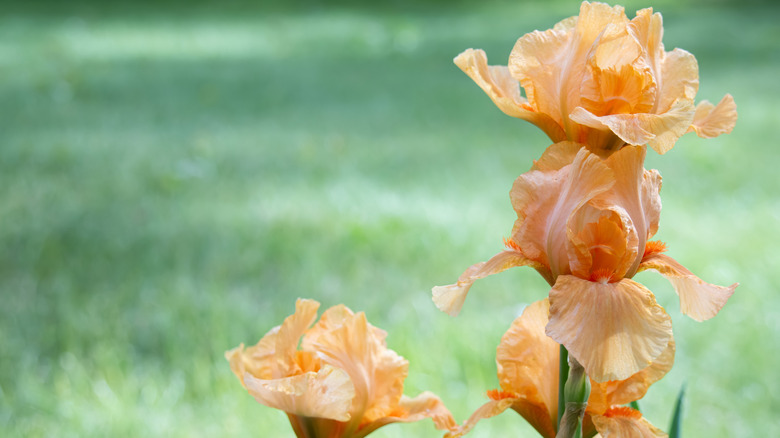
I love intermediate irises for their somewhat smaller flowers and mid-spring bloom time, just before the taller irises start to open. This peachy intermediate gem blooms from mid- to late spring and, at only 19 inches tall, is a perfect size for the front of the border. The orange hues of ‘Many Mahalos’ can vary, and yours may include shades of peach, orange, apricot, salmon, and tangerine, but usually this one has paler, warmer tones of peach and apricot.
‘Pallida’
Peg Aloi / House Digest
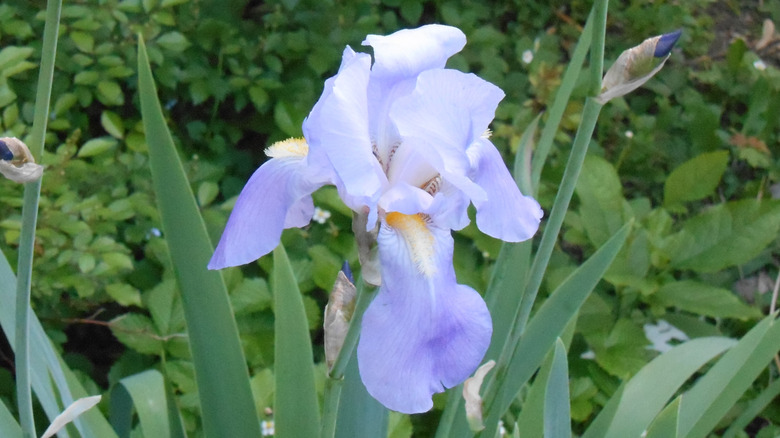
‘Pallida’ is the name given to this older heirloom iris that is often seen in established iris gardens. With pale blue standards, light lavender falls, and white beards tinted pale orange, the colors alone make this desirable, but many gardeners love this classic for its delicious fragrance. I think it smells like grape Kool-Aid! Like most heirloom bearded irises, its flowers are not super large or frilly, and it has fewer buds per stem than newer hybrids. It blooms for weeks and increases reliably. This timeless beauty belongs in every iris garden.
‘Beverly Sills’
Nahhana/Shutterstock
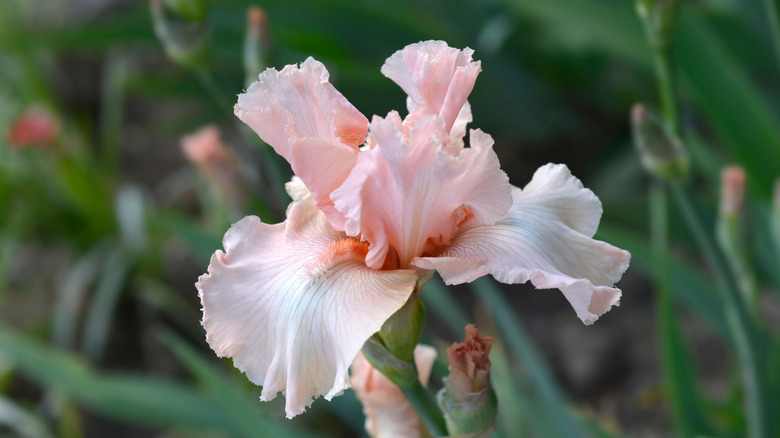
‘Beverly Sills,’ like the beautiful opera singer she is named for, puts on a dramatic performance in the garden. With huge frilly pink blooms touched with peach and salmon, and salmon beards surrounded by delicate white and pink plicata shading, this stunning rebloomer provides long-lasting color. ‘Beverly Sills’ is far and away the most popular pink bearded iris, with tall flowers (35 inches) that bloom in mid-spring and again in late summer.
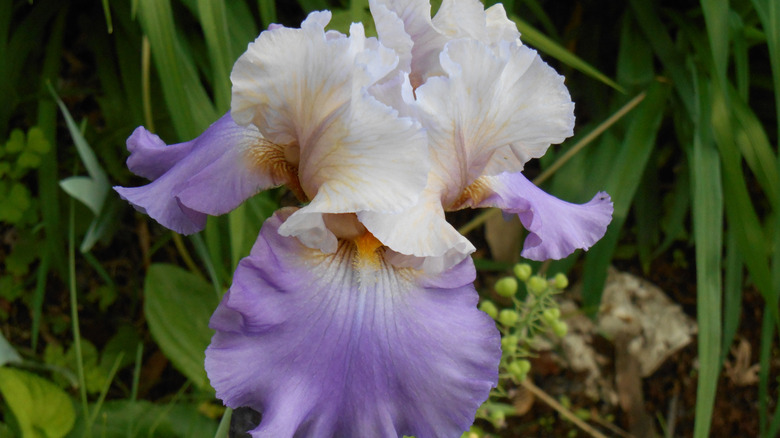
‘Mother Earth’
Peg Aloi / House Digest
The ‘Mother Earth’ iris is a stunning rebloomer that offers a pleasing blend of pastel colors. The standards are a silvery white tinged with pale violet and gold veining, and the lavender falls have apricot-orange beards. The big frilly blooms hold up well to wet spring weather. They’re more likely to rebloom if they’re planted in full sun.
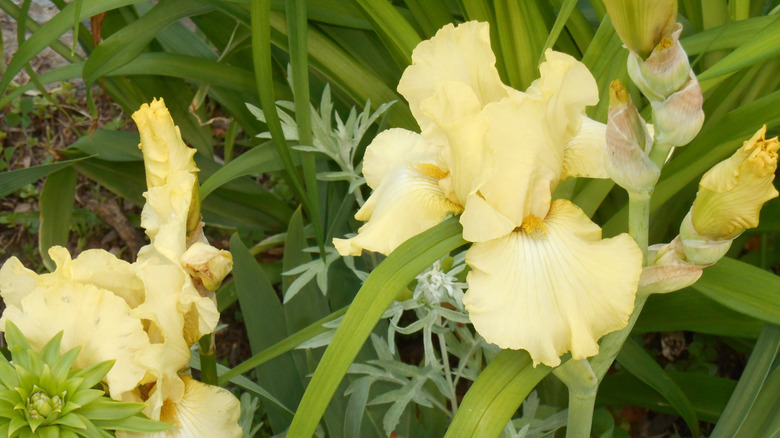
‘Fall Empire’
Peg Aloi / House Digest
There are many bright yellow irises, but I tend to prefer pale yellow ones. The butter-colored self of ‘Fall Empire’ is aptly named: after blooming beautifully in spring, its regal blooms return in late summer through early autumn to light up the garden. The large frilly flowers have golden yellow beards and a delicate white plicata, making this one of the most beautiful yellow rebloomers. This one increases reliably, and I’ve had luck with it blooming in partial shade where it gets sun at midday.
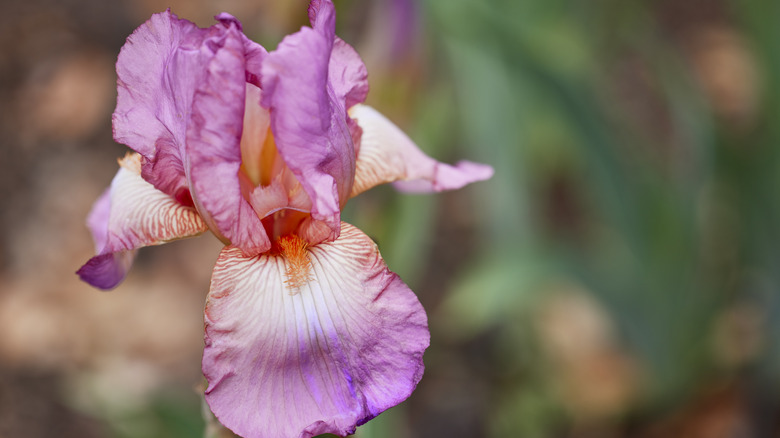
‘Jennifer Rebecca’
Wingedwolf/Getty Images
Though the blooms aren’t huge, the bold lavender-pink and tangerine hues of ‘Jennifer Rebecca’ make it a real charmer. The rose-pink standards and lavender-pink falls are offset by bright tangerine beards and plicata shading with salmon-pink veins: just gorgeous! This pretty rebloomer is also sweetly fragrant and grows between 24 and 30 inches tall, so it rarely needs staking or support.
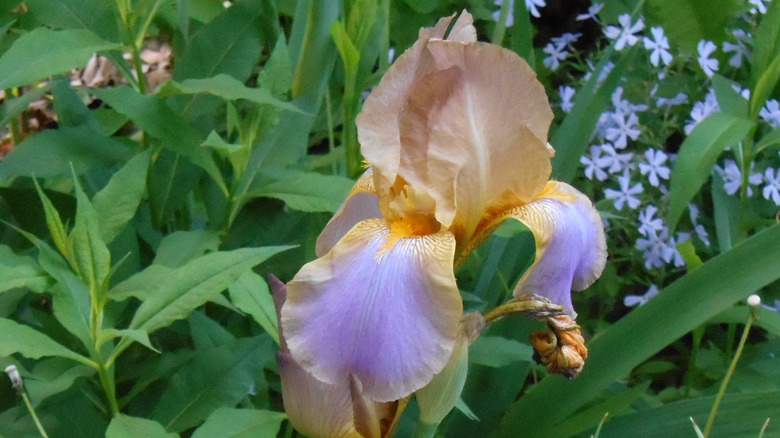
‘Quaker Lady’
Peg Aloi / House Digest
The unusual color combination on this beloved heirloom is gorgeous in the garden. I love to plant ‘Quaker Lady’ among lavender and yellow irises to create a sort of multi-colored bridge among them. With buff-mauve standards, pale violet-blue falls edged in tan, and tangerine beards, this tall bearded iris has small blooms that make a gentle color statement. These grow assertively and increase every year, so you can divide and share.
‘Victoria Falls’
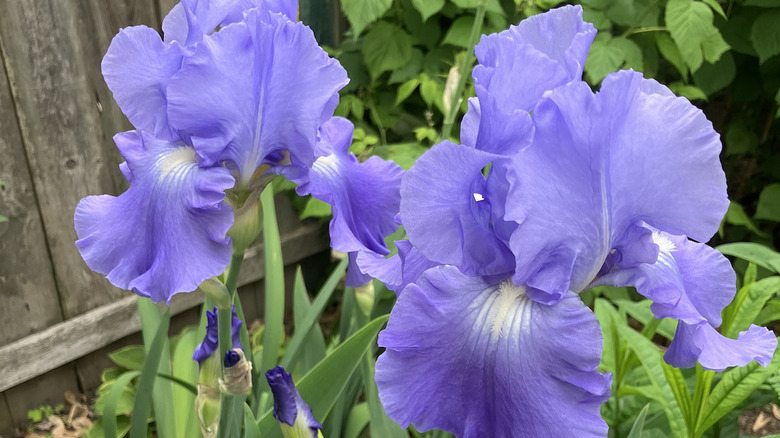
Peg Aloi / House Digest
The periwinkle blue blooms of ‘Victoria Falls’ are beautifully ruffled and have prominent creamy white beards and a large patch of white plicata veining. They’re medium tall and have a good upright form that rarely needs staking. I look forward to these beauties blooming every spring in a reliable burst of cool color. Plant them alongside white tulips for a cool palette. These sometimes rebloom in warmer zones, too.
‘Mariposa Autumn’
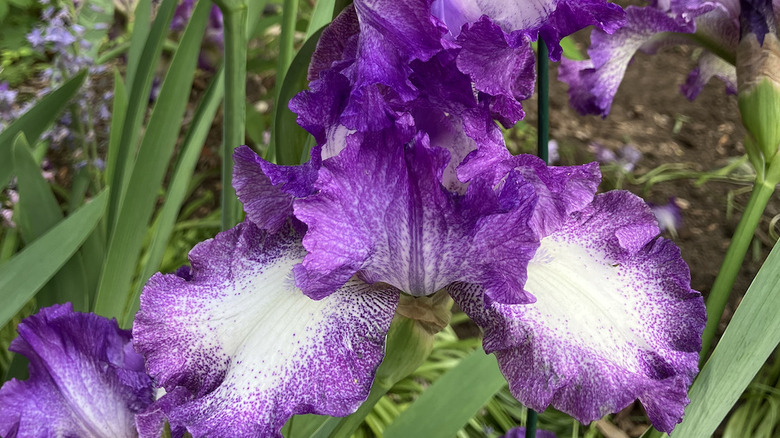
Peg Aloi / House Digest
This dramatic reblooming iris has magenta-purple stippled edges around the white standards and falls with white beards, creating a cool two-tone look. The falls flare out slightly, making a nice, wide bloom. ‘Mariposa Autumn’ is fairly tall at 32 inches, so give it a prominent place in the back of the iris bed where its stature and bold color will shine.
‘Rain Dance’
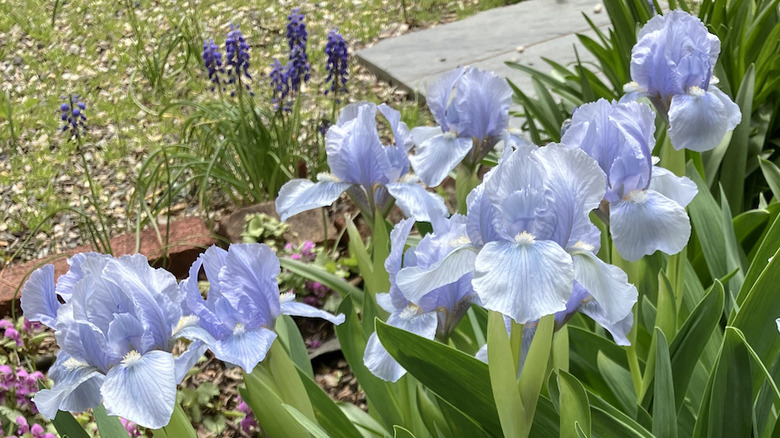
Peg Aloi / House Digest
This is one of my favorite dwarf bearded irises. ‘Raindance Returns’ blooms in early to mid spring, with flowers that are between 12 and 15 inches tall. A later reblooming version of the ‘Raindance’ heirloom iris, this one has small, frilly, pale blue blooms with pale yellow beards and ice blue edges. The delicate hues are stunning in the spring garden and provide a lovely pastel accompaniment to boldly colored tulips of yellow, orange, red, or pink. These increase well and are very hardy.
‘Iris germanica vulgaris’
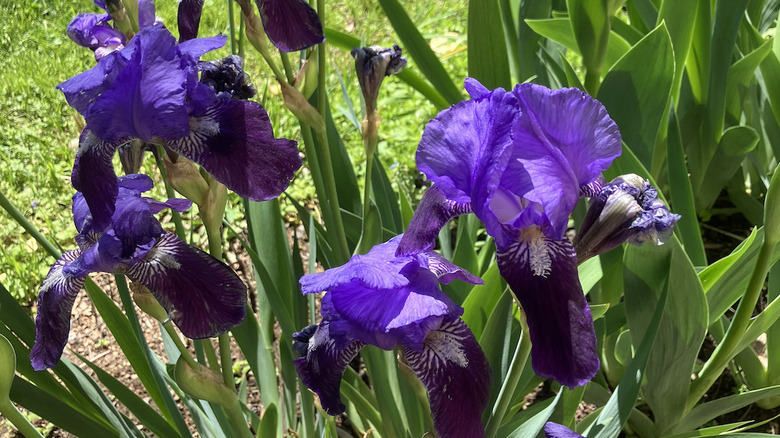
Peg Aloi / House Digest
This well-loved heirloom doesn’t have a specific cultivar name but is recognized by many gardeners as being a prolific rebloomer that increases yearly. The blue-violet standards sit above deep purple falls with striking white beards and white veining. Often sold simply as ‘purple bearded iris,’ it can still be found for sale in many places. This sturdy, reliable iris is a must-have for the iris lover’s garden.
‘Nosferatu’
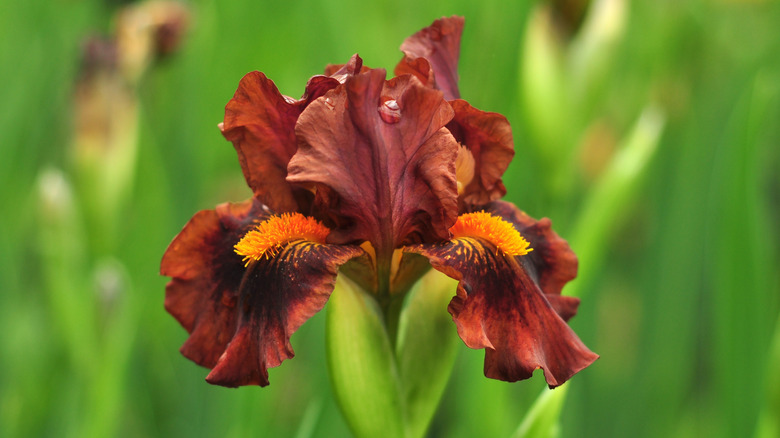
Julia Gardener/Shutterstock
The bold, dark colors of ‘Nosferatu’ are like a burst of deep autumn in mid-spring! This dwarf bearded iris puts on a dramatic color show and looks great planted alongside blue and purple hyacinths or early orange tulips. The dark burgundy-brown falls have deep russet shading and golden tangerine beards and veining, and the standards are nicely frilly. The colors range from deep red to mahogany and copper tones, offering a luscious, earthy palette that’s uncommon in the early spring garden. As an added bonus, it has a spicy fragrance!
‘Burst of Joy’
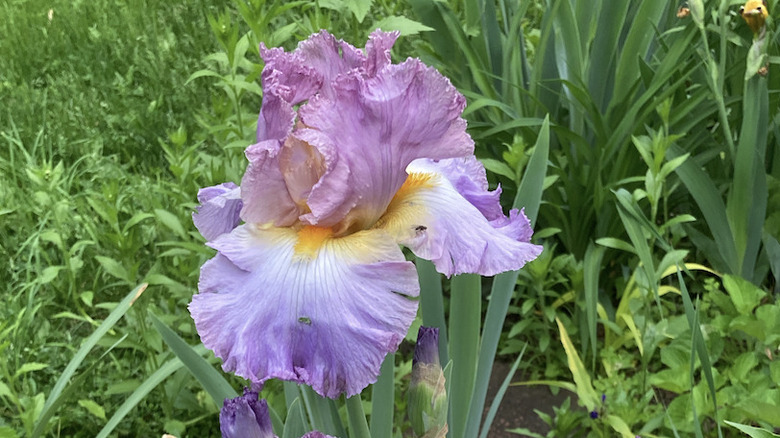
Peg Aloi / House Digest
‘Burst of Joy’ is one of those irises that really stand out in the garden with its large, frilly, colorful flowers. With its dusky mauve buds, mauve-pink standards, lavender falls, and bright tangerine beards, it makes a bold statement even if it’s the only bearded iris variety you grow. I have found this one to be a very robust bloomer, and the flowers keep going for several weeks. It looks great with other lavender and golden yellow irises.
‘Cherry Garden’
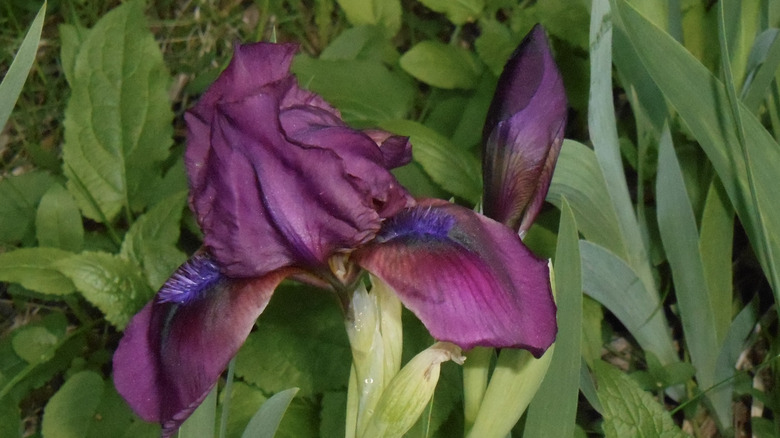
Peg Aloi / House Digest
The rich colors of this heirloom dwarf bearded iris make it a popular choice. ‘Cherry Garden’ isn’t red as one might expect, but a gorgeous deep plum-wine color with dark purple beards. Despite its beloved colors and reputation for being a prolific bloomer, this one is becoming hard to find for purchase. Ask your iris-loving friends to see if they might have a division from their garden to share. I had these in my garden years ago, but they’re missing from my current iris collection, and I must rectify this as soon as possible!
‘Golden Panther’
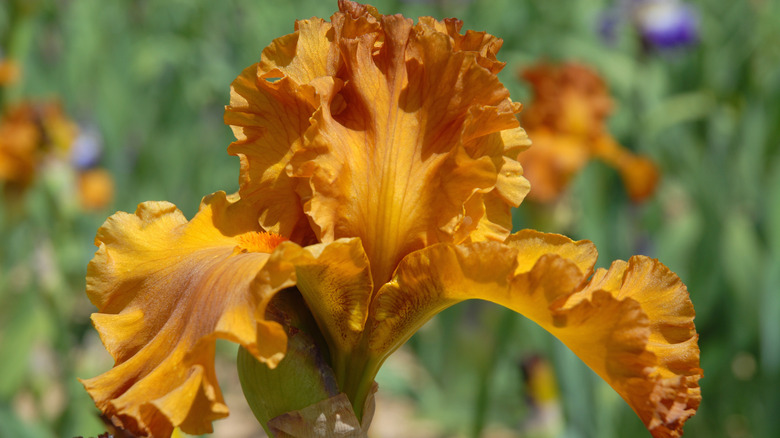
Josie Elias/Shutterstock
This award-winning iris is a real stunner in the spring. ‘Golden Panther’ boasts large stems with three branches of flower buds. The frilly standards and falls glow in an array of golden hues (butterscotch, amber, bronze, and orange), with veining in dusky violet: it’s a bold iris that can really enhance your iris garden palette. Try it planted alongside irises in periwinkle blue, dark purple, or burgundy for a dramatic carnival of color.
‘Silverado’
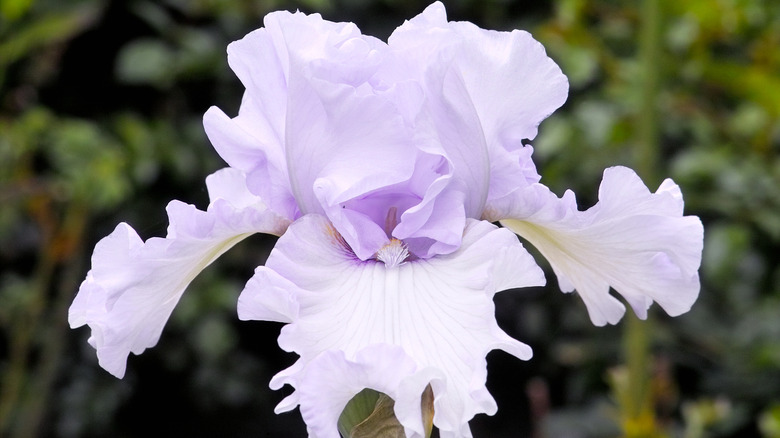
Ole Schoener/Shutterstock
The delicate pale orchid color of ‘Silverado’ is subtle yet beautiful, seeming to glow from within. True to its name, the blooms of this iris have a silvery sheen and often look white from a distance until you come closer to see the subtle glints of pale purple and lavender. The beards are white but sometimes show a whisper of pale yellow. This one is tall (up to 38 inches) and blooms fairly late in spring, adding a beguiling pastel color show to your garden.
‘Sweet Musette’
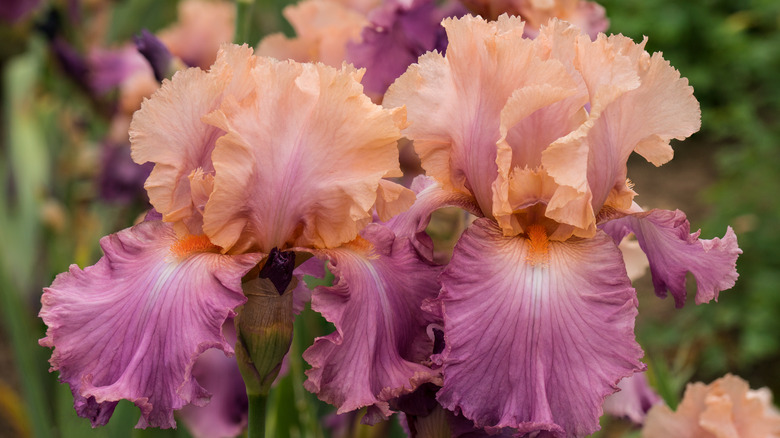
Cynthia Liang/Shutterstock
This two-tone iris has a beautiful color structure and enchanting rippling form. Irises like ‘Sweet Musette’ make it easy to understand why bearded irises are considered some of the prettiest flowers in the world. It has pink-peach standards veined with dusky purple, and rosy purple falls with peach and white plicata veining and tangerine beards. The effect in the garden is breathtaking, and this one is sweetly fragrant too. In a warm zone (7 or above) with plenty of sun, this one might rebloom.
‘Blueberry Bliss’
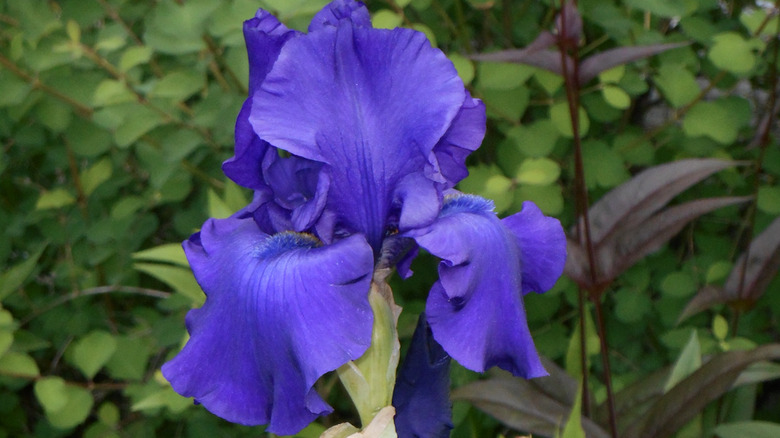
Peg Aloi / House Digest
Iris lovers will tell you there aren’t many “blue” irises with reliable darker blue color: most of them tend to be more of a violet blue. I find ‘Blueberry Bliss’ to be closest to a true blue, though the coloration can vary slightly from one garden to the next. This one has a gorgeous, deep blue self with cobalt blue beards and large, somewhat frilly flowers. The color really holds its own and blends well with both pastels and brights.
‘Champagne Elegance’
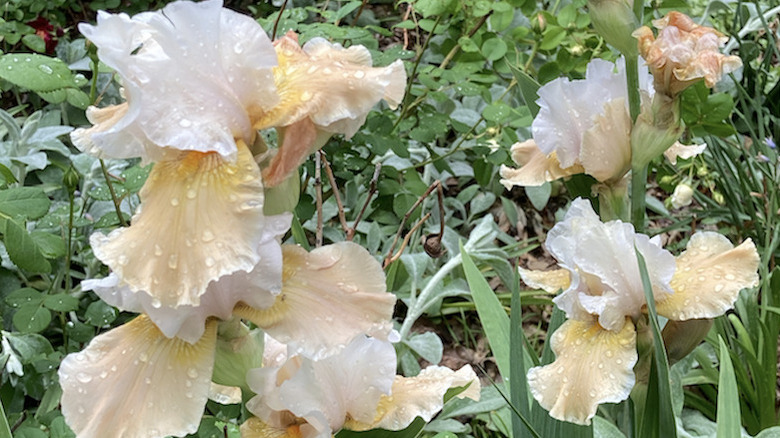
Peg Aloi / House Digest
This pretty rebloomer adds classy color to the garden in spring and again in late summer. The frilly flowers of ‘Champagne Elegance’ feature white standards touched with pale pink shading and pale apricot falls with golden yellow beards. They’re medium height and don’t usually need staking, and they get multiple big buds on each stem. They look great planted near reblooming white irises like ‘Immortality,’ or try them with pale peachy pink rebloomers like ‘Pink Attraction’ or ‘Peggy Sue’ to create a delectable swath of pastel color.
‘Lady Friend’
Nahhana/Shutterstock
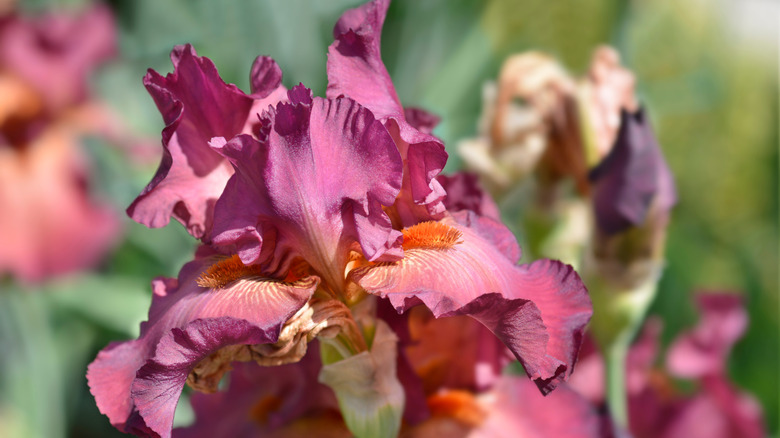
I fell in love with this one the first time I saw it in a garden shop: an unusual shade of dusty garnet red, or is it deep rosy pink? The tangerine beards and veining add another layer of rich color to this rare beauty. ‘Lady Friend’ grows up to three feet tall, increases reliably, and is a thrilling addition to the iris color palette.
Comments are closed.