
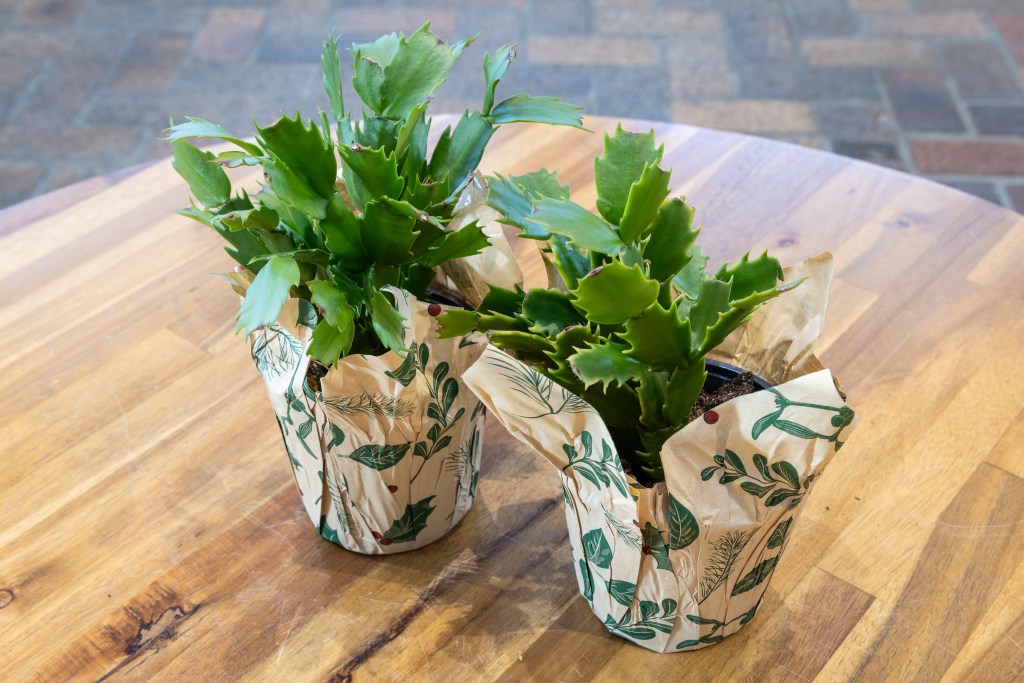
I have a habit of buying cool-looking plants before understanding their care. Recently, I picked up a Christmas cactus. I would appreciate some guidance from someone with experience on how to grow it successfully and hope it is not too fussy of a plant.
— Amelia Nowak, Prospect Heights
You picked an interesting and great plant, in my opinion, and it’s beautiful when it flowers. Christmas cactus (Schlumbergera bridgessii) is a popular, long-lived, winter-flowering houseplant that’s associated with the holidays because it usually blooms between mid-November and late January. It does well with average home conditions and moderate care, so you should find it easy to grow. You’re lucky with your choice this time! Christmas cactus likes temperatures between 60 and 70 degrees Fahrenheit with average to high humidity for its general growing conditions; it can adapt to low light, but the plant will bloom more readily in brighter light. It’s native to the tropical rainforest, so it’s treated much differently than cacti that are native to arid desert climates, which need infrequent, sparse watering. Water a Christmas cactus when the top inch of soil in the container feels dry to the touch. Good drainage with this plant is critical, so be careful not to overwater it.
Hybridization over the past century has resulted in lots of new varieties of Christmas cactus with colors available in white, pink, red, salmon, yellow, and purple. They’re usually sold in full bud with at least a few blooms open, so try to keep the movement of the plant to a minimum to prevent the buds and flowers from dropping. Over-watering, lack of humidity, or insufficient light can also cause buds to drop before opening, so place it in a bright location away from heat vents, fireplaces, and drafts. You can ensure long-lasting blooms by keeping your cactus on the cool side with a little humidity.
After the plant is finished blooming, give it a rest period for about two months in a spot that gets moderate light; give it very little, if any, water while it’s resting. If the foliage or stems begin to shrivel during this time, just water them lightly and the leaves should recover quickly. As the days start to lengthen in spring, slightly increase how much you water it and move the plant to a location where it gets more light. After the danger of frost has passed and once outside temperatures are staying around 50 degrees Fahrenheit, move the plant outdoors, choosing a place that’s sunny or lightly shaded. Christmas cacti require bright sunlight for the best performance, but too much direct sunlight can burn their leaves; the leaves will bleach first if they’re getting too much sun.
A good time to pinch or prune your plant to shape it and encourage branching is in early spring, when new growth is starting. During the growing season, from April through September, fertilize your Christmas cactus with an all-purpose houseplant fertilizer — something with no more than 10% nitrogen.
The best time for repotting a Christmas cactus is in February, March or April. The plant will flower best if it’s kept in a container that keeps its roots more condensed; you’ll want to use a cactus mix for the container. If your Christmas cactus is given the right care and is placed in the right location, it might even flower several times throughout the year.
For more plant advice, contact the Plant Information Service at the Chicago Botanic Garden at
plantinfo@chicagobotanic.org. Tim Johnson is senior director of horticulture at the Chicago Botanic Garden.
Comments are closed.