
Facebook
Twitter
LinkedIn
Threads
WhatsApp
Telegram
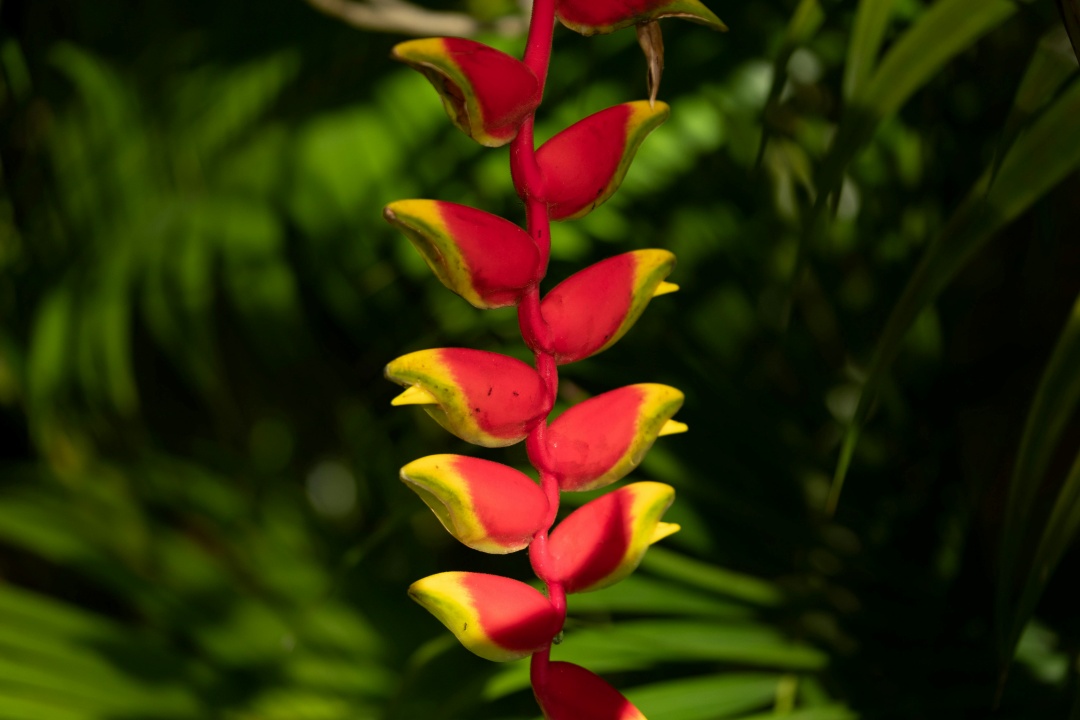
There are over 100 species of evergreen heliconia, and they are widely used for home and landscaping decorations.
 RECENTLY my friend, Dr Wong, asked me how many types of heliconia that I had grown.
Having collected some 30 types himself, he would exchange some with me if I had any different varieties.
I used to have many species for landscaping purposes.
Some of the expensive ones, imported from Hawaii, fetched some hundreds of ringgit.
For this week’s column, I would like to share with you what I know about this fabulous plant, identifiable by its beautiful brightly-coloured flowers.
The name itself describes heliconia – derived from the Greek word ‘helix’, meaning ‘spiral’.
It refers to the colourful bracts that overlap themselves, forming the pendulous inflorescence with small florets.
The plant is native to the rainforests in South East Asia, the Pacific Islands and the American tropics.
There are over 100 species of evergreen heliconia, and they are widely used for home and landscaping decorations.
They are good for fencing garden’s edges, but regular pruning is necessary as the shoots will keep on spreading out.
Now, I will share my experience growing heliconia in a home environment.
Before buying a plant, identify the species that would suit your preference – and budget.
Heliconia rostrata and Heliconia wagneriana are both popular, but they are very different from each other in the aspects of colour and the shape of their flower clusters.
By then, you should be able to, or already set a suitable site in your garden.
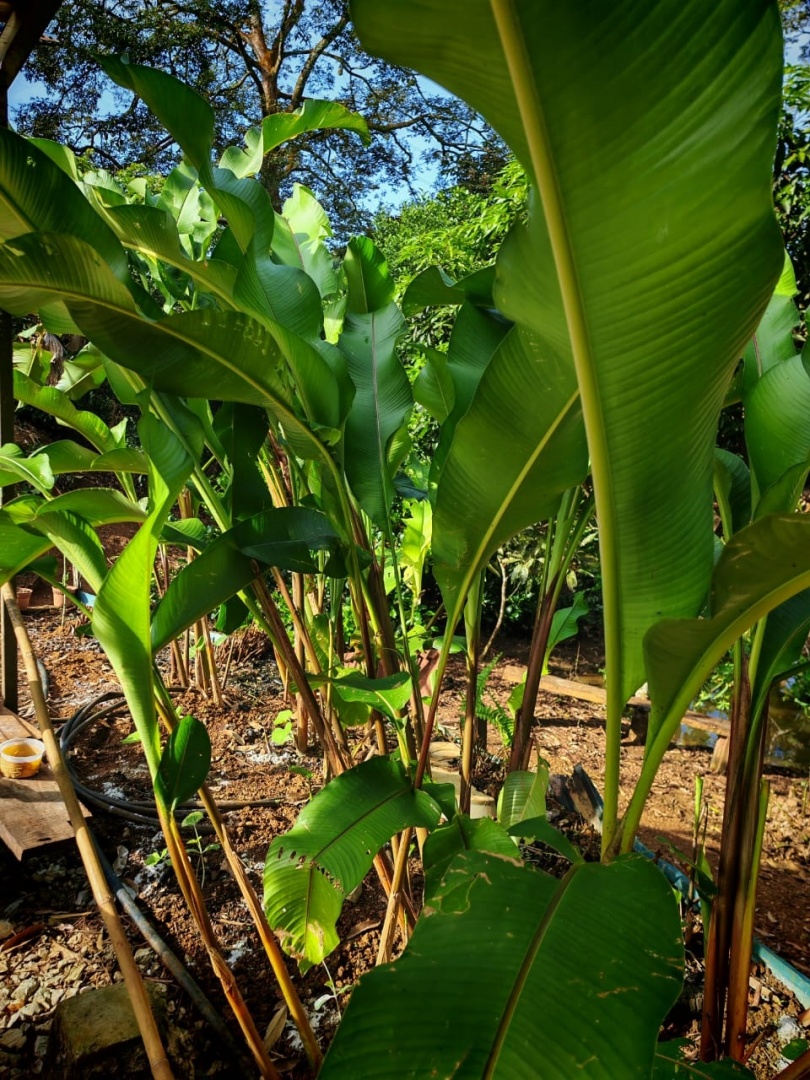
Photo shows the heliconia stalks planted by the writer in his garden.
Keep in mind that this plant needs a warm spot with partial shade.
It also thrives in humus-rich soil that is moist, but well-drained.
This is also true for the water canna species, which prefers the lowlands with partially-submerged ground.
The rostrata and wagneriana are more tolerant to heat, and can be grown without shade.
Again, always keep watch of the ‘spreading power’ of the roots – they keep sprouting new shoots.
It is good to create a barrier using bricks, or have the heliconia planted in large jars to avoid the over-propagation.
Maintenance is quite simple – much of it covers regular pruning and adding fertilisers.
Remove the spreading shoots and dead ends to avoid crowding.
Avoid any pests or diseases such as caterpillar’s snail, slugs and mealy buds – rouging (manually removing undesirable growths, or ‘rogues’ from the plant) and pruning should suffice.
Heliconia have glossy leaves that beautifully frame the vibrant, lobster-claw-shaped bracts – making them a great candidate for garden and home decorations.
They stay fresh for a longer time too.
Happy Gardening!
Facebook
Twitter
LinkedIn
Threads
WhatsApp
Telegram
Comments are closed.