
Photo Feature by Idania Cárdenas
HAVANA TIMES – In the heart of the vast National Botanical Garden of Havana, a space devoted to the conservation of Cuban and world flora, there lies a corner that tells a story of fellowship, beauty, and slow abandonment: the Japanese Garden.
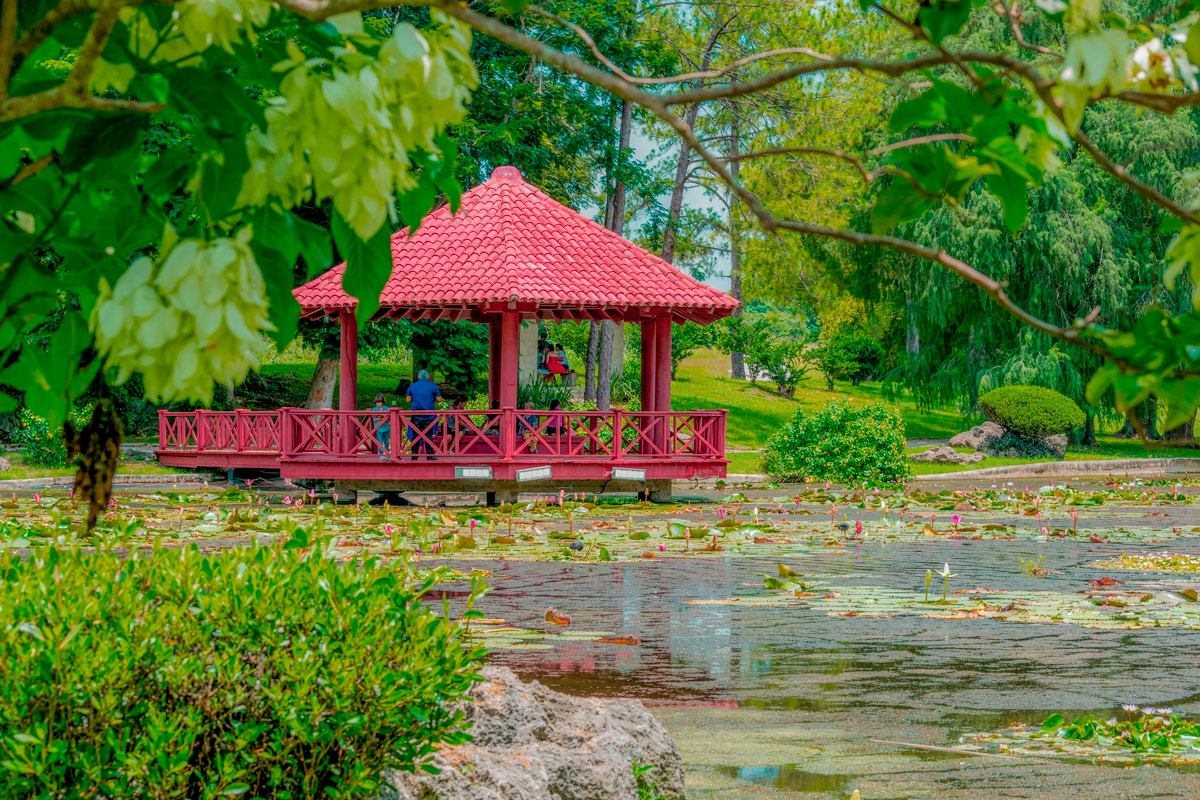
Its history is brief but significant. It was a gift from the Japanese community in Cuba and the government of Japan, inaugurated in 1989 as a symbol of friendship and culture. Designed according to the traditional principles of the Japanese Garden, it sought to be a space of harmony, contemplation, and peace. Its central feature was a serene lake, originally inhabited by koi carp (the emblematic pink fish), crossed by wooden bridges and presided over by an elegant pagoda of Eastern grace set within the Cuban landscape.
Today, the passage of time and the lack of maintenance have left a deep mark. The lake is the most visible wound. What was once a mirror of water inhabited by colorful fish is now a murky pond, filled with mud and invasive vegetation. The carp disappeared, transforming the garden’s vital element into a silent swamp. The bridges—once paths for strolling and contemplation—have become a hazard. They are missing railings and show the relentless damage caused by termites and humidity, laying bare the delicate balance between charm and danger.
And yet, despite the deterioration, the magic has not vanished. The place remains a magnet for beauty and celebration. It is one of the favorite settings for Havana’s quinceañeras, who, with their ruffled dresses and dreams in tow, search among its corners for the perfect backdrop for their photos. The pagoda, the winding paths, and the lush vegetation provide a visual poetry that resists decay. The Garden, in its sadness, continues to offer solace and a kind of melancholic beauty that speaks of resilience.
The Japanese Garden of the National Botanical Garden is today a photogenic and painful metaphor. It is the frozen sigh of a beauty that was gifted, that was loved, and that now struggles not to drown in the mire of oblivion. A reminder that nature and cultural heritage, without care, can turn a sanctuary of peace into a mirror of our neglect. Even so, amid broken planks and murky waters, the pagoda still stands, perhaps waiting for a rebirth.
See more Havana Times photo galleries here.
Comments are closed.