

“This is not a very nice place to be spending Christmas. I can’t host, or bring anyone over here. Christmas is going to be very isolating and very miserable for me this year.”
This is how Oriel Corway (35) views life right now, living in a one-bedroom, flat-roofed studio in the garden of a semidetached house in Tallaght, Dublin 24, since 2023.
The entire flat is covered in blotches of black mould, with puddles of condensation gathering under her bed and couch, and damp patches spreading over the ceiling and walls.
She is dreading another Christmas here, and says that while she used to “really enjoy the Christmas period”, this year she “doesn’t want to bother”.
The rent for Corway’s home is €1,300 a month, with the majority of this covered by the Housing Assistance Payment (HAP).
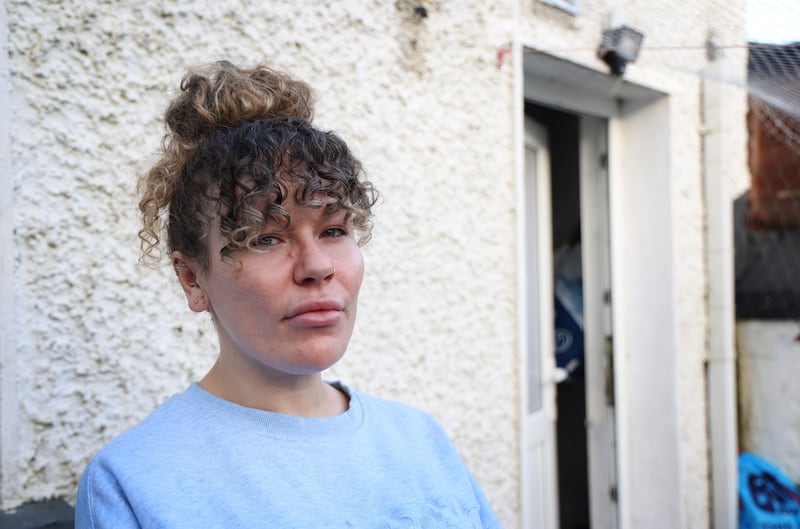 Oriel Corway at her rented home
  Damp and mouldy ceiling over the shower unit
 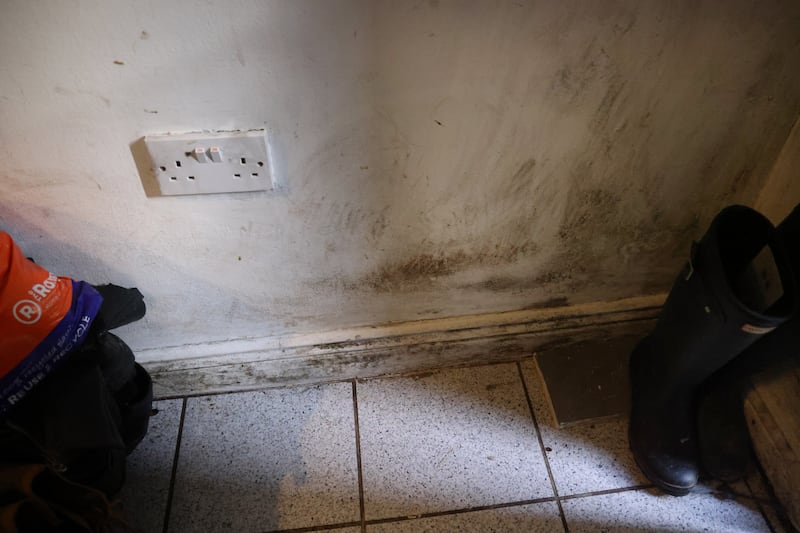 Mould on the wall
The HAP scheme is designed for people on the social housing list and is paid directly by local authorities to private landlords.
Corway, who is studying law at Maynooth University, has repeatedly raised the situation with letting agent Ray Cooke, who manages the unit.
Despite the agent sending out workmen on several occasions, the mould and leaks persist, and it has taken a toll on her health.
“There were issues from the moment I moved in,” Corway says. “There was no heating, no shower, there was mould already appearing once I moved the furniture around – they had obviously tried to hide it.”
Two years later and the situation has become far worse.
“There is mould everywhere, it’s all over everything and it is probably all over me,” she says.
“Having a shower is a nightmare, because the bathroom is the worst. It’s nearly kind of scary in there. You just want to get right back out again.”
“My skirting boards outside the bathroom are like sponge,” she says.
She has to pull out the couch several times a week to clean up puddles of water that gather there, and she has fallen in the kitchenette a number of times because of condensation on the floor. The situation is worse in her bedroom.
“My bed is soaking wet, I have to dry it with a hair dryer some nights. Sometimes I wake up and I’m soaking wet. It’s no way to live,” she says.
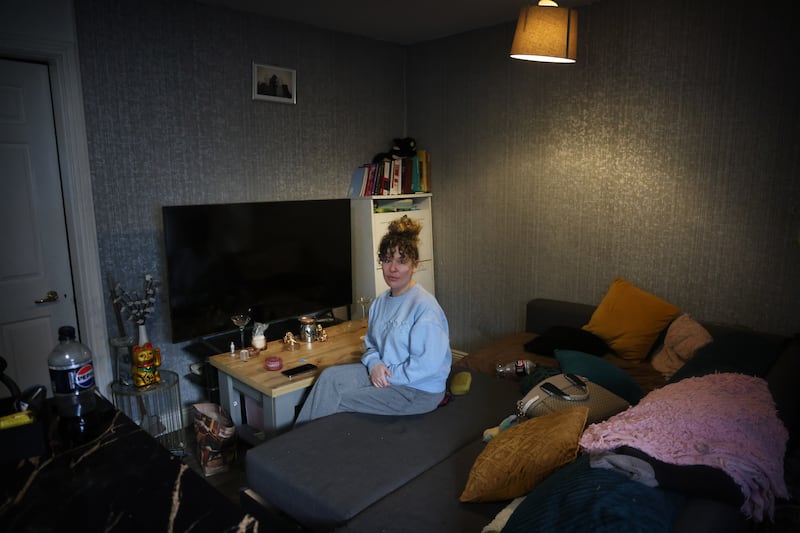 Oriel Corway at home
In May 2025 she paid for an engineer’s survey on the property, seen by The Irish Times.
The report found high levels of dampness and mould growth throughout the inside of the apartment.
It also found insufficient ventilation, exposed live wires and poor weather sealing around the doors and windows.
The report recommended engaging a damp-proofing specialist to resolve the issues, the removal and treatment of the mould and the rewiring of the unit.
Corway’s studio is owned by a company called Open Bridge Ltd, according to Land Registry documents.
The director of Open Bridge Ltd is Glen Power, a founding member and drummer with the band The Script.
While the three-bedroom house on the site is registered with the Residential Tenancies Board, it appears Corway’s garden studio is not.
Researchers at the Houses of the Oireachtas have found that black mould, such as that seen in Corway’s home, is more common in social housing and in households experiencing fuel poverty.
This kind of mould in people’s homes has been associated with poor health outcomes and an increased risk of chronic conditions such as asthma, according to the 2024 paper.
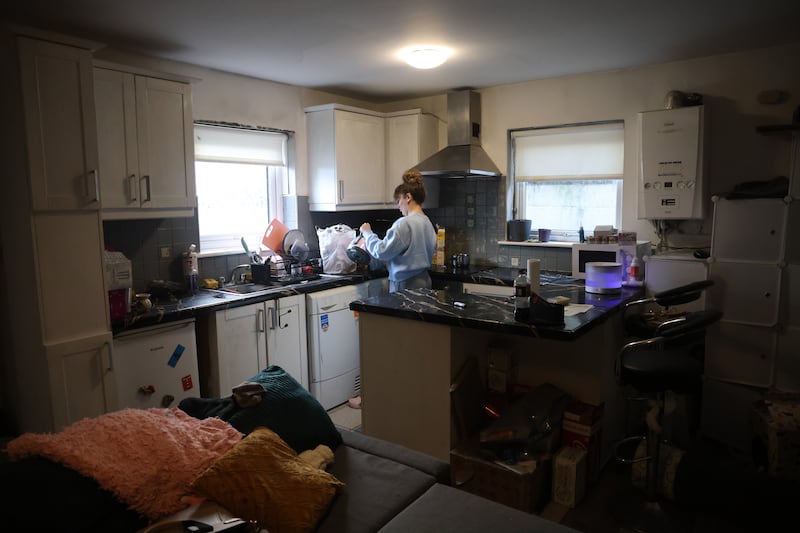 Oriel Corway in her rented studio flat
While there are regulations enforcing minimum standards for rented dwellings in Ireland, there is no explicit legislation to address the issue of mould.
Local authorities are responsible for enforcing these minimum standards through inspections, and can issue improvement or prohibition notices to noncompliant landlords.
The research concluded that other countries, such as the UK and France, had “more explicit regulations and robust enforcement mechanisms” for addressing mould.
“There is much to be learnt from the UK’s approach, including the stricter timelines for addressing mould issues, enhanced enforcement through increased inspections and penalties for noncompliance,” the paper found.
It appears no such inspection by the local authority has taken place at the studio Corway is living in, and her health has deteriorated in the time she has lived there.
“My breathing has gotten quite bad – my friends and family have noticed it – so I’m going to see a specialist about my lungs, just to make sure there’s no damage done.
“It’s had a big impact on my mental health as well. It has had an impact on my dignity. It’s isolating me. I can’t have friends over.
“It was a major contributing factor in the breakdown of my two-year relationship. My education has been so severely impacted, that one of my advisers at the university has written to the council on my behalf to try and get something sorted,” she says.
[ ‘My grandkids have breathing problems’: Dublin City Council tenants protest over damp and mould issues in flatsOpens in new window ]
In the meantime, she plans to spend Christmas Day at her mother’s house and try to get through the festive period with as little fuss as possible.
“I’m hoping to just get my head down and study through Christmas and just kind of ignore the whole thing. Because there’s nothing nice about it here.”
A spokesman for Ray Cooke, also speaking on behalf of Glen Power, said the landlord was “is fully committed to have the issues resolved in full” and has “been looking at ways to keep [the] tenant in situ while works are completed”.
More than €9,000 has been spent trying to rectify the issue over the past eight months, he said, and the landlord has received his own property survey “for comparison”.
“Extensive works are required to remedy” the issues found and “vacant possession will be required while works are completed”, he said.
The “tenant will be offered the property back once works are completed”, the spokesman said.
South Dublin County Council did not respond to requests for comment.
Comments are closed.