
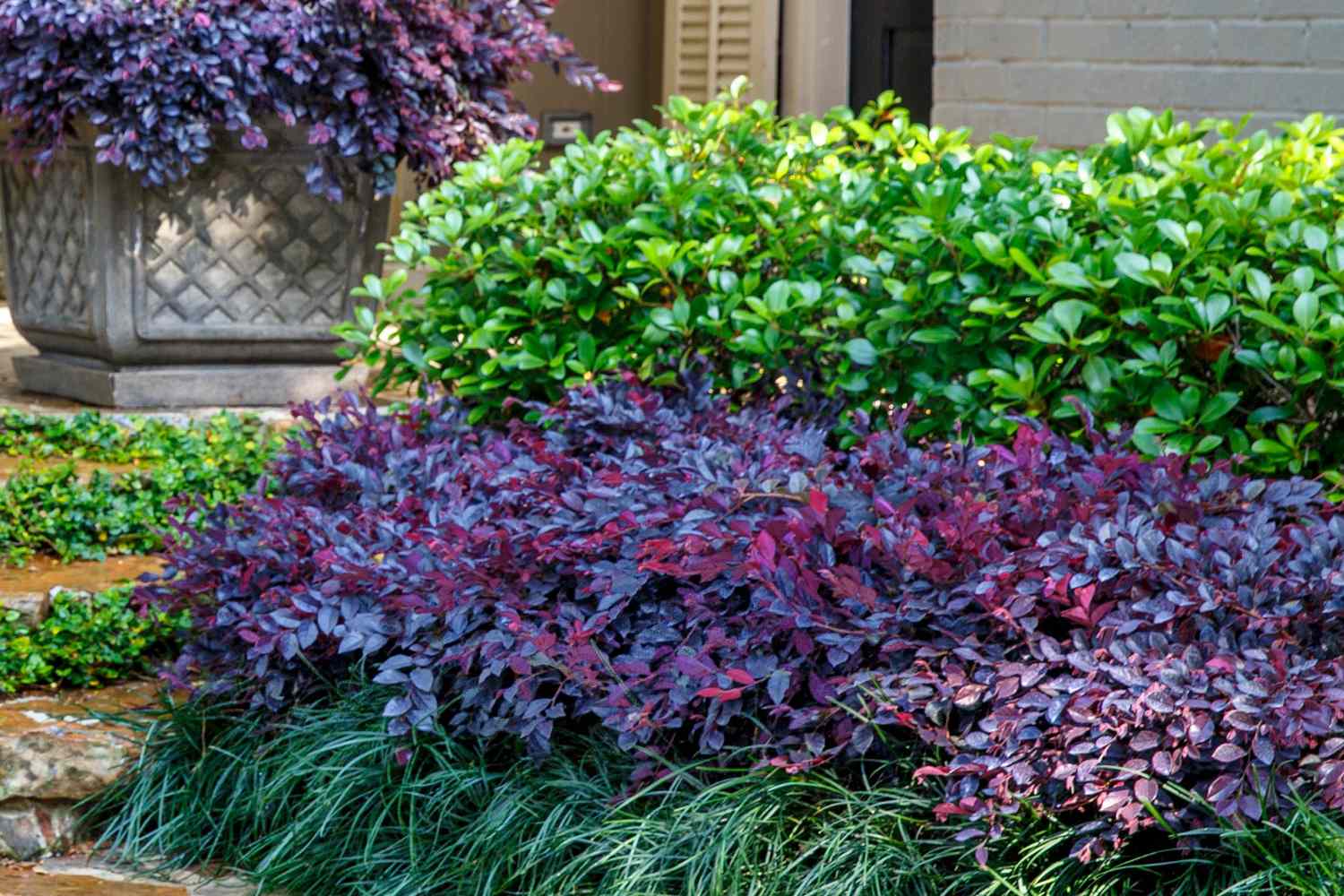
While colorful berries and occasional blooms pepper the winter landscape, evergreen shrubs form the backbone of the garden, carrying it through the season. Not only does the foliage of evergreen shrubs add color all winter long, but their enduring structure maintains the overall composition of a garden, maintaining privacy and providing protecting from winter winds. The dense canopies of evergreen shrubs also shelter birds from the cold.
Evergreen foliage comes in many styles, from solid hues to variegated selections and seasonal bursts of color. There are both broad-leaf and needled evergreens to work with, each adding unique textures to the garden. With such a diversity of plant forms, foliage colors, and textures, evergreen shrubs play many roles in the landscape. Solid-colored plants work well as backdrops or lined up to define space, while more colorful varieties make lovely accents. Variegation may be used to echo the foliage and flower colors of other plants or to create a vibrant focal point. As with any source of color, winter foliage can be used to create balance and establish the mood of a planting.
Mojo® Pittosporum
Credit: Courtesy of PDSI
Botanical Name: Pittosporum tobira ‘CNI Three’Sun Exposure: Part sun to shadeSoil Type: Medium, well-drainingSoil pH: Acidic to alkaline (5.0-8.0)USDA Plant Hardiness Zone: 7 to 10
With luminous gold and green variegated foliage, Mojo® Pittosporum makes a lovely accent and works equally well massed in foundation plantings or lining walkways. Growing just three feet tall and wide, you can pot up Mojo® in patio containers, where you can enjoy the fragrant spring blooms. This tough evergreen tolerates heat, drought, and salt spray, making an ideal addition to coastal gardens.
Purple Daydream® Dwarf Loropetalum
Credit:
Southern Living Plant Collection
Botanical Name: Loropetalum chinense ‘PIILC-III’Sun Exposure: Full sun to part shadeSoil Type: Rich, moist, well-drainingSoil pH: Acidic (4.5-6.5)USDA Hardiness Zones: 7 to 9
Purple Daydream® Dwarf Loropetalum combines the rich purple foliage and vibrant pink blooms of your favorite Loropetalum in a compact, low-maintenance package. Use it to add a pop of color to winter containers and plant it throughout the garden as an accent or mass planting. Growing just 2 to 3 feet tall and 3 to 4 feet wide, Purple Daydream® is perfectly sized for small gardens and low hedges. Plants resists deer browsing and are drought-tolerant once established.
Romeo™ Cleyera
Credit:
Southern Living Plant Collection
Botanical Name: Ternstroemia gymnanthera ‘Variegata’Sun Exposure: Full sun to part shadeSoil Type: Rich, medium, well-drainingSoil pH: Acidic (5.0-6.5)USDA Hardiness Zones: 7 to 10
The variegated foliage of Romeo™ Cleyera brings warm hues to the winter landscape when the gold-edged leaves take on rose-pink hues. Plants are pest free and heat tolerant for low-maintenance beauty all year long. Cleyera benefits from afternoon shade in hot locales and tolerates heavy shade. Plant Romeo™ as an accent in mixed borders or in drifts to create a unique privacy planting or hedge.
Golden Oakland® Holly
Credit:
Southern Living Plant Collection
Botanical Name: Ilex hybrid ‘Magden’Sun Exposure: Full Sun to Part ShadeSoil Type: Rich, moist, well-drainingSoil pH: Acidic (5.2-6.8)USDA Hardiness Zones: 6 to 9
Golden Oakland® Holly adds radiant variegation to an already handsome holly. The distinctive oak-shaped leaves and strong pyramidal form make for a stunning focal point in foundation plantings and entryway gardens, and brings a pop of color to borders and privacy plantings. Plants maintain their form with little pruning and are resistant to deer browsing.
Sugar Cookie® Sweet Viburnum
Credit:
Monrovia.com by Doreen Wynja
Botanical Name: Viburnum odoratissimum ‘COMPACT01’Sun Exposure: Full sun to part shadeSoil Type: Rich, medium, well-drainingSoil pH: Acidic (5.5 – 6.5)USDA Hardiness Zones: 7 to 9
This classy viburnum provides season after season of color and texture. Foliage turns burgundy red in the winter, complementing the berries that attract hungry birds. Spring brings cinnamon-hued new growth and fragrant, butterfly-friendly blooms. This compact, disease-resistant selection tolerates clay soil, heat, and drought.
Japanese Plum Yew
Credit: Image by jclopezalmansa under a Flickr Creative Commons Attribution-ShareAlike License
Botanical Name: Cephalotaxus harringtoniaSun Exposure: Partial to full shadeSoil Type: Medium to moist, well-drainingSoil pH: Acidic to alkaline (6.0-8.0)USDA Hardiness Zones: 6 to 9
The fine, dark green needles of this coniferous evergreen add soft texture to gardens. Unlike other yews, plants tolerate summer heat and humidity, exhibiting drought tolerance once established. In Southern states, plants benefit from partial shade and are quite tolerant of heavy shade. Japanese plum yews varieties include low spreading forms and upright columnar varieties.
Leucothoe
Credit: Southern Living Plant Collection
Botanical Name: Leucothoe spp. and cltvs.Sun Exposure: Part sun to shadeSoil Type: Rich, medium, well-drainingSoil pH: Acidic (4.5-7.0)USDA Hardiness Zones: 5 to 9
With graceful arching stems and striking winter foliage, this Southeastern native is gaining attention throughout the plant world. Numerous improved cultivars have been introduced, some with variegated foliage, others with colorful new growth. Chains of bell-shaped blooms dangle from branches in spring, attracting bees, butterflies and other pollinators to the garden.
Camellia
Credit: Image by Drew Avery under a Flickr Creative Commons Attribution License
Botanical Name: Camellia spp.Sun Exposure: Full sun to part shadeSoil Type: Moist, well-draining, richSoil pH: Acidic to Neutral (5.8-6.5)USDA Hardiness Zones: 7 to 9
Camellias are an essential component of the winter landscape throughout the South. Not only do these upright shrubs grace the garden with glossy evergreen foliage, but they also fill our winter days with blooms as beautiful as any rose. Flowering time varies by species, with Sasanqua camellias blooming October through November and Japanese camellias opening February through March. Both are available in a variety of sizes, growth habits, and blossom colors.
Carolina Cherry Laurel
Credit:
Getty Images
Botanical Name: Prunus carolinianaSun Exposure: Full sun to part shadeSoil Type: Rich, moist, well-drainingSoil pH: Slightly acidic to slightly alkaline (5.5-8.0)USDA Plant Hardiness Zone: 7 to 11
Carolina cherry laurel makes the perfect addition to pollinator gardens and any bird-friendly landscape, providing winter cover, spring blooms, and autumn berries. Plants grow as a small tree with a dense oval crown. The species can grow rather large, but the compact variety Bright ‘N Tight™ is readily available.
Podocarpus
Credit:
Southern Living/Vlasova Evgeniya
Botanical Name: Podocarpus macrophyllusSun Exposure: Full Sun to Part ShadeSoil Type: Moist, Well-draining, RichSoil pH: Acidic to Neutral (4.5-7.0)Mature Size: 10-15′ high x 3-4′ wide
With a slender profile and dense, needle-like foliage, this coniferous evergreen adds soft texture and upright structure to plantings large and small. Also called Buddhist pine or Southern yew, plants are commonly grouped as a hedge or privacy screen, thanks to their height and density. This tough, low-maintenance shrub tolerates salt and drought, and performs well in hot, humid environments, including coastal gardens.
Holly
Credit:
Getty Images / Crispin la valiente
Botanical Name: Ilex speciesSun Exposure: Full sun to part shadeSoil Type: Average to rich, well-drainingSoil pH: Acidic to neutral (4.5-7.0)USDA Plant Hardiness Zone: 4 to 11
Gardeners typically plant hollies for their stunning winter berries, but these broad-leaf evergreens also have handsome foliage. Many species boast glossy, dark green leaves, often sculpted along the edges. Others add vibrant golden or creamy white accents through variegation. Evergreen varieties range in size from pint size shrubs to towering trees, providing options for every corner of the landscape.
Distylium
Credit: Courtesy of PDSI
Botanical Name: Distylium hybridsSun Exposure: Full sunSoil Type: Average, medium, well-drainingSoil pH: Acidic to Alkaline (5.0- 8.5)USDA Hardiness Zones: 3 to 9
This once unknown evergreen has stepped into the limelight in recent years to the delight of Southern gardeners. With endless adaptability and charm, Distylium has a lovely natural form, producing mounding layers of dense, evergreen foliage. Plants are pest-free, low-maintenance, and stand up to Southern heat and humidity. They are drought tolerant once established but also grow in wet soils. You’ll love their versatility.
Juniper
Credit:
Getty Images
Botanical Name: Juniperus spp. and cltvs.Sun Exposure: Full sunSoil Type: Average, medium, well-drainingSoil pH: Acidic to Alkaline (5.0- 8.5)USDA Hardiness Zones: 3 to 9
Junipers have long been a standout in the winter landscape thanks to their dependable color and care-free nature. The dozens of varieties available offer unique forms to fill any garden niche, from ground-hugging sprawlers to narrow columnar varieties. Cultivars featuring soft blue or sunny golden needles are popular for winter gardens.
Boxwood
Botanical Name: Buxus spp. and hybridsSun Exposure: Full sun to part shadeSoil Type: Moist, well-drainingSoil pH: Neutral (6.5-7.5)USDA Hardiness Zones: 5 to 9
Boxwood shrubs add structure to any garden, from formal gardens to flowing borders. They have endless applications in the landscape, making perfect hedges and edge plantings, solid backdrops, and lasting accents. Many are compact enough to plant in containers on the porch or patio. Newer cultivars maintain tidy forms with very little pruning, though they also lend themselves to shaping and topiary.
Pieris
Credit:
Photos from Japan, Asia and othe of the world / Getty Images
Botanical Name: Pieris japonicaSun Exposure: Partial to full shadeSoil Type: Rich, moist, well-drainingSoil pH: Acidic (5.0-6.0)USDA Hardiness Zones: 4 to 8
With dense evergreen foliage and an upright, layered habit, Pieris makes a wonderful addition to the winter garden. The oblong foliage is accented by clusters of pendulous flower buds that dangle from stems all winter long before opening in spring. Many varieties feature showy new spring growth, emerging in bronze, burgundy, or fiery red hues. Variegated forms are also available.
Comments are closed.