
In case you’re wondering, the Swedish biologist and physician Carl Linnaeus was the one who came up with our current way of naming plants and animals. About 300 years ago, he organized what’s called binomial nomenclature, the use of two Latin or Greek names: genus (the main identifier used in nursery labeling, always capitalized) and species (individuals within the genus, always lowercase). The genus and species are often italicized and follow the main general identifiers: kingdom, phylum, subphylum, class, order and family, which don’t show up on the nursery label. Back in the dark ages of my biology and botany classes, there was a mnemonic device to remember them, but much has changed in the last 50 years.
Latin was already the language of science, which meant that scientists all over the world could communicate with each other, and still can. Because Latin is considered a dead language, it’s not evolving like English and other languages, so it’s perfect for naming plants. But there’s nothing static about this system because names are constantly changing as research reveals information about where a plant actually should reside in the grander scheme.
Species names often describe characteristics such as smell: foetidus; foetidissima; nauseosus; odoratus; fragrans; fragrantissima; citriodorus; pungens; and inodorus. Others denote color: rugosa; rubra; sanguinea; igneus; atrorubens; alba; violacea; atropurpurea; viridis; virens; azurea; aurea; leucantha; and niger. Some are descriptive: bellus; ferris; major; robustus; simplex; and vulgare. Some give a clue to where the plant originated: borealis; australis; orientalis; occidentalis; centralis; sinensis; japonica; italicus; and persicus. Others tell us about growth habit: pendulus; tortuosus; patens; horizontalis; and erectus.
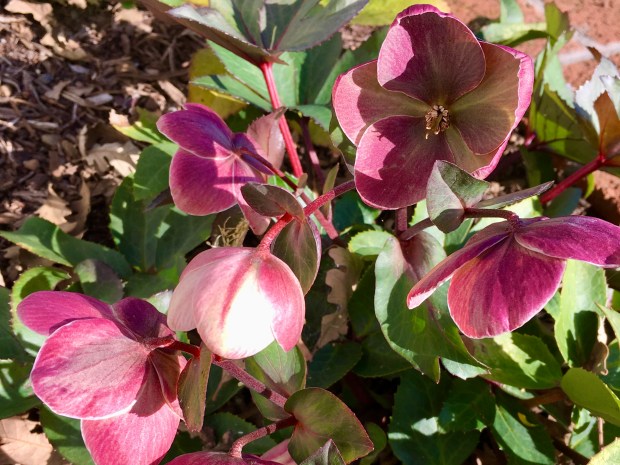 Helleborus foetidus, also known as stinking hellebore, has narrow leaves and diminutive blooms. Despite its name, it only smells if you crush its leaves. (Photo by Becca Ryan)
Many of us know a lot of plants by their common names, which can be confusing but sometimes definitive. Take the commonly named California fuchsia, also known as hummingbird trumpet, hummingbird flower, wild fuchsia and firechalice. If that wasn’t confusing enough, its scientific name is now Epilobium canum, formerly Zauschneria californica. Some old-timers still call it Zauschneria, though a young person at the nursery recently wasn’t familiar with that name.
Another example would be Helleborus, commonly called hellebores, Lenten rose, Christmas rose, winter rose and oriental hellebore. The names refer to the late winter into early spring bloom cycle. This genus has about 20 species, but there are subspecies, hybrids and cultivars that have been developed over many years, which means there are likely dozens, maybe hundreds, of different ones out there.
When you see a species name such as Helleborus x hybridus, it means that two species were hybridized, but there could be dozens of offspring, including some named for the breeder, such as Ballard’s Group. “The Sunset Western Garden Book” has explanations of some.
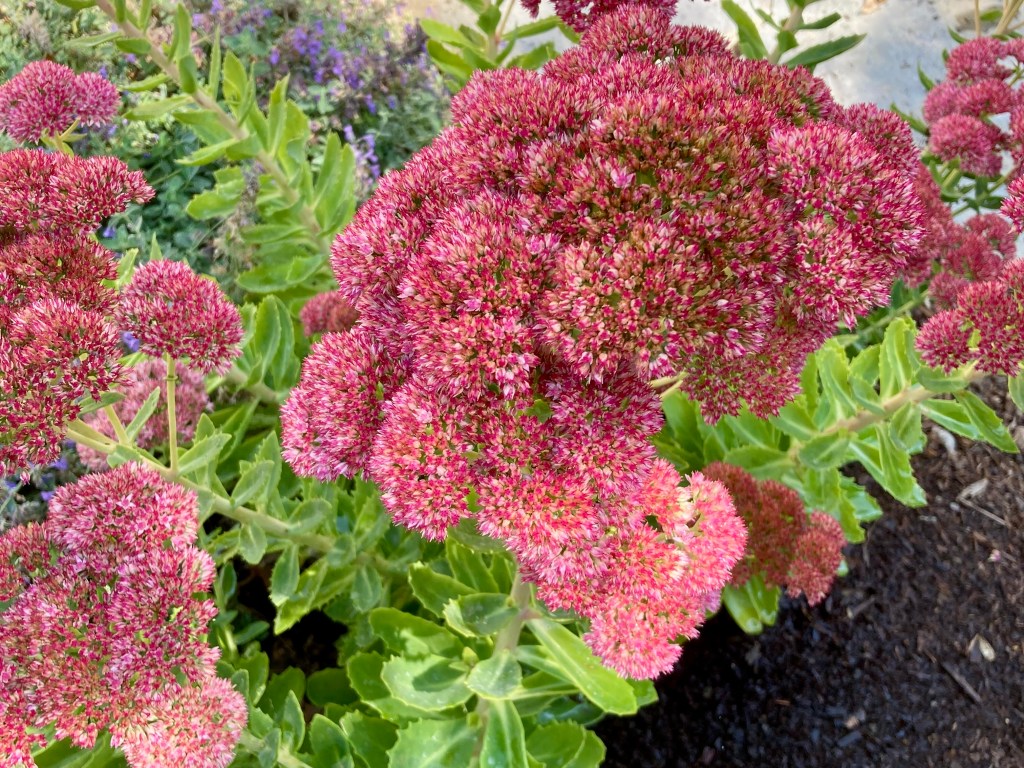
Some sedums are now considered distinct enough to merit their own genus. What used to be called Sedum ‘Autumn Joy’ now has the new, not-so-easy-to-pronounce name Hylotelephium with the cultivar name ‘Herbstfreude.’ Rosemary used to be classified as Rosmarinus, but DNA testing revealed that it’s more closely aligned with the sage family, Salvia, so it’s now named Salvia rosmarinus. Sometimes, a new name doesn’t take. Pineapple guava, Feijoa sellowiana, was renamed Acca sellowiana when botanists noticed the two were similar, but 2019 DNA analysis revealed that they weren’t so similar after all, so now it has gone back to its original name! I’m sure there are many more names that have changed in recent years, and research will continue to push these changes.
The bottom line is that if you want to be sure you’re getting a specific plant, it’s good to know the Latin name and make sure the nursery tag verifies that information. Plant lovers all around the world may speak hundreds of languages, but we’re all on the same page when it comes to plants.
Sponsored by UC Cooperative Extension, the University of California Marin Master Gardeners provide science- and research-based information for home gardeners. Email questions to helpdesk@marinmg.org. Attach photos for inquiries about plant pests or diseases. The office is closed for drop-in visits. Subscribe to the Leaflet, UC Marin Master Gardener’s free quarterly e-newsletter, at marinmg.ucanr.edu.
Comments are closed.