
Gardening
Our feathered friends must rely on whatever food and nesting sites they can find, supplemented by bird feeders and suet cakes.
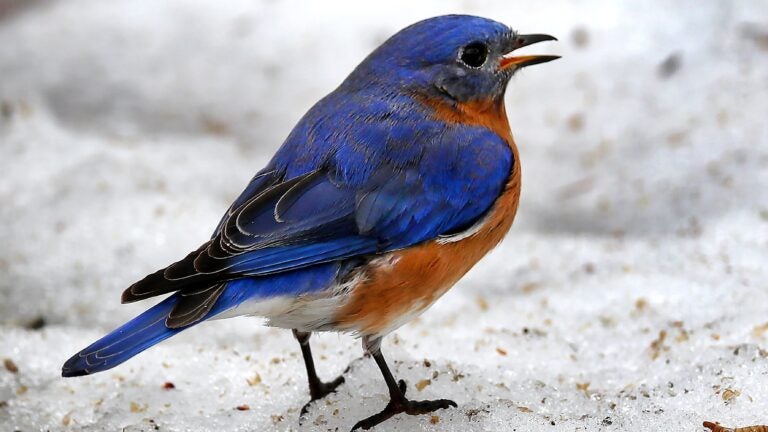
An eastern bluebird looks for food on the snow in a Pembroke front yard. Bluebirds will stay in Massachusetts in the winter if there is a good source of food from berries and backyard feeders. John Tlumacki/Globe Staff
In the winter, my thoughts turn to the creatures that live in my garden. Some are safely hibernating below ground in small cavities or literally frozen in mud (frogs and toads). But birds — both year-round natives and migratory ones — face some challenges.
The choices we make in our private gardens resonate into the broader landscape. Our feathered friends must rely on whatever food and nesting sites they can find, supplemented by bird feeders and suet cakes.
Here, I discuss which shrubs and vines are best for supporting birds and why ecologically harmful plants like non-native honeysuckle, buckthorn, and bittersweet promote a vicious cycle in which birds unwittingly play a role.
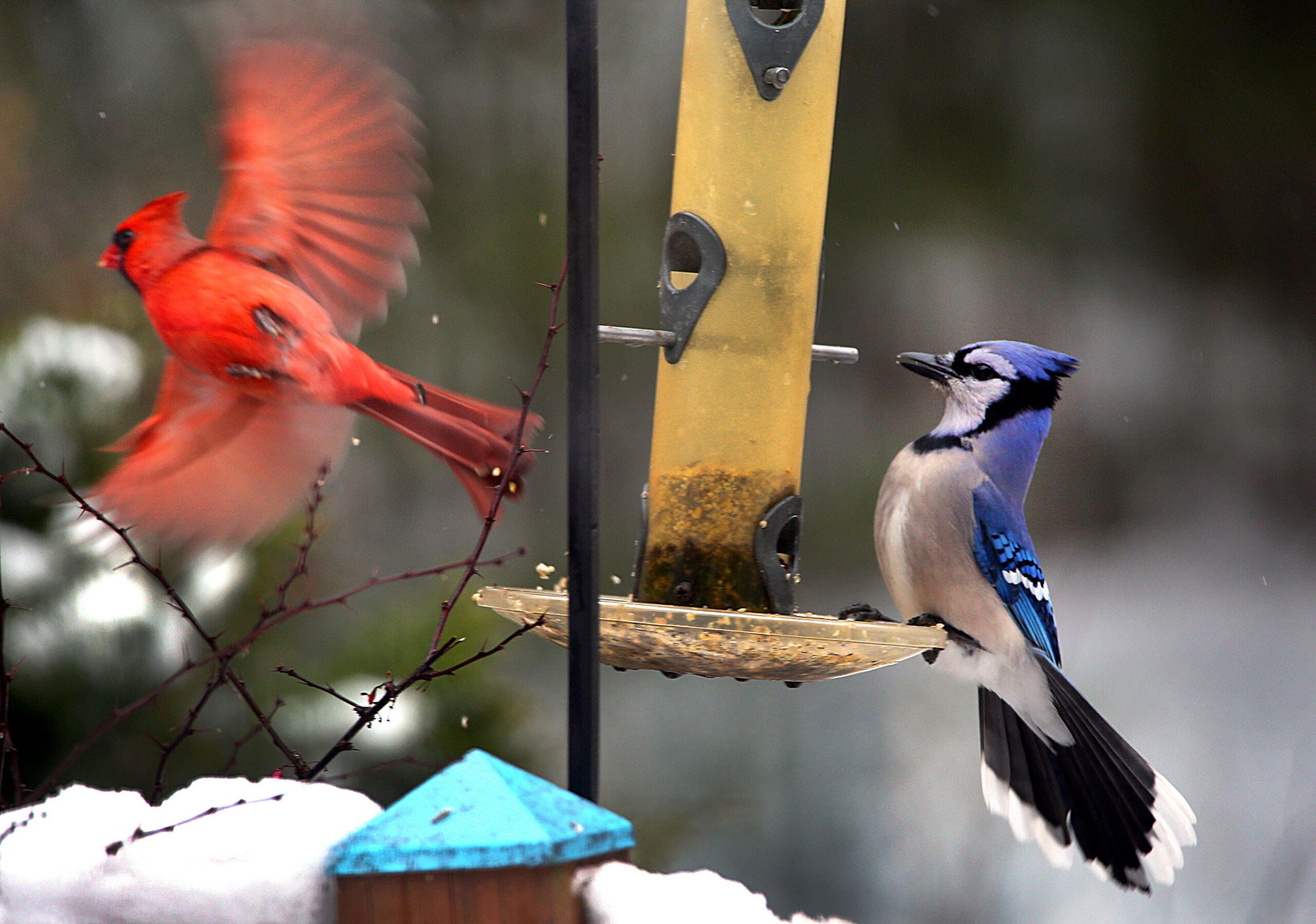 A blue jay jousts with a cardinal for perch positions on a backyard feeder. – John Tlumacki
The plight of the birds
Not all berries are created equal. Some are high in fat, some have high levels of carbohydrates and other energy-rich compounds, and others have high levels of antioxidants, which help birds recover from the stress of migration and winter conditions.
Despite the marketing push for the modern banana, there is no perfect fruit. Instead, birds must cobble together what they can find locally or along flight paths. Bird diversity and populations have been declining over the past decades, and our landscapes have become more fragmented, with a greater abundance of ecologically harmful plants. Protected lands like parks and state forests are very valuable, yet birds must navigate between them and largely suburban landscapes. Some species are learning to survive better than others, including non-native birds like starlings and English sparrows, who exert additional pressure on native birds for scarce resources.
So what can we do to help? I believe we must adopt a good, better, best approach: favoring native shrubs and vines where possible, embracing fruit-bearing plants from other parts of the world, and working to reduce the abundance of ecologically harmful plants.
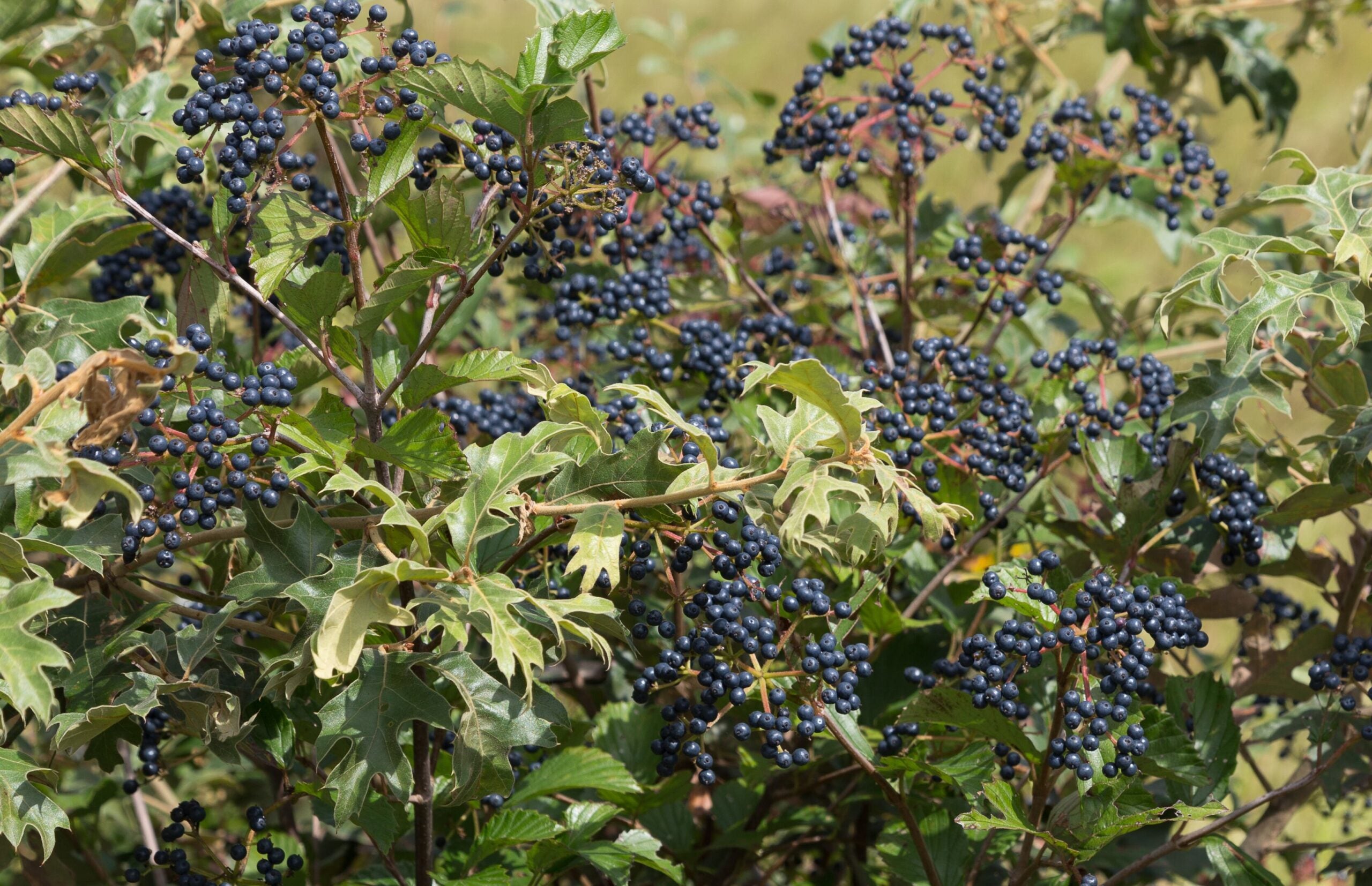 Arrowwood viburnum fruit produces small, round, blue berries in late summer and fall. – Ulrich Lorimer
The best shrubs and vines for bird nutrition
Because of their long evolutionary history together, migratory birds prefer native shrubs that provide high-fat, nutrient-dense fruit with high antioxidant content.
Viburnums:
Arrowwood (V. dentatum)
Maple leaf (V. acerifolium)
Nannyberry (V. lentago)
Dogwoods:
Gray (C. racemosa)
Silky (C. amomum)
Red-osier (C. sericea)
Flowering dogwood (C. florida)
Other native shrubs & vines:
Virginia creeper vine (Parthenocissus sp.)
Serviceberry (Amelanchier sp)
Spicebush (Lindera benzoin)
Blueberry (Vaccinium sp.)
Elderberry (Sambucus sp.)
(The University of Rhode Island has a nifty PDF detailing the research behind these recommendations available online.)
Shrubs like winterberry holly (I. verticillata), chokeberry (Aronia sp.), and bayberry (Morella sp.) also provide nutrition but contain less fat, which accounts for why their fruits tend to last longer into winter. Birds know which fruit is best and will eventually move to consume what is left of lesser nutritional quality.
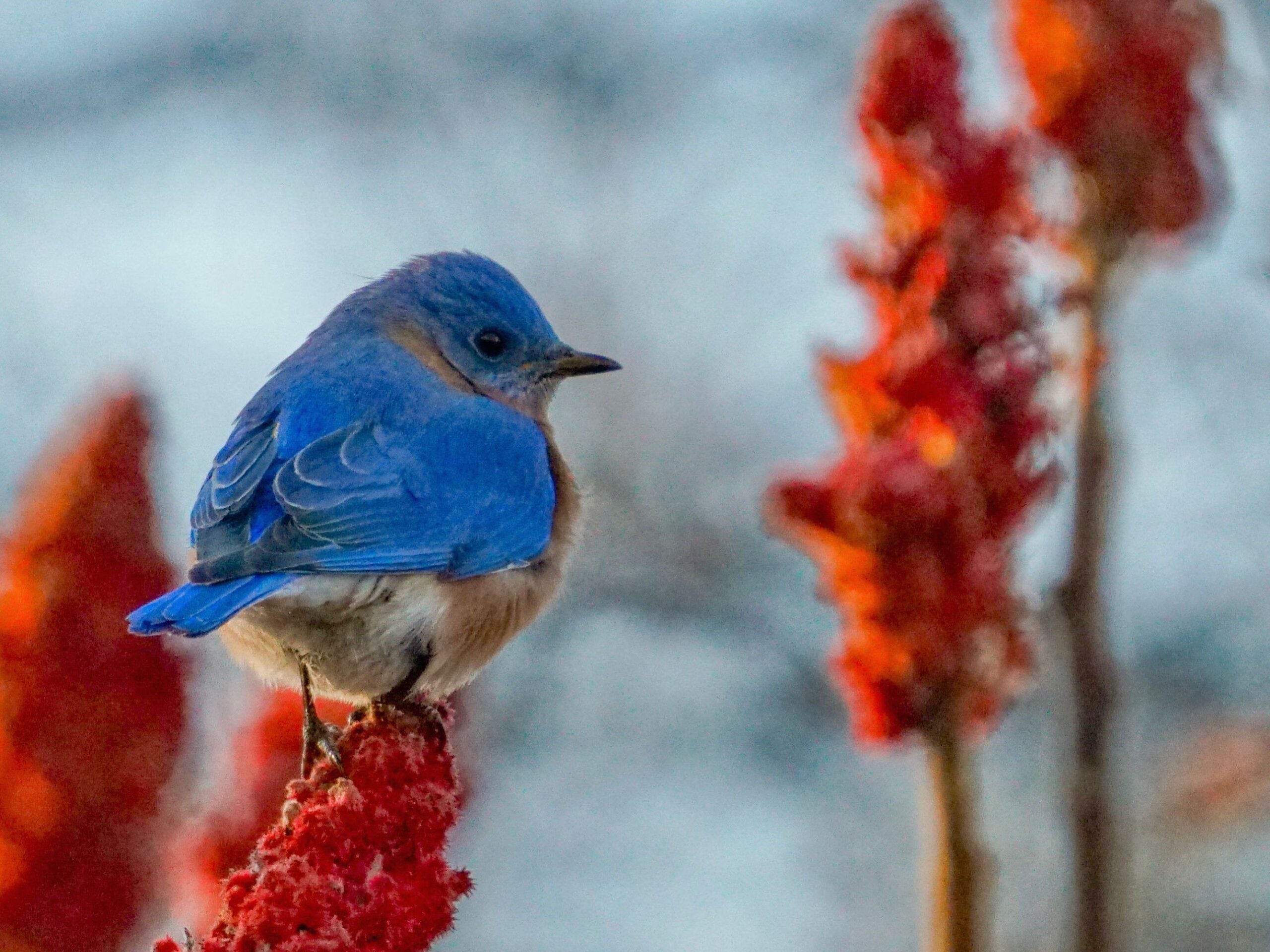 Pictured is an eastern bluebird, one of the bird species that have started spending the warmer winters in New Hampshire. – Grace McCulloch
Ecologically harmful plants
It is essential to distinguish between beneficial fruit-bearing trees and shrubs and those known to be ecologically harmful. All fruit has some degree of value for birds — even if some of the fruit is akin to avian junk food. Asian viburnums, hollies, and crab apples — along with their cultivars — help local birds cobble together resources to survive the winter, especially if other options are lacking. Sadly, ecologically harmful plants often provide the only option when there is nothing else to eat, and thereby perpetuate their cycle of invasion. The fruits of buckthorn, bittersweet, honeysuckle, and callery pear, to name a few, are chiefly dispersed by birds who become attracted to them at a time of year when little else is available. They simply provide poorer nutrition, leading birds to consume more to meet their needs.
A forest of bittersweet seedlings sprouted this spring directly beneath my bird feeder, providing visual evidence that the birds were supplementing their diet with bittersweet fruit from nearby tangles. What happens when those seeds are deposited in local parks or forests? With no one to pull them as seedlings, they rapidly add to the problem. This is where the agency you have over your own garden space is critical. Work to remove ecologically harmful plants and replace them with either fruit-bearing trees and shrubs or, if possible, native trees and shrubs. Another benefit of this approach is that many of these native shrubs double as host plants for caterpillars and moths, and they also support pollinators during the growing season.
Collectively, we can make a difference to ensure the survival of our cherished songbirds, migratory birds, and year-round residents is a little easier.
Ulrich Lorimer is the director of horticulture at the Native Plant Trust in Framingham. Send your gardening questions, along with your name/initials and hometown, to [email protected] for possible publication. Some questions are edited for clarity.
Address Newsletter
Our weekly digest on buying, selling, and design, with expert advice and insider neighborhood knowledge.
Comments are closed.