
🌿 Welcome to EverGreen Home Living!
In today’s video, you’ll learn:
•For thousands of years, our ancestors grew powerful, nutrient-dense vegetables that fed entire civilizations — vegetables we no longer plant, no longer taste, and in many cases, no longer even remember. Modern agriculture replaced them with uniform, store-friendly crops, and in the process, we lost flavor, nutrition, and resilience.
In this deep-dive, we rediscover 5 ancient vegetables that vanished from our gardens — and how YOU can grow them again today. From skirret, the forgotten perennial root of medieval Europe… to sea kale, the Victorian delicacy that thrives where modern crops fail… this video brings history back to life in your backyard.
You’ll learn:
🌱 Why these heritage crops disappeared
🌱 How modern farming pushed them out
🌱 How to grow each ancient vegetable step-by-step
🌱 Where to get seeds and root divisions
🌱 Why reviving forgotten food heritage matters
If you care about food security, biodiversity, heirloom gardening, or simply tasting REAL flavor again… this is a must-watch.
👍 LIKE this video to support food heritage
💬 COMMENT: Which ancient veggie will you grow?
🔔 SUBSCRIBE for more self-sufficiency & forgotten food knowledge
Let’s rediscover what we’ve lost — and grow something that truly matters.
#AncientVegetables #HeritageGardening #ForgottenFoods #HeirloomSeeds #PerennialVegetables #GrowYourOwnFood #FoodHistory #SelfSufficiency #RareVegetables #GardenTips #HomesteadGardening #SustainableLiving
✔ Subscribe for more gardening hacks & plant care tips:
https://www.youtube.com/@EverGreenHomeLiving?sub_confirmation=1
🌱 Grow smarter. Live greener. Save more.ancient vegetables, forgotten vegetables, heritage crops, heirloom gardening, skirret, good king henry plant, cardoon vegetable, alexanders herb, sea kale growing, lost food heritage, rare vegetables to grow, perennial vegetables, historical crops, food biodiversity, medieval vegetables, Victorian vegetables, old world vegetables, ancient gardening, self-sufficiency gardening, how to grow ancient vegetables, rare edible plants, forgotten crops
Disclaimer:
This video is for educational purposes only. Always research your local growing conditions before planting any crop.
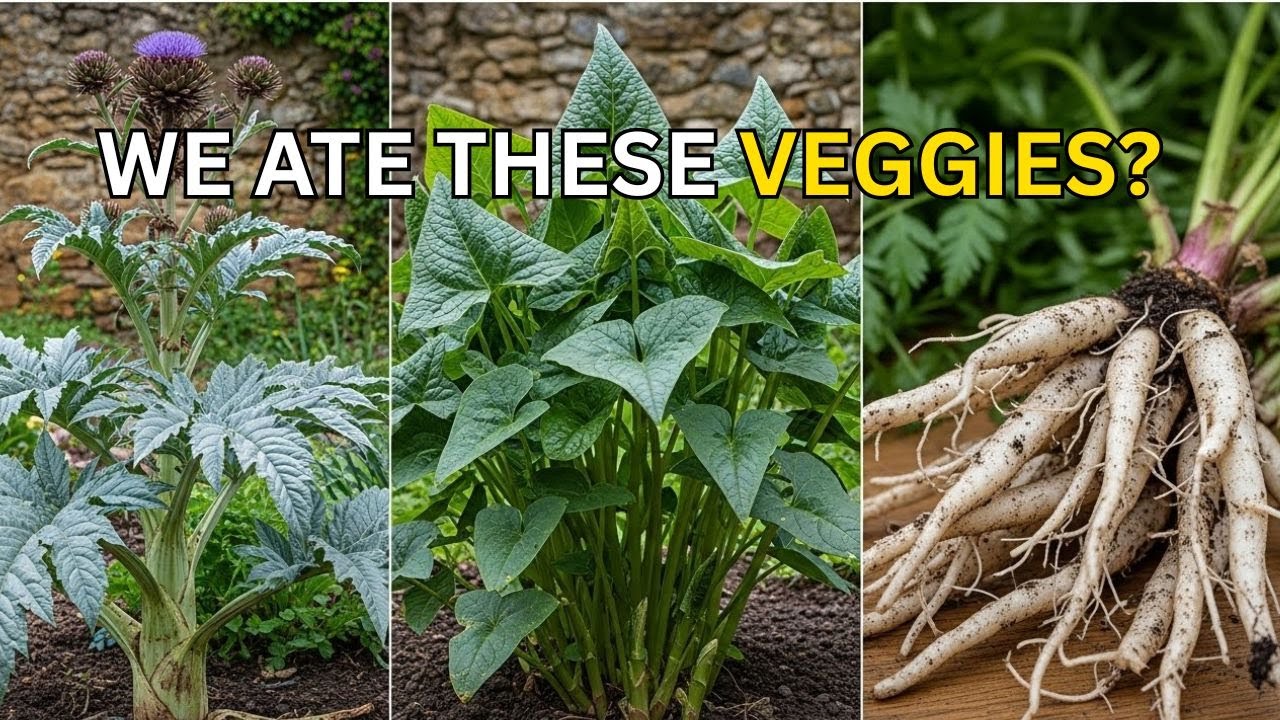
What if I told you that some of the most nutritious, most resilient, and most delicious vegetables in human history have been sitting in seed bankanks, forgotten, while we keep planting the same dozen crops year after year. These aren’t exotic superfoods from distant lands. These are vegetables our great grandparents grew in their backyards. Vegetables that fed entire civilizations for thousands of years, and then somewhere along the way, we just stopped growing them. Today, I’m bringing five of these ancient vegetables back from obscurity. Number three was considered more valuable than gold in ancient Rome. Number five can survive droughts that would kill modern crops. And that bonus tip at the end, it’ll show you where to find seeds for all of these forgotten treasures so you can start growing them this season. Let’s rediscover what we’ve lost. Welcome back to the channel. If you’re new here, I’m all about helping gardeners grow food that’s not only productive, but also meaningful, connected to history, and built to last. And today, we’re doing something special. We’re going back in time. Here’s what happened to these vegetables. Over the last century, industrial agriculture focused on crops that shipped well, stored long, and looked perfect on grocery store shelves. Nutrition didn’t matter. Flavor didn’t matter. Resilience didn’t matter. What mattered was profit and uniformity. So thousands of heritage varieties, vegetables that had fed humanity for millennia were abandoned and nearly lost forever. But here’s the good news. Seed savers, historians, and passionate gardeners have been working to preserve these ancient crops. And now you can grow them in your own backyard. You can taste history. You can reconnect with food heritage that goes back thousands of years. Before we dive in, hit that subscribe button and turn on notifications. This channel is about food freedom, self-sufficiency, and growing food with purpose. And drop a comment telling me if you’ve ever grown an heirloom or heritage variety before. I want to hear your story. All right, let’s start with ancient vegetable number one. Vegetable number one, skirit. Coming in at number one, we have skarit. A vegetable that was once a staple across Europe for over 2,000 years. and then mysteriously vanished from gardens in the 1800s. Here’s what skirit is. It’s a root vegetable in the carrot family, but instead of one thick taproot, skirit produces clusters of sweet white roots that taste like a combination of parsnip, carrot, and chestnuts. Medieval gardeners loved it. Roman writers praised it. And for centuries, it was considered one of the finest vegetables you could grow. So why did we forget it? When potatoes arrived in Europe from the Americas, they were easier to grow, produced bigger harvests, and stored longer. Slowly, skirit was replaced. By the early 1900s, most people had never even heard of it. Today, it’s almost impossible to find in grocery stores, and very few gardeners know it exists. But here’s why you should grow it. Skirit is incredibly hearty. It’s a perennial, which means you plant it once, and it comes back year after year. The roots are sweet, nutty, and delicious. whether roasted, boiled, or added to stews. And nutritionally, it’s excellent. Packed with vitamins and minerals that sustained people through harsh winters when other food was scarce. How do you grow skirit today? Here’s the key. Skirit isn’t grown from seeds easily because germination can be tricky. Instead, most gardeners propagate it by dividing the roots. You can order skirit root divisions from specialty heirloom seed companies or heritage plant nurseries. Plant the roots in early spring or fall about 2 in deep and 12 in apart. Skirit prefers full sun but tolerates partial shade. It likes moist, well- drained soil that’s rich in organic matter. Once established, Skirit is lowmaintenance. Water it during dry spells and it’ll thrive. The plant grows about 2 to 3 ft tall with delicate ferny foliage and white umbrella-shaped flowers in summer. In fall, after the first frost, dig up the roots. Each plant produces a cluster of finger- sized roots. Harvest what you need and replant a few roots for next year’s crop. Here’s how to prepare Skirit. The roots have a thin woody core running through the center. After cooking, this core slips out easily. Roast the roots with olive oil, salt, and herbs. The flavor is sweet, earthy, and unlike anything you’ll find in a modern grocery store. Skirit is a perfect example of what we’ve lost. A perennial vegetable that produces year after year, tastes incredible, and requires minimal care. Yet somehow, it disappeared. Growing it today isn’t just gardening. It’s an act of preservation. You’re keeping a 2,000-year-old food tradition alive. Vegetable number two, Good King Henry. At number two, we have Good King Henry. And this one has a story. It was named after King Henry IVth of France and was once called poor man’s asparagus because it was so abundant and easy to grow that even the poorest families could rely on it for fresh greens. Good King Henry is a leafy perennial in the same family as spinach and quinoa. The leaves taste similar to spinach but with a slightly mineral earthy flavor. The young shoots in spring can be cooked and eaten like asparagus and the seeds though small are edible and related to quinoa. This vegetable was a staple in English cottage gardens from medieval times through the Victorian era. Every household grew it because it was reliable, nutritious, and produced greens from early spring through late fall. But as commercial agriculture took over and people started buying vegetables instead of growing them, Good King Henry faded into obscurity. By the mid 1900s, it had almost completely disappeared. Today, most people have never heard of it, even though it’s one of the most useful perennial vegetables you can grow. Here’s why you should bring it back. Good King Henry is incredibly lowmaintenance. It’s a true perennial that comes back stronger every year. It’s one of the first greens to emerge in spring, often pushing through the last snow. It tolerates poor soil, shade, and neglect. And it provides fresh greens when almost nothing else is producing. How do you grow good King Henry today? You can start from seeds, though they they need cold stratification to germinate. The easier method is to buy established plants from heirloom nurseries or get root divisions from other gardeners. Plant Good King Henry in early spring or fall. It prefers partial shade to full sun and thrives in rich, moist soil. Space plants about 18 in apart because they spread into large clumps over time. Once established, Good King Henry requires almost no care. Water during extreme drought and that’s it. In early spring, when the shoots are about 6 to 8 in tall and still tender, you can harvest them like asparagus. Snap them off at the base, steam or sauté them, and enjoy that fresh early season flavor. Once the shoots mature into full leaves, harvest the young leaves regularly for cooking. They’re excellent steamed, sauteed with garlic, or added to soups and omelets. Older leaves become tougher and more bitter, so focus on harvesting the young growth. The more you harvest, the more the plant produces. It’s a cut and come again perennial that just keeps giving. Here’s a historical note. During World War II, when food was scarce in Britain, the government encouraged people to grow Good King Henry as part of the Dig for Victory campaign. It was seen as a reliable, nutritious crop that could help families survive. Today, that knowledge has been mostly forgotten, but the plant is still just as useful. Growing good King Henry connects you to centuries of gardeners who relied on this humble vegetable. Its history you can taste and it’s one of the easiest perennials to grow. Vegetable number three, cardon. At number three, we have cardon. The ancient ancestor of the artichoke and a vegetable so prized in ancient Rome that it was considered more valuable than gold at the dinner table. Here’s what Cardon is. It’s a large dramatic plant that looks like a giant thistle. It can grow 5 to 6 feet tall with silvery blue leaves and purple artichoke flowers. But unlike artichokes where you eat the flower buds, with cardon you eat the thick celeryike stalks. Cardon was cultivated by the Greeks and Romans over 2,000 years ago. It was a delicacy served at banquetss and feasts. Roman writers praised its flavor and medicinal properties. For centuries, it was a staple in Mediterranean gardens. But as tastes changed and easier vegetables became available, cardon slowly disappeared from most gardens. Today, cardon is still grown in parts of Italy, Spain, and France. But in the English-speaking world, it’s almost unknown. Most gardeners have never seen it, let alone tasted it. And that’s a shame because cardon is both beautiful and delicious. Here’s why you should grow it. Cardon is incredibly ornamental. Even if you never harvest a single stalk, it’s worth growing just for the stunning foliage and flowers. It’s a conversation starter in any garden. But beyond beauty, the stalks have a unique flavor, slightly bitter, earthy, and reminiscent of artichokes with a hint of celery. When cooked properly, cardon is a delicacy. How do you grow cardon today? Start seeds indoors in early spring, about 8 to 10 weeks before your last frost. Cardon seeds are large and germinate easily. Transplant seedlings outdoors after frost danger has passed, spacing them about 3 to 4 feet apart. These plants get huge, so give them room. Cardon prefers full sun and rich, well- drained soil. It’s a Mediterranean plant, so it tolerates heat and drought once established. Water regularly during the growing season and side dress with compost mid-season to keep the plants vigorous. Now, here’s the important part. To make Cardon stalks tender and less bitter, you need to blanch them. This doesn’t mean boiling. Blanching in gardening terms means excluding light. About 3 to 4 weeks before harvest, usually in late fall, gather the outer leaves together and tie them loosely. Then wrap the entire plant in burlap, cardboard, or black plastic, leaving the top open for air circulation. This blanching process keeps the stalks from producing chlorophyll, which makes them tender, pale, and mild flavored. After 3 to 4 weeks, unwrap the plant and harvest the stalks. Cut them at the base. Trim off the leaves and peel away any tough outer fibers. How do you cook cardon? It’s traditionally brazed. Cut the stalks into pieces. Boil them in salted water with a little lemon juice to prevent browning. Then finish them in a skillet with butter, garlic, and parmesan cheese. The result is tender, rich, and utterly delicious. Cardon also appears in traditional Italian Christmas dishes and Spanish stews. Here’s the historical significance. Cardon represents the sophisticated vegetable culture of ancient Rome. Growing it today is like stepping into a Roman kitchen garden. It’s a living connection to a time when food was art and vegetables were treasured. Vegetable number four, Alexanders. Coming in at number four, we have Alexanders. A vegetable that was once so common in Europe that it grew wild along roadsides and was foraged by everyone from peasants to kings. Then celery was introduced and Alexander’s disappeared almost overnight. Here’s what Alexander is. It’s a member of the parsley family. And every part of the plant is edible. The young leaves taste like parsley with a hint of celery. The stems are crisp and flavorful, similar to celery, but with a more complex, slightly peppery taste. The roots can be cooked like parsnips. The flower buds can be eaten like broccoli. And the seeds are aromatic and can be used as a spice. Alexander was named after Alexander the Great, though the connection to the historical figure is unclear. What is clear is that this plant was a staple food in Europe for over a thousand years. It was grown in monastery gardens, kitchen gardens, and foraged from the wild. Medieval recipes include alexanders in soups, stews, and salads. So, why did it disappear? When celery was cultivated and improved in the 1600s and 1700s, it became more popular because it was milder and easier to prepare. Alexander, with its stronger flavor and slightly bitter undertones, fell out of favor. By the 1800s, it was rarely grown. Today, it’s almost completely forgotten, though it still grows wild in coastal areas of Europe. Here’s why you should grow Alexander. It’s incredibly versatile. You get leaves, stems, roots, flower buds, and seeds from one plant. It’s a biionial, which means it grows in the first year and flowers in the second, but it selfseeds readily, so once you plant it, it comes back on its own. It’s also extremely hardy, tolerating poor soil, salt spray, and cold winters. How do you grow alexanders today? Seeds can be hard to find, but specialty seed companies that focus focus on heritage vegetables sometimes carry them. You can also forage seeds from wild plants if you are in coastal Europe or find a gardener who’s already growing it. Sew seeds in early spring or fall directly in the garden. Alexander prefers full sun to partial shade and well- drained soil. It’s not fussy about soil quality and actually thrives in less than ideal conditions. Space plants about 12 in apart. In the first year, the plant produces a rosette of dark green glossy leaves. Harvest young leaves throughout the season for fresh use. They’re excellent in salads or cooked like spinach. In the second year, the plant sends up thick flower stocks. These stalks are the prize. Harvest them when they’re young and tender before the flowers open fully. To prepare the stems, peel away any tough outer fibers. Then blanch them in boiling salted water for a few minutes. Finish them by sautéing in butter with garlic and lemon. The flavor is bold, herbal, and deeply savory. It’s nothing like modern celery. It’s richer, more complex, and more interesting. The flower buds can be steamed and eaten like broccoli. The roots dug in fall of the first year can be roasted or boiled like parsnips. And if you let some plants go to seed, you can harvest the seeds and use them as a spice similar to celery seed, but more aromatic. Historically, Alexander was considered a health tonic. Medieval herbalists used it to treat digestive issues, joint pain, and fatigue. Whether or not those benefits are real, what’s certain is that Alexander is nutrientdense and has sustained people for centuries. Growing Alexanders today is an act of culinary archaeology. You’re tasting something that medieval cooks used, that Roman soldiers foraged, and that nearly vanished from human memory. Hey, quick pause here. If you’re enjoying this journey through lost food heritage, do me a huge favor and hit that like button right now. It helps this video reach more people who care about preserving food history. And seriously, drop a comment below. Have you ever heard of any of these vegetables? Have you tasted Cardon or Skirit? I want to hear from you. Your engagement keeps this channel alive. All right, let’s get to the final ancient vegetable. And this one’s a survivor. Vegetable number five, sea kale. And finally, at number five, we have sea kale. A vegetable that grows wild on coastal beaches across Europe and was once so prized in England that professional seaale growers made a fortune supplying it to wealthy households. Then it vanished. Here’s what sea kale is. It’s a hearty perennial that produces thick, fleshy shoots in early spring. These shoots are blanched naturally by piling sand or soil over them as they grow, which keeps them pale, tender, and sweet. The flavor is mild, slightly nutty, and similar to asparagus with a hint of cabbage. Sea kale was foraged from wild coastal populations for centuries, but by the 1700s, it was being cultivated in kitchen gardens across Britain. Victorian gardeners considered it a gourmet vegetable, and elaborate methods were developed to force early crops using heated frames and special blanching pots. So why did we forget it? Sea kale is slow to establish. It takes 2 to 3 years before you get a full harvest. And modern gardeners lost patience. When faster growing vegetables became available, sea kale was abandoned. By the mid 1900s, it was nearly extinct in cultivation. Today, wild populations still exist on beaches, but very few gardeners grow it. Here’s why sea kale deserves a comeback. It’s one of the hardiest perennial vegetables in existence. It tolerates salt spray, poor sandy soil, and freezing winters. Once established, it produces abundant harvests every spring for decades. And the flavor is exceptional, delicate, refined, and unlike anything else. How do you grow sea kale today? You can start from seeds, but germination is slow and unreliable. The better method is to buy root cutings called thongs from specialty nurseries. Sea kale is propagated by taking root cutings in late winter and planting them. Plant thongs in early spring, about 2 in deep and 2 ft apart. Sea kale prefers full sun and sandy well- drained soil. It thrives in coastal conditions but adapts to inland gardens as long as drainage is good. Amend heavy clay soil with sand and compost before planting. In the first year, let the plant establish without harvesting. It will produce large blue gray cabbage-like leaves. These leaves aren’t typically eaten, though they are edible. In the second year, you can take a light harvest. By the third year, the plant is fully mature and produces abundantly. Here’s the key to great sea kale. Blanching. In late winter, just as the shoots begin to emerge, cover the crown with a large pot, a bucket, or a traditional seaale forcing pot. Pile soil or mulch around the base to exclude all light. The shoots will grow pale and tender under the cover. After about 4 to 6 weeks, remove the cover and harvest the blanched shoots. Cut them at the base when they’re 6 to 8 in long. The flavor is sweet, mild, and utterly delicious. Steam or lightly boil the shoots. Then serve with butter, hollay sauce, or simply with salt and pepper. After harvest, let the plant recover. It will grow a full canopy of leaves through summer, storing energy for next year’s crop. One established seaale plant can produce for 20 years or more with minimal care. Here’s a historical note. In Victorian England, sea kale was so popular that entire market gardens were dedicated to growing it. It was served at aristocratic dinners and considered a luxury vegetable. Wealthy households built special forcing houses just to produce early sea kale. Then almost overnight, it was forgotten. Today, sea kale is making a slow comeback thanks to chefs and gardeners who appreciate rare heritage vegetables. Growing it connects you to centuries of coastal foragers and Victorian gardeners who understood that patience and skill produced the finest food. Why we forgot these vegetables? So here’s the question. Why did we forget these incredible vegetables? What happened between our great grandparents gardens and today that caused these crops to disappear? The answer is complicated, but it comes down to three main factors. Industrialization, convenience, and loss of knowledge. First, industrialization. When agriculture became industrialized in the 1900s, the focus shifted to crops that could be grown on massive scales, harvested by machines, and shipped long distances. Vegetables that were perennial, slow to mature, or required special handling didn’t fit the model. Skirit, sea kale, and cardon couldn’t compete with potatoes, carrots, and cabbage in an industrial system. Second, convenience. Modern life prioritizes speed. We want vegetables that grow fast, taste familiar, and require no special preparation. Blanching cardon stalks for weeks, forcing sea kale under pots, peeling skirt roots. These traditions felt like too much work, so we abandoned them in favor of vegetables you could buy, wash, and eat with no effort. Third, loss of knowledge. Gardening knowledge used to pass from generation to generation. Grandparents taught parents. Parents taught children. But in the 1900s, that chain broke. People moved to cities. They stopped growing food. And within two or three generations, entire food traditions vanished. By the time my generation came along, most people had never even heard of these vegetables. But here’s the good news. We can bring them back. Seeds have been preserved. Knowledge has been recorded. And a growing movement of gardeners, seed savers, and food historians is working to rediscover and share these lost treasures. When you grow these ancient vegetables, you’re not just planting seeds. You’re reviving food heritage. You’re reconnecting with traditions that fed humanity for thousands of years. And you’re preserving knowledge for future generations. That matters because food diversity matters. Every crop we lose makes our food system more fragile. Every vegetable we forget is a loss of flavor, nutrition, and resilience. By growing these five ancient vegetables, you’re fighting against that loss. How to get started. So, how do you actually get started growing these ancient vegetables? Where do you find seeds or plants? How do you learn the techniques? Here’s your action plan. First, connect with seed savers and heritage seed companies. Organizations like Seed Savers Exchange, Baker Creek Heirloom Seeds, and Territorial Seed Company carry rare and heritage varieties. In the UK, companies like the Real Seed Catalog and Garden Organic specialize in heritage vegetables. You can also connect with local seed swaps and gardening groups. Many experienced gardeners grow these rare crops and are happy to share seeds or root divisions. Check community gardens, botanical gardens, and historical societies in your area. Second, do your research. Each of these vegetables has specific growing requirements. Read historical gardening books. Victorian and Edwardian gardening manuals are goldmines of information about these crops. Many are available for free online through archives and digital libraries. Join online forums and groups dedicated to heirloom and heritage gardening. Facebook groups, Reddit communities, and gardening forums are full of people growing these exact vegetables. Ask questions. Share your experiences. Learn from others. Third, start small. Don’t try to grow all five of these vegetables at once. Pick one that excites you. Maybe it’s Cardon because you love the dramatic look. Maybe it’s Skir It because you’re curious about the flavor. Maybe it’s sea kale because you love the challenge of mastering a difficult crop. Plant it, observe it, learn from it, then add another. Over time, you’ll build a garden full of vegetables most people have never heard of, let alone tasted. Fourth, document and share. Take photos. Keep notes. Share your harvests with friends and family. Post on social media. Write about your experiences. The more people who see these vegetables and hear their stories, the more likely they are to survive. You’re not just a gardener. You’re a curator of food history. You’re keeping traditions alive. And that’s powerful. All right. I promised you a bonus tip, and this one’s important. Here it is. Save seeds and share them. Most of these ancient vegetables are open pollinated, which means you can save seeds and grow them again next year. When you save seeds, you’re not just saving money. You’re becoming part of a chain of seed. Saving that goes back thousands of years. Here’s how to do it. Let a few plants go to seed each year. Collect the seeds when they’re fully mature and dry. Store them in a cool, dry place in labeled envelopes or jars. And most importantly, share them. Give seeds to your neighbors. Trade them at seed swaps. Mail them to other gardeners. The more people growing these vegetables, the safer they are from extinction. There’s a saying in the seed saving community. Seed diversity is maintained by growing, not by storing. Seeds locked in a freezer are safe but static. Seeds in gardens are alive, adapting, evolving, and feeding people. When you save and share seeds from these ancient vegetables, you’re ensuring they don’t get forgotten again. You’re creating a living library of food heritage that no corporation can control and no disaster can erase. That’s the ultimate act of food sovereignty and it starts in your backyard. So there you have it. Five ancient vegetables we forgot how to grow. Skirit, good King Henry, Cardon, Alexanders, and seale. Every single one of these crops fed people for centuries, then nearly vanished. But today you can bring them back. These aren’t just plants. They’re history. their culture. They’re a connection to ancestors who understood that food is more than fuel. Food is heritage, identity, and survival. If this video inspired you, hit that subscribe button right now and turn on notifications. This channel is dedicated to helping you grow food that matters. Food with history, flavor, and purpose. And drop a comment below telling me which of these five vegetables you’re most excited to try. I want to hear from you. Remember, every time you plant an heirloom seed, every time you grow a forgotten vegetable, every time you save and share seeds, you’re fighting against the loss of food diversity. You’re preserving something irreplaceable, and you’re becoming part of a global movement to rediscover what we’ve lost. Thanks for watching, and I’ll see you in the next video. Now, get out there and grow something ancient. The past is waiting in your
5 Comments
growing Good King Henry, Alexanders, Sea Kale and Lovage Jay Cheltenham UK
Toller Kanal ! Ich bin aus Österreich. Leider konnte ich diese Pflanzen noch nirgends finden. Bei uns ist es sehr heiß und trocken im Sommer. Dann ist der Boden wie Beton. Und wir haben 100e Nacktschnecken pro m2. Es ist schwierig überhaupt etwas anzupflanzen. Ich finde es super, dass du auch erzählst wie man die Pflanzen pflegst und zubereitet. Like und Abo !!!
This is your first video I've popped in and I enjoyed it 🙂 fascinating topic.I haven't heard for any of these plants by now. I liked all of them but I'd like to try growing Skirret though…Greetings from Serbia 🙂
Where can I buy these seed i live in New jersey
I started collecting perennial plants three years ago. I didn't know just how many perennials there actually are. I got all of mine off Etsy and I'm enjoying watching them come back each year.