
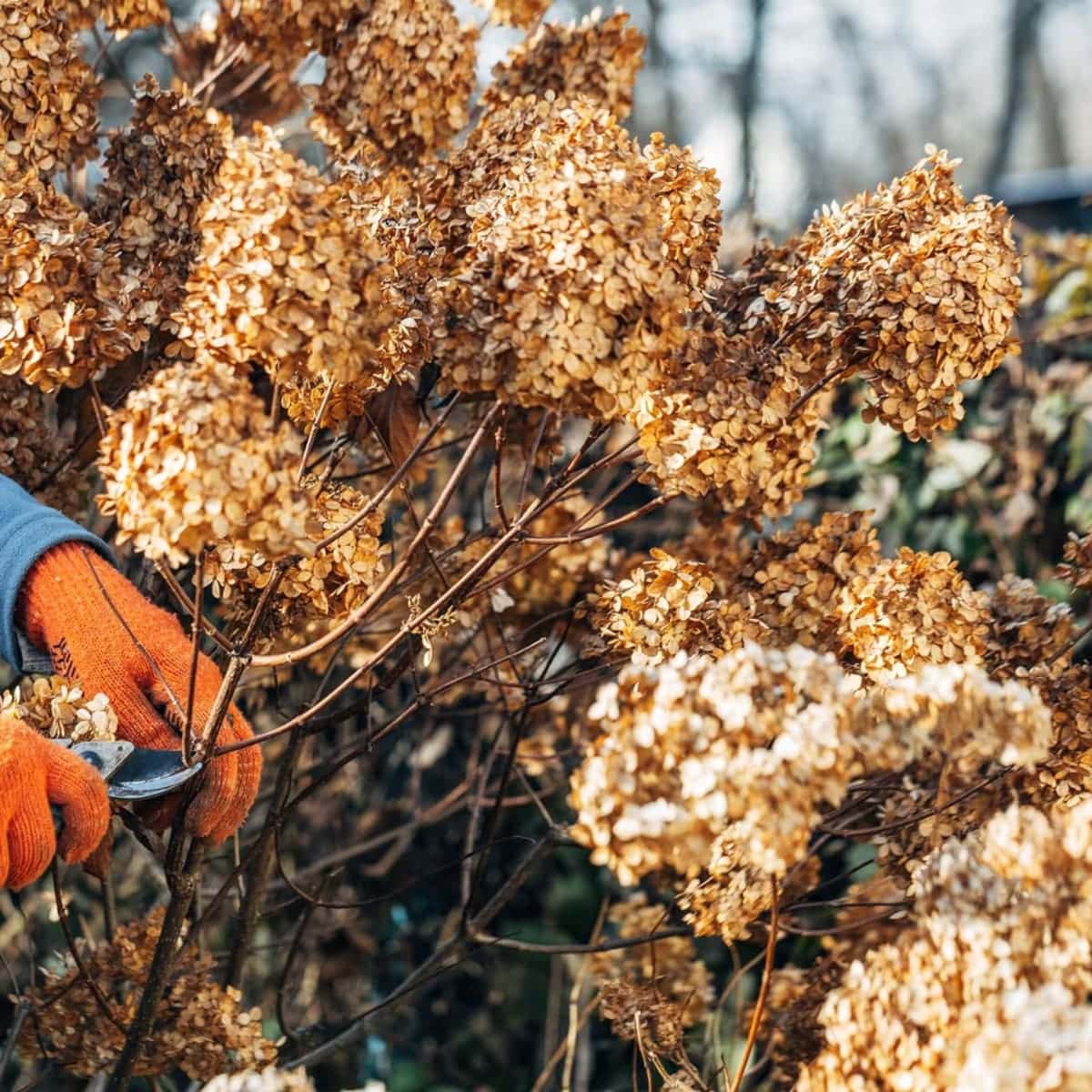
From June through September, hydrangeas burst into their most spectacular display of color before fading as autumn settles in. But pruning them at the wrong time—or in the wrong way—can ruin next year’s flowers. Since hydrangeas bloom on last year’s stems, timing is everything. Here’s how to prune them properly for lush, healthy blooms.
A summer favorite for adding color to gardens, terraces, and balconies, hydrangeas come in a stunning range of shapes and hues. But is autumn pruning really necessary? And if so, when and how should you do it to protect next year’s blossoms?
Why cut hydrangea flowers after they bloom?
Throughout the summer, hydrangea stems become heavy with bright, beautiful flowers. Balcony pots look vibrant, and garden shrubs thrive. When autumn arrives, it’s time for a bit of cleanup. The goal is simple: remove dead wood, damaged branches, and faded blooms.
However, this light pruning should only be done if you live in a mild climate, where exposed branches won’t risk freezing over winter.

Cut above a developing bud. ©Eléonore H, AdobeStock
Why you shouldn’t prune in colder regions
If you live where winters are cold, it’s best to leave those faded flower heads alone. Cutting them off too soon could expose new buds to frost damage. Leaving them in place provides natural protection against the cold while offering shelter to beneficial insects through the winter months.
And there’s another perk: when coated with frost or a dusting of snow, those dried flower heads add a delicate charm to your winter garden.
A quick tip
Before pruning, save a few flowering stems to create a beautiful dried bouquet. Once preserved, it will add a touch of color to your home all year long.
When to prune hydrangeas
Whether or not you’ve done a light cleanup in autumn, the main pruning should happen in late February or early March, before new growth starts. This is when new green buds are easiest to spot. Be careful, though—hydrangeas bloom on old wood, so cutting too aggressively can mean no flowers for a year. Leave them untrimmed, and they’ll grow unruly; trim too hard, and they won’t bloom.
Use sharp, clean pruning shears. Start by removing all the faded blooms, then cut each stem just above a fresh, green bud or a pair of healthy leaves.
While you’re at it, remove any dead or damaged wood at the base, and recycle the trimmings as mulch around your plants. Shape the shrub by thinning out the center for better airflow, which helps prevent diseases and pests. Finally, feed your plants with hydrangea-specific fertilizer and top the soil with a layer of mature compost.

Stéphanie Chaillot
Journalist
My name is Stéphanie Chaillot and I have been a freelance journalist since 2021, writing both for print and digital media in the plant world (rédaction-jardin.fr).
A Passion for Gardening
In parallel, I have been the webmaster of the website jardinier-amateur.fr since 2002. After more than 18 years working in the editorial team at Rustica, I decided to strike out on my own. As you can see, the gardening world truly inspires me.
As a freelance journalist, I collaborate with many players in the specialized press, the web, and the plant sector (DIY stores, garden centers, seed companies, producers, etc.). Writing interviews, producing content for magazines or packaging, creating SEO-optimized articles… these are all part of my daily work.
I also enjoy contributing gardening articles to Futura, meeting the expectations of readers and addressing seasonal topics.
Always on the Lookout
Outside of my professional activities, I am passionate about gardening. I am constantly testing tips, tricks, and new techniques to speak about them more effectively and to develop a 360° expertise on the garden: vegetables, kitchen gardens, fruits, flowers, shrubs, landscaping, houseplants, treatments, techniques, plant diseases, and more.
Walking is also part of my balance, as it helps me recharge and find inspiration.
Comments are closed.