
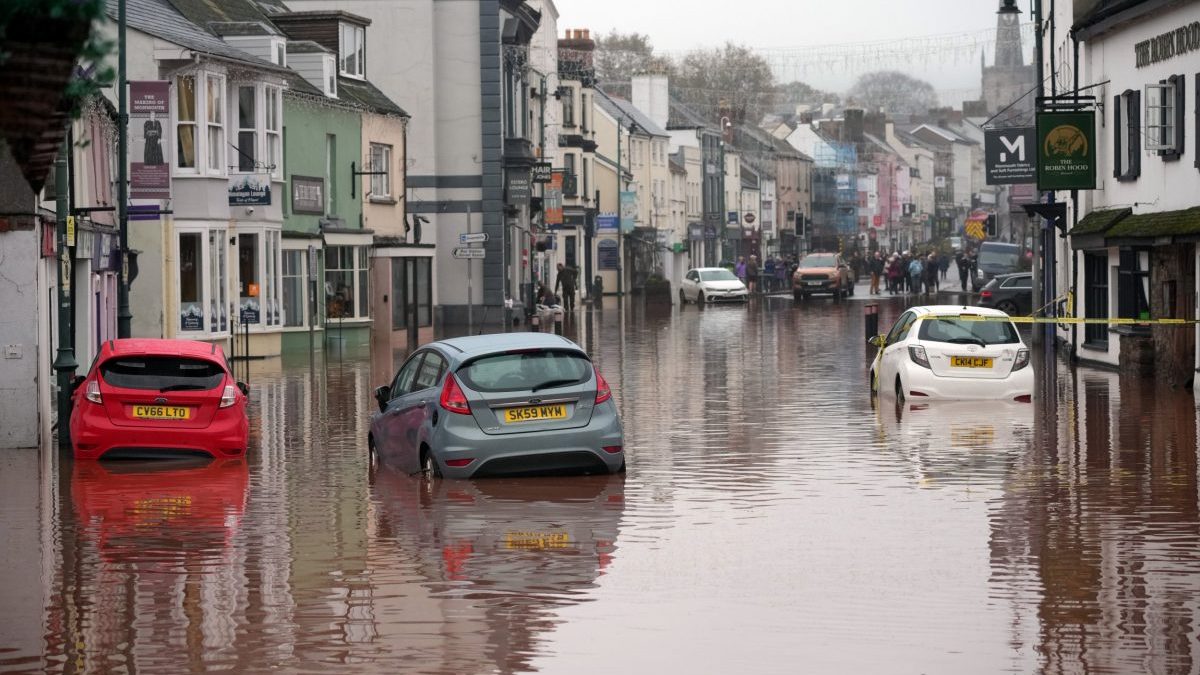
I don’t know about you, but I’m fed up with getting rained on all the time. Wales is bearing the brunt of heavy showers this week, but much of the country is also suffering. Shropshire, Oxfordshire and North Yorkshire have all been drenched in the last week.
This isn’t just a bit of winter drizzle either. At the time of writing, there are nine flood warnings and 86 flood alerts in effect all across the UK. The level of flooding we’ve seen in recent years is not normal, and it’s getting worse: one insurer found in February this year that claims for flood damage by UK residents have gone up 218 per cent in five years, with £31m claimed in total. We’re suffering from a combination of climate change and breakneck development.
Compared with pre-industrial times, rainfall in autumn and winter storms is now 20 per cent heavier because warmer air holds more water. And the heavens have opened just as many of the country’s softer, sponge-like surfaces are being replaced by harder, impermeable ones, thanks to a home building spree and millions of existing households concreting over their gardens.
And so, rather than absorbing some of the rainwater that falls on them, these hard surfaces send it all cascading downhill into other people’s gardens or into rivers, which then overflow and flood local homes.
Clearly much of this development is unavoidable. We have a rapidly growing population and an acute housing shortage. But domestic ground-hardening projects – swapping real lawns for artificial grass, bigger driveways and patios – are a definite choice. In all, a quarter of UK homeowners with outside space have turned all or part of their garden into a driveway and a further 17 per cent are planning to make this change, according to research by Aviva. Meanwhile, one in 10 homeowners with outside space has replaced at least some of their garden’s natural lawn with artificial grass.
But it’s not only existing homeowners who are to blame for the increasing risk of floods. Despite everything, houses continue to be built in areas of high flood risk.
In England alone, 6.3 million homes are in areas at risk from flooding, around one in five homes. That is forecast to rise to one in four homes by 2050, according to the Environment Agency, as new homes continue to be built in flood zones.
So what can be done? For starters, if you’re thinking about paving over your garden for a new drive or patio, think again. If it’s too late, you might consider pulling your patio up and replacing it with grass, a flowerbed or a vegetable patch.
Don’t fancy that? Understandable. A much cheaper and more manageable approach is to buy a water butt (or two, or even three depending on the size of your garden and house) and put them at the foot of your drainpipes. Water captured in butts means that much less is waterlogging the garden or running off elsewhere.
These cost as little as £30 and more than pay for themselves in lower water bills. Captured rain can be used to water the garden and wash patios, garden furniture and tools (not the car though: it can contain traces of dust and other road pollutants). While savings will vary hugely from one home to the next, one water butt manufacturer estimates a water butt will cut the average household water bill by between £20 and £50 a year.
And they may also reduce the chances of you running short of water in the event of a hosepipe ban, as the country increasingly see-saws its way through floods and droughts.
There are other measures you can take. Replacing hard paving with permeable paving, which lets rainwater through to be absorbed into the ground, can reduce local flooding. Putting in a pond or growing plants on the roof of your shed reduces runoff too. Planting natural lawns, trees and thirsty shrubs – plants like dogwoods, which love wet soils – will all help by encouraging surface water to drain away naturally.
The Government is encouraging builders to include these kinds of elements – known as sustainable drainage systems (SuDS) – on all new developments. But while it published new SuDS standards in June, the government stopped short of what the experts had been hoping for by failing to force developers to include them in new projects.
“There is a big problem with this approach,” Chartered Institute of Water and Environmental Management expert Alastair Chisholm told me. “SuDS need to be mandatory, not advisory. This indicates the government simply isn’t committed enough to using them to mitigate flash flooding which it readily could do.”
Ultimately, it cannot be left to householders to stave off flooding by stuffing their gardens with rhododendrons. The Government also needs to make a massive investment in traditional flood defences. There are more than 6,500km of raised flood defences in the UK including walls and embankments.
But many of these were built in the late 1940s, and although many have been renewed since then, they just weren’t built with today’s conditions in mind.
Many have fallen into disrepair. Now, 250,000 homes are at increased risk of flooding due to flood defences being below required condition, according to the National Engineering Policy Centre (NEPC). In a report published last week it lamented that more and more flood defences are at risk of failing, and that “the rate of deterioration has increased due to more frequent and severe weather extremes”.
As a result, almost one in 10 of the 98,000 flood defences inspected by the Environment Agency were deemed inadequate due to erosion – including 6,498 “high consequence” defences.
The government, as ever, points to 14 years of underinvestment by the Tories for our poor flood defences. It absolutely has a point. And in June, Labour announced £7.9bn of flood defence investment over 10 years. It’s not nothing. But the scale of the problem is so great that it simply isn’t enough.
Spending on flood infrastructure is a good use of money. As the NEPC report says, every £1 spent on maintenance saves £11 in the longer run because it reduces the risk of repairing costly flood damage and it prolongs the life of the defences.
So while the Government does appear to be taking flooding seriously, it needs to spend more on defences and make SuDS on new developments a legal requirement.
That’s the best way to make sure that when they hear the first drops of rain on the roof, Britons can sleep easily in their beds.
Comments are closed.