
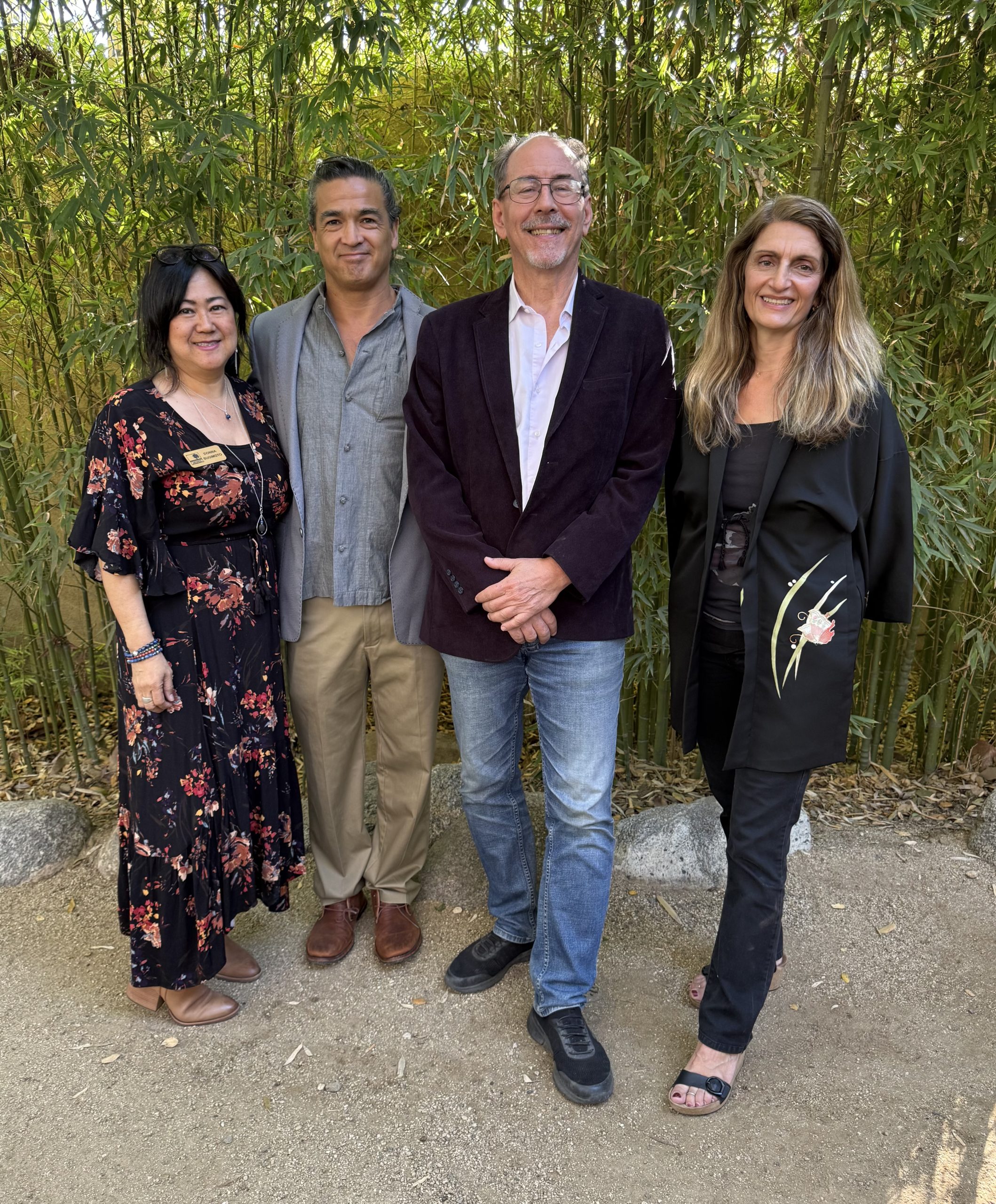
Storrier Stearns Japanese Garden hosted an educational and cultural event on Sunday, December 14, organized by the Tuna Canyon Detention Station (TCDSC) and featuring an exhibition with information about the detention center.
Donna Sugimoto, the Board Secretary of TCDSC and a descendant of the detainees at the detention center, spoke about its history. She read the Presidential Proclamations issued by President Franklin D. Roosevelt to detain Japanese Americans, Italians, and Germans.
President Franklin D. Roosevelt issued Executive Order 9066 on February 19, 1942, which authorized the forced removal and detention (internment) of people of Japanese ancestry, including U.S. citizens, from the West Coast during World War II, based on fear and racial prejudice following the attack on Pearl Harbor. While the order didn’t explicitly name Japanese people, it allowed military commanders to create exclusion zones from which Japanese Americans were forcibly relocated to “relocation centers.”
“Tuna Canyon was different,” noted Sugimoto. “Instead of detaining masses, it held a small population, mostly men separated from their families. For many years, I enjoyed the golf course area at La Tuna Canyon. Decades later, going through grandpa’s boxes with my siblings, we discovered several letters with the letterhead Tuna Canyon Detention Center.”
She discovered with shock that her grandfather was detained there.
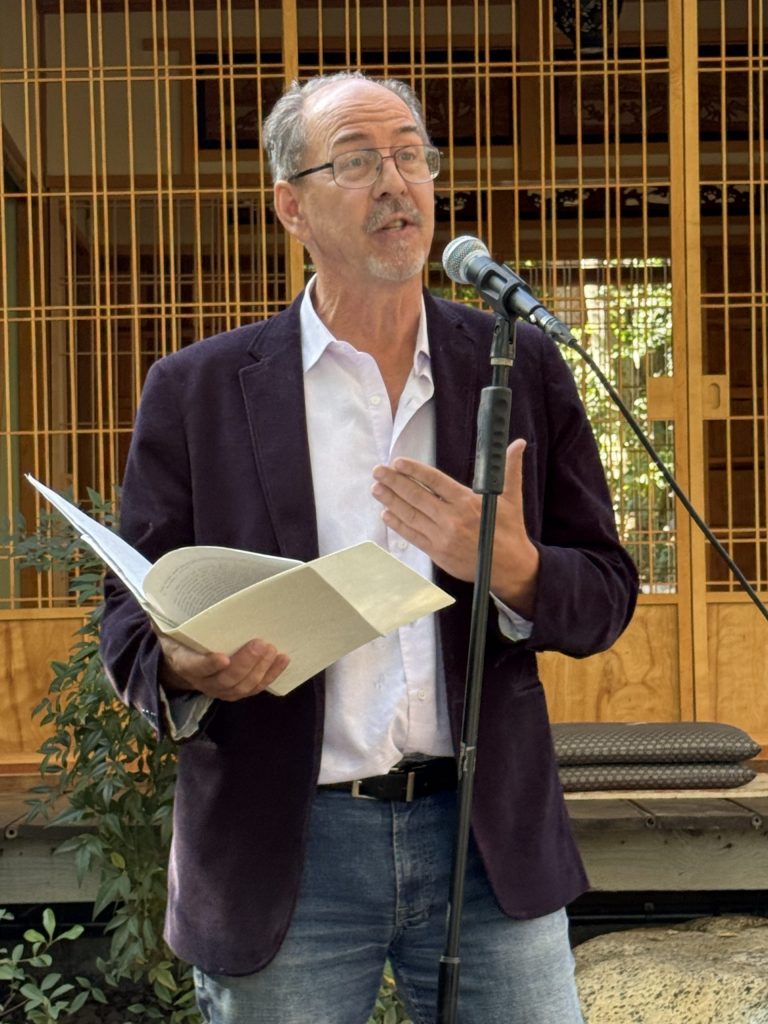 Dr. Kendall Brown delivered remarks at the historic commemoration. Photo: Karine Armen
Dr. Kendall H. Brown, a Japanese garden historian, discussed the legacy of Storrier Stearns Japanese Garden’s landscape architect, Kinzuchi Fujii, who was detained at Tuna Canyon during World War II. Brown provided an in-depth background on Fujii.
“Fujii’s ambition was to leave a real and uncompromising garden in the United States,” stated Brown. “His father had worked in a garden in Yamaguchi.”
Mistress of the ceremonies, art historian Meher McArthur, is the Creative Director of the Storrier Stearns Japanese Garden and an author. Recently, she published her memoir, “A Japanese Art Journey, A Curator’s Memoir of Polka Dot Pumpkins, Paper Dolls and Woodblock Prints,” which was featured in Local News Pasadena. McArthur welcomed everybody with positive energy.
Also on the program was Josh Parr, who is of Japanese mixed heritage, who read a brief biography of Kinzuchi Fujii, who designed the garden for Charles and Ellamae Storrier Stearns in Pasadena. The construction of the garden took place from 1935 to 1940.
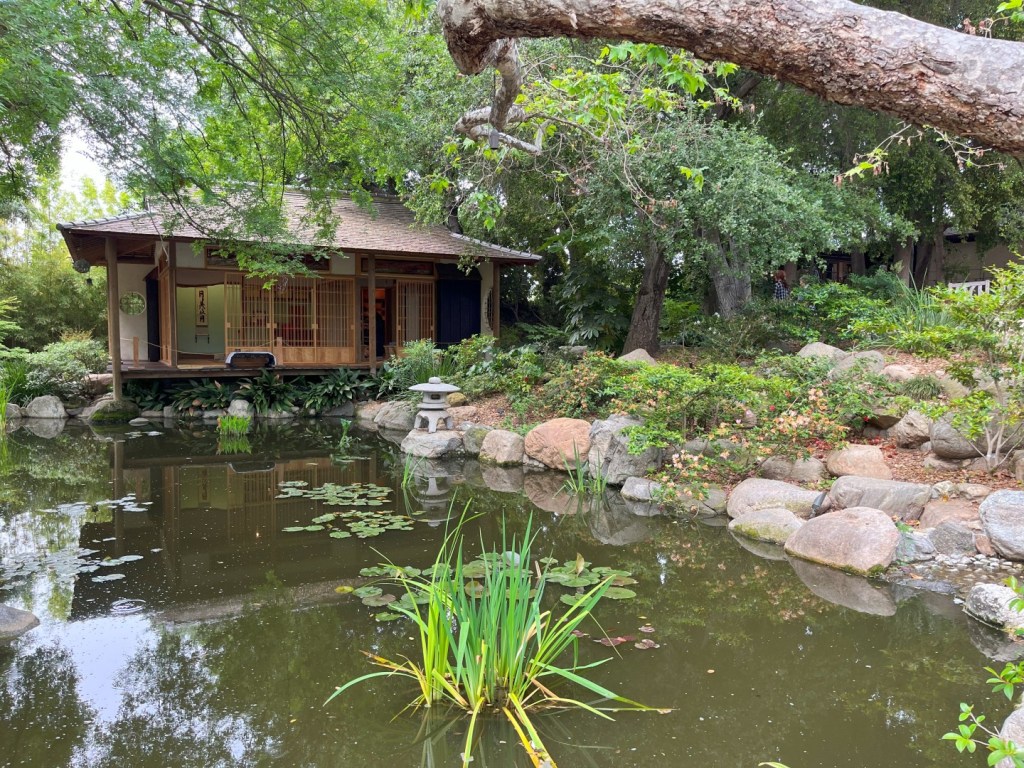 The Storrier Stearns Japanese Garden is open. Photo: Pasadena Convention Bureau.
Parr said, “Fujii moved to the U.S. in 1903. He settled in Santa Barbara. At the end of World War II, in 1945, Fujii and his wife were able to move back to Santa Barbara. Kinzuchi Fujii passed away in 1957. His masterpiece garden, Storrier Stearns Japanese Garden, was added to the National Registry of Historic Places in 2025.”
The event continued with a solo performance on a Japanese bamboo flute by Rachel Rudich. Later, there was a reception in the garden’s calming setting.
DEETS
Storrier Stearns Japanese Garden, 270 Arlington Drive.Pasadena, CA 91105
Phone: 626.399.1721
Hours:
Select Friday and Saturday: 4:00 pm to 8:00 pm.
Sundays: 10:00 am to 4:00 pm.
General Admission on Friday and Saturday: $15; Sunday: $12.
Children 12 and under are free.
LOCAL NEWS PASADENA IS FREEBut our work depends on volunteers and on your donations.
If Local News Pasadena has helped or informed you, please donate through our 501c(3) nonprofit, Pasadena Media Foundation. Your contribution in any amount helps us save and support local news. Thank you!
Like this:
Like Loading…
Comments are closed.