
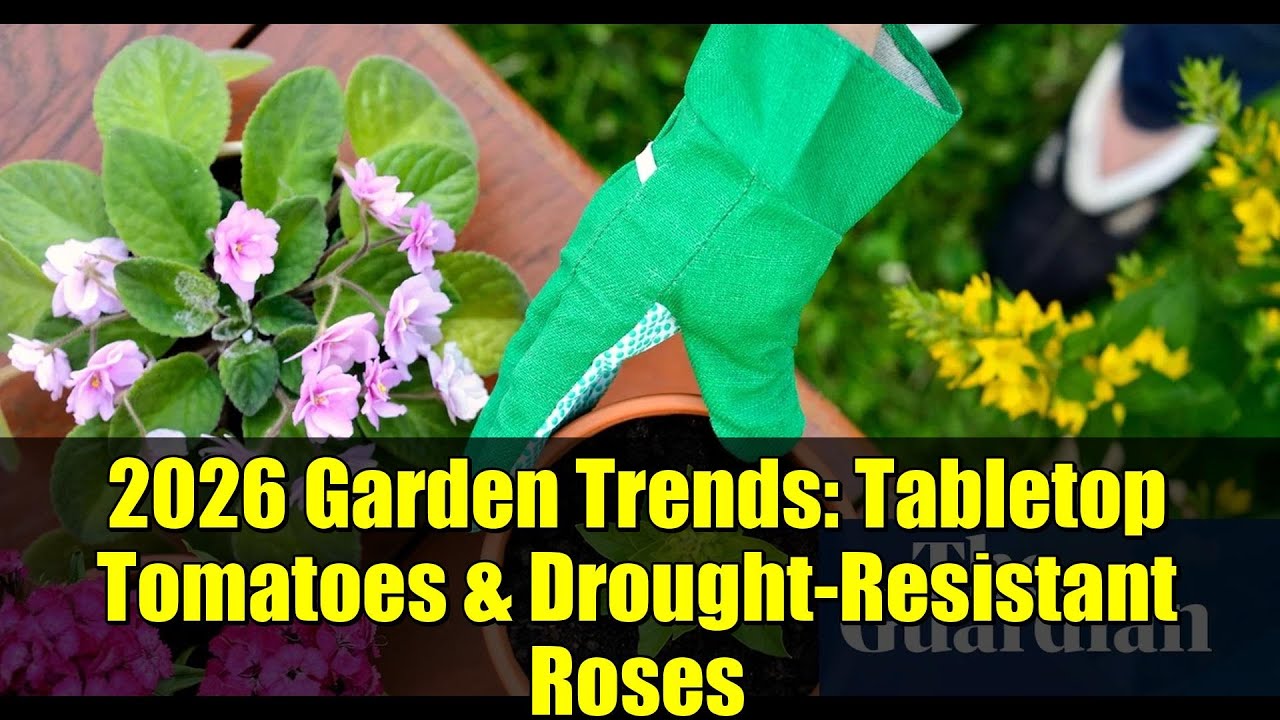
Garden trends 2026 tabletop tomatoes drought-resistant roses RHS predictions UK gardening.
Discover the hottest garden trends for 2026 according to the Royal Horticultural Society. Swap cut flowers for tabletop vegetable plants like mini aubergines, chillies, peppers, and tomatoes in your home decor. These dwarf varieties are easy to grow and provide fresh produce.
Learn about drought-tolerant roses bred with central Asian varieties for resilience against dry summers. Explore in-and-out plants, the year of the tomato, and innovative water butt techniques to save water.
In this video, we’ll cover:
– Compact veg plants for indoor and outdoor use
– Rose breeding for arid conditions
– Climate-adapted gardening hacks
– RHS insights on sustainable gardening
Optimize your garden for 2026 with these expert tips from the RHS.
Get ready to rethink your garden in 2026. Say goodbye to traditional flower arrangements and hello to edible centerpieces. The Royal Horicultural Society, RHS, predicts a major shift towards tabletop vegetable plants as the hottest trend for next year. But here's where it gets interesting. We're not just talking about any veggies. Think miniature oberines, chilies, peppers, and tomatoes. All bred to be as beautiful as they are delicious. And this is the part most people miss. These dwarf varieties are designed to thrive in small spaces. From sunny window sills to cold frames, making them perfect for urban gardeners or those with limited outdoor areas. Could this be the year we finally blur the line between kitchen and garden? Controversial thought. Are we sacrificing aesthetics for functionality? Or have we found the perfect marriage of form and function? Let's discuss in the comments. This trend isn't just about looks. It's a response to a growing need for sustainability and self-sufficiency. After one of the driest springs and summers on record, gardeners are seeking droughtresistant options. Enter the new wave of roses crossbreed with Central Asian varieties like Rosa Persica, which thrive in aid conditions. These resilient blooms aren't just surviving, they're flourishing even in extreme weather. But here's the kicker. As climate change continues to reshape our gardens, are we doing enough to adapt or are we simply chasing trends? Share your thoughts below. The RHS's predictions are rooted in a mix of public engagement, retail trends, scientific research, and innovative plant breeding. Guy Barter, the RHS's chief horiculturalist, explains that these compact vegetable cultivars are not only easy to grow, but also visually appealing, offering weeks of satisfaction. From seeds to plug plants, and potted varieties, there's an option for every gardener. New favorites include tabletop chilies, hanging basket cucumbers, and potted herbs, which have seen a 10% sales increase in the past year. Another game changer, the rise of in-n-out plants. Traditionally, indoor varieties like spider plants and lantana are now making their way outdoors thanks to hotter, drier summers. This trend isn't just about aesthetics. It's a practical solution to climate challenges. But here's a thought. As we bring indoor plants outside, are we risking their long-term health or is this a sustainable adaptation? Let us know what you think. And let's not forget the tomato craze of 2025, which saw a 14% sales increase as gardeners capitalized on the hot, dry summer. The RHS expects this trend to continue with tomatoes remaining a garden staple. Meanwhile, innovative water saving solutions are gaining traction from DIY water butts with slowrelease holes to high-tech AI enabled systems that self-mp based on weather forecasts. But here's the real question. As we embrace these trends, are we truly addressing the root causes of climate change or are we just finding creative ways to cope? Share your opinions in the comments. We want to hear from
Comments are closed.