
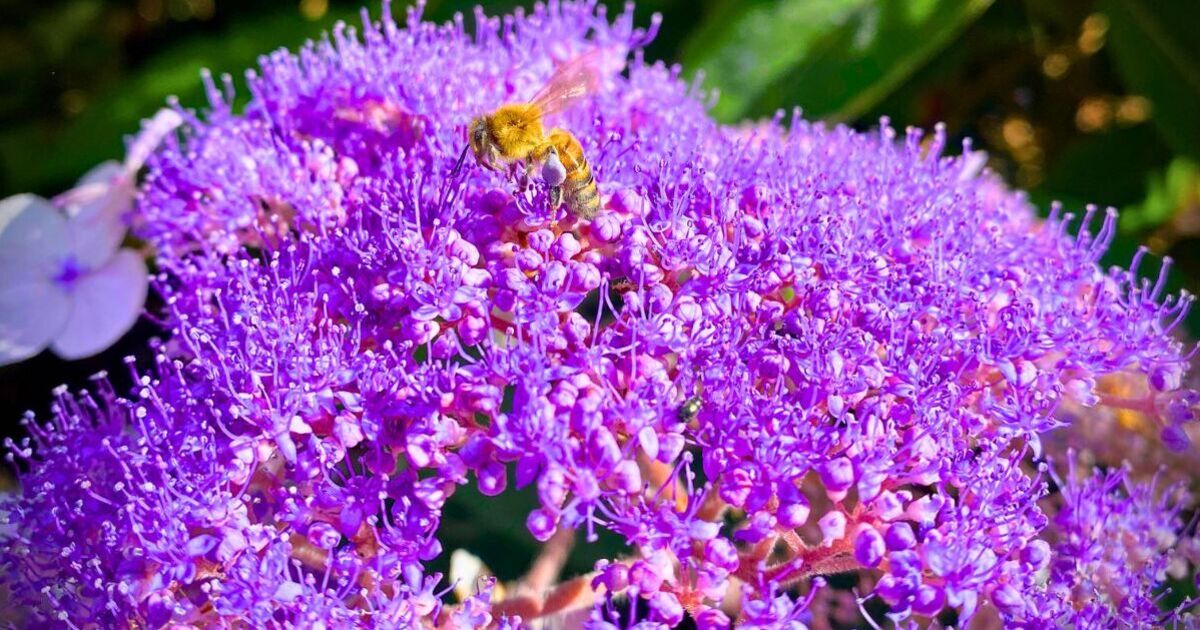
It can be startling to see hydrangeas go from beautiful colourful flowers to bare brown stems in winter, but they will often recover if they are cared for properly at this time of year. Hydrangeas are quite hardy plants, but many gardeners do not realise that their roots are sensitive and can be easily damaged by frost.
British winter weather can fluctuate wildly in winter, causing roots to repeatedly freeze and thaw, while excess moisture can also lead to root rot. In most cases, hydrangeas return to a healthy state in spring, but damaged roots can result in fewer flowers and blooms that are duller in colour. However, if hydrangea roots are exposed to too much frost, it is unlikely that the plant will flower the following year, leaving a bare area in the garden.
Kelly Elko, a gardening expert, has shared that keeping hydrangea safe from the cold is incredibly easy, as you just need to take 10 minutes to mulch them.
She said: “Lay down a thick layer of mulch or straw over the root area at the base of the plants to help protect them from the long, cold winter.”
Mulching is simply covering the top layer of soil around a plant with material, and in winter, this is done to insulate the roots to stop them from freezing.
Hydrangeas have shallow roots, so adding a layer around them will help keep them dry throughout the rest of winter, and once spring arrives, the nutrients from the mulch can feed the flowers.
Straw is a good winter mulch for hydrangeas, but you can also use bark chips, dried-out leaves or compost as they will naturally break down over time.
Mulching is very easy, but it is best done once the ground has frozen, otherwise mulch can warm up the hydrangeas and encourage them to grow rather than go dormant. Any new growth will quickly die when exposed to the cold weather and it can greatly damage, or even kill, the plant.
Once the temperature is consistently below 5C, you are fine to mulch. Begin by cleaning up the area around hydrangeas by removing any weeds or debris.
You can buy organic material from local gardening centres. When you have your mulch, spread it in a thick layer evenly around the hydrangea.
Keep the mulch a few centimetres away from the stems and base of the plant, otherwise it can be too suffocating for the plant.
Taking the time to mulch now will keep hydrangeas protected throughout the rest of winter so you can expect bigger and healthier flowers next year.
Comments are closed.