
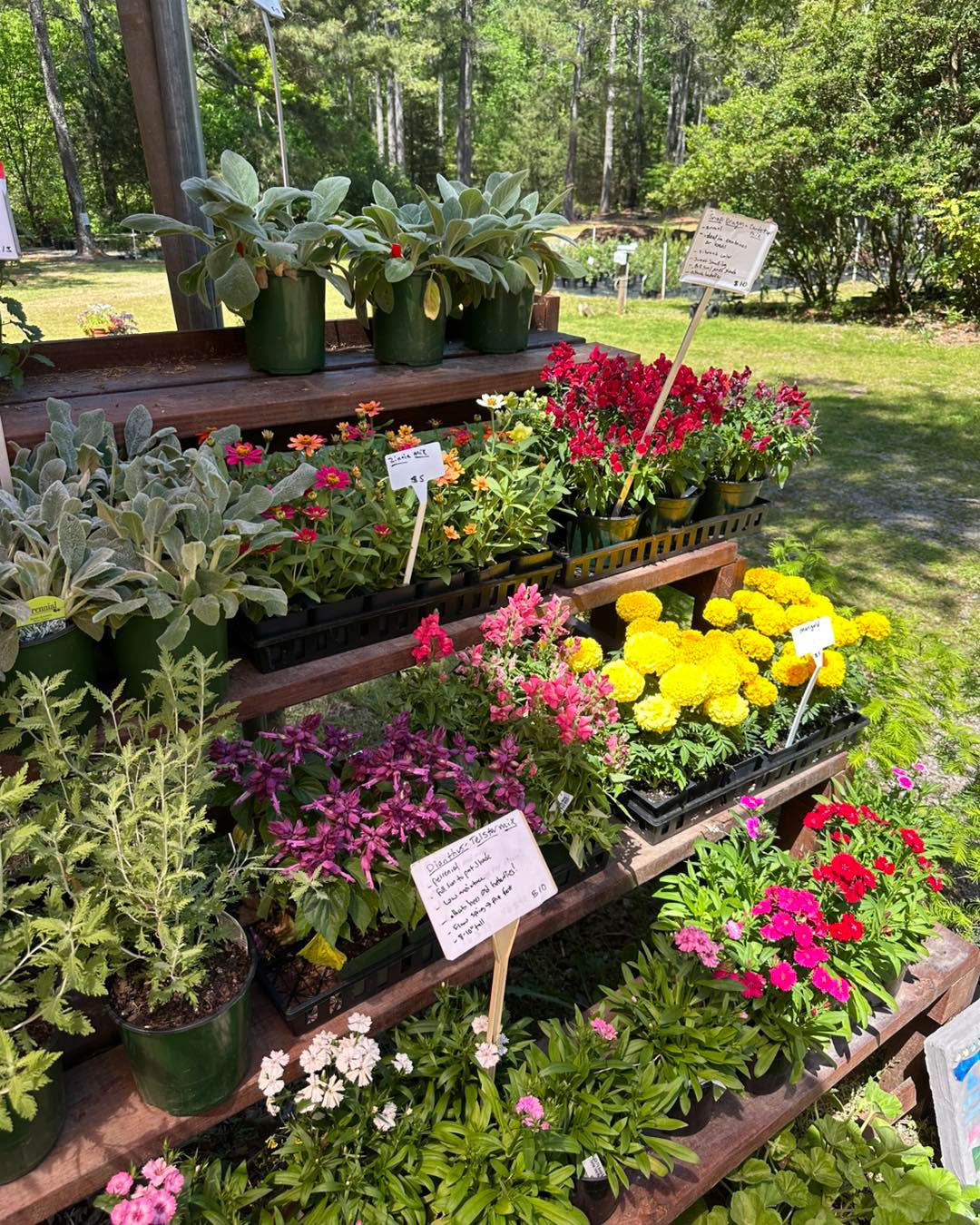
It can be hard to shop for the plant-centered people in your life during the holidays. Favorite specimens may not be available in the winter, most won’t stay alive for weeks under the Christmas tree, and plants are notoriously hard to swaddle in gift wrap. Here’s a few suggestions for the gardener in your life, and a few items to avoid wasting your cash on.
Gift card to a nursery ($20–$100): Gift cards can be seen as impersonal presents, but having a larger-than-expected budget to buy beautiful things feels great. This gift will take some detective work on your part, because not all nurseries are a good fit for what each gardener wants. Feel free to pose the question as a New Year’s Resolution: “Well, do you have any plans for your 2026 garden?” Athens nurseries sport a good selection of popular landscape plants, so don’t overlook the local option. That said, the closest nurseries might not have the specific species your giftee is drooling over. In general, try to pick nurseries geographically closer to your backyard. This will lessen the shock a plant endures in acclimating to its new environment.
Plant flashcards ($12–$35): I bought a stack of tree flashcards this year to practice my identification skills, and I’ve loved it. If your person says things like, “Gosh, I wish I knew what this plant was,” then flashcards could be the way to go. I’ve seen flashcard decks built around wildflowers, medicinal herbs, mushrooms and house plants. If your particular plant person is more interested in learning the nomenclature and common identifying traits of botanical families, you might be more interested in Botany in a Day by Thomas J. Elpel ($25). The book (unfortunately) does not teach botany in a day, but does explain in common, easy-to-understand terms how to identify plants. I often use it to puzzle out the family name of a particular plant before checking the Lady Bird Johnson Wildflower Center to discover the specific variety. Yes, yes, I know Google Lens can tell you in two seconds what a plant is, but I want to learn—not recite an internet query’s answer. If you’ve got an amateur botanist, help them on their way with these gifts.
Pass on the white workwear gloves ($60): The New York Times’ Wirecutter suggests buying a $60 pair of white goatskin gloves for the gardener in your life. Are they using AI? Someone or something hallucinated while making this pick. Gloves for a gardener is a safe bet. Purchase sturdy, cheap gloves that can handle getting wet. I like the thinner, nitrile gloves in the summer and a thicker leather or insulated pair for winter chores. Even Wirecutter’s own guide suggests another set of options for the “more practical type.” Gardeners are (overall) the practical type, so opt for anything more practical than gloves that will literally show every speck of dirt and cannot be submerged in water.
Gardening stool and/or knee pad ($20–$70): This could be as simple as cutting a wooden stool down to size and sewing a water-resistant cover for a polyurethane foam pillow. You could also spend some cash on some longer-lasting non-DIY options. Avoid any product where it seems like holding a straight back is impossible. I’ve seen a few stools where the tag ergonomic seems more aspirational than a practical descriptor. I’m also highly skeptical of the wearable gardening stool you’re supposed to strap to your butt for “convenience.” However, it is goofy, and for $23 might be just the choice for the class-clown plant-lover who won’t mind waddling around the garden with a toadstool strapped to their derriere.
Copper plant tags ($20–$50): This is a great gift for a gardener. They’re aesthetically pleasing, and you, the gift giver, don’t have to know much more about the gift receiver than they love their garden and try to make it beautiful. Most growers begin the spring season staying on top of plant tags, but by summer most are toast. Little plastic tags tend to blow away or become obscured as the plant grows larger. Homemade versions can fade because they’re not UV resistant. Copper plant tags stay in place and refuse to fade. They’re also beautiful and give the garden an overall cohesive feeling.
Like what you just read? Support Flagpole by making a donation today. Every dollar you give helps fund our ongoing mission to provide Athens with quality, independent journalism.
Comments are closed.