
Photo: Judie Steeves
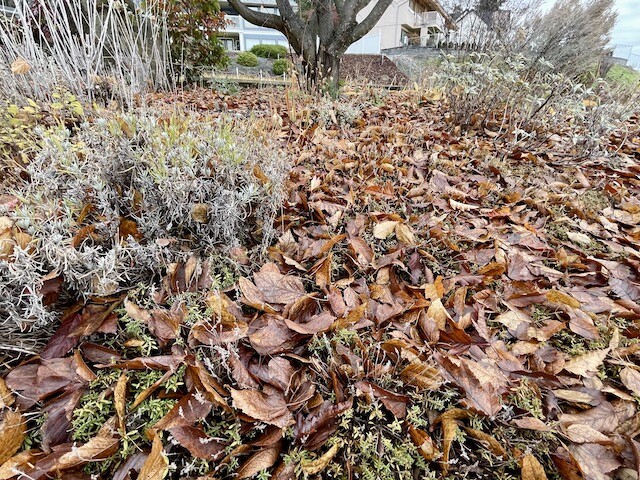
Leaving the leaves to protect perennials through winter is a very ecologically-sensible way to go, but care must be taken to make sure they are all healthy leaves.
As autumn arrives and trees put on their annual colourful display, many environmentally-conscious homeowners have embraced the practice of leaving fallen leaves in place, while others still shudder at the perceived mess.
The benefits are well-documented as leaves provide valuable habitat for beneficial insects, enrich soil as they decompose, and reduce the volume of waste going to landfills.
However, there are dangers in leaving all leaves to overwinter in place. Instead, there are instances when this eco-friendly practice should be abandoned in favour of thorough leaf removal.
Understanding when to rake isn’t just about aesthetics but about protecting the health of your landscape. On the other hand, the most compelling reason to remove fallen leaves is the presence of foliar diseases.
Many common tree and plant diseases overwinter in fallen foliage, waiting to reinfect plants when spring arrives. Apple scab,(Venturia inaequalis), one of the most troublesome diseases affecting apple and crabapple trees, occurs in the Okanagan in years with higher than normal rainfall.
Spores, known as ascospores, survive winter in infected leaves on the ground. Come spring, these spores are released during wet weather and carried by wind to newly-emerging leaves, perpetuating the cycle.
If your apple or crabapple trees showed signs of dark, scabby lesions on leaves and fruit during the growing season, removing and destroying those fallen leaves is essential for disease management. Black spot,(Diplocarpon rosae) the bane of rose gardeners everywhere, follows a similar pattern.
This fungal disease causes distinctive black spots surrounded by yellowing tissue on rose leaves. The pathogen overwinters in fallen leaves and infected canes, ready to splash onto new foliage with spring rains.
Gardeners who’ve battled black spot fungus should never leave infected rose leaves on the ground but instead, these leaves should be bagged and discarded.
I have a client with a large rose garden who requests that I manually remove all leaves from her rose plants in order to prevent disease.
Anthracnose diseases affect numerous trees and shrubs, including London plane trees, dogwoods, maples, and oaks. The damage can be easily seen each year in the boulevard plantings of London plane trees around Kelowna. These fungal pathogens cause irregular dead patches on leaves and can lead to severe defoliation and twig dieback.
Infected leaves and twigs harbour the fungus through winter, and leaving them in place ensures reinfection the following season. If your trees displayed the characteristic brown, dead patches along leaf veins, removal of fallen foliage should be a priority.
Beyond disease concerns, there are practical situations when leaf removal is simply necessary. Leaves left on hard-scaped areas can present a slipping or tripping hazard and they can leave stains on concrete. Thick layers of leaves left on lawns will smother grass, creating dead patches that require reseeding come spring.
While a light covering can be mulched with a mower and left to decompose, heavy accumulations must be removed or relocated to garden beds where they won’t suffocate desirable plants.
Leaves that collect in gutters, storm drains, and against foundation walls should always be removed. Clogged gutters can lead to water damage, ice dams, and costly repairs. Leaves packed against foundations stay wet and can contribute to moisture problems and provide hiding places for pests seeking winter shelter.
When removal is necessary, proper disposal matters. Infected leaves should never be composted in home systems, as typical home compost piles don’t reach temperatures high enough to kill all pathogens. Instead, bag them for municipal collection, bury them deeply away from susceptible plants, or burn them where local regulations permit.
The key to making informed decisions about fall leaf management is observation.
Take note of any disease problems during the growing season. Photograph symptoms if you’re unsure about identification, and consult with your local master gardener chapter or certified arborists when needed.
For trees and gardens that remain healthy throughout the year, leaving leaves in place offers many environmental benefits. However, when disease is present, removal becomes an important cultural control practice. Fall leaf management doesn’t have to be an all-or-nothing approach. You can remove diseased leaves from problem areas while leaving healthy foliage in place elsewhere in your landscape.
This balanced approach protects plant health while still supporting beneficial wildlife and soil organisms. By understanding when leaves should go and when they can stay, you’ll make better decisions for both your garden’s health and the environment.
Enjoy the blog posts on our website at okanaganxeriscape.org to learn more about gardening successfully in the Okanagan.
The Okanagan Xeriscape Association is grateful for the ongoing financial support of the Okanagan Basin Water Board and is proud to be collaborating on the Make Water Work campaign. Check out the Make Water Work plant list at makewaterwork.ca.
This article is written by or on behalf of an outsourced columnist and does not necessarily reflect the views of Castanet.
Comments are closed.