
By Shireen Jamooji
Updated:Dec 16, 2025
 Share
Share
Discover how Asha Girish Shenoy transformed her Dubai backyard into a thriving 324-square-foot kitchen garden, yielding 350kg of produce annually despite extreme desert conditions. Learn her expert tips for urban gardening, sustainable living practices, and food preservation techniques. Her inspiring story proves anyone can grow fresh, organic vegetables at home, even in the world’s harshest climates.

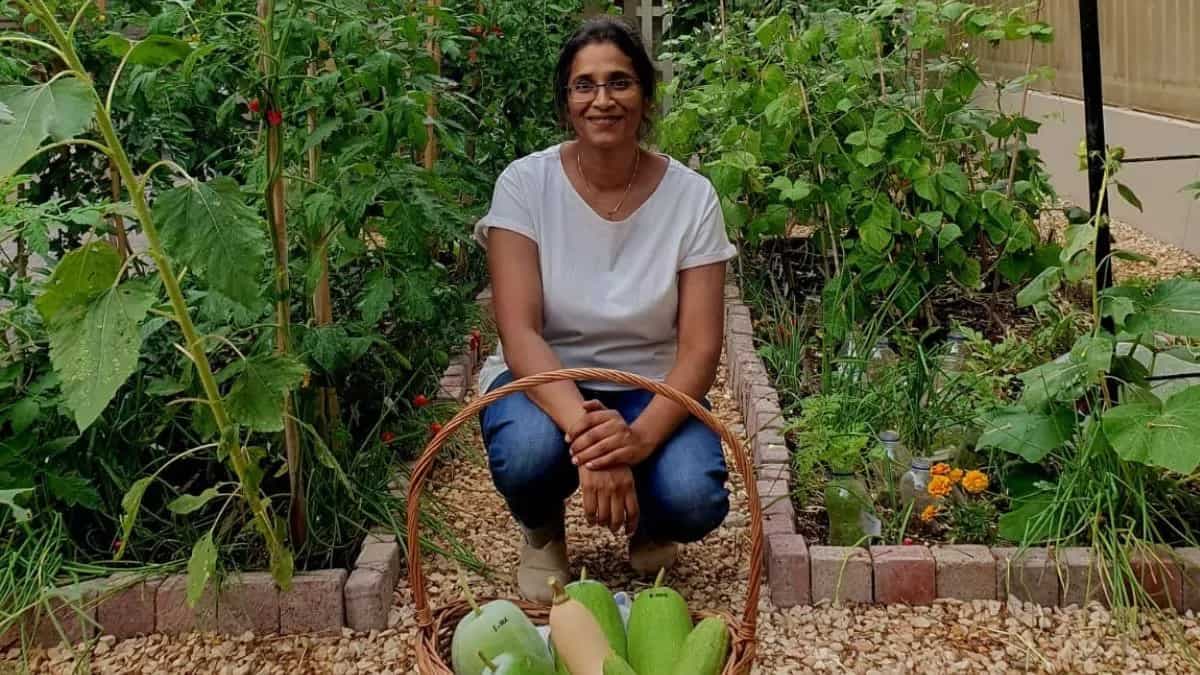
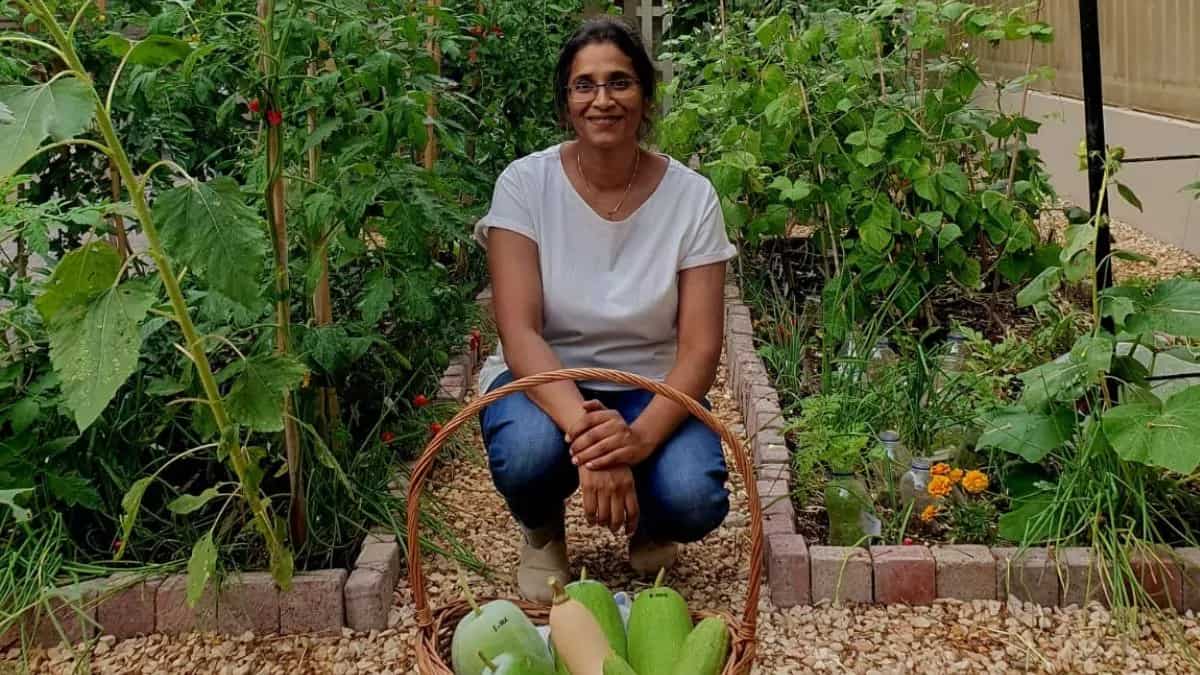
Image Credit: Asha Girish Shenoy in her Dubai garden
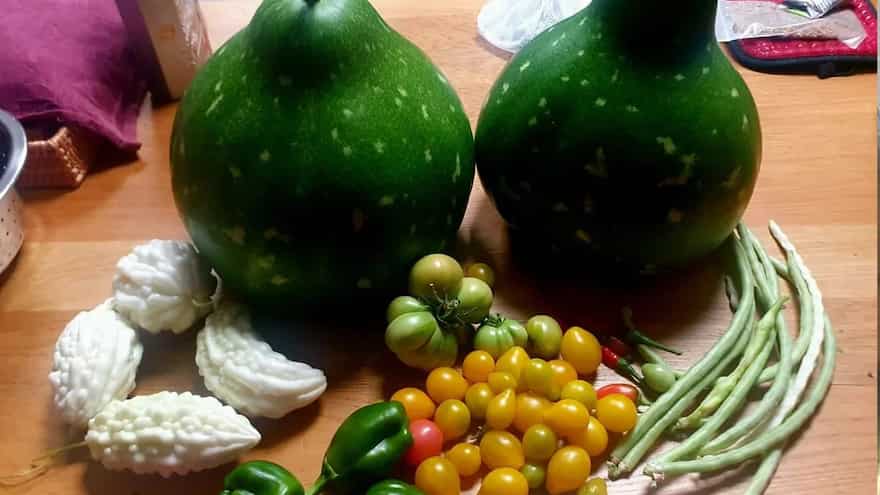 Abundance and diversity in the desert.
The Unexpected Organic Journey
Asha’s path to becoming an urban gardener wasn’t one that had been meticulously planned or prepped for her whole life. She hadn’t left her corporate career with visions of rows of tomatoes and climbing beans, but life, as it so often does, had other ideas. “I had not left the job for kitchen gardening. I had decided to take a break and then soon after my husband, Girish, had a two-year posting in Constanta, Romania in 2008,” she recalls. It was in Romania, of all places, that the seed was planted (quite literally). The couple found themselves housed in a bungalow with a yard, and Asha quickly noticed something peculiar about the local relationship with vegetables.
That first small-scale experiment proved to be a revelation. Though she wouldn’t return to serious gardening for another thirteen years, the experience had quietly lodged itself in her heart, waiting for the right moment to bloom.
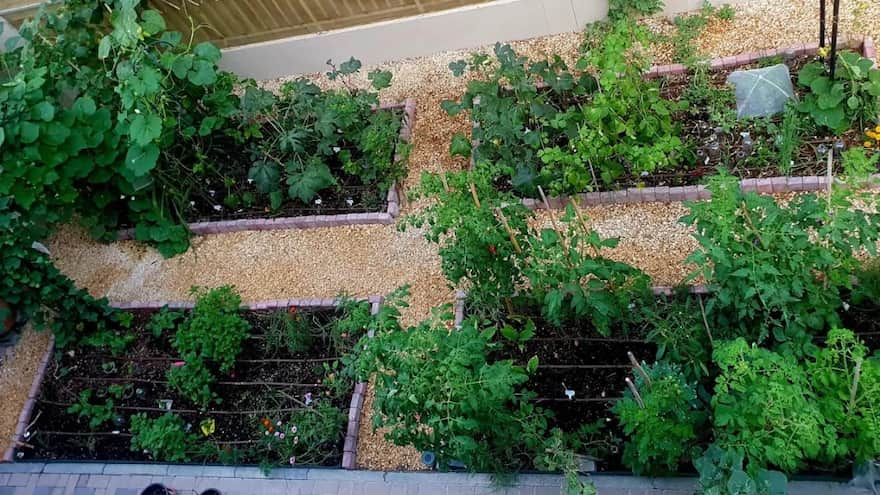 The garden – unassuming from above, but rife with opportunity
 Diversity of produce, even by category is the key
A Garden Of Abundance
Though its 324 square foot space may seem modest, its 250 kg yield in 2023 and 350 kg in 2024 say otherwise. Walk through Asha’s garden today and you’ll find an impressive diversity: cucumbers and butternut pumpkin, green and red okra, onion chives and garlic chives, methi (fenugreek) and coriander, noodle beans and amaranth leaves, sponge gourd and snake gourd and ash gourd, hyacinth beans and tindli, basil and tomatoes, even turmeric that she dries and powders herself. There are pickled chillies and, when fortune smiles, the occasional sweet melon.
The list reads like a love letter to biodiversity, and Asha attempts to grow about thirty different types of vegetables each season, often experimenting with multiple varieties of the same vegetable to see what thrives and what tastes best.
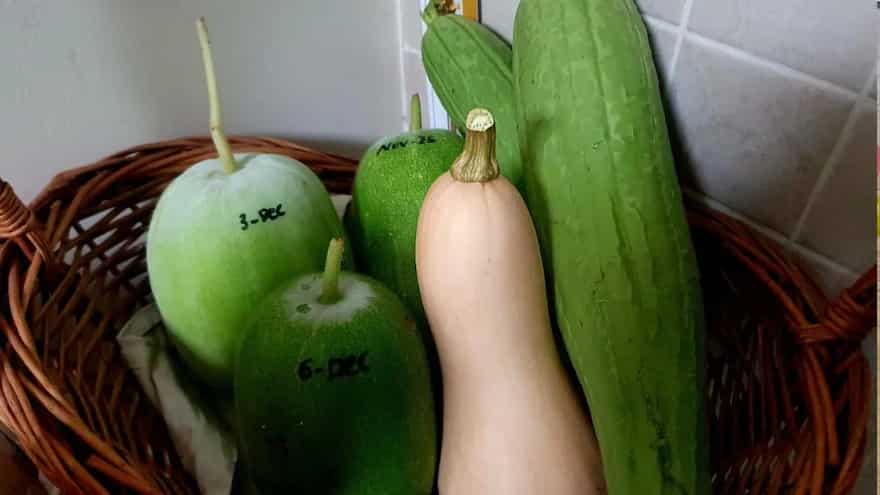 Asha discovered gourds can survive outside for months at a time (and labels them to keep track)
Bittergourd gets sun-dried with salt and chilli powder or frozen for later. And some vegetables, like butternut pumpkin and ash gourd, possess an almost magical quality, they can sit on her kitchen counter for nearly nine months without degrading, natural time capsules of summer’s abundance.
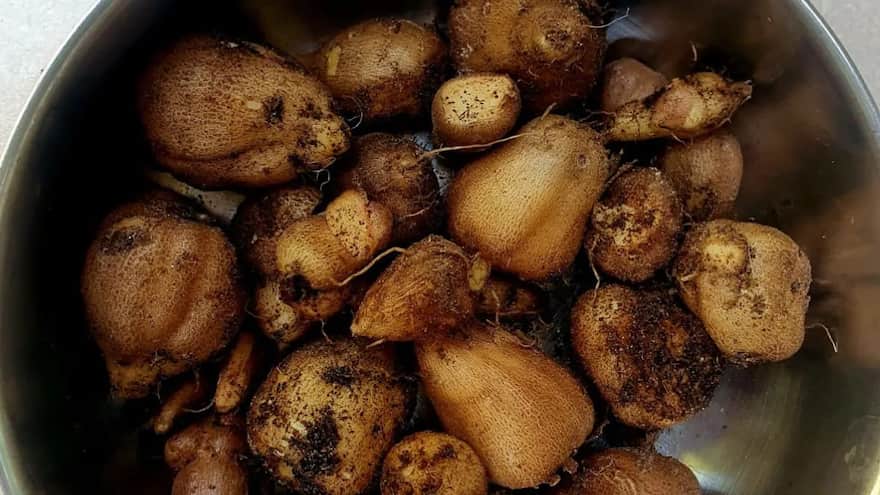 Going chemical free was a challenge, but gives Asha peace of mind that her produce is pure
 Simple staples take on new life in Asha’s garden
She’s watched tomatoes stay fresh on the kitchen counter for forty-five to sixty days, witnessed vegetables maintain their vitality for months. These are things she wouldn’t have believed without experiencing them herself. It’s made her reconsider everything she thought she knew about food and freshness.
But perhaps the most profound lesson has been simpler and more universal. “What goes in, comes out is not just applicable to humans, but for plants as well. Nutritious food translates to improved health and immunity,” she says.
And then there’s the character-building aspect of it all. Gardening without pesticides has been, in her words, ‘an exercise in humility and adaption’. Some seasons are generous, others less so. Some plants thrive whilst others mysteriously fail. The garden keeps you honest, keeps you learning, keeps you humble.
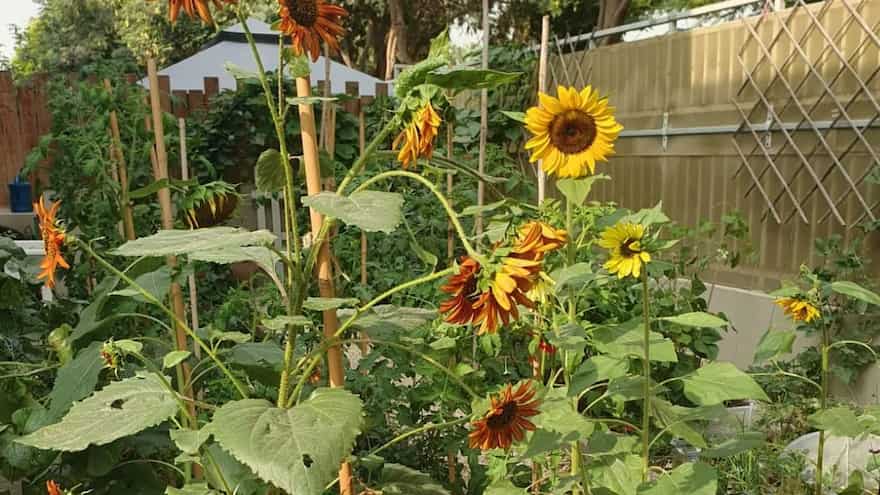 A small, but beautiful oasis.
She particularly recommends Bokashi composting for apartment dwellers, it’s odour-free, doesn’t require brown waste, and produces a pickled pre-compost that can be buried in a pot of soil, breaking down into usable soil within three to four weeks.
As for what to grow? Start with the easiest, no-fuss options. She recommends mint, methi, coriander, onion and garlic, small varieties of amaranth, carrots, and even beetroot. These can all be grown in grow bags and handle shade well. If you have more space and sunlight, tomatoes, okra, and cucumbers are good candidates. “If you find gardening intimidating, start small and simple. When the reward comes, you will most likely be tempted to get more adventurous with the choices!”
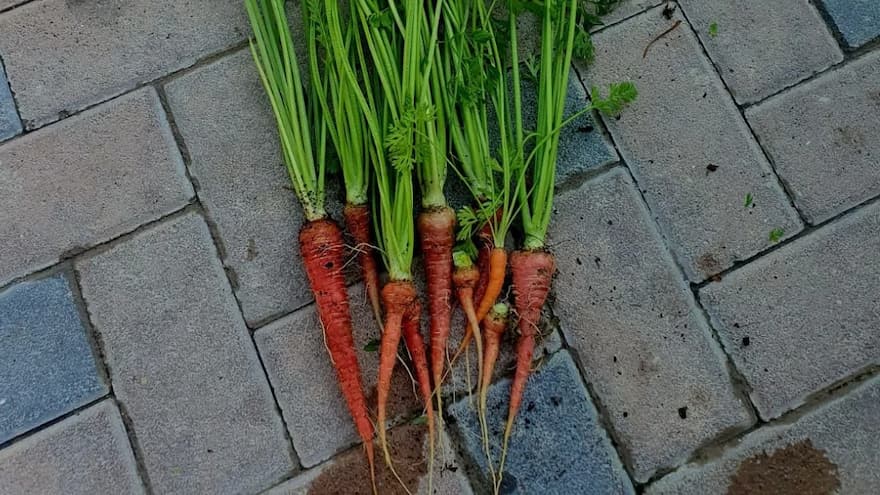 Asha continues to grow and thrive, as does her garden.
* All images courtesy Asha Girish Shenoy.
Comments are closed.