
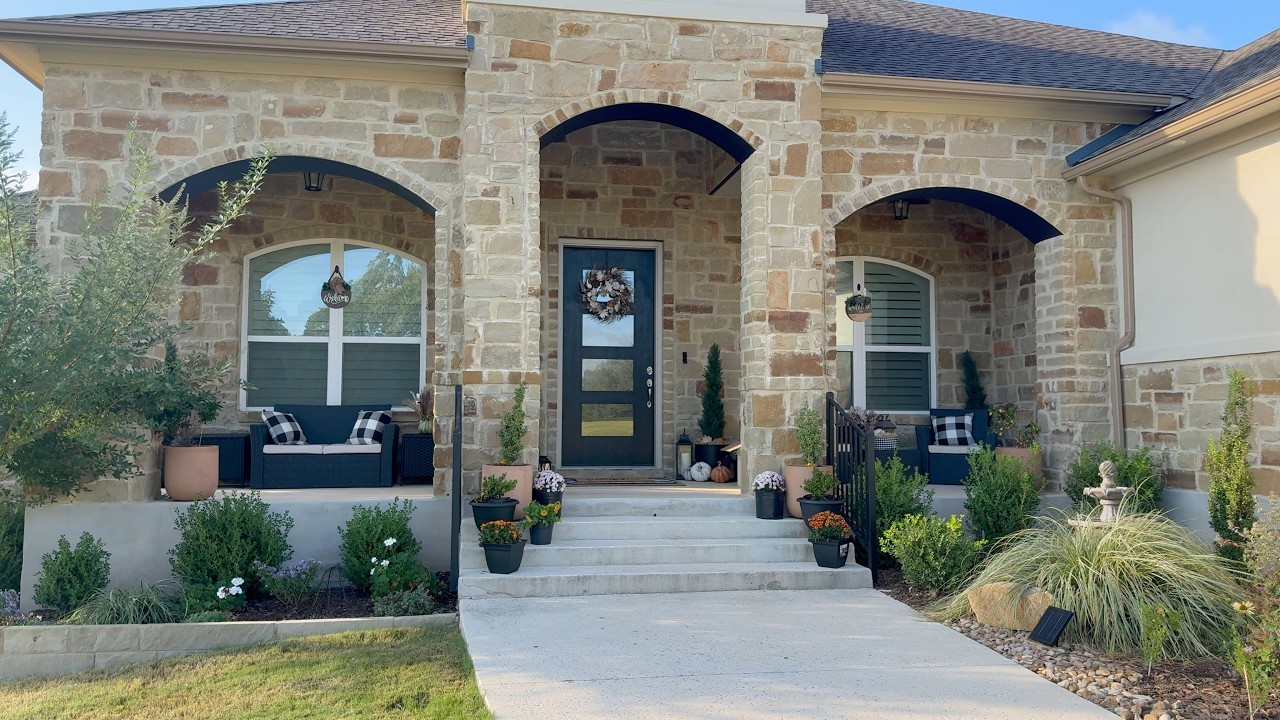
This is a Front Yard Fall Garden Tour of my Zone 8 Texas Garden, showing progress from a blank slate yard to this Low Maintenance garden filled with Drought Tolerant, rabbit and deer resistant plants. We also removed lawn and created a new drought tolerant pollinator garden! As always, candid information about all kinds of plants including perennials, trees, shrubs, and gardening in general, plus that specific to Texas gardening will be included!
#Fall front yard tour
#low-maintenance
#deer-resistant perennials
#pollinators
#gardening tips
#droughttolerantplants
Chapters:
00:00 Introduction
00:35 The front porch garden with Pugster Buddleia, Caryopteris & More
06:28 Fall annuals- mums and a peek at the fall porch decor
07:52 More annuals and low maintenance deer resistant plants
10:02 Excellent Evergreen Deer Resistant Shrub Zone 6 and up
11:19 Non-invasive Buddleia/butterfly bush and deer resistant rosemary
12:25 Touring the new pollinator garden bed with all drought tolerant plants
19:30 Gorgeous Miss Violet Buddleia and it is a sterile butterfly bush
19:48 Another great deer resistant evergreen… a ligustrum alternative
20:50 Summertime Blues Vitex is looking gorgeous
23:00 Veronica Speedwell struggles
24:45 A great deer resistant drought tolerant evergreen – Sprinter boxwood
Hi everyone. Welcome to our fall front yard tour. For three years, we’ve been building a lowmaintenance, deer resistant garden packed with gorgeous perennials and shrubs that pollinators absolutely love. Come see our postsummer yard. Some plants are shining, others are still growing in, but we are so excited to share what’s working and what’s not. Plus, our favorite deer and rabbit resistant picks to keep your garden thriving. Please consider clicking like, subscribe, and notifications for more real life gardening tips. Okay, so you guys, I’m going to start right up front with the porch, what I refer to as the porch garden, because it’s what we see when we’re sitting on the porch. And so, one of the trouble spots in this area was right over here in this corner. And what has performed really well over here, this is the amethyst puckster budlia and it has these gorgeous amethyst colored blooms. Right now, because it’s the end of summer, they are a little smaller than the size of the blooms in the spring, which for blooms, they’re still a decent size. I would guess they’re about 3 in in length, whereas in the spring, they’re probably 4 in in length. There are no issues with this plant whatsoever. Um, it is very low maintenance. The deer and rabbit go nowhere near it. It is in bloom from spring all the way through fall. Um, now one thing I would point out, the the Pster Amethyst versus the Pter Blue. Last year, my Pster Blue remained evergreen. Behind it, I have the Beyond Midnight Karaopterus. It’s taking a little lull right now, but even even when it’s not in bloom, I think it still looks pretty nice. Um, back here behind this pucker amethyst. And right out front is what I just planted. These are salvia gregi. And you can see on the one on the right, it has little white blooms. Now, this was a massive problem area because this is a low spot. So, this is where all of the irrigation in this bed, it drains to this point. There is a drain in here sending it underneath the sidewalk over into the grass. Um, however, sometimes it, you know, it still stays soggy and, um, I tried to continue the boxwood that I’ll show you in a minute all the way around this corner, but they the boxwood didn’t survive. They just weren’t happy. I don’t know if it was the sun, the the moisture, but when you have a problem spot, that’s the time you really want to lean into your natives. They’re natives because they can survive without us. And so this autumn sage with the white flowers is a native here. And so that’s why I planted one, two, three. Um because they too are evergreen. They’re going to complete the evergreen hedge, so to speak. Um, going to mix with the baby gem boxwood. But the nice thing about these, they only become 2 to 3 feet in height and width. It’s going to have these gorgeous white flowers throughout the season. These just went in a month ago because, well, I gave up on trying to grow baby gem boxwood here. And so I think having an evergreen with these lovely white flowers in front of these gorgeous amethyst and then the I don’t know I call it burpal because some people say it’s blue I think it’s purple but burpal flowers of the karaopterus back there when it’s in bloom. recently planted was this echgonatia. And when I say recent, I mean it went in a month ago as well. And it already has taken off. It was a little tiny tiny plant. And I think I have a an image to pop in just to show you how happy it is here and how much it has grown in just one month. And of course, it has this lovely flower. What I’m hoping is that it’s going to drop all these seeds in this space and it’ll kind of fill up this space with echgonatia because even this feather falls carrots right here which is easily about 4 feet in width. So beware in some places they become pretty large. It’s not that tall. It’s only about 2 feet in height but it is for sure 4 feet in width. but it needs to be cut back and we probably will be able to get three to four plants. So, a smaller one will be popped back in this spot in front of this rock and back there behind the fountain because those that one will get divided too. But what the point of that is it will give more room for the echgonatia to fill in the space where you see some of these these leaves on the featherfall carrot. So, that’s a method to my madness with that. And then over here, we have a Veronica lavender lightsaber. This is something I’m iffy about, the Veronica lavender lightsabers. I really like the gorgeous lavender blooms that it will have. It doesn’t take up that much space becoming, you know, only somewhere around 20 in to 2 ft in width, but it will become tall. So about 28 to 32 in in height, but it’s spidermitites like the the leaves look ratty for so much of the year. However, it is an evergreen. So when the spider mightites are gone and the flowers are gone, it still has leaves. And during the winter, you know, they’re they’re lovely leaves. So I’m on the fence as to whether or not the Veronica lavender lightsaber will stay in this garden. And this isn’t the only spot that we have them. Now, along the steps, I put some mom’s um back there in the pot is a Carissa Holly that I need to plant in the new pollinator garden that I’m so excited to share with you guys. Going to show you that in a couple of minutes. But yeah, it’s it’s it’s been a success. But um I just popped it in the pot. What will actually go there is a boxwood, a smaller boxwood that I’m going to let um shape into um a ball. Okay. Over on the other side, I’ve been very very happy with zonal geraniums. Been very happy with those. It has these pure white blooms on a plant that isn’t really bothered by any disease. The only thing that criticism I can say is when the leaves die on the plant, as you can see in the bottom, they have that kind of crusty brown look. But, you know, they just they don’t require a lot of pruning. I can just come in with my hands. They’re so brittle. And just pull them off. But I bought these from the grocery store. So, HB just to fill in the space here. and I’ve been very pleased with them. They’re not going to return here, but at the beginning of spring, I might do the same thing all over again. Maybe get pink ones next year. Um, we’ll see. Now, down here is my nepida. So, this is cat’s meow. And as you can see, it’s starting to get blooms again. The one thing I wish is that the cats would stop visiting it every evening on the security cameras. We see cats visiting. They come walking right through the down the sidewalk right into this bed into this napa. And then right here, the gorgeous purple flowers, that’s perennial aers. I don’t know the variety because again, it was something that I picked up at HB, which is a local grocery store. We’re going to be really curious to see how it performs and looks throughout the year. If it’s just green, just creates a clump of green in this bed, I’ll be okay with that. So, let’s move over to what I really want to show you all. And that is my new pollinator garden. Pulled out some lawn, which anytime you can pull out some lawn, that’s a good thing because it uses so much water. Even water less frequently, it uses so much water. And well, let’s also feed the pollinators. Last tour I had a dead dwarf berford holly right here and so this one’s been replaced. The dwarf berford holls are great for this area. They are deer and rabbit resistant. Um they will become quite large if you let them. Uh like 6 feet in height, 8t in height, 8t in width. Um, however, at a at a a rental property that we lived at when we were saving money to build this house, they were along the porch. And they needed to be pruned at least a couple times per year, but they can be kept at about a 5ft height and 4 feet in width pretty easily. I would not dare try to keep them at 3 feet in height because that would be a lot a lot of pruning at that point. I would just put Cararissa we would just put Cararissa Holl’s here. But because there is height here along the stone I think a 5-ft height going up to the cap on the stone right there. Um that’ll be good. It’s going to be three towers. It won’t completely block the window. That is a garage window, so it’s not something that really gets used. But let’s move over to the pollinator bed that was just created. Oh, and can’t pass this beauty without talking about it, but this is a buda. It is one of the seatless varieties. Um, lo and behold, line with a big weed growing in it right here that I need to get out. But there’s one on the other side, too. But people kept trampling through this bed through there at one point and it got squashed. So, it’s over there under a cloch. These three culinary rosemary. So, chef’s choice culinary rosemary. gonna pull them out because they are just too large for the space. I’m not even going to show you the other side what they look like after having to be trimmed to get them off of the driveway. They’re going to get replaced with boxwood. And I will likely move these to the back garden somewhere. But this is what I want to show you. Everything that you see up here going all the way to the back was lawn. So, we took out all of this lawn to create this pollinator bed. Now, of course, I’m still we’re still struggling with the Bermuda in there. I go in at least twice a month and pull the Bermuda out, but um these are white Lantana. And these were little $5 plants. They were quartz that were purchased at HB. This bed was created. So, I’m telling you right now, you’re not going to see mature plants. You’re going to see some pretty things and you’re going to see a lot of pollinators, but um this this bed went in May of this year, so it’ll fill out. We have three evergreen. So, Cararissa Holl’s back there that will become about 3 feet in height to camouflage all this equipment over here. And they’re evergreen. And then over there I have Veronica. And I’m telling you, we’re having a lovehate relationship with Veronica. Now, the one in the front is not its fault. My husband noticed that this plant had just been pulled out of the ground and it was sitting over here. And I don’t know. I don’t know what animals can do, but it didn’t survive. I put it back in the ground and gave it some water and it didn’t survive. And then the other five little plants in here. Those are more of the same Veronica. And you know, fall is a season where plants do really well here, spring and fall. And if they don’t bounce back, which I am a little optimistic about a couple of them, but all of them need to do well. Going to have to consider putting something else in this space. And then we have these Marvel rose salvia that I didn’t trim at all, but they’re looking pretty good. They were little court plants from Home Depot, and they attract pollinators. If I go in and clean it out a bit, you’d just be looking at the pretty rose pink blooms. So, I’m I’m okay with the health of this plant. It’s just I’m not certain about the rose pink, but we shall see. That is a Russian sage. Another pollinator attractor. It is deer resistant, rabbit resistant. It has honey bees on it as we speak. um buzzing around on the bottom and the sides. Another pollinator attractor for this pollinator garden. And then the karaopterus is starting to get color again. And I’m going to go in close up so you can see that purple color on the karaopterus. So, it is starting again. Karaopterus, they don’t just bloom for you in the spring. Um, in certain climates, it bloom throughout the spring. Um, the ones by the porch, and they’re going to start blooming again. It’s really a great deer and rabbit resistant plant. The deer come through this shore practically every other night, and they don’t go anywhere near this plant. So, this one, this is another winner. those looking to attract pollinators to the garden, those concerned about deer and rabbits, um I do nothing to it other than late winter, I go in and I just cut it back a little. Um and that’s about it. Okay, so let’s move down in this pollinator garden right in front of the crepe myrtle. You’ll see the purple flowers on the right eye skull cap. This is another native plant that does well in zones 8 and above. It is also an evergreen. It is low maintenance, low water use, deer and rabbit resistant. They just went in in May as well. Okay, but let’s get to the good part. Okay, so we have um Greg’s mist flower right there. And then we have mystic spire salvia blue fortune agistaki. Another Greg Smith flower. And as you can see the butterflies just absolutely love these plants. This year I’ve seen some of the most gorgeous butterflies. Some they come flying over and they’re so large just the shadow of them like oh my what’s flying over me and it’s like some big gorgeous swallowtail butterfly or there’s one that has um this bright turquoise blue and black and oh it is just absolutely gorgeous. Sometimes we just come out here and we just stand and watch all of the different pollinators on these plants. But this Greg’s mist flower, if you live in a climate warm enough to grow this, no pollinator garden is complete without the Greg Smith flower, it’s still early, but in a couple of hours, this plant will just be inundated with butterflies and different pollinators that we are scaring away right now. And as we move along, the back has the evergreen interest because you always want that. Um, the point here is to cover up the rod iron fencing, but also, well, you want your garden to look like something all year. And so these privets, these are kindly privets. They’re noninvasive. um they will flower in the spring but they don’t have the seeds that get spread that cause environmental or potentially cause causes environmental issues. And then there’s another mystic spire salvia with a big bumblebee on it. And and of course, oh my gosh, today I’ve got to get out here and deal with some Bermuda grass because if not, it will just take over. Another denim and lace Russian sage. There’s a trio down here. These were planted recently. Um, this whole bed flooded in July. So, about six weeks after we put the plants in, the entire bed flooded. Okay. One thing that I want to show you all as well is this Miss Violet. But Leah going to have to figure out what’s going on right now with the leaves. It’s an iron deficiency or is needing something. Going to have to pay more attention to it. It is again disease resistant, drought tolerant, rabbit resistant, deer resistant and it has these gorgeous violet color blooms on it. Now this m violet will become larger 5 to 6 feet in width and height. So the goal is to have it fill up this entire space over here near the fence. And speaking of kindly privets, the one that I just showed you over there, this is what it turns into in two years. So in two years, it is already at least 4 feet in height and about 3 feet in width. Looks like it’s going to have vaseike growth. Um it’s definitely supposed to become taller than it is wide. Now next year maybe we’ll start filling in the front here. thinking of putting a karaopterus right here and a karaopterous right there and just putting evergreens in the front and taking them around. Just keeping it simple because it is the front yard and in the front I want to lean towards evergreens for sure having the yard look like something year round. Okay, let’s move to the other side. So you’ll here is the summertime blues vitex. Isn’t she gorgeous? However, she’s a big mama. Um, this was supposed to be about eight to 10 8 feet in in width. 8 to 10 feet in width and about 8t in height or something like that. I don’t remember at this point, but what we can definitely say is it’s nowhere near that. We came out and measured it a couple of months ago and it was 22 24 feet in width. Now, the height, um, it’s not as tall as it is wide. And I’m going to do a closeup on it now. Oh, another thing. If you grow this plant and you want to limit up, what I found is it is trainable. Like you’re going to go through rounds of seems like every week, but at least every couple of weeks you’re having to come and prune the growth off of the bottom canes as you try to raise the canopy canopy. But eventually that will become once a month and then now I haven’t been out here to cut anything back on the bottom. It’s been at least about a month or so now, but it has these gorgeous lavender blueish purple blooms. Now, I have another one over um on the west side of the property that is not on irrigation and it has already dropped all of its leaves and it’s not as large as this one. this summertime blues vitex. Like I said, dear everything up here is deer and rabbit resistant because well, we have deer and rabbits big time and it wouldn’t survive. But if you want something that you can plant, water it in well, and just let it be, this is one that here in zone 8b, central Texas, can be planted in May or June. And I think I planted that one and then we went into severe drought restrictions. Couldn’t water anything at all. It survived. It bloomed. It’s just not as large as others. Okay. Down here are the Veronica lavender lightsaber. And again, lovehate relationship with those. And these are Don boxwood. They’re really starting to grow. But you talk about getting attacked by spidermitites. Yes, they do. They absolutely do. Okay. And here is another kindly privet. This one was planted a year ago, so it’s not quite as large as the others that I showed you. But all of the things you love about the privet, it has. It’s just not invasive, which okay, score. Win-win. Next is there’s 17 boxwood. These are sprinter boxwoods. And one thing you can see for certain is that they have an upright growth. They grow really quickly. These were those little quart plants that Home Depot has. They went in the ground um I think it was July of 2023. So they’ve been here for 2 years at this point. And again, evergreen interest in front of this fence. And then the evergreen interest behind the fence is what’s going to basically camouflage the fence. So you don’t really see that it’s here. But the big thing that I want to point out, when they went in the ground, we came out and watered them once a week. I we counted to 15 with the hose next. 15 with the hose next. And then the following year, so 2024, we watered them when it was hot. And this year, these sprinter boxwoods, I haven’t watered them at all. So dear rabbit resistant, drought tolerant for sure once it’s established. Now, these tall plants right here, these are mahonia. Now, some Mahonia, they don’t even pretend to be deer resistant. Like, for example, the I think the um I think there’s a soft caress. I never read that it is deer rabbit resistant. And the soft caress part of it makes me think if it’s yummy, well, there’s nothing about what it feels like to scare the deer away. It probably doesn’t have thick leathery leaves as well. However, I must say that these two, these are marvel mahonas. While the deer don’t absolutely eat them, they do nibble on it. Now, these are another plant that it was planted and we don’t water. So, all it really receives is what mother nature provides. Now with that being said, you know, Mahonia is not for full sun. And plants that are growing in part shade shade conditions, they definitely don’t feel the same water stress quite often as plants that are in full sun. But these don’t get watered at all. I think they have probably been watered two or three times, you know, with me coming out dragging the hose over here. So, they’re getting by with the approximately 36 in of rain that we receive in this area annually. So, if you don’t have heavy deer pressure, um you may want to grow this. Plus, I I’m just going we’re just going to let it be. Um it’s supposed to become five to six feet in height, four to five feet in width, somewhere about. And if it fills in and it just gets nibbled by the deer, but a lot of plant remains, we’re not going to worry about it. It’s going to stay here. Okay, you all, that is the fall front garden tour. It is October 2025. I appreciate you watching. This garden is a work in progress and I welcome you to come along for the journey, especially if you’re interested in plants that can take the heat, drought tolerant plants, deer and rabbit resistant plants, evergreens, trees, annuals, not so much, perennials a lot. Thanks for watching. I hope you have a great day in your gardens. Bye.
Comments are closed.