
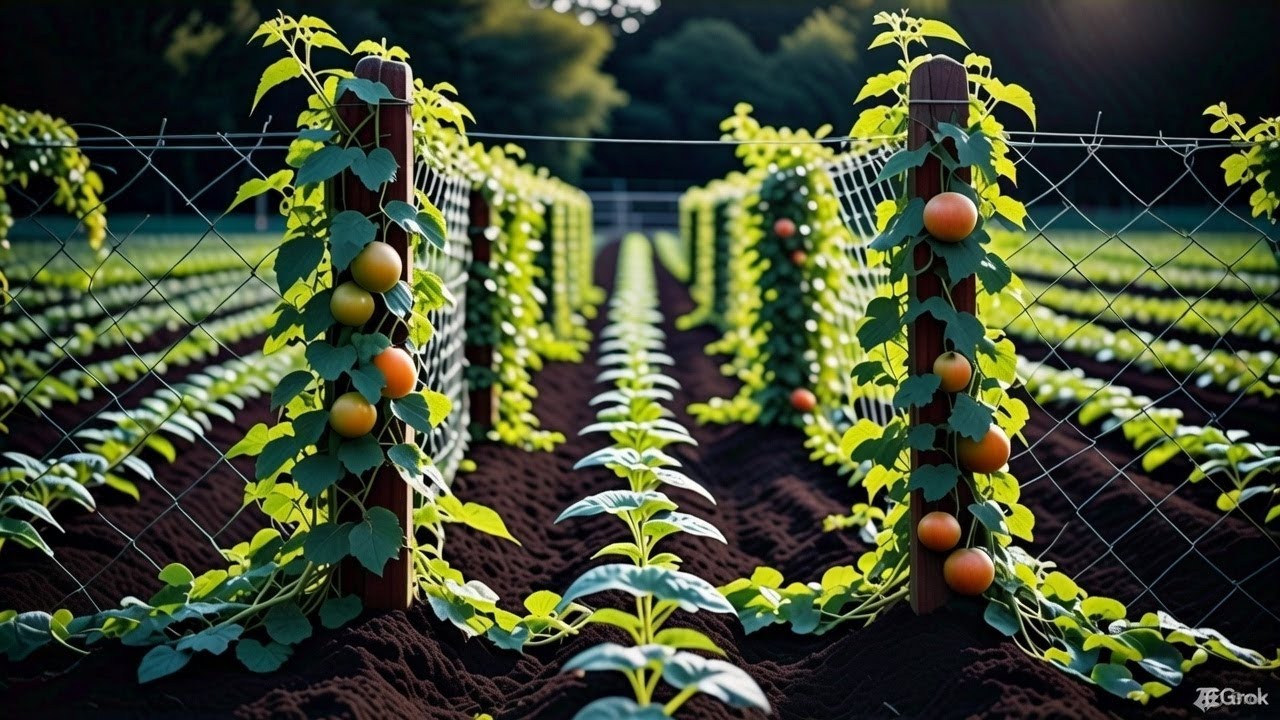
Running out of garden space? These perennial edible climbing vines turn fences, walls, and trellises into permanent food systems. In this Nature’s Blueprint video, you’ll discover the best vertical perennial crops that keep producing year after year with minimal effort.
Learn how to grow food vertically, reduce replanting, improve soil health, and maximize harvests in small gardens using nature-aligned systems.
Subscribe to Nature’s Blueprint for smarter, lower-effort gardening that actually works long term.
Hello and welcome to my garden. There’s a particular satisfaction, isn’t there, in seeing a space completely transformed by what you’ve planted. Yet, I find that so many of us, myself included, at times, tend to look down. We focus on our beds, our borders, the ground beneath our feet. But what about looking up? So often the walls of our homes, the fences that mark our boundaries, the sheds and garages, they all stand bare, silent witnesses to the seasons. This is a vast untapped canvas, a vertical world just waiting to be brought to life. It’s an entire dimension of gardening that’s frequently overlooked, but one that holds immense potential, especially for those of us with limited ground space. This is not about decoration. This is about turning vertical surfaces into permanent food systems. While a flush of annual sweet peas or morning glories is a lovely sight, their beauty is fleeting. You must start again each year with the same preparation, the same waiting. Perennial vines, however, are a different matter altogether. They are an investment. You plant them once and with a little care. They reward you year after year, their roots delving deeper, their stems growing stronger, their harvest becoming more reliable. They build a living architecture in your garden, a framework of productivity that becomes part of the place itself, weaving itself into the very fabric of your home. For those of us gardening in smaller plots where every square in is precious, this vertical approach is nothing short of revolutionary. By growing upwards, you are in effect expanding your garden’s footprint without acquiring a single extra foot of land. You can create layers of productivity with shadeloving plants at the base of a sunreaching vine. You’re building a more complex, resilient, and ultimately more fruitful ecosystem. So, today we’re going to explore 10 remarkable perennial vines that can help you do just that. We’ll look at how to choose them, how to plant them, and how to help them thrive. It’s time to start looking up. Let’s begin with a true classic, a plant intertwined with human history for millennia. The grape vine, Vitus Venifera. There is something profoundly satisfying about growing grapes. It connects you to a very long line of gardeners and farmers. Their longevity is quite remarkable. A well-tended vine can outlive the gardener who planted it, becoming a legacy for the next generation. This isn’t just a plant. It’s a permanent feature, a living sculpture that changes with the seasons. From the fresh green of new spring leaves to the heavy laden bunches of late summer. One of their greatest assets is their sheer productivity. Even a single mature vine can produce an astonishing amount of fruit, far more than you might expect from the space it occupies at ground level. And of course, the uses are endless. Fresh eating juices, jellies, and if you’re feeling ambitious, even a bottle or two of your own wine. It’s a harvest that feels generous, almost extravagant. The deep gnarled trunk of an old vine speaks of resilience and stability. And that’s not just a visual metaphor. Their root systems are powerful and extensive, which makes them excellent for helping to stabilize soil on a slope or bank. They anchor the earth, preventing erosion while simultaneously reaching deep for water and nutrients, which contributes to their drought tolerance once they are established. You don’t need a sprawling vineyard to enjoy them either. Grapes are surprisingly adaptable and will thrive in a large container on a patio, a raised bed, or planted directly in the ground. The key, as with so many plants, is drainage. They absolutely detest having wet feet. So, if you have heavy clay soil, it’s vital that you amend it generously with grit and organic matter to open it up. When planting in a pot, ensure there are plenty of drainage holes and use a good gritty soilbased compost mix. Give them a sunny, sheltered wall to climb against, and they will reward you handsomely. Pruning is the other essential piece of the puzzle. It can seem daunting with all the talk of spurs and canes, but it is fundamentally simple. You are controlling the vine’s vigor and encouraging it to put its energy into producing fruit rather than excessive leafy growth. A hard prune in winter sets the framework for the year’s crop. It’s a task that connects you intimately with the plant’s cycle of growth and dormcancy. A quiet, contemplative job for a cold winter’s day. Now for a fruit that might surprise you. When we think of kiwi, we often picture the large fuzzy brown fruit from the supermarket, Actenidia delissiosa. But there is a wonderful and in my opinion superior relative that is perfectly suited to more tempered gardens. The hearty kiwi or Actonidia arguta. These are not the giants of the grocery store. They produce charming grapesized fruits with smooth edible skin. You simply pick them from the vine and pop them into your mouth. a burst of intense, sweet, and complex flavor. The nutritional value is quite extraordinary. They are packed with vitamin C, even more so than oranges, making them a wonderfully healthy snack to have growing right outside your back door. The flavor is often described as more intense and aromatic than their larger cousins. A truly gourmet experience that you’re unlikely to find in any shop. It’s one of those homegrown treats that feels like a luxurious secret you’ve unlocked in your own garden. There is however an important consideration with these plants. Most varieties are dioishious which is a botanical term meaning that you need separate male and female plants to get fruit. The male plant produces the pollen and the female plant once pollinated produces the fruit. You’ll typically need one male for every six to eight female plants. He won’t give you any fruit himself, but he is the essential partner in the enterprise. Some self-fertile varieties like Isai do exist which can be a good option for very small spaces. Though their vigor and productivity can sometimes be a little less impressive, and vigor is the key word here, do not underestimate how quickly and powerfully these vines can grow. A mature hearty kiwi is a substantial plant, a woody vine, or lyanna that can easily scramble 30 or 40 ft. They need a very sturdy support structure from day one. A robust pergola, a strong wire trellis system bolted to a wall, or an old sturdy tree, a flimsy trellis will be pulled apart in just a few seasons. This rampant growth needs to be managed with regular and firm pruning, both in winter to establish a framework, and in summer to control the rampant shoots and expose the developing fruit to the sun. It’s a bit of a battle to keep it in check, but a worthwhile one. The sight of these vigorous vines dripping with their jewelike fruit in late autumn is a reward that more than justifies the effort. They are a testament to the sheer untameable life force of the plant world. There are few plants that combine the outrageously exotic with the deliciously edible quite like the passion fruit vine or pacifa etilus. The flowers are simply breathtaking. They look like something from another world and intricate complex structure of filaments and color that stops you in your tracks. They are a piece of living art and for the flowers alone they would be worth growing. But then of course there is the fruit that follows. The fruit itself is a powerhouse of intense aromatic flavor. Sliced open. The pulp is a treasure trove of seeds suspended in a fragrant tangy jelly. It’s the taste of the tropics. A flavor that can transport you to a warmer, sunnier place with a single spoonful. And they are wonderfully nutritious. Rich in vitamins, fiber, and antioxidants. It’s a fruit that feels both indulgent and incredibly wholesome at the same time. Now, it must be said these are plants that crave the sun and abhore the cold. In a temperate climate, like here in the UK, they are best suited for the warmest, most sheltered, frost-free spots you can offer. A southacing wall that acts as a storage heater, soaking up the sun’s rays and releasing them slowly is ideal. In cooler regions, they are a prime candidate for a greenhouse or a conservatory where they can be protected from the harshness of winter. They are incredibly fast growers. In a single season, a small plant can put on many feet of growth, eagerly scrambling up whatever support you provide. This makes them excellent for quickly covering a wall or a fence, providing a lush green screen in a remarkably short amount of time. Their tendrils, little coiled springs of purpose, will grasp onto wires, trellis, or netting, pulling the plant ever upwards toward the light. Despite their exotic origins, their needs are relatively simple. Plenty of sunshine, a free draining soil, and regular water and food during the growing season to fuel their rapid growth and fruit production. A liquid seaweed feed every couple of weeks will work wonders. Pruning is mostly about thinning out congested growth to allow air and light to penetrate and removing any dead or weak stems. It’s a plant that brings a touch of the jungle to the garden, a reminder of the sheer diversity and beauty of the plant kingdom. Here we have a plant that is perhaps less familiar to many gardeners, but one that is hugely productive and honestly well worth getting to know. the chaote or it’s a member of the gourd family like cucumbers and squash but with a crucial difference. While most of its relatives are annuals in a mild or warm climate, chyote behaves as a tenacious perennial returning year after year from its fleshy tuberous root. The fruit is the most commonly used part of the plant. It’s a pale green pear-shaped gourd with a mild flavor and a crisp texture somewhere between a potato and a cucumber. It’s incredibly versatile in the kitchen. You can boil it, fry it, stuff it, or even add it raw to salads. It really does absorb the flavors of whatever it’s cooked with, making it a fantastic and productive staple vegetable. But, you know, the bounty doesn’t stop there. One of the wonderful things about chiote is that other parts of the plant are also edible. The young shoots and tendrils can be harvested and cooked like asparagus, providing a delicious early green vegetable before the main fruit crop is ready. Even the large starchy root can be dug up and cooked like a yam. Though this is usually done at the end of the plant’s life since it sacrifices the perennial nature of the vine, it’s a plant that offers multiple harvests throughout the season. Be warned though, this is not a shy and retiring plant. It is an aggressive, powerful climber. It will enthusiastically cover anything in its path, a fence, a shed, a pergola, or even a small tree if you let it. Its growth can be truly rampant, so it requires a strong support system and a bit of space to really let loose. This makes it a fantastic choice if you have a large unsightly structure you want to cover in a hurry to keep it productive and manageable, especially in a smaller garden. Some pruning is essential. You can trim back the most vigorous vines during the growing season to control its spread and encourage it to branch out. This also makes harvesting the fruit much easier, keeping it within arms reach rather than 20 ft up in the air. It’s a generous, almost overwhelmingly productive plant that asks for little more than sun, water, and something strong to climb on. In the height of summer, when the weather turns truly hot and humid, many of our familiar leafy greens like lettuce and spinach can really struggle. They have a tendency to bolt, meaning they rush to flower and set seed, turning their leaves bitter and tough. This is where a remarkable vine called Malibar spinach or comes into its own. It is not a true spinach at all, but its leaves are used in much the same way and it absolutely revels in the heat that causes other greens to fail. It’s a beautiful plant in its own right with lush, thick, succulent leaves and reddish purple stems that twine eagerly around any support you give them. The leaves are glossy and heart-shaped, and they have a mild, slightly peppery, earthy flavor. When cooked, they have a texture similar to spinach, though perhaps a little more mucilaginous, which makes them a great thickener for soups and stews. Eaten raw in salads, they have a lovely succulent crunch. The key attribute of Malibar spinach is its incredible heat tolerance. It doesn’t just survive in the heat, it thrives. The hotter it gets, the faster it seems to grow, producing a continuous and abundant supply of nutritious leaves throughout the warmest months of the year. It’s a lifesaver for gardeners in hot climates who want to keep a steady supply of fresh greens on the table when everything else has given up. It is also a cut and come again crop in the truest sense. You can harvest the individual leaves or snip off the top 6 to 8 in of the growing tips and the plant will simply respond by branching out and producing even more growth. This continuous regrowth means that just a few plants can provide a family with fresh greens all summer long. It is the very definition of a productive and resilient food source. While it is a perennial in tropical climates, for most of us, it is best treated as a fast growing annual vine. Though it’s so productive, it certainly earns its place. It needs a trellis, fence, or stakes to climb on, and it will quickly cover it in a dense screen of edible greenery. It’s a perfect example of a plant that fills a specific niche in the gardening calendar, providing abundance when other more traditional crops are struggling. When you mention hops, most people immediately think of beer, and for good reason. The female flowers or cones are the essential ingredient that provides bitterness and aroma to our favorite ales. Growing your own can be a fascinating project for any home brewing enthusiast. But even if you never intend to brew a single pint, hops are a fantastic perennial vine for the vertical garden with another lesserknown edible use. In early spring, as the ground warms up, the hop plant sends up a profusion of new shoots from its overwintering ryome. These tender asparagus-like shoots are a prized delicacy. Sometimes called hop asparagus, they have a unique, slightly nutty and earthy flavor. Harvested when they are just 6 to 8 in long, they can be steamed, sauteed in butter, or added to omelets. It’s a fleeting seasonal treat that marks the true beginning of the garden’s awakening. One of the most striking features of hops is their incredible rate of growth. From those first spring shoots, the vines or vines as they are correctly known, can grow astonishingly fast, sometimes up to a foot in a single day during peak season. They climb by twining their rough, hairy stems around a support. This rapid vertical growth makes them absolutely perfect for covering a tall arch, a pergola, or running up strings to the eaves of a house. This growth habit is particularly useful for narrow spaces. Because they grow straight up with very little lateral branching, you can get a huge amount of green growth from a very small footprint on the ground. You can plant them in a narrow border against a wall or fence where a more shrubby plant wouldn’t fit, and they will create a dramatic vertical accent, a living green pillar reaching for the sky. At the end of the season, after the first hard frost, the vines will die back completely to the ground. You simply cut them down and add them to the compost heap. But underground, the ryome is safe and dormant, gathering its energy. The following spring, it will return, often with even more vigor than the year before. This annual cycle of rapid growth and dieback makes them very easy to manage with no woody structure to prune or control. The scarlet runner bean, also known as fasiololis coxinius, is a familiar sight in so many vegetable gardens. Often grown as a cheerful annual for its brilliant red flowers and those long, tasty green pods. But what a lot of gardeners don’t realize is that in milder climates where the ground doesn’t freeze solid, the runner bean can actually behave as a short-lived perennial, regrowing each spring from its fleshy, tuberous root. This perennial nature is honestly a wonderful advantage. It means you don’t have to go through the process of sewing seeds and waiting around for germination each year. The established root system gives the plant a significant head start in the spring, often resulting in an earlier and more vigorous crop than its annually sewn counterparts. A layer of thick mulch in the autumn is usually enough to protect the roots through a mild winter. Like all legumes, the runner bean has this secret weapon working for it beneath the soil. Its roots form a symbiotic relationship with riseobia bacteria, which allows the plant to fix nitrogen from the atmosphere and convert it into a form that other plants can use. This means they’re not only producing food for you, but they are also actively improving the fertility of the soil they are growing in. They’re givers, not just takers. The harvest is honestly wonderfully versatile. The vibrant scarlet flowers are themselves edible and make a beautiful peppery addition to salads. The young pods, when picked small and tender, are just delicious steamed or boiled. If you happen to miss a few and they grow large and tough, you can leave them on the vine to dry, then shell them for the beautiful patterned beans inside, which can be stored and used in soups and stews all winter long. Their climbing habit makes them a perfect choice for a vertical food system. They will happily and quickly cover a bean pole teepee, a trellis against a fence, or even an archway, creating a wall of lush green leaves dotted with those flashes of brilliant red. They are both incredibly productive and highly ornamental, a plant that works hard and looks beautiful while doing it. They really are a classic cottage garden plant for very good reason. When we think of yams, we usually picture the starchy tubers we buy in the market with little thought to the plant that produces them. But many species of yam from the genus Dioscera are vigorous perennial vines that offer a fantastic dual harvest, making them one of the most spaceefficient crops you can grow. This is a plant that truly maximizes its potential both above and below the ground. Above ground you have a fast growing twining vine. Depending on the species like the Chinese yam dioscora polystachia, these vines can produce small p-sized aerial tubers known as bullbills along their stems. These can be harvested throughout the late summer and autumn and cooked just like miniature potatoes. They have a nutty flavor and a great texture and they are produced in abundance along the length of the vine that’s climbing your trellis. Then of course there is the main event happening underground while the vine is busy climbing and producing its aerial tubers. It is also growing a large starchy storage tuber deep in the soil. This is the main yam which can be harvested in the autumn after the vine dies back. By growing a single plant, you’re effectively getting two distinct harvests from two different levels of your garden, one at eye level and one at your feet. This two-tier system represents the pinnacle of space efficiency. You are using the vertical dimension for one crop and the subterranean dimension for another, all from a single plant occupying a tiny patch of ground. For anyone seeking to maximize their food production in a limited area, this is an incredibly intelligent way to garden. It offers a level of long-term food security that few other plants can match. Growing them is straightforward. They need a deep, loose, well- drained soil to allow the tuber to expand and a sturdy trellis for the vine to climb. The Chinese yam, for instance, is very hearty and will die back in winter and respout reliably in spring. It’s a system of stacked functions, a plant that works on multiple levels to provide a sustainable and resilient source of food year after year. Let’s look at a vine that is as beautiful and intriguing as it is useful. Abia Quinada, commonly known as the chocolate vine. It earns this name not from its fruit, but from the clusters of small maroon purple flowers that appear in early spring. On a warm day, they release a delicate spicy fragrance with hints of chocolate or vanilla. It’s a wonderfully subtle and sophisticated scent to welcome the new gardening season. Following the flowers, the plant produces the most extraordinary fruit. They’re large, soft, sausage-shaped pods with a pale purple leathery skin. When ripe, they split open along one side to reveal a translucent gelatinous pulp filled with black seeds. The pulp is mildly sweet and quite delicious. Eaten fresh with a spoon, almost like a natural pudding, it’s a novelty, certainly, but a delightful one. For reliable fruing, it’s often best to plant two different clones to ensure good cross-pollination. One of Akibia’s most valuable traits is its tolerance for shade. While most fruing vines demand full sun to perform well, achia is quite content in a partially shaded or even a fairly shady spot such as a north-facing wall or a position under the canopy of large trees. This makes it an invaluable plant for those difficult darker corners of the garden where little else will thrive, let alone produce something edible. It is a semi- evergreen twining vine that provides a lovely delicate screen. The foliage is very attractive, composed of five leaflets arranged like the fingers on a hand. In mild winters, it will hold on to its leaves, but in colder climates, it will drop them before returning with fresh growth in the spring. Once it is established, it is remarkably lowmaintenance, requiring very little feeding or pruning beyond an occasional trim to keep it within its bounds. A Kebia is a plant that offers a multi-ensory experience. the beautiful unusual flowers, the gentle fragrance, the attractive foliage, and the strange sweet fruit. It is a tough, adaptable, and elegant vine that can bring life, beauty, and a surprising harvest to the shadyiest parts of your garden, proving that productivity isn’t just reserved for the sunny spots. Finally, we come to a humble but incredibly useful group of plants, the perennial peas. particularly lethyus latapoglius. This is not the common garden pee pisum satum but a tough resilient relative that comes back year after year without any need for resoing. It provides some of the very earliest green harvest you can get from the garden. A welcome taste of spring when little else is growing. The primary edible part of the perennial pee is its young shoots and tendrils. In early spring, these emerge from the ground and can be snapped off when they are tender and just a few inches long. They have a wonderfully fresh sweet pea flavor and are fantastic eaten raw in salads, lightly steamed as a side dish, or thrown into a stir fry at the last minute. It’s a gourmet green that requires almost no effort to produce. Like their cousin, the runner bean, these perennial peas are nitrogen fixers. Their root systems host bacteria that enrich the soil, making them a fantastic companion plant. You can grow them along the base of a hungry fruit tree or along a vegetable bed where they will climb a fence and slowly but surely improve the soil for all the plants around them. They are a functional part of a healthy garden ecosystem. While the pods of lethyus latapogius are generally not eaten, other perennial species like the asparagus pee lotus tetraanolibus produce edible pods. The key is to know your species. But even if you only grow it for the shoots, lethyus latapogius is well worth its place. It produces masses of beautiful unscented flowers in shades of pink, purple, and white. Looking much like a sweet pea, making it a highly ornamental plant as well. It is a reliable and tenacious plant. It will die back to the ground in winter and return without fail each spring, often with increased vigor. It will happily scramble over fences, low walls, or up a trellis, providing a lovely floral display and an early edible crop for many years. It’s a lowmaintenance, multi-purpose plant that works hard for you. both above and below the soil. So, there you have it. 10 remarkable plants that can transform those forgotten vertical spaces into productive living walls of food. This is a long-term project, of course. Unlike a bed of annuals that gives its all in one season, these perennial vines are an investment in the future of your garden. To support that future, remember that a little ongoing care goes a long way. support their long-term productivity with light feeding during the growing season and most importantly regular thoughtful pruning to maintain their health and shape. This isn’t a chore. It’s a conversation with the plant, guiding its energy and ensuring a generous harvest for years to come. By thinking in three dimensions, you are not just adding plants. You are adding layers of life and complexity to your garden. You’re creating new habitats, new sources of food, and a beauty that evolves through the seasons and across the years. You are building a garden that is more resilient, more sustainable, and infinitely more interesting. This is about working with the nature of the plants, understanding their desire to climb towards the light, and giving them the opportunity to do so in a way that nourishes us. It’s a partnership, and a deeply rewarding one. If this guide helped you rethink how much food your vertical space can produce, subscribe to Nature’s Blueprint and share this with anyone gardening in tight spaces. The smartest gardens grow up, not out. Thank you for joining me today. Now go outside, look up, and imagine the possibilities. Happy gardening.
Comments are closed.