
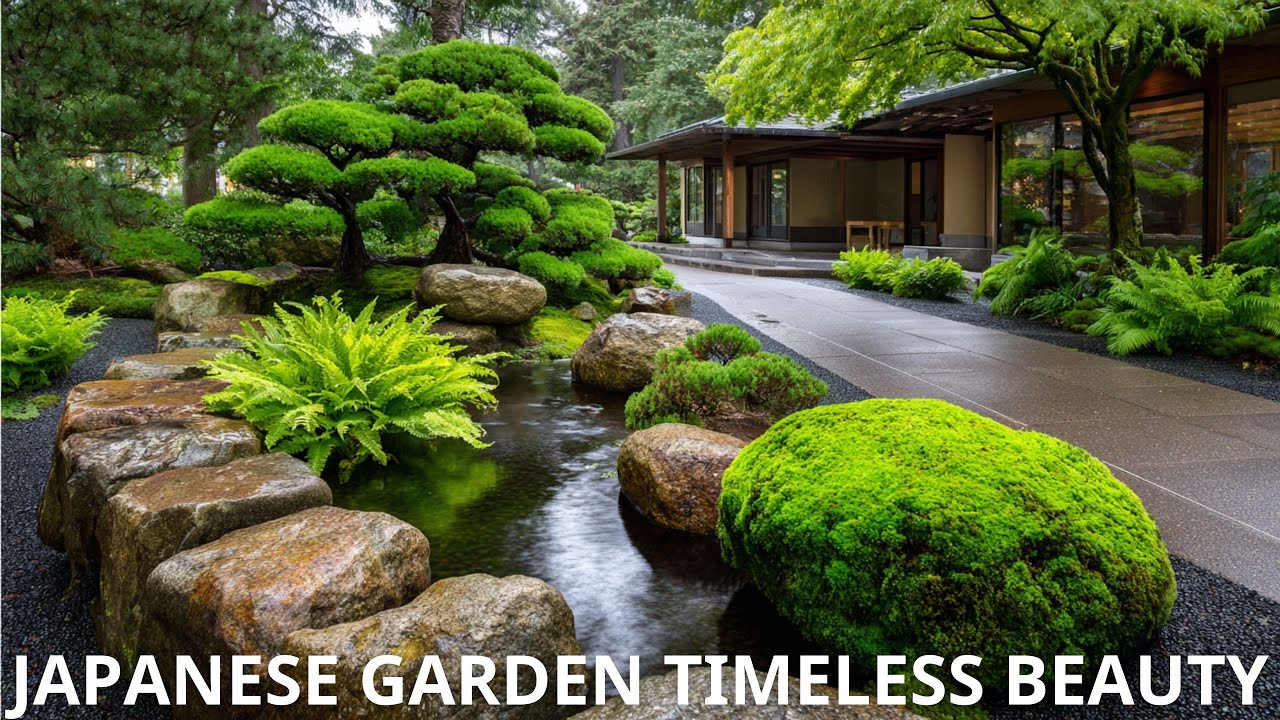
Step into the timeless beauty of a Japanese garden. In this video, Ling Studio takes you on a peaceful journey through a Zen-inspired courtyard, where rustic stones, lush moss, bonsai trees, and ferns come together to create pure harmony. With the gentle sound of water features and a serene natural layout, this garden design brings a sense of calm and balance to any home.
🌿 Discover how Japanese courtyard gardens combine tradition and simplicity to transform small spaces into living works of art. Whether you dream of a tranquil retreat, a place to meditate, or simply a lush corner of greenery, this design will inspire you to bring Zen elegance into your own home.
🏡 Ling Studio shares inspiring ideas for stones, moss landscapes, bonsai arrangements, and water features that capture the essence of Japanese aesthetics. Every detail of this garden reflects peace, mindfulness, and the deep connection between nature and human life.
👉 Subscribe to Ling Studio for more inspiring house and garden designs that bring beauty, creativity, and serenity into everyday living.
#JapaneseGarden #ZenGarden #CourtyardDesign #LingStudio #GardenDesignIdeas
[Music] Welcome back to Ling Studio, where design meets imagination and tradition blends with beauty. Today we will walk together into the serene world of Japanese gardens, places that breathe calmness and invite reflection. In this video, you will discover how stone, water, moss, and bonsai create harmony beyond architecture. These gardens are not simply outdoor spaces, but living poems of nature and art. Every detail tells a story of patience, balance, and grace. Get ready to immerse yourself in the timeless beauty of Japanese garden design. [Music] A Japanese garden is not built in a day. It is nurtured like a soul. Every stone is chosen carefully, not for its size, but for its spirit. Moss grows slowly, teaching us patience with time. Water flows endlessly, reminding us that life is movement. Bonsai stand proudly, shaped by both discipline and love. Together, they form a sanctuary of peace. [Music] large rust. ic stones in a Japanese garden are more than decoration. They are anchors of strength. Their rough surfaces carry stories of mountains and rivers. Placed with precision, they create balance in space. Around them, moss softens the edges, weaving stillness into the ground. The contrast of hard and soft becomes a perfect dialogue. It is harmony carved by nature itself. [Music] Moss is the quietest artist of the garden. It does not shout for attention, but its green velvet whispers calm. Covering stones and soil, it softens everything it touches. It thrives in shade, teaching us beauty can grow even in darkness. Moss does not hurry. It simply exists. And its patience becomes the heart of the garden. [Music] Water is the soul of a Japanese garden. Whether it flows as a stream or rests in a pond, it brings movement to stillness. Its sound is like music for meditation. Gentle and timeless fish swim quietly, reflections shimmer on the surface and peace fills the air. Water cleanses both the garden and the mind. In every ripple there is serenity. [Music] [Music] Ferns sway softly with the wind, their delicate fronds adding texture to the garden. They thrive beside stones and streams, symbols of quiet resilience. Their green shades deepen the lush atmosphere. Ferns remind us that elegance often comes in simple forms. They ask for little yet give much, and their presence completes the circle of life in the garden. [Music] Bonsai are living sculptures shaped by patience and devotion. Each branch is carefully guided, each leaf a lesson in discipline. They represent nature in miniature, showing the grandeur of trees within tiny frames. A bonsai is not forced but gently encouraged. It becomes a dialogue between human hands and natural growth. And that dialogue lasts for decades. [Music] In a Japanese garden, emptiness is as important as presence. Open spaces are left deliberately creating balance between fullness and void. Silence becomes part of the design. This philosophy teaches us that beauty lies not in abundance but in harmony. The pauses between notes make the music. And the spaces in a garden make its soul. [Music] Stone lanterns are not just lights. They are symbols of guidance. Their weathered surfaces blend with moss and shadows. At night, they glow softly like stars within the garden. Even in daylight, they stand as timeless guardians. They remind us of tradition, of history, of ancient paths. Each lantern is both decoration and meditation. Heat. Heat. [Music] Pathways in a Japanese garden invite slow steps. Stones are placed unevenly on purpose, encouraging mindfulness with every stride. Walking here is not about speed, but awareness. Each step grounds you deeper into the moment. The path is not a line from A to B. It is the journey itself. And in walking slowly, we learn to live fully. [Music] Bridges add poetry to the garden. Whether arched wood or simple stone, they connect more than just shores. They connect moments, emotions, and souls. Standing on a bridge, one feels both above and within the water. It is a place of pause, of reflection. And every bridge is a promise of crossing into peace. [Music] Trees in a Japanese garden are chosen for their grace. Maples with fiery leaves, pines with dignified silhouettes. Each tree is a symbol of endurance, change, and life’s rhythm. Their shadows cool the stones. Their branches frame the sky. They change with seasons, reminding us of impermanence. And impermanence, too, is beauty. [Music] Bamboo brings rhythm with its tall whispering stalks. The sound of wind through bamboo is like a gentle song. Its straight lines add structure while its hollowess symbolizes humility. Bamboo bends but does not break. Teaching resilience in groups. It becomes a forest of harmony. And harmony is the essence of Japanese design. [Music] Every Japanese garden embraces seasons. Spring blossoms fill the air with color. Summer greens breathe life. Autumn paints the ground with fire. Winter strips everything bare, leaving stillness and purity. The garden changes, but its heart remains. And in its changes we see ourselves. [Music] Stones in a dry garden arranged like islands in sand evoke oceans. The raed gravel becomes waves flowing without water. This is meditation in form. Simplicity carries infinite meaning. To gaze upon it is to enter stillness. And stillness at last becomes enlightenment. [Music] A Japanese garden is not about size. Even a small corner can hold infinity. With one stone, one bonsai and a patch of moss, a whole universe opens. What matters is not space but spirit. Every garden, no matter how small, can be boundless. Boundless in peace, boundless in beauty. [Music] designing. ing a Japanese garden is like writing a poem. Each stone is a word, each tree a sentence, each water drop a pause. The rhythm must flow, the balance must sing. Too much and the poem is heavy. Too little and the poem is lost. The art is in knowing what to leave and what to place. [Music] Birds find homes in Japanese gardens. Their songs blend with water and wind. Butterflies dance among flowers, adding fleeting grace. Every creature is welcome, every presence meaningful. A garden is not only for humans but for all life. And in that inclusivity lies its charm. [Music] Lantern light at dusk transforms the garden into a dream. Shadows grow long, water glimmers softly, and silence deepens. Night does not hide the garden. It reveals another side of it. The garden becomes mystical, whispering secrets. To walk here in evening is to step into a story. And that story never ends. [Music] Japanese gardens teach us to slow down in a rushing world. They are sanctuaries of stillness. Here the heart beats gently. The mind breathes freely. Stress melts into moss. Noise dissolves into water. The garden does not demand. It invites. And in that invitation, we heal. [Music] Hey. Hey. Hey. [Music] A Japanese garden is not only built, it is lived. It grows with time. It changes with seasons. It matures with care. It becomes part of the family, part of the story. To create one is to create a legacy, a legacy of peace, balance, and beauty. And that legacy outlives us all. [Music] Thank you for walking with us through the timeless beauty of Japanese gardens here on Ling Studio. We hope you found inspiration in the stones, the moss, the water, and the stillness. These gardens remind us that peace is not far away. It is just outside waiting to be nurtured. If this journey has touched your heart, let it also inspire your own space of calm. Stay with us for more journeys into the art of design. Until then, may your days be as peaceful as a Japanese garden. [Music] Heat. Heat. [Music]
Comments are closed.