
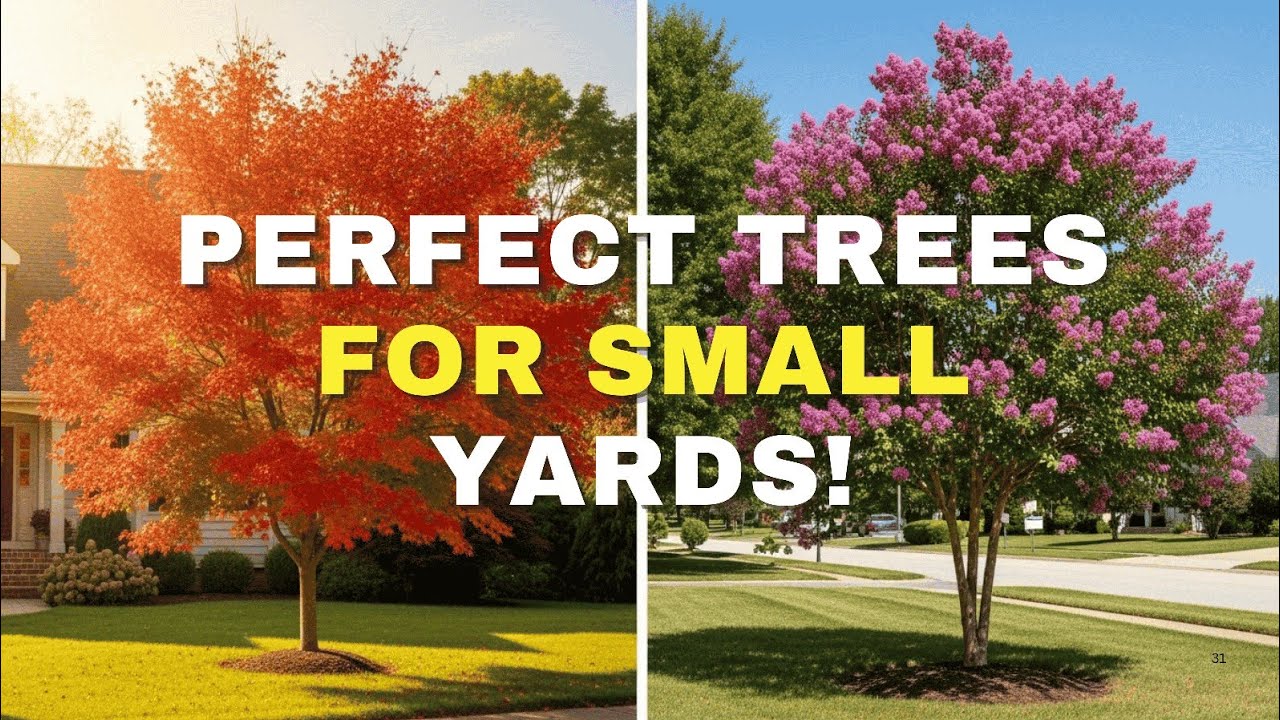
Top 9 Best All-Season Small Trees for Front Yards | Low-Maintenance Dwarf Trees for Landscaping | Golden Seniors Living
We’ll Cover
• The vibrant Japanese Maple with its fiery seasonal colors and elegant shape
• Why the Dogwood’s spring blossoms and year-round appeal make it a timeless classic
• How the Eastern Redbud’s dazzling spring blooms create instant curb appeal
• The Crape Myrtle’s summer-long flowers and striking winter bark for effortless beauty
• Discover the Dwarf Alberta Spruce for year-round greenery with minimal upkeep
• The fragrant Japanese Snowbell that adds elegance and charm to any front yard
• Why the Amur Maple’s fiery fall foliage is a game-changer for small spaces
• The Magnolia’s show-stopping blossoms and fragrance for a luxurious look
• How the Holly tree’s evergreen leaves and red berries shine through winter
Transform your front yard with these 9 low-maintenance, all-season small trees that deliver stunning curb appeal year-round without the hassle. Based on expert landscaping insights, this video shares the best dwarf trees for small spaces, perfect for seniors or anyone seeking easy-care beauty. Learn which trees suit your climate, space, and style to create a professional-looking yard with minimal effort.
small trees for front yards, low-maintenance landscaping, dwarf trees for small spaces, all-season trees, curb appeal ideas, easy-care gardening, senior-friendly landscaping, Japanese Maple landscaping, Dogwood tree care, Eastern Redbud blooms, Crape Myrtle varieties, Dwarf Alberta Spruce, Japanese Snowbell fragrance, Amur Maple fall color, Magnolia small yards, Holly tree winter appeal
#GoldenSeniorsLiving #LowMaintenanceTrees #SmallYardLandscaping #AllSeasonBeauty #CurbAppeal #DwarfTrees #SeniorGardening #EasyLandscaping #FrontYardIdeas #UnitedStates
Seniors 55+ looking for low-maintenance landscaping solutions, homeowners with small front yards, gardening enthusiasts seeking all-season beauty, retirees wanting easy-care curb appeal, and anyone interested in dwarf trees for professional-looking landscapes.
Subscribe to Golden Seniors Living for daily gardening and landscaping tips tailored for seniors and homeowners who want beautiful, low-effort yards. Our channel offers practical advice to help you create a stunning front yard that thrives in every season while fitting your lifestyle. Join our community of savvy homeowners and gardeners today!
Want a front yard that looks absolutely stunning in every season without endless watering, constant pruning, or replanting year after year? You’re in the right place. In this video, I’m going to reveal the nine best allseason small trees that not only transform your curb appeal, but also stay incredibly lowmaintenance. Imagine a yard that turns heads every time someone walks by, and you barely have to lift a finger. Here’s a quick look at what’s coming. From fiery red Japanese maples to elegant flowering dog woods and even hearty evergreens that stay lush in the dead of winter, each of these trees is perfect for small front yards. And trust me, you’ll want to stick around for number three. It’s a real gamecher. I know the struggle of wanting a yard that looks professional without turning gardening into a full-time job. That’s exactly why I put this list together. By the end of this video, you’ll know exactly which tree is perfect for your climate, your space, and your style. But before we dive in, do me a favor, hit that subscribe button and tap the bell icon so you don’t miss out on more landscaping and gardening tips just like this. Now, let’s jump right into our list. At number nine on our list, let’s start with one of the most breathtaking small trees you can plant in your front yard, the Japanese maple. These trees are famous for their graceful, elegant shape and their incredible foliage. Depending on the variety, you can enjoy fiery reds, deep purples, or even bright green leaves that shift in color as the seasons change. Imagine stepping outside in spring to see fresh, delicate leaves unfolding. Then by fall, your yard glowing and vibrant shades of scarlet and gold. It’s like having a living piece of art right in front of your home. One of the best things about the Japanese maple is its size. Most varieties grow only 8 to 15 ft tall, which makes them perfect for smaller front yards where you don’t want a tree that overwhelms the space. Instead, they bring structure, beauty, and that wow factor without crowding your walkway, driveway, or home. And here’s the real bonus. These trees are surprisingly lowmaintenance. They thrive in partial shade. They don’t demand constant pruning, and once established, they’re happy with minimal care. All you really need to do is give them a good start with well- drained soil and the right spot and they’ll reward you year after year with almost no extra work. Japanese maples are also versatile in landscaping. You can use them as a standalone focal point. Plant them near your entryway to create a welcoming atmosphere or pair them with evergreens to highlight their seasonal color changes. No matter how you use them, they elevate your curb appeal instantly. If you’re looking for a small tree that delivers allseason beauty and makes your front yard look like it was designed by a professional landscaper without the hassle, the Japanese maple deserves a top spot on your list. At number eight, we have a true classic that never fails to impress, the dogwood tree. Dog woods are loved for their four season appeal. In spring, they explode with delicate blossoms, ranging from soft whites to shades of pink and even red, instantly brightening your front yard after the long winter. By summer, their lush green leaves provide a soft canopy of shade, making your entryway or front garden feel cool and inviting. It’s the right height to make a statement without overwhelming a smaller yard. They have a graceful spreading form that works beautifully near driveways, walkways, or as a centerpiece right in the middle of your lawn. Now, what about care? Dog woods are surprisingly easy to grow. They prefer well- drained soil and a spot with partial shade, although they can adapt to more sun with a little extra water. Once established, they’re hardy and don’t require constant attention. A little mulch around the base helps keep the roots cool and moist, and occasional pruning can shape them if needed, but for the most part, they maintain their natural beauty with very little effort. Dogwoods are also versatile in landscaping design. Plant one as a statement tree near your front door to welcome guests with spring blooms, or pair a dogwood with evergreen shrubs to create yearround contrast and depth in your landscaping. The blossoms also attract birds and pollinators, bringing more life and movement to your yard. If you want a tree that truly offers something special in every season while still being easy to care for, the Dogwood is an unbeatable choice. It’s not just a tree, it’s a yearround display of beauty that turns your front yard into a destination. At number seven, we have one of the most eye-catching small trees you can plant, the eastern red bud. If you’ve ever walked past a yard in early spring and seen a tree covered in a dazzling cloud of pink or magenta blossoms, chances are it was a red bud. Before the leaves even appear, the branches burst into color, creating a show that stops people in their tracks. It’s one of the very first trees to bloom in spring, which means it brings life and excitement to your yard at a time when most other trees are still waking up. Once the blossoms fade, the eastern red bud keeps the beauty going with heart-shaped green leaves that add a soft, romantic look throughout summer. Then in autumn, those same leaves transform into warm shades of yellow, giving you a full threeseason display. Even in winter, the graceful branching structure adds interest so you’re never left with a dull corner in your yard. In terms of size, the Eastern Red Bud is ideal for front yards. Most varieties grow between 15 and 25 feet tall, which is large enough to stand out, but compact enough to fit neatly into smaller landscapes. The rounded, spreading canopy provides a perfect accent without overwhelming the space. Now, let’s talk about care. Red buds are tough, adaptable trees. They thrive in full sun to partial shade and can tolerate a variety of soil types as long as the drainage is good. Once established, they don’t need much fuss, just occasional watering during very dry spells. Pruning is minimal, and honestly, many homeowners leave them to grow naturally because their shape is so appealing on its own. Landscaping with red buds is also easy. They look stunning as a standalone tree near your front walkway or driveway, but they’re equally striking when planted in pairs to frame an entryway. You can also underplant them with spring bulbs or low shrubs for a layered professional look. And because their blossoms attract pollinators like bees and butterflies, they’ll bring extra life and color to your garden every year. The eastern red bud is a tree that combines showstopping beauty with lowmaintenance care. If you’re looking for a small tree that will guarantee compliments every spring and still deliver charm throughout the year, the red bud is a must-have for your front yard. At number six, we have a true champion of summer color, the crepe myrtle. If your front yard tends to look a little dull in the hottest months of the year, this tree is the answer. While most trees are just holding steady in midsummer, the crepe myrtle comes alive, covering itself in clusters of vibrant blooms that can last for weeks, sometimes even into early fall. Depending on the variety, the flowers may be shades of pink, purple, red, or pure white. A striking display that adds instant curb appeal when you need it most. But the beauty of the crepe myrtle doesn’t end with its flowers. In fall, its foliage shifts into shades of orange, red, and yellow, getting you another splash of color before winter. Then, in the colder months, when most trees look bare and ordinary, the smooth modeled bark of the crepe myrtle provides subtle texture and visual interest. It’s truly a four-season performer. Size-wise, crepe myrtles are perfect for front yards because they come in so many varieties. Some dwarf versions stay as small as 8 to 10 feet, while larger types can reach up to 20 ft. This means you can easily pick the right size for your space. Whether you need a compact tree for a small corner or a larger one to serve as a focal point. Now, let’s talk about care. One of the reasons landscapers love crate burrles is because they’re tough. These trees are drought tolerant once established, which makes them ideal for hot, dry regions. They love full sun and thrive in well- drained soil. Pruning is minimal, just enough to shape them if you’d like. And unlike some flowering trees, they don’t require constant pampering to put on their show. In terms of landscaping, crepe myrtles are incredibly versatile. Plant one as a single specimen tree to draw the eye. Line a driveway with a pair of them for a grand entrance, or mix dwarf varieties into your flower beds for a layered look. No matter where you place them, their vibrant blooms are guaranteed to grab attention. If you want a lowmaintenance tree that delivers not just summer flowers, but also fall color, winter texture, and year- round charm, the crepe myrtle should be at the top of your list. It’s proof that lowmaintenance doesn’t have to mean low impact. At number five, we have one of the most dependable year round performers you can add to your front yard, the dwarf Alberta Spruce. Unlike flowering trees that change with the seasons, this compact evergreen keeps its lush green color and neat shape all year long. Its naturally conicle form looks like it’s been trimmed by a professional landscaper even when you haven’t touched it. Imagine stepping outside in the middle of winter when most yards look bare and lifeless and still seeing that vibrant splash of green holding strong by your walkway or front entry. That’s the power of the dwarf Alberta spruce. Size is another huge advantage. These trees typically grow very slowly, reaching about 6 to 10 ft tall over many years. Their compact size makes them ideal for small spaces where you want structure and beauty without the worry of a tree outgrowing its spot. They’re often used in pairs to frame an entrance or driveway or as accent pieces in front of a home. Now, when it comes to care, the dwarf Alberta spruce is about as lowmaintenance as it gets. They thrive in full sun, adapt to most soils as long as they’re well- drained, and don’t require frequent pruning. Their slow growth means you won’t be out there every year trying to cut them back. Just give them a little water during very dry spells and they’ll reward you with decades of steady, reliable beauty. Landscaping with dwarf Alberta spruce is simple but effective. Place them near your front porch for a welcoming touch. Use them to create balance and symmetry in your yard, or mix them with flowering plants to provide evergreen contrast. They also look stunning in winter when dusted with snow, making your front yard feel cozy and inviting, even in the coldest months. If your goal is to add a touch of elegance, structure, and yearround greenery to your front yard without constant upkeep, the dwarf Alberta spruce is one of the best investments you can make. At number four, we have a tree that adds both elegance and fragrance to your front yard, the Japanese snowbell. This tree is a true charmer known for the way its branches gracefully spread out, creating a soft, layered canopy. But the real magic happens in late spring to early summer when clusters of small bell-shaped white flowers dangle beneath the branches, almost like little ornaments. These blooms give off a light, sweet fragrance that drifts through the air, turning your front yard into a welcoming sensory experience. The Japanese snowbell typically grows between 20 and 30 feet tall. But because of its naturally graceful form and relatively narrow spread, it never feels overwhelming. In fact, its refined look makes it a perfect accent tree for smaller spaces, especially if you want to add a touch of sophistication without going too bold. In terms of care, this tree is surprisingly easygoing. It thrives in well- drained, slightly acidic soil, and it does best in partial sun to full sun. Once it’s established, it requires very little maintenance. No heavy pruning, no special fertilizers, and no constant attention. A little watering during dry spells is usually enough to keep it happy. From a landscaping perspective, the Japanese snowbell shines when placed near walkways, patios, or front entrances, where you can truly appreciate its fragrance and the unique way its flowers hang beneath the branches. It also pairs beautifully with evergreen shrubs or flowering perennials, adding layers of texture and color throughout the year. Even after the blooms fade, the lush green leaves provide shade and structure through summer, followed by a soft yellow color in autumn. And in winter, the delicate branch structure continues to bring interest to your yard, proving that this tree has something to offer in every season. If you’re looking for a lowmaintenance small tree that delivers not just beauty, but also fragrance and elegance, the Japanese snowbell deserves a spot in your front yard. At number three, we have a small tree that truly shines in autumn, the amber maple. This hearty little tree is known for its fiery red and orange fall foliage which can light up an entire front yard. In spring and summer, it offers soft green leaves that create a fresh, welcoming look. But when the cooler weather arrives, those same leaves transform into brilliant shades of crimson and scarlet, adding instant drama and curb appeal. The amber maple is perfect for small front yards because of its compact size. Most varieties reach only 15 to 20 ft tall with a rounded tidy shape that fits comfortably in almost any space. It’s also available in multi- stemmed forms which create a shrub-like appearance or as a single stem tree for a more classic look. Either way, it brings a lot of versatility to your landscaping. One of the biggest advantages of the amor maple is its toughness. This tree is extremely hearty and can handle colder climates where other ornamental trees might struggle. It thrives in full sun, tolerates a variety of soils, and once established, it doesn’t need much more than occasional watering in very dry conditions. Maintenance is minimal, just light pruning if you want to shape it or keep it compact. In terms of landscaping, the amber maple works beautifully as an accent tree in the middle of a lawn or as a border tree along driveways or walkways. Its fall colors pair especially well with evergreens, creating that striking contrast of bright red against deep green. And because of its smaller size, it won’t overshadow your home or take over your yard. Instead, it enhances it with just the right amount of character. If you want a reliable, lowmaintenance tree that guarantees a jaw-dropping display every fall while still looking neat and attractive the rest of the year, the Amor maple is an excellent choice for your front yard. At number two, we’re bringing in pure elegance and fragrance with one of the most beloved ornamental trees, the magnolia. Magnolia are famous for their large, showy blossoms that appear in shades of white, pink, or purple, depending on the variety. The blooms are not only beautiful, but also wonderfully fragrant, filling your yard with a sweet, inviting aroma each spring. Imagine stepping out your front door to be greeted by these stunning flowers. It’s like nature’s way of rolling out a welcome mat. For smaller front yards, two excellent varieties stand out. the little gem magnolia and the Jane magnolia. The little gem magnolia is a compact evergreen variety that stays neat and manageable, usually topping out at around 20 ft. It has glossy green leaves with a rusty underside and produces creamy white blossoms for months at a time. The Jane magnolia on the other hand is a deciduous type with vibrant purple pink flowers in spring followed by lush green foliage through summer and yellow tones in fall. Both options bring four season interest while staying well suited for limited spaces. When it comes to care, magnolia are surprisingly lowmaintenance. They thrive in full sun to partial shade, prefer well- drained soil, and require little pruning to maintain their shape. Once established, they are hardy and resistant to most pests and diseases. A bit of mulch around the base helps them retain moisture, but otherwise, they don’t demand constant attention. Magnolia also make a strong landscaping statement. Plant one as a centerpiece in your front yard to instantly boost curb appeal, or position it near your entrance for a splash of color and fragrance. Their broad spreading form provides both shade and beauty, and evergreen varieties like Little Gem ensure that your yard looks lush and vibrant even in winter. If you’re looking for a small tree that combines breathtaking blossoms, year- round presence, and very little upkeep, the magnolia is a timeless choice that never goes out of style. And finally, at number one, we have a classic evergreen that brings year round beauty and a special splash of color in winter, the holly tree. Holl are instantly recognizable with their glossy green leaves and in many varieties bright red berries that last through the colder months. This combination makes them a standout choice for front yards, especially when everything else in the landscape has gone dormant. Imagine the curb appeal of those vibrant red berries against a backdrop of snow. It’s nature’s way of decorating your yard for the holidays. For smaller front yards, dwarf varieties of holly are perfect. They stay compact and manageable, often growing 10 to 15 feet tall, and many can even be pruned into neat shapes if you prefer a more formal look. Their evergreen foliage ensures your yard always looks fresh and vibrant, no matter the season. When it comes to care, holly trees are very lowmaintenance. They thrive in full sun to partial shade and adapt to a range of soil types as long as the soil drains well. Once established, they are drought tolerant and require little more than the occasional watering during prolonged dry spells. Pruning is optional. They keep a nice natural form, but if you like, you can trim them for symmetry or shape. Holl also shine in landscaping design. You can plant one as a standalone accent near your front door. Use a pair to frame an entryway or mix them with flowering trees and shrubs to provide evergreen contrast. And if you choose berry producing varieties, you’ll enjoy not only the winter color, but also the wildlife they attract since birds love the berries. If your goal is to keep your front yard looking alive, colorful, and elegant all year long while putting in minimal effort, a holly tree, especially one of the dwarf varieties, is an outstanding choice. It’s dependable, versatile, and adds that finishing touch of charm to any landscape. All right, let’s do a quick recap of the nine amazing trees we’ve covered. We started with the Japanese maple, a living piece of art with fiery foliage. Then we moved to the dogwood with its breathtaking spring blossoms and year round appeal. Next came the eastern redwood, a true showstopper in early spring. At number six, we highlighted the crepe myrtle, famous for its vibrant summer blooms and striking bark. Then we introduced the dwarf Alberta spruce, a dependable evergreen that looks neat and elegant all year long. For number five, we talked about the Japanese snowbell with its graceful shape and fragrant bell-like flowers. At number four, the amber maple, giving you fiery red fall foliage and compact size. Number three brought us the magnolia, a timeless classic with showstopping blossoms. And finally, at number two, we had the service berry, a tree that truly delivers in every season. Flowers, fruit, fall color, and winter texture. Now, here’s the exciting part. You don’t have to choose just one. These trees can complement each other beautifully. For example, pair a Japanese maple with a dwarf Alberta spruce to balance seasonal color with year round structure. Or plant a service berry alongside a magnolia to enjoy spring blossoms, summer berries, and a luxurious splash of fragrance all in one space. Even mixing a dog wood with an amber maple gives you blossoms in spring and fiery color in the fall. With the right combinations, your front yard can look stunning every single month of the year and still stay incredibly easy to maintain. Now, I’d love to hear from you. Out of these nine incredible trees, which one would you choose for your front yard? Would you go for the bold fall colors of the amber maple, the fragrant blossoms of the magnolia, or maybe the reliable evergreen beauty of the dwarf Alberta spruce? Drop your answer in the comments below. I always enjoy reading your ideas, and your choice might even inspire someone else watching this video. And if you found a tree here that you’d love to add to your yard, hit that like button. It lets me know you enjoy this kind of content and helps more homeowners discover these landscaping tips. Don’t forget, sharing this video with a friend or neighbor who’s planting their yard could really help them choose the perfect lowmaintenance tree, too. Remember, creating a front yard that looks stunning in every season doesn’t have to mean endless work. By choosing the right small trees, ones that are naturally lowmaintenance and full of character, you can enjoy color, texture, and beauty all year long without turning gardening into a full-time job. If you found this video helpful, make sure you subscribe and hit the bell icon so you never miss more landscaping and gardening tips just like this. I’ve got plenty more ideas to help you design a yard that’s beautiful, easy to care for, and uniquely yours. Thanks so much for watching, and I’ll see you in the next video.
Comments are closed.