
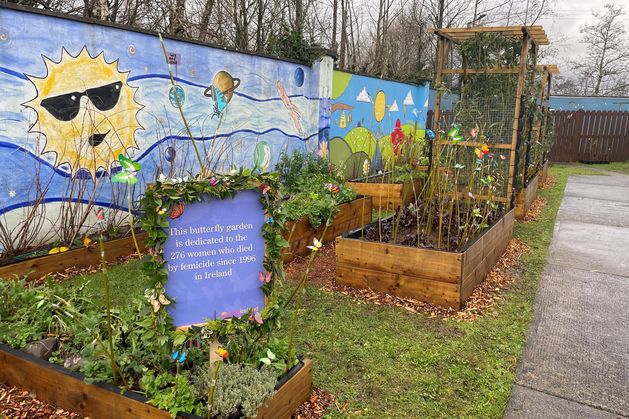
Safe Ireland Mayo’s butterfly memorial in the refuge garden commemorates the 277 women lost to femicide, however CEO Mary McDermott warns the true figures are higher
Each woman is represented by a single butterfly, a symbol of transformation, change and rebirth.
Scattered throughout the garden, the butterflies create a beautiful yet stark reminder of the violence women face across the country.
Mary McDermott, the CEO of Safe Ireland, explained the deeper meaning of the butterfly memorial.
“The theme of the butterfly is a commonplace and well-known trope of cocooning, disillusion, reassembling and recovery into a transformative and different way of life,
“The process of recovery is a very precise and skilled process. There is a lot of difficult truths that have to be faced, there is a lot of need for practical and surrounding supports to be in place so the journey to independence and freedom is possible,
“To that extent, the butterfly represents that in a very simple and straightforward way,” she said.
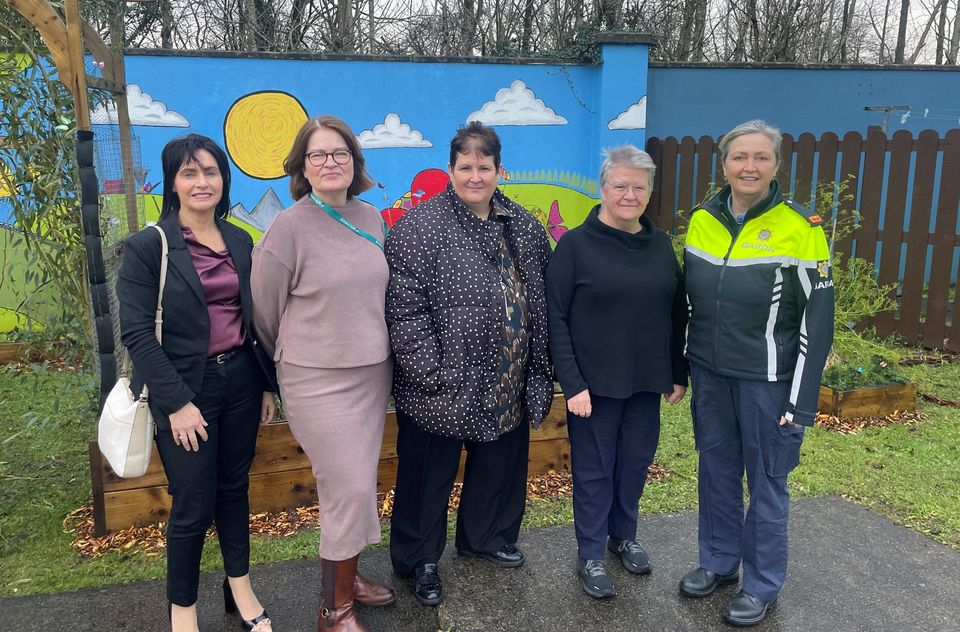
(From left to right: Patricia Horan from the Law Centre, Hilda Gregg Acting Manager at Safe Ireland Mayo; Christine Lodge, Director of Operations for Safe Ireland; Mary McDermott, CEO of Safe Ireland Mayo; Inspector Naomi de Rís) Women from various support service across Mayo took attended the memorial garden launch.
While the memorial honours women lost to femicide, it also sits within a living, growing garden that supports women and children currently staying in the Safe Ireland Mayo refuge.
The garden, which is used daily by residents, offers a quiet, natural space where they can plant fruit and vegetables, learn about nature, or simply take time for themselves as part of their healing.
For many, this hands-on connection with nature complements therapy and can provide an alternative way to process their thoughts.

The butterflies are dotted around the garden where the fresh fruit and vegetables are growing
Dominika Adamiec, a volunteer at Safe Ireland Mayo, started the garden last year. She decided to create it after some of the children staying at the centre showed an interest in gardening.
“I said I need to find something for them to do. I thought I’m going to plant potatoes with them,
“Every child got a bag and some soil, and they planted the potato inside the bag and into the ground,” she explained.
“It is important for me that when they leave, they take these plants with them, so they can plant them again and it is theirs.”
Planting in bags means families can take their plants with them when they move on, something Ms Adamiec sees as central to the project.
Women who had never gardened before are now growing produce, and for some, planting becomes a meaningful part of their recovery. She recalls one woman planting a tree with her.
“When she moves out, she can take the tree with her and plant it in her garden, so that’s beautiful,” she said, “It is important for me that when they leave, they take these plants with them, so they can plant them again and it is theirs.”
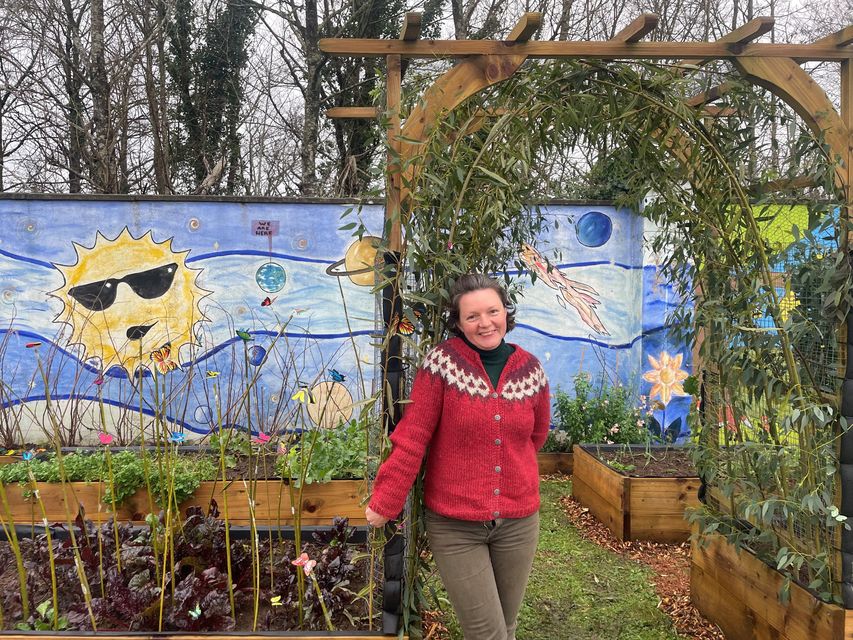
Safe Ireland Mayo volunteer and gardener Dominika Adamiec with the garden she created at the refuge centre.
“Women who were not into gardening are starting to garden. When there is a new family coming, I always ask – What is your favourite vegetable or fruit? One woman said to me parsnips, so we planted them here,
“It gives them a sense of control over their own life. The garden is a place of recovery,” she said.
Five months on, the garden is thriving with carrots, parsnips, raspberries, red cabbage, beetroot and the last of the summer strawberries. The polytunnel makes the garden usable all year round, offering shelter and space for residents to sit, talk or reflect.
“It gives them a sense of control over their own life. The garden is a place of recovery.”
Inside are two chairs donated by friends of Valerie French.
Ms French was an occupational therapist and a mother of three from West Cork. On June 14, 2019, she was found in her home in Kilbree Lower, Westport, Mayo after being murdered by her husband.
The chairs are inscribed with two phrases: “For Valerie French, a kind, vibrant, creative young woman who lived life to the full. Sit and talk a while,” and “You are not alone, we believe you, we are here for you.”
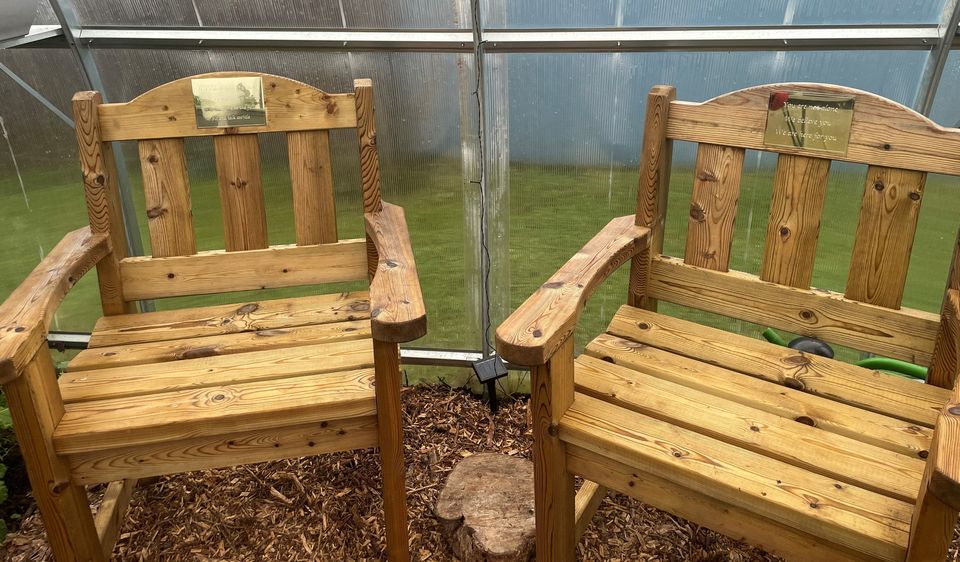
The memorial chairs in the polytunnel that were donated to Safe Ireland Mayo.
While Femicide Watch has recorded the deaths of 277 women, the true scale of femicide in Ireland is widely understood to be higher.
Underreporting, misclassified violent deaths, and the exclusion of women who die by suicide after experiencing sexual, domestic, or gender-based violence all contribute to an incomplete picture.
“You are not alone, we believe you, we are here for you.”
The absence of a legal definition of femicide in Irish law further complicates how the issue is recognised and addressed.
“We know that 277 women have been killed since 1996,” Ms McDermott said, “I could go immediately to a heavy debate about that number, I could talk about data, and how the definitions and language [used] constantly obscures – it’s like a willful effort is made on the part of society generally not to be able to name this accurately.”
She added that arguments over terminology can distract from the wider reality: “The simple fact is there is a pervasive pattern against women and girls, and more generally against children and young people.”
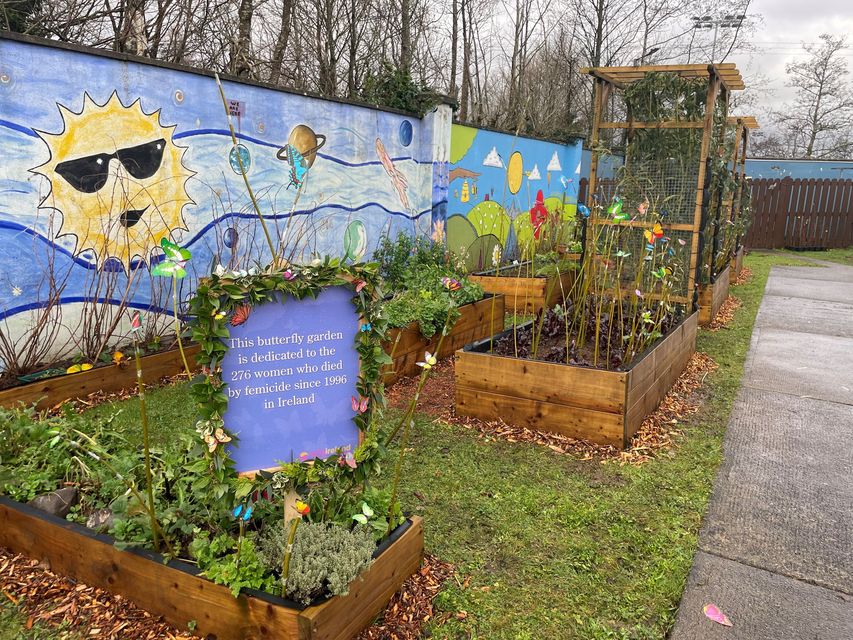
The Butterfly Memorial Garden is at the Safe Ireland Mayo Refugee Centre.
Ms McDermott stated that domestic violence is not a niche or isolated issue; it is central to many of Ireland’s most pressing social challenges. Domestic violence, she said, is a keystone social problem.
Addressing it at the state level, she argued, would relieve immense pressure on the system elsewhere, particularly in relation to housing.
“Domestic violence has to be recognised as a core driver of homelessness and the breakup of households.”
“If you address it at the state level, you would be going to the heart of a large-scale social problem, and you would relieve many other problems if you attended to it correctly – homelessness and housing not being the least of it,” she explained.
Yet she believes the political handling of homelessness often masks the role domestic violence plays in driving families into housing insecurity.
“We understand the political battles around housing, homelessness and numbers; they are weaponised as a political attack. But what we are saying is in principle domestic violence has to be recognised as a core driver of homelessness and the breakup of households.”
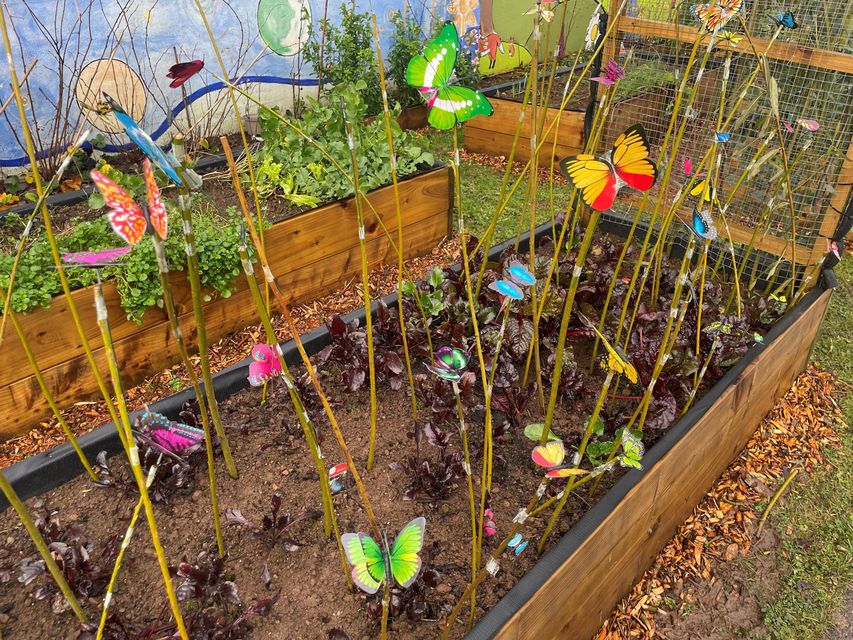
Each butterfly represents a women who has lost her life to femicide in Ireland since 1996.
Acknowledging the scale of the problem, she said, must be separated from the challenge of meeting housing needs: “We need the Department of Housing, through its guidelines to local authorities, to name domestic violence for the reality that it is – a core driver of homelessness.”
She noted that officially counting domestic violence as a cause of homelessness would almost certainly raise the figures, but insisted there is “no reason to get hysterical” over it.
“If you address it at the state level, you would be going to the heart of a large-scale social problem.”
“What we have observed with local and national politicians is that they do not want to name this because it will raise the homelessness figures, therefore, political weaponry would be put into play,
“We are saying this is turning away from a vast social problem and the intense suffering of individuals, families and communities on the basis of this – we have to turn and face this,
“Safe Ireland has very little time for the cheap weaponisation of homelessness figures in the context of the suffering of victims of domestic violence.”
As the UN’s 16 Days of Activism calls for global attention to gender-based violence, Ms McDermott’s message underscores why naming the problem accurately and unapologetically is essential.
This article has been funded by the Local Democracy Reporting Scheme.
Comments are closed.