
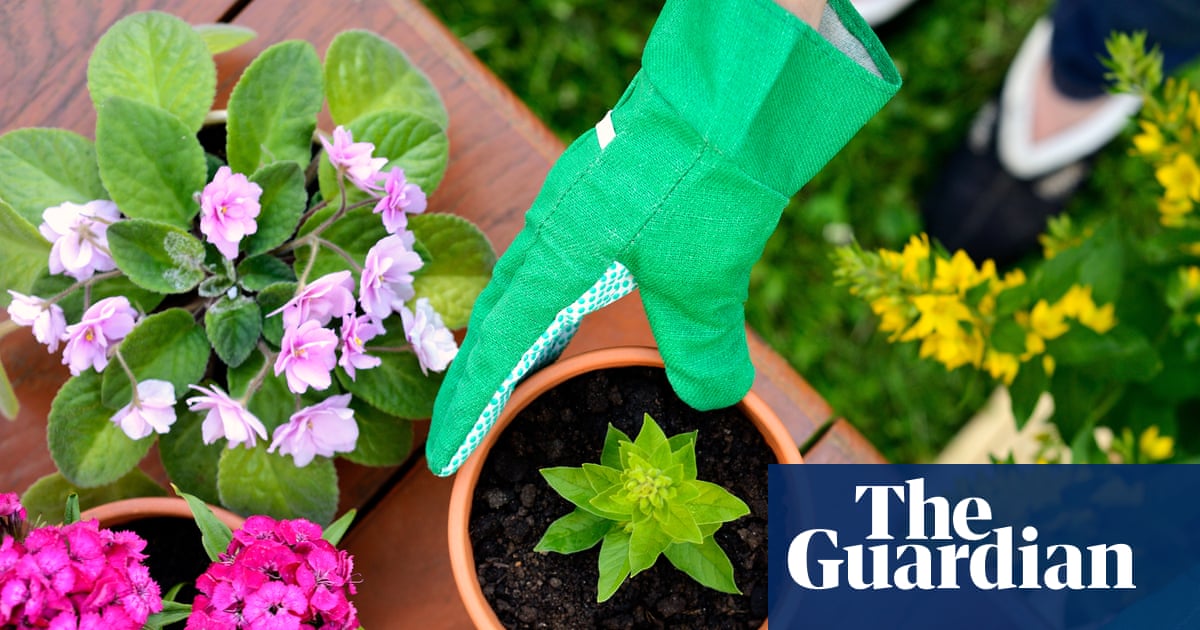
Bouquets of cut flowers will be swapped for tabletop vegetable plants next year, the Royal Horticultural Society has said, as the UK charity announces its top plant trend predictions for 2026.
Mini-planters of aubergines, chillies, peppers and tomatoes will be displayed in homes instead of flowers, as breeders develop dwarf varieties that are decorative and capable of supplementing the weekly shop, the RHS says.
Gardeners have also been looking for drought-tolerant plants after one of the driest springs and summers on record, with much of the country under a hosepipe ban in summer. Rose growers have been crossbreeding their flowers with central Asian varieties that are adapted to arid conditions.
The charity’s predictions draw on engagement with the public across its gardens, shows and gardening advice service, as well as retail and industry trends, science research and new plant breeding.
Guy Barter, the chief horticulturalist at the RHS, said: “Small veg plants are seen by plant breeders and nurseries as an expanding market, and have developed compact cultivars supporting a good crop of quality produce that are easy to grow and have eye-appeal as fully grown plants that will give weeks of satisfaction to gardeners.
A fiery skipper butterfly gathers nectar and pollen on a lantana plant. Photograph: Bruce Chambers/Zuma/Rex/Shutterstock
“These are offered as seeds for people to raise on their own, plug plants are available by mail order and small potted plants are offered by garden centres. Smaller vegetable plants also lend themselves to being grown in cold frames, cloches or even sunny windowsills, where greenhouse space is lacking for bigger, tender crops such as aubergines, chilies, peppers and tomatoes.”
New popular choices include tabletop chillies, compact aubergines and hanging basket cucumbers. Potted herbs also remain a firm favourite, with sales up 10% in the past year across RHS retail.
Drought-tolerant rose varieties are coming to market as green-fingered Britons adapt to climate breakdown.
Barter added: “Roses are tough and reliable shrubs but Rosa persica from central Asia, where winters are bitter and summers fiercely hot and dry, have been used by plant breeders to take rose resilience to new levels, using R persica as a source of drought and disease resistance in some new cultivars currently under trial at RHS Wisley. This year they have performed outstandingly well in the garden, relishing this summer’s extremes.”
Plants that can adapt to different environments are gaining popularity, says the RHS. Photograph: Kristina Blokhin/Alamy
Another increasingly popular climate hack is the use of “in-and-out plants”, the RHS says. Traditionally, indoor varieties such as spider plants and tradescantia are making their way into outdoor summer hanging baskets and pots – a trend likely to continue as England faces more frequent hot, dry summers. Lantana, long grown indoors in Britain, has flowered prolifically at RHS Garden Wisley this year. Other formerly indoor-outdoor plants are now potential outdoor plants, including the more delicate lomandra and salvia hybrids.
And 2025 is also the year of the tomato, as gardeners took advantage of the hot, dry summer, driving a 14% increase in sales. The RHS expects that trend to continue next year.
As a result of the drought, gardeners are experimenting with new ways to use water butts. Some are punching small holes in strategically placed butts to provide a slowrelease of water into the soil for storage and to free capacity for the next rainfall, helping to minimise mains water use. And there are some hi-tech solutions too: AI-enabled water butts that self-empty based on the weather forecast are being trialled and could be on the market soon, the charity says.
Comments are closed.