
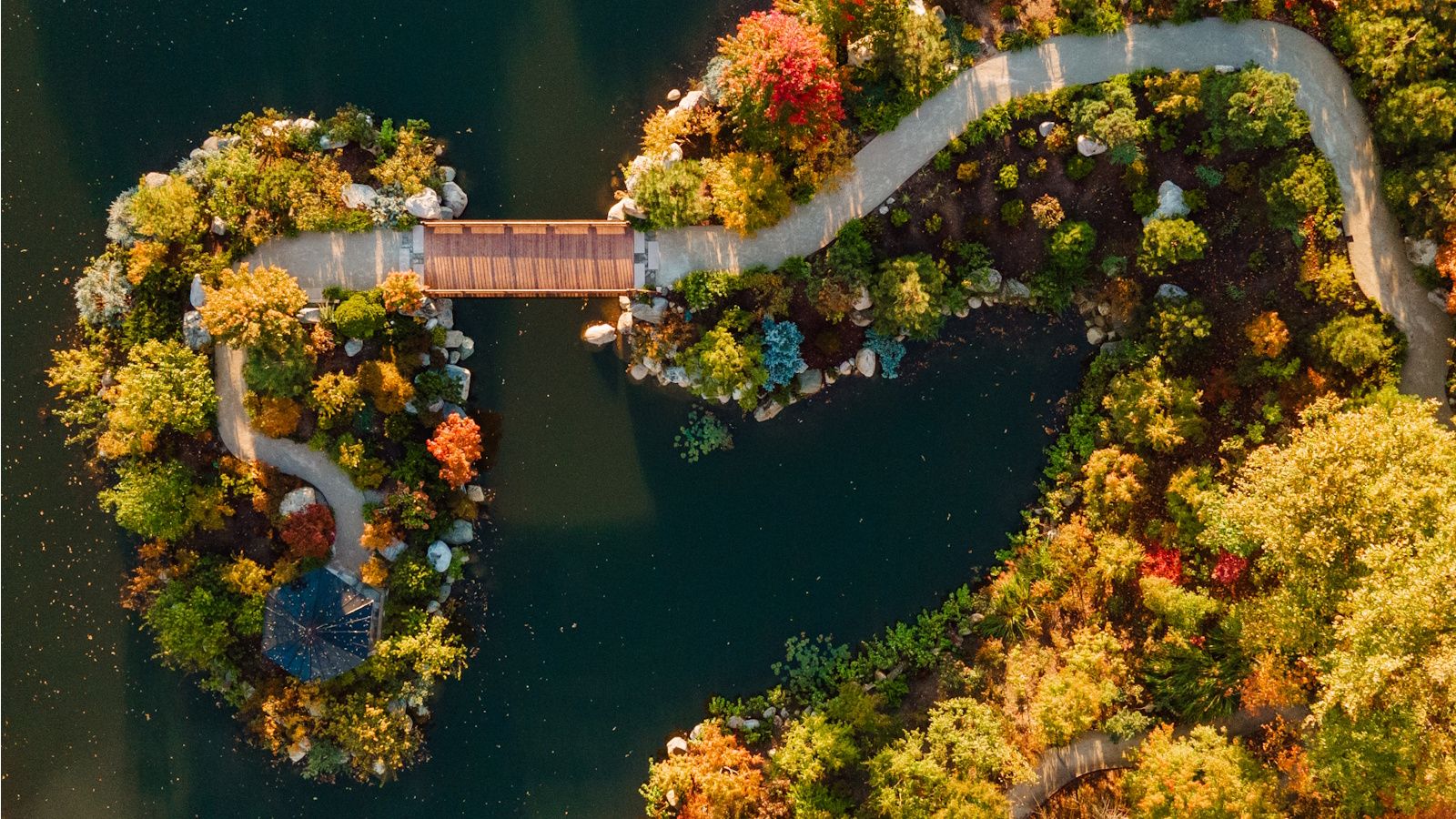
Few places bring horticulture and art together quite like the cultural hub of Frederik Meijer Gardens & Sculpture Park in Great Rapids, Michigan. Here, a sublime Japanese garden waits to enlighten with design delights that don’t just deliver on the aesthetics – they transform one’s perception of the world around us.
Spanning eight acres, Meijer’s Japanese garden is home to a fascinating collection of Japanese native flora, encompassing meandering paths that twist and turn around a large pond central to the design. But it is so much more than a beautiful garden. For designer Hoichi Kurisu, the Meijer Japanese Garden is a chance to immerse visitors in practices deeply rooted in Japanese garden culture, unlocking the symbiotic relationship between humanity and the natural world.
You may like
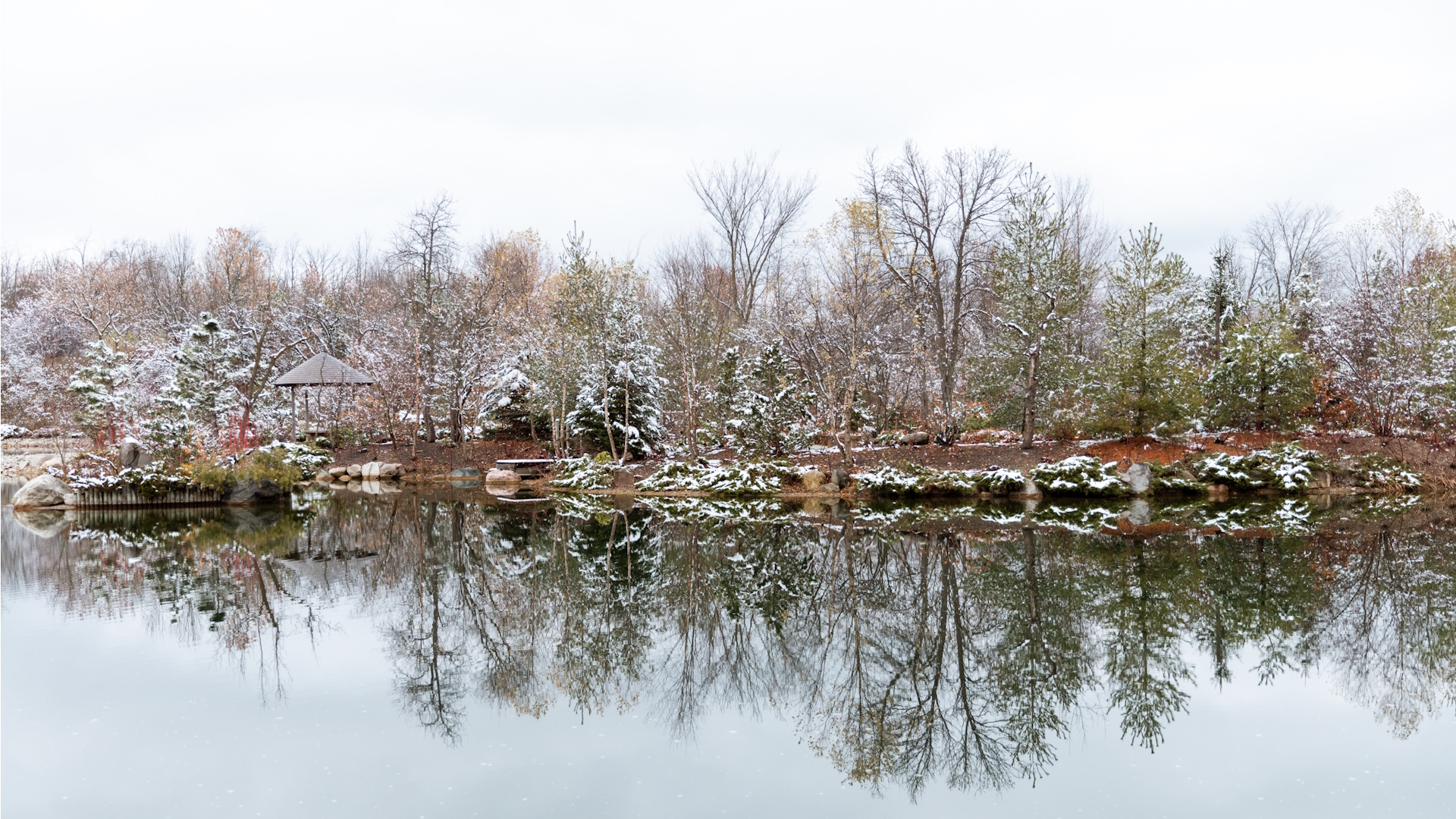
Clear reflections on the pond create mirrored illusions, an example of nature as art
(Image credit: Courtesy of Frederik Meijer Gardens & Sculpture Park)
Snow Blossoms in Winter’s Quiet: The Beauty of Impermanence
‘Winter is one of my favorite times to walk through the Japanese garden,’ says Steve. ‘I think it’s the sound. There’s a quietness in the garden that allows me to perceive it differently,’ he explains.
The Miejer Japanese Garden was inspired by a trip Frederik Meijer (founder of the garden) took to Japan in the early 2000s. Soon after his visit, plans were made to recreate what he saw here.
‘We worked with designer Hoichi Kurisu for about five years on the design and installation of the garden. We just celebrated the 10th anniversary this summer,’ Steve explains.
Aspects of traditional Japanese design can be found throughout the garden, with the space exuding tranquillity, peace, and welcoming a moment to pause and contemplate.
For Steve, this is felt most in the stripped back, calm winter landscape.
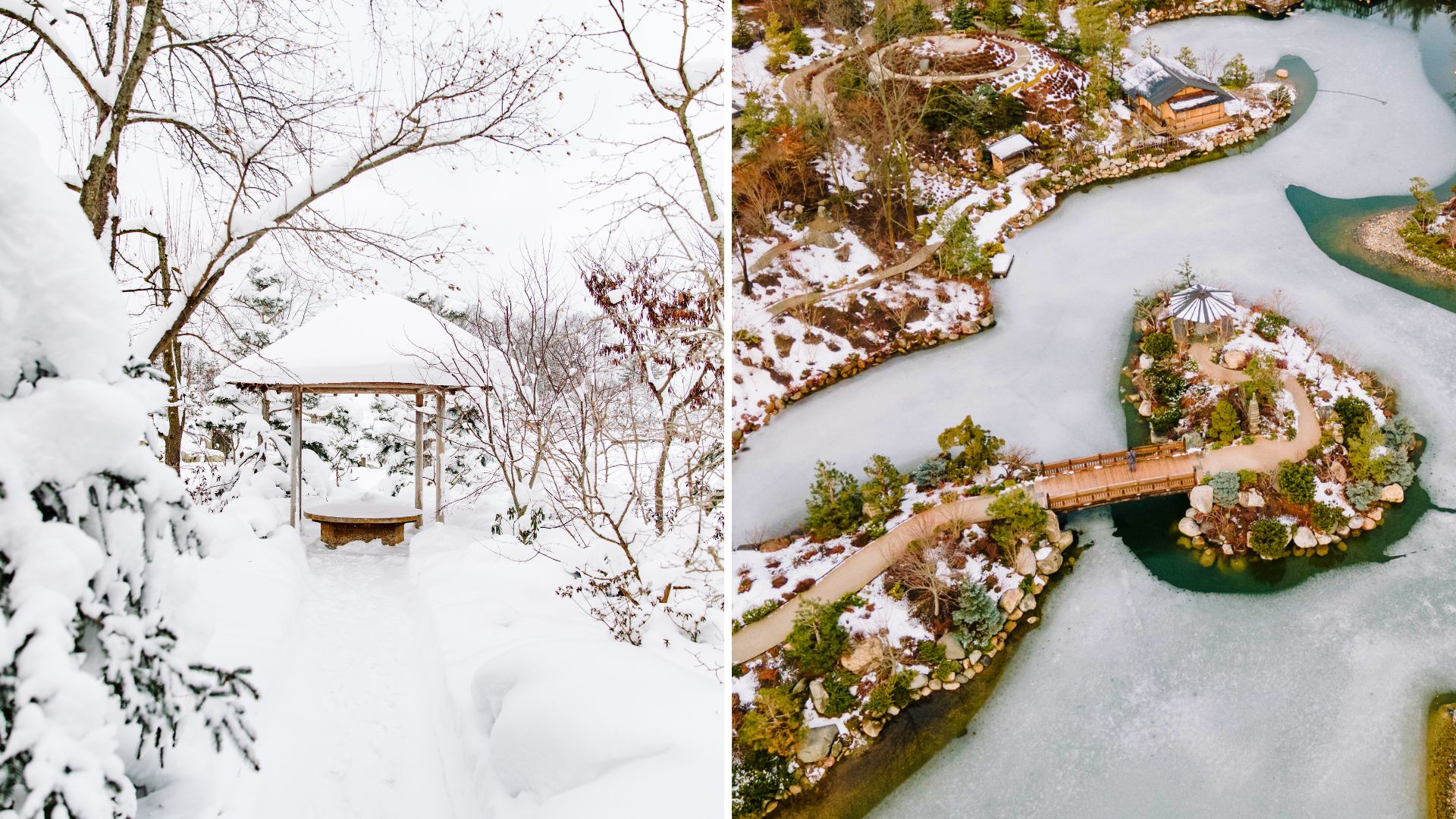
Snow transforms the garden into an entirely different landscape
(Image credit: Courtesy of Frederik Meijer Gardens & Sculpture Park)
‘It’s just beautiful covered in snow. You hear the waterfalls differently, you see ice sweep over the pond. Everything feels a bit more muffled in the winter, but it somehow puts you at ease,’ Steve describes.
There’s much to see at this time of year. While plant matter may have faded, boulders and rocks are painted white in snow, cold-hardy ‘Yellow Groove’ bamboo stands tall, and water features softly trickle.
You may like
In Japanese tradition, the winter garden has as much life as the bloom-filled spring. It’s a time to observe the underlying bones of the garden, take note of its structure, and appreciate stillness.
Snow is seen as another form of blossoming, with bare branches laden in a blanket of the season’s offering.
As the snow melts away, it represents nature’s fleeting beauty. This idea of impermanence is known as ‘mujō’, the same sentiment given to the short lifecycle of cherry blossoms.
For Hoichi, this evolving landscape is paramount to the visitor experience. Each season encourages you to look at things a little differently, with winter in particular demonstrating ‘wabi-sabi’; the celebration of imperfection, simplicity, and subtle beauty.
Profuse Color: The Garden Awakens With Spring
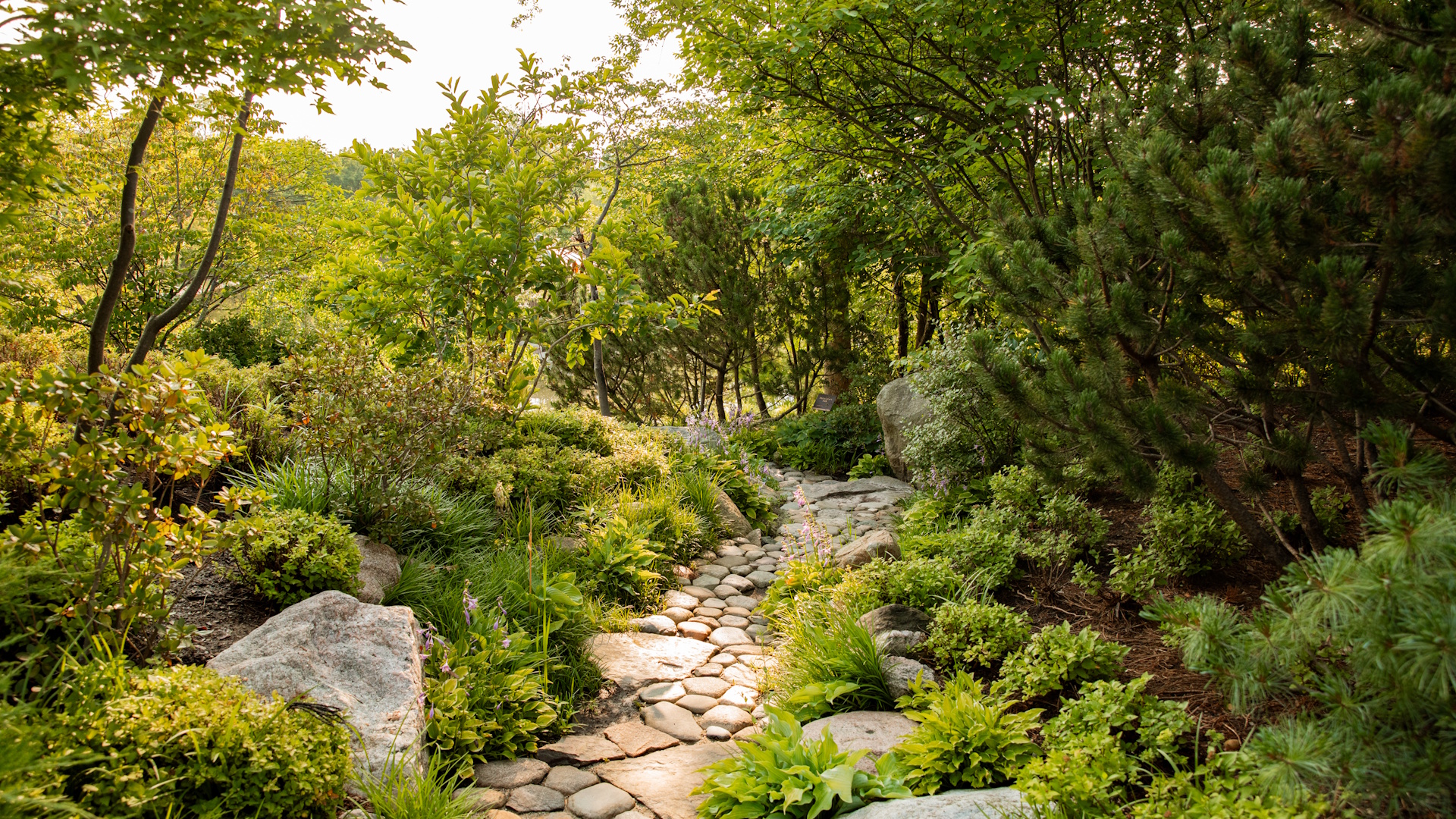
Lush plantings transport you to peaceful forests
(Image credit: Courtesy of Frederik Meijer Gardens & Sculpture Park)
As the garden begins to defrost in early spring, Steve says the color is almost immediate.
‘The first flush of leaves on the trees is a joyful sight after winter. The small chartreuse green buds contrast to the dark stems,’ he describes.
‘Watching the ice go away, the snow melt, and the trees green up is a delightful process. It’s a physical reminder of the restorative power of nature that Hoichi is so passionate about.’
The garden trees are fundamental to the structure of the garden year-round, offering evergreen color and foliage throughout.
‘The conifers create a backbone of the garden, recognizable in all four seasons,’ Steve says.
‘I think they’re one of the most iconic plants in the garden, especially because they have been pruned and shaped over time to really create the caricature of a tree,’ he adds.
The pruning of these trees is referred to as ‘niwaki’, where branches are carefully selected and pruned to create an exaggerated silhouette that looks as though the tree has been shaped over many years by forces of nature.
It’s an artform that leaves a tree with an airier, organic, and asymmetrical, yet refined look.
The art of bonsai also touches on this sculptural pruning, just on a smaller scale.
At Meijer, this can be appreciated in the the vast bonsai collection on display from spring to fall, including acers, pines, and even flowering varieties like azalea.
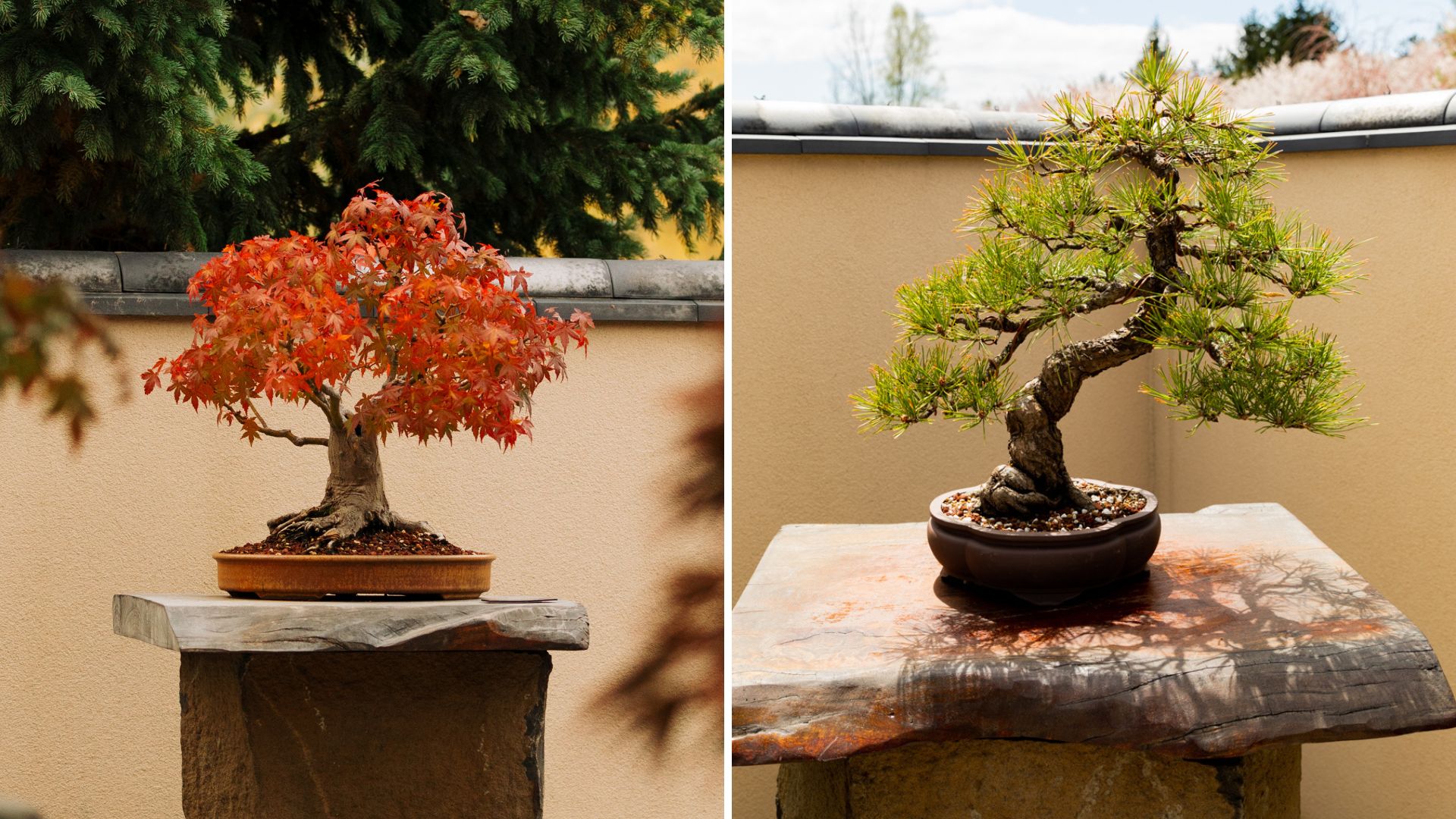
Meijer is home to many different types of bonsai trees, which are put on display as living sculptures
(Image credit: Courtesy of Frederik Meijer Gardens & Sculpture Park)
As spring progresses, Meijer Japanese Garden experiences what Steve describes as ‘ephemeral waves of bloom.’
‘The first example of this is in late April with the flowering cherry blossoms in the Cherry Tree Promenade along the Zig-Zag Bridge,’ he says.
‘Sakura’, the Japanese word for ornamental cherries, have long been symbolic of fleeting and transient beauty, flowering for just a couple of weeks.
During their peak bloom, which Steve notes is usually somewhere between 20 April and 1 May, creamy white and pink blossoms are in abundance.
‘Serviceberry comes next, and then the vibrant azaleas, and later water lilies,’ Steve says. ‘Every week in the growing season has something new in flower, there’s always a colorful display to soak up,’ he describes.
And it continues into fall, as fiery hues take over the entire garden landscape thanks to the large collection of Japanese maples of all leaf shapes and sizes turning orange, red, and yellow.
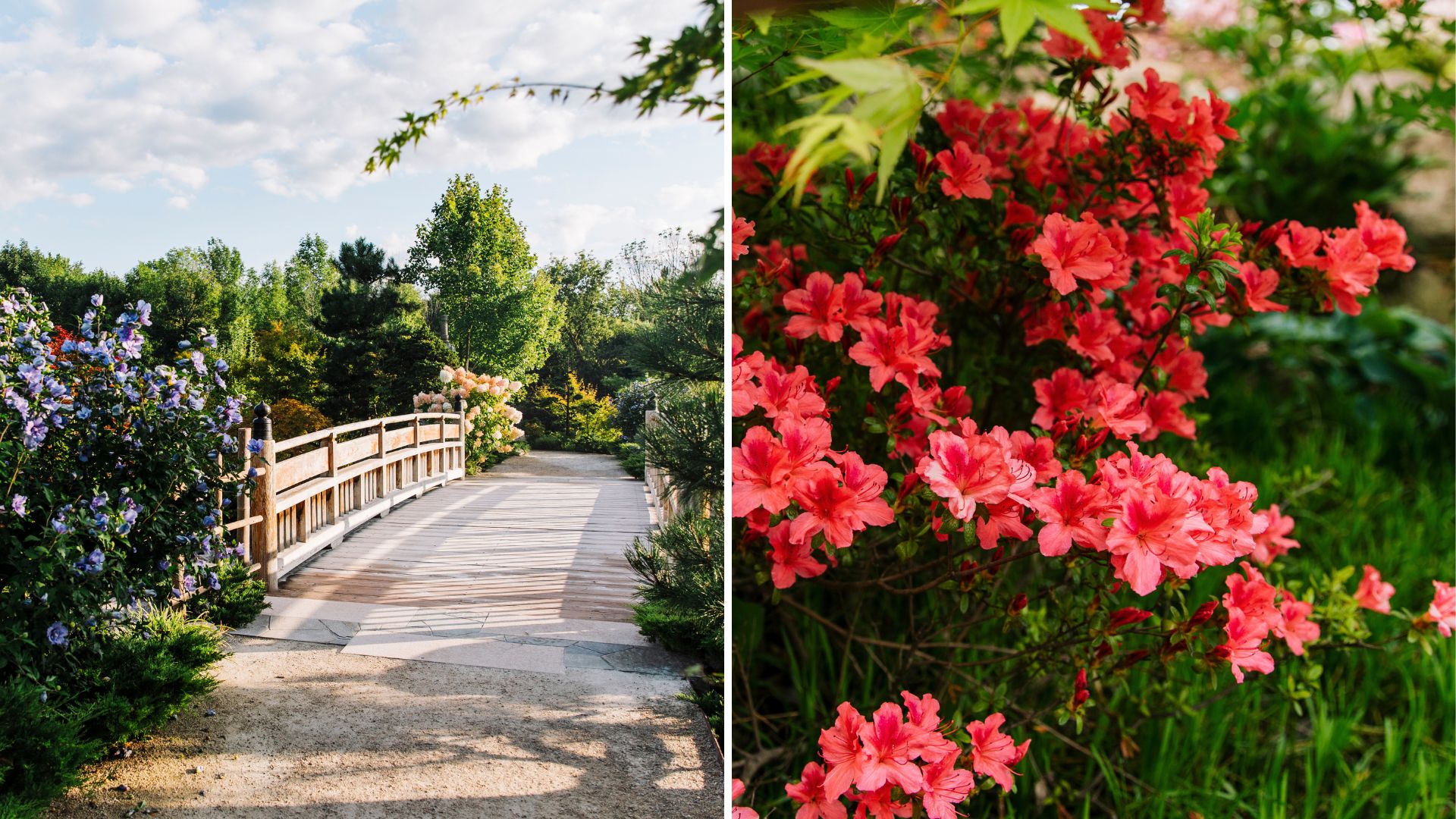
Bright flowers can be seen across the garden throughout the spring and summer months
(Image credit: Courtesy of Frederik Meijer Gardens & Sculpture Park)
A Taste of Japanese Culture in Michigan: The Teahouse and Zen Garden
Japanese plants are not the only core element of historic design principles, traditional structures are just as vital in the use of the garden.
One of the most bespoke features at Meijer is the traditional teahouse, open to the public to partake in the garden’s renowned tea ceremony.
‘The teahouse was actually created in Japan, dismantled for shipping, and reconstructed here, built from authentic materials,’ Steve shares. ‘It’s got a hand bent copper roof and the tatami mats and woodwork are traditionally created.’
Inside, a traditional tea area is found, including a raised seating area for those with accessibility needs.
‘It was important to us that persons of any ability can participate in the tea ceremony and enjoy the intentional views of the pond from the windows,’ Steve says.
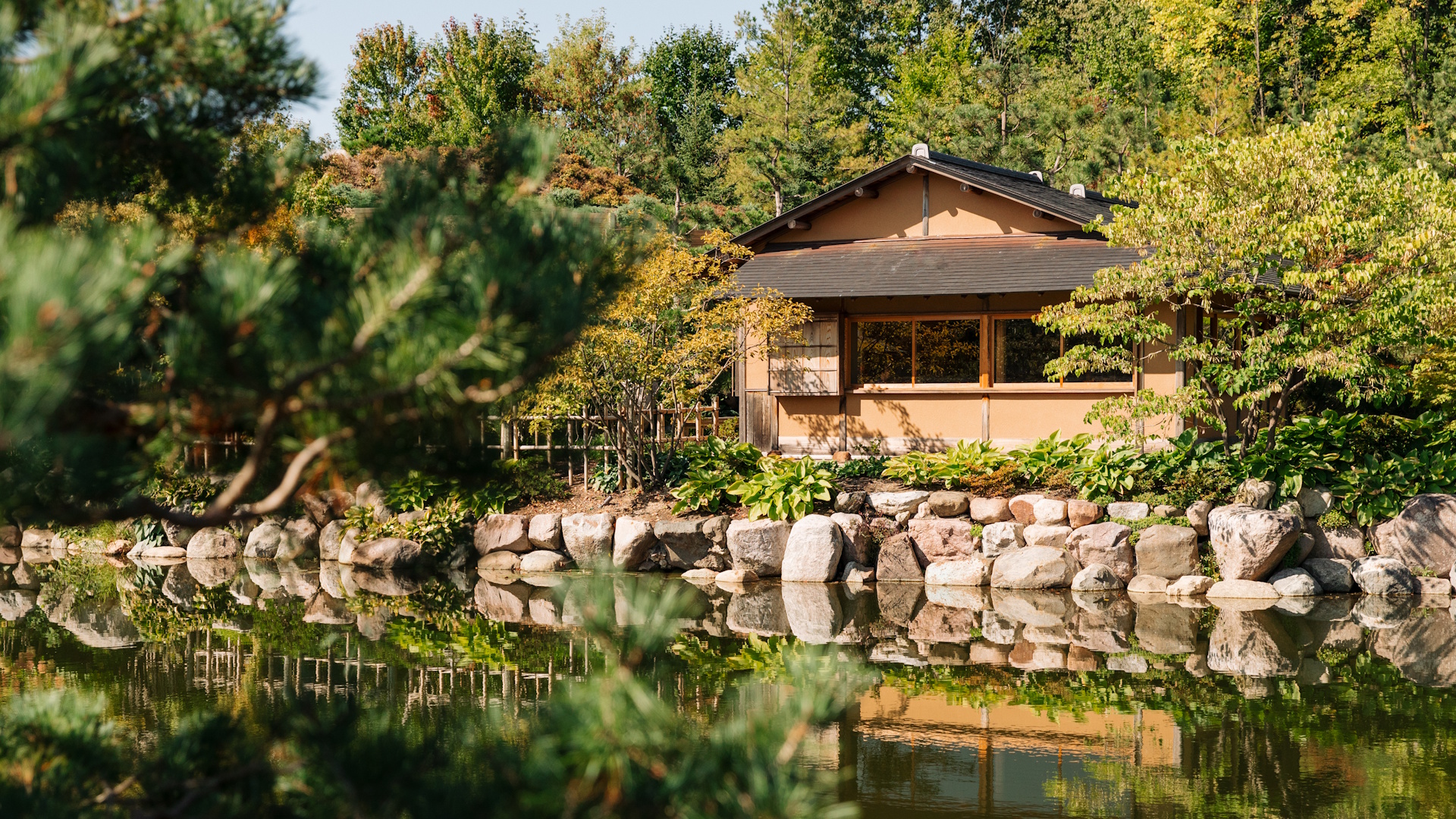
The teahouse looks out on the pond so guests can benefit from peaceful views during the tea ceremony
(Image credit: Courtesy of Frederik Meijer Gardens & Sculpture Park)
Tea ceremonies (‘sadō’ or ‘chadō’) hold deep meaning in Japanese culture and are strongly influenced by Zen Buddhist philosophy. They are practiced as a meditative art where individuals gather, share tea, and reflect.
‘I’ve been fortunate to participate in not only our tea ceremony, but also a tea ceremony in Japan,’ says Steve. ‘It’s a way to really quiet the senses and participate in mindful reflection, aided by the serenity of garden views,’ he describes.
‘It’s an opportunity to connect with the people you’re with, but also to connect with yourself.’
Frederik Meijer Gardens & Sculpture Park holds several tea ceremonies throughout the year run by professional tea masters.
‘These events are always popular. People are delighted to experience such an authentic experience and get a feel for these traditions,’ says Steve.
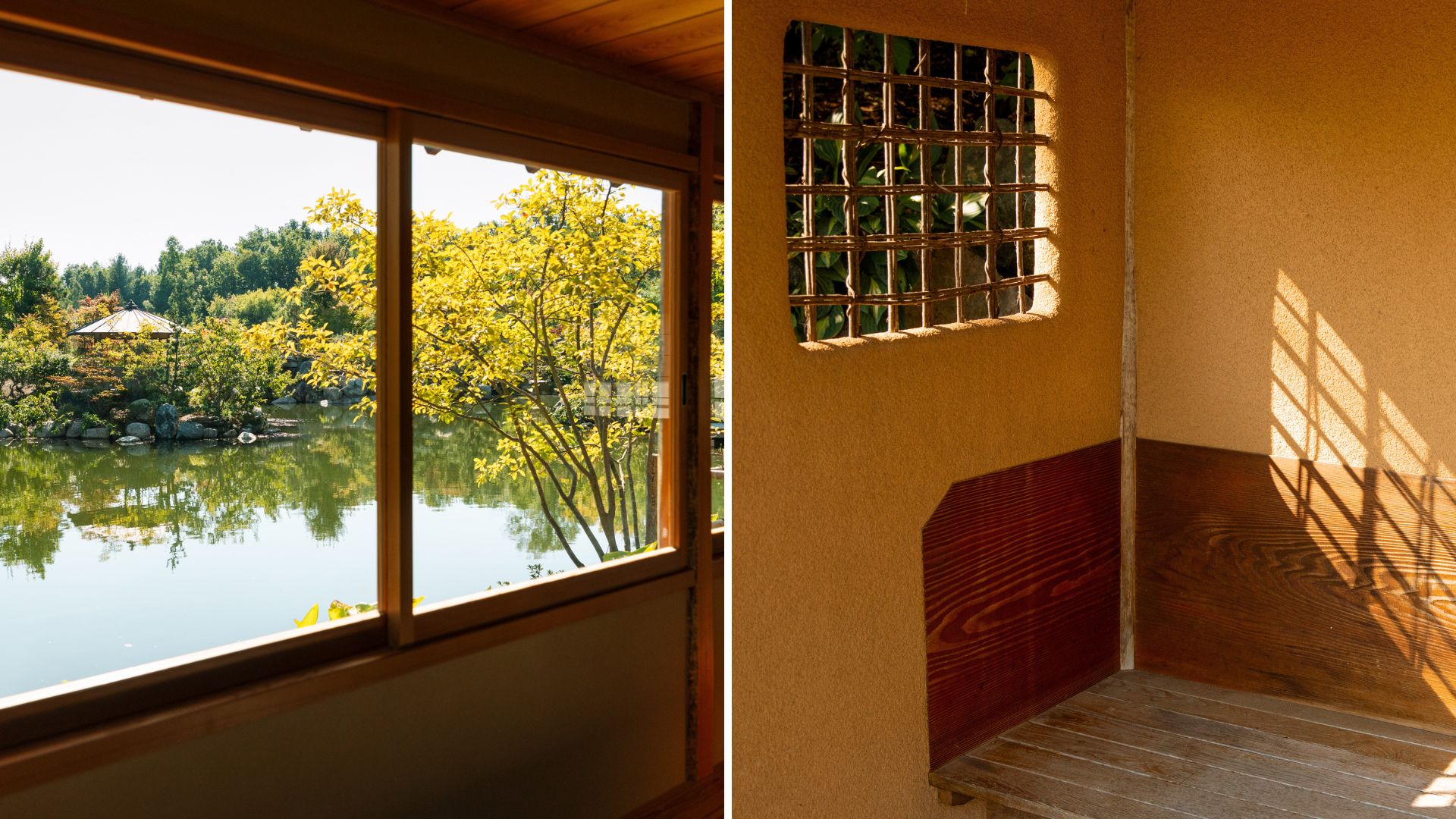
‘The tea ceremony is an art. It takes dedication and practice to become proficient in reaping its rewards’ – Steve LaWarre, Senior Vice President of Frederik Meijer Gardens & Sculpture Park
(Image credit: Courtesy of Frederik Meijer Gardens & Sculpture Park)
Another meditative art within Japanese gardens is the zen garden (‘karesansui’), a dry gravel garden, minimal in design.
‘This is a space where our four horticulturists looking after the Japanese Garden can really express themselves,’ Steve notes.
Traditional Japanese rakes are used to create curving patterns in the gravel. The result is a piece of artwork in its own right, especially impressive when viewed from above.
‘There are some classic designs that change through the seasons, but the zen garden is also refreshed if it rains or there are accidental footsteps,’ Steve explains.
Zen gardens often have boulders placed asymmetrically on the gravel, as found at Meijer. It’s a representation of islands, mountains, and living beings. The patterns around them offer organic shapes without rigid symmetry, creating a natural, light space to tune into your thoughts and emotions.
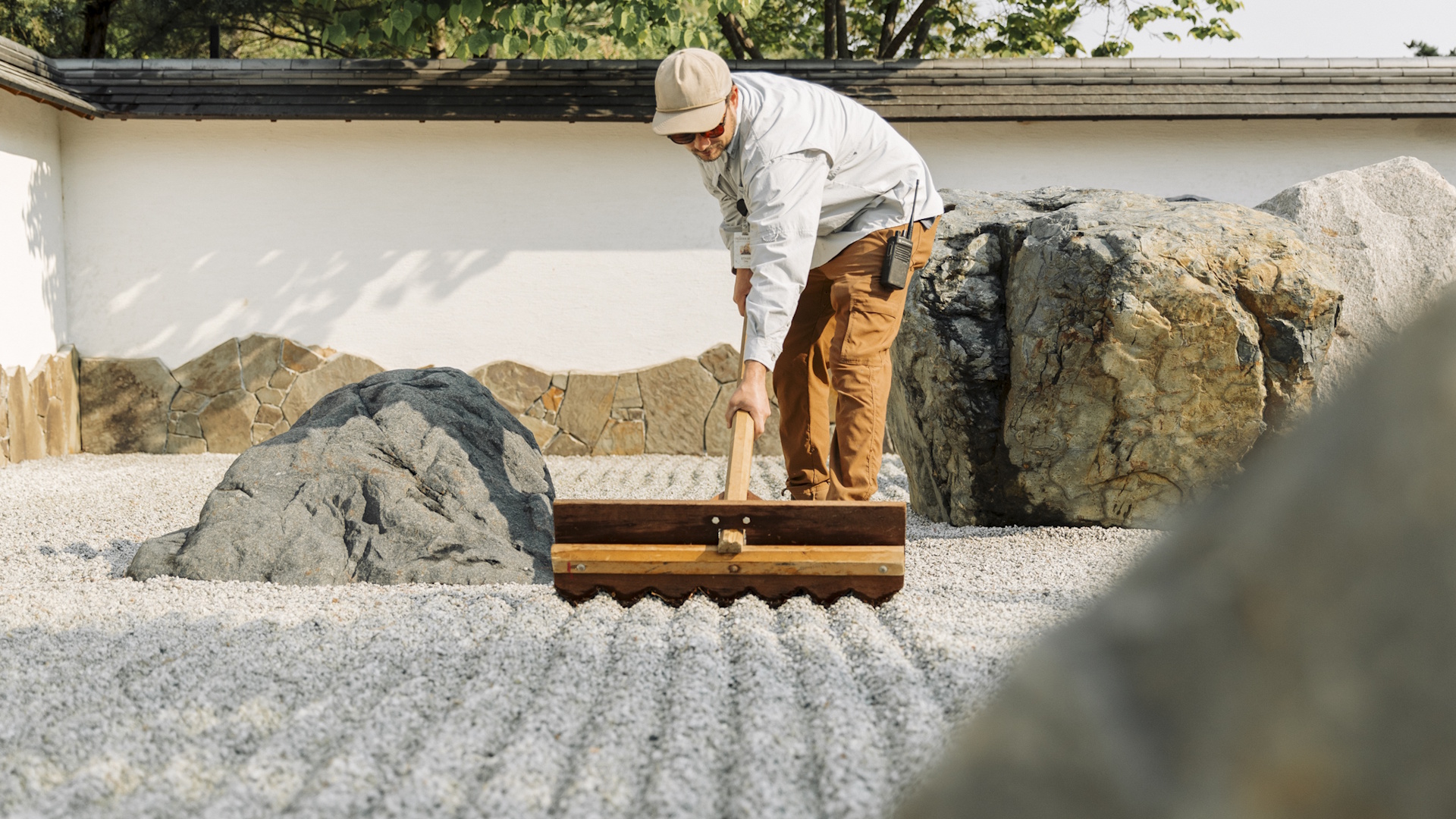
The practice of maintaining the zen garden is a mindful activity
(Image credit: Courtesy of Frederik Meijer Gardens & Sculpture Park)
The Heart of the Garden: Reflections From The Water
No Japanese garden is complete without water, and the water features found at Meijer are pivotal in unifying the different areas of the garden.
‘The shape of the central pond reminded Hoichi of the Japanese character for a heart. It’s known as ‘kanji’,’ says Steve. ‘It’s not your physical heart, but rather your spiritual heart, your sense of being.’
Within the pond are several islands, including a peninsula that sticks out. A network of bridges guides the visitors around these different areas, while keeping the water in sight at all times.
‘We even have a viewing hill that you wind your way to the top of, giving you a view across the entire garden and pond,’ Steve describes.
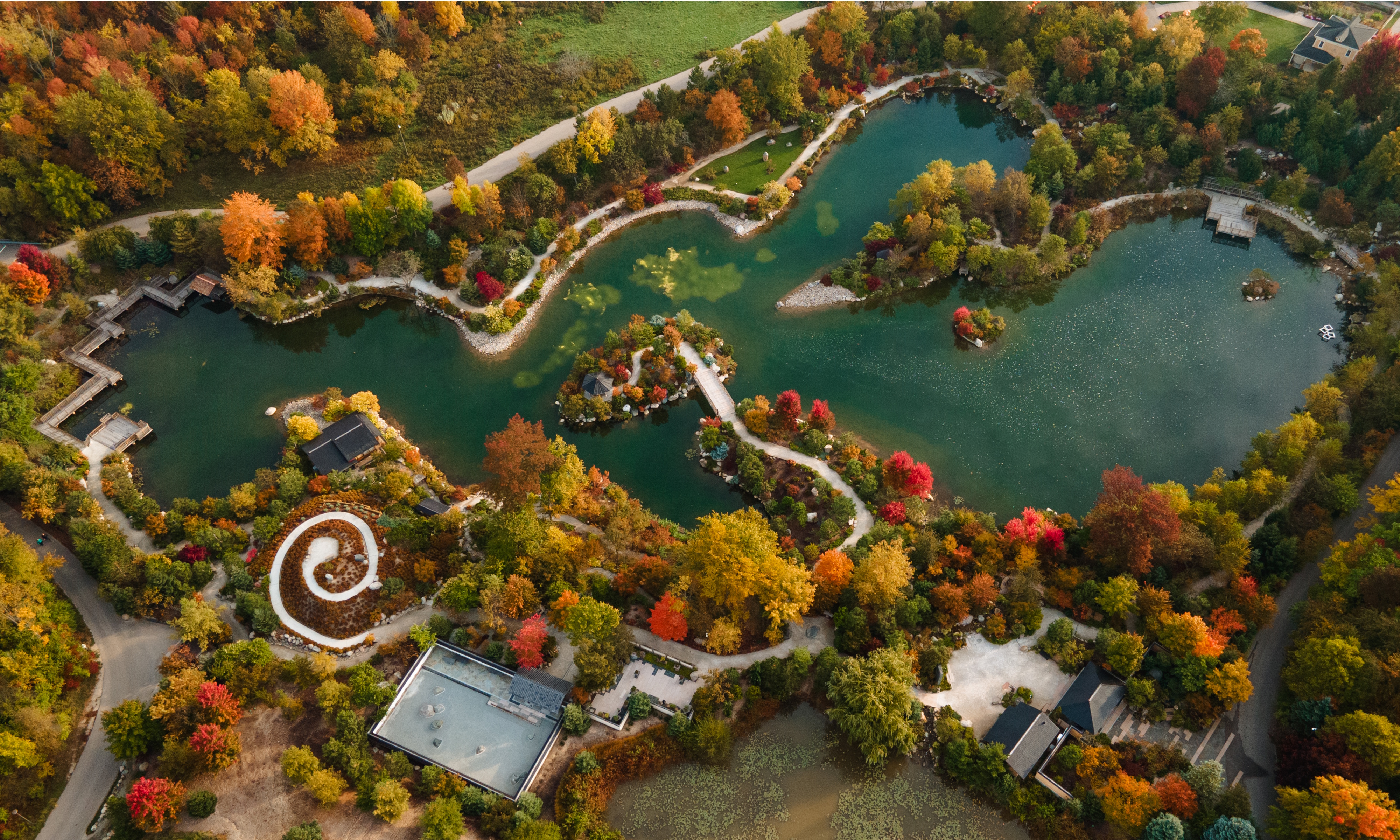
The ‘kanji’ shape of the pond can be seen from above
(Image credit: Meijer)
In Japanese tradition, bodies of water like this are representative of renewal and purification. It’s a dedicated space to meditate, contemplate, and rejuvenate.
Aesthetically, the water offers a harmonious balance with the earth parts of the garden. It also creates astonishing mirrored reflections of the landscape above, an example of an art illusion in nature and a reminder for introspection.
‘There are also four waterfalls in the garden and several water features to create sound and movement around that space, where the pond water can often lie still,’ Steve notes.
Two main waterfalls sit at the north and south side of the pond, representing masculine and feminine energy, once again bringing a sense of harmony.

Waterfalls bring a sensory experience to the garden, with sound you can hear even if you don’t see them
(Image credit: Meijer)
Centuries Old Tradition Meets Modern Art: A Timeless Living Masterpiece
Japanese gardens have historically been places of living art, which is why it makes the perfect fit for the Frederik Meijer Gardens & Sculpture Park.
‘It’s interesting because while Japanese garden design is centuries old, I have always seen it as something not static, especially with Hoichi’s design,’ says Steve.
‘We wanted to make sure that this garden was rooted in tradition, but there was also innovation. For us, that meant including contemporary artwork within the garden space,’ he explains.
The Japanese Garden houses a number of permanent sculptures, as part of the wider garden’s sculpture collection. Steve notes they’re not all necessarily Japanese, but they do embody the overall theme of human connection to nature.
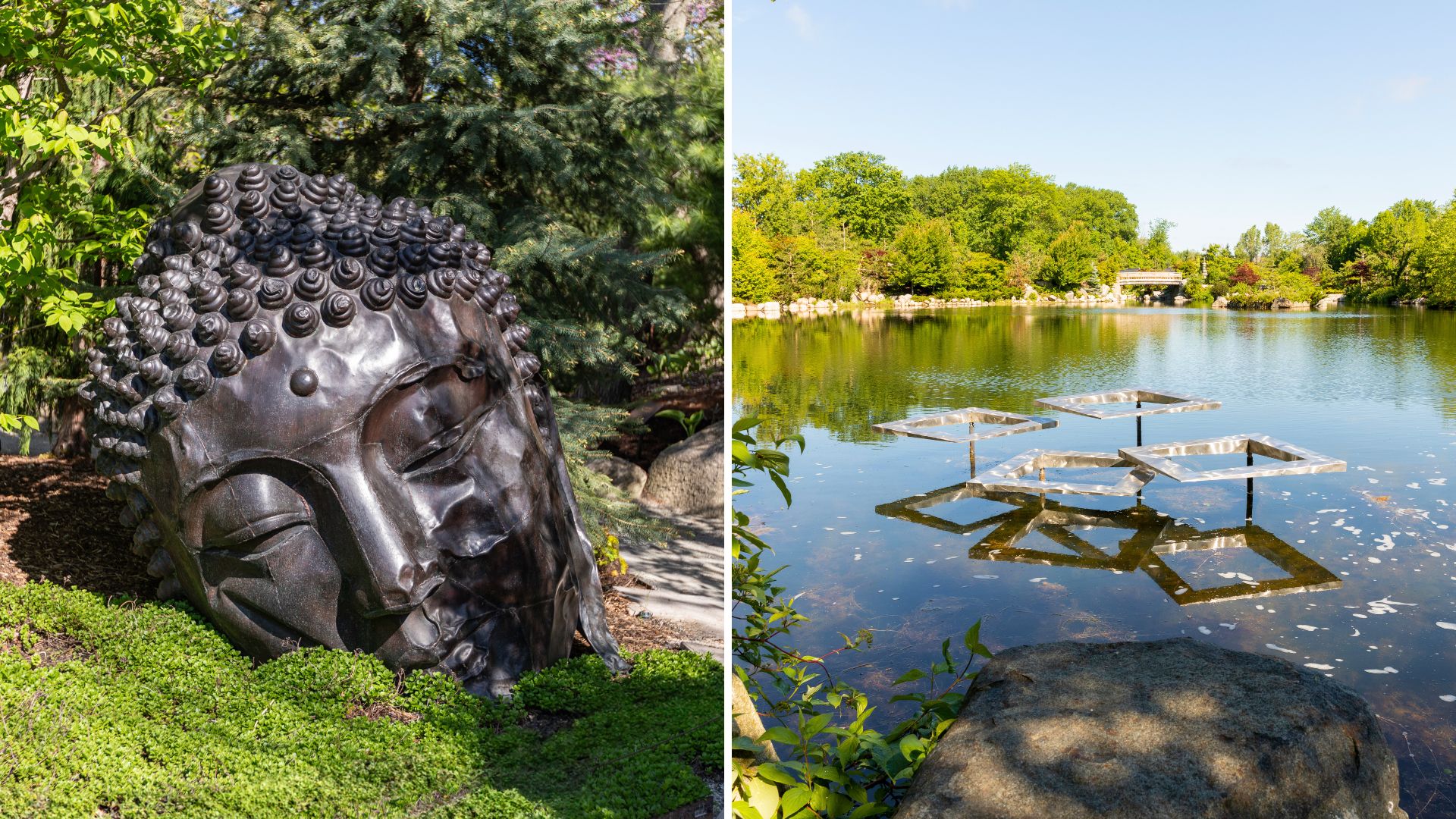
To the left: Long Island Buddha, by Zhang Huan. To the right: Four Open Squares Horizontal Gyratory-Tapered, by George Rickey
(Image credit: Courtesy of Frederik Meijer Gardens & Sculpture Park)
‘Japanese gardens historically have sculptural structures, like lanterns and pagodas. The contemporary artwork nods to this with a modern feel,’ Steve describes.
These artworks effortlessly slot into the landscape in which they’re found, not disrupting the more traditional aspects but rather enhancing the possibilities of enlightenment for visitors.
‘Japanese gardens don’t have a specific formula, they’re more of a concept with a few foundational principles around style and impact. Hoichi captures this in how he uses space in his design,’ Steve says.
‘One minute you can be in an incredibly intimate pathway that is narrow and has plant material enclosing on either side of you. The next, you’ll emerge from lush planting to the opening of the pond, with a long view of the entire landscape.
‘This is intentional, bringing you through different spaces to discover new things and ideas,’ Steve describes.
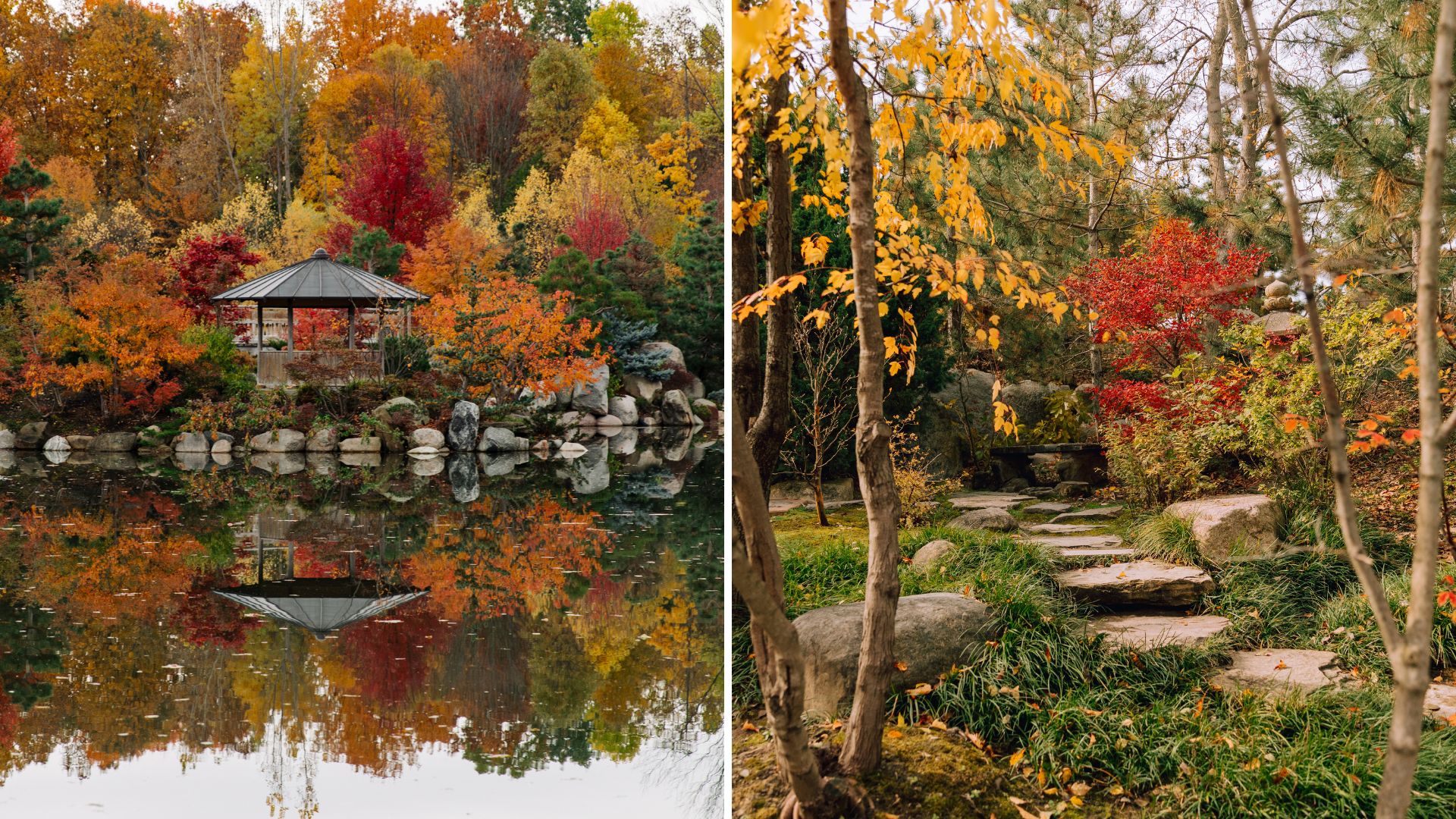
Oranges, reds, and yellows fill the garden in fall, once again changing the landscape for a new season
(Image credit: Meijer)
‘It’s been the most wonderful opportunity to work with Hoichi and to continue working on the evolution of this garden,’ Steve says.
‘It’s taught me to look at things differently. As humans, we can be focused on achieving neat lines and symmetry, but taking a moment to observe your surroundings will reveal this isn’t usually how things are in the natural world.
‘It’s opened my eyes to working with nature, for example by manipulating plantings to natural contours on the landscape. It gives a new meaning to balance – not balance with symmetry, but rather being in balance with nature,’ he describes.
Ideas to Steal From Meijer Japanese Garden
While many of us can only dream of having the sanctuary of a Japanese garden in our backyards, the quiet corners of the Meijer Japanese Garden prove you can create tranquil moments in the smallest of ways.
Here are three easy ideas to replicate in your own yard:
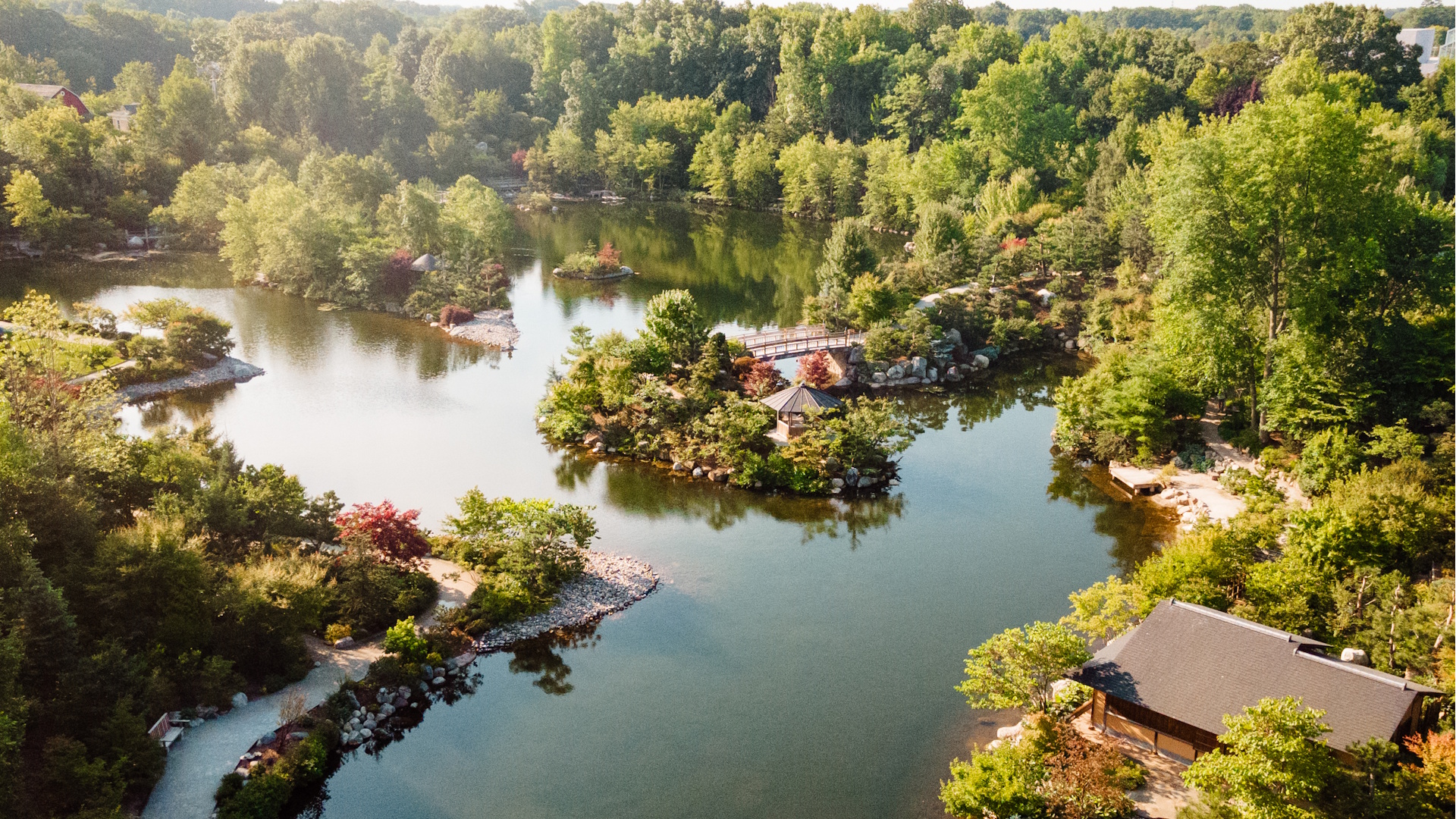
Hoichi’s design intentionally creates different environments to explore over just eight acres
(Image credit: Courtesy of Frederik Meijer Gardens & Sculpture Park)
Consider asymmetry
As Steve notes, imperfection is something celebrated in Japanese garden design. At Meijer, this is apparent in asymmetrical sculptural trees, boulder placement in the zen garden, twisting paths, and more.
Incorporating asymmetry in your own yard can look like a number of things. You could try pruning conifers in a Japanese style ‘niwaki,’ (you’ll find traditional Japanese pruning shears are best for this, which are available on Amazon), curate a border with a mix of plant heights, or use natural curves in paths to follow the landscape. It’s these elements that create a more dynamic look to the garden, enhancing natural features.
Make a moment of water
No matter where you are in the Meijer Japanese Garden, you can either hear or see water. It’s an element known to provide green therapy, instantly soothing nerves and clearing the mind.
Whether you have a garden pond or just a bird bath, there are lots of ways to incorporate water in the yard.
Add some movement to the body of water to create sound. You could do this by simply using a submersible water fountain for a bird bath (like this one from Amazon), for example.
Embrace the winter garden
When it’s cold and frosty outside, it can be easy to ignore our outdoor spaces. But, this is one of the most peaceful times of year at Meijer Japanese Garden.
Take a close look at how frost glistens on architectural seedheads, watch as branches are dressed in snow, and indulge in the silence of the season.
You can even incorporate winter plants in your yard so there’s some color to capture the eye among a more monotone landscape.
Beyond Wild Expectations is a new series exploring exceptional public gardens of every scale, from grand formal parterres to intimate community plots. We reveal the design vision, planting choices and defining details that bring the garden to life, and show how each one gives fresh perspectives on how we connect with nature and outdoor living.
 Steve LaWarre
Social Links Navigation
Senior Vice President at Frederik Meijer Gardens & Sculpture Park
Steve provides strategic leadership for horticulture, operations, and long-range campus planning. With nearly three decades of service, including a distinguished career overseeing one of the Midwest’s most respected public horticulture programs, Steve plays a vital role in shaping the guest experience and stewarding Meijer Gardens’ living collections. His work reflects a commitment to intentional design, botanical excellence, and the seamless integration of art and nature. Steve has been instrumental in the creation and care of many of Meijer Gardens’ most beloved spaces, including The Richard & Helen DeVos Japanese Garden, an eight-acre landscape defined by authenticity, craftsmanship, and seasonal change.
TOPICS
Beyond Wild Expectations
Comments are closed.