
All Are Welcome!
This is a weekly blog with a fun vibe that often veers off gardening, so stop on by and join the conversation. We are here every Saturday at 8AM Central with new content and chit chat continuing throughout the week. We have a core crew that checks in each day, all comments are read. Which makes us the best diary series on DK.
Our plants are mostly sleeping during winter cold, rain, and snow, waiting for spring. Others are sleeping in your garden too – including queen bees hibernating just under loose soil and leaf letter, and bee larvae taking long winter naps in the cozy plant stem nests their moms left made for them at the end of summer.
When I was web surfing for information on bees – that is the native species of bees that are major pollinators for homegrown veggies – I was a bit shocked to see links come up on how gardeners could get rid of bees in their yard. A neighbor confessed to me that she hired an exterminator to eliminate a nest of bumblebees under her house foundation.
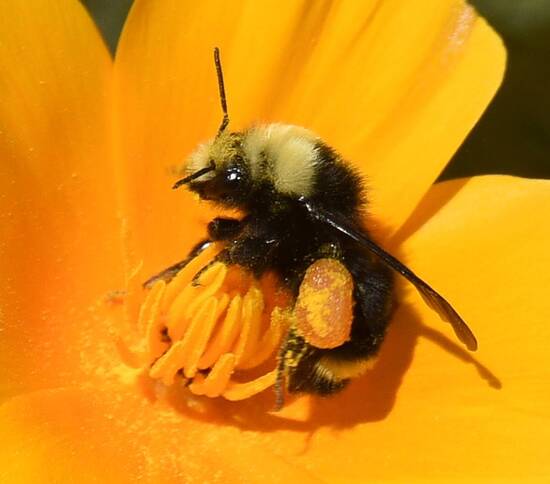
A Yellow-faced Bumble Bee, a common species in the Pacific Northwest, collecting pollen from California Poppy flowers. This was likely the bumblebee species that made the nest my neighbor didn’t want in her yard.
I hope you know that native bees are beneficial pollinators; they won’t sting unless really provoked. Besides, native bees are fascinating, and some are really cute. They range in size from large bumblebees to tiny furrow bees and small carpenter bees. Most are solitary, making nests that only last for one season, or overwinter until spring
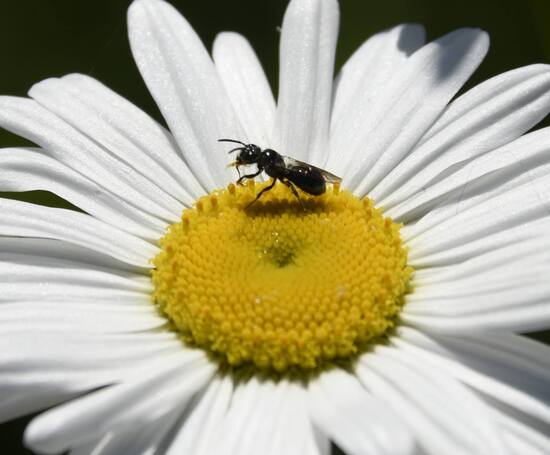
A small carpenter bee on a Shasta Daisy flower.
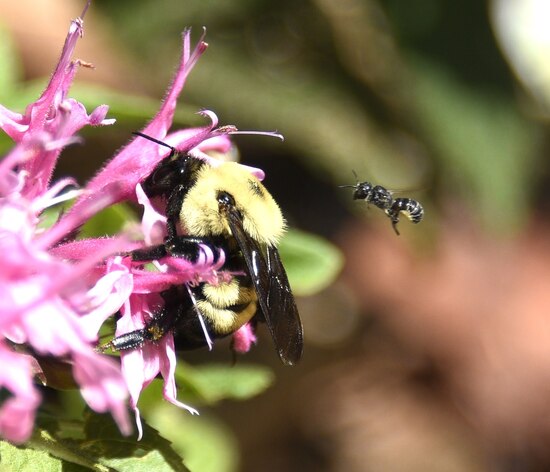
A large queen Brown-belted Bumble Bee that had emerged from winter hibernation sipping nectar from a bee balm flower, photo-bombed by a much smaller resin bee, showing difference in bee sizes.
Most queen bees prepare a nest either by excavating a burrow in the ground or by digging into a hollow plant stem. Large carpenter bees use holes in dead wood for their nests. The queen collects pollen from flowers – often from specific species of native flowers that her larvae need to thrive – and carts the pollen back to the nest to make packets to lay her eggs on. The larvae mature into worker bees that devotedly bring pollen to the nest so the queen can lay eggs for more workers. At the end of the season, some of the bee larvae develop into queens and drones, which mate; and then the queens either make nests for winter hibernating larvae, or queens of some species, like bumblebees, hibernate themselves until the next spring.
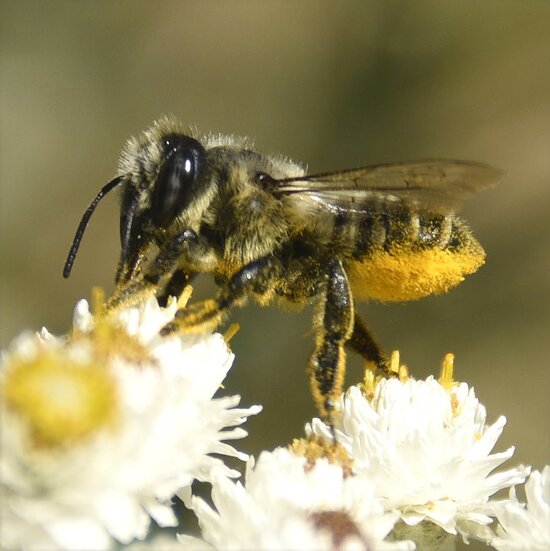
A female Western Leafcutter collecting pollen from Pearly Everlasting, a native aster. Leaf cutters store pollen on hairs on the abdomen rather than on their legs like other bees. Note the serrated jaws that she uses to cut pieces of leaf to line her nest in dead stems or other cavities.
Native bees, along with most other insects, are in decline due to habitat loss, pesticide use, and competition for nectar and pollen with feral honeybees.
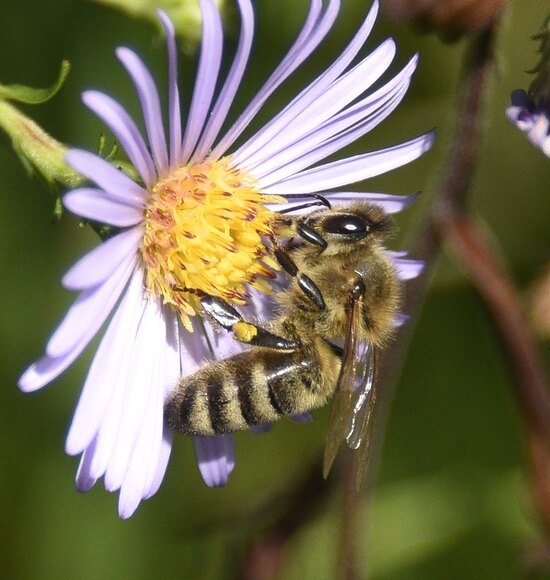
A feral honeybee on a native Douglas Aster flower — honeybees are active from early spring to late fall, and compete with native bees for nectar and pollen.
So how can we garden to protect and encourage our native bees?
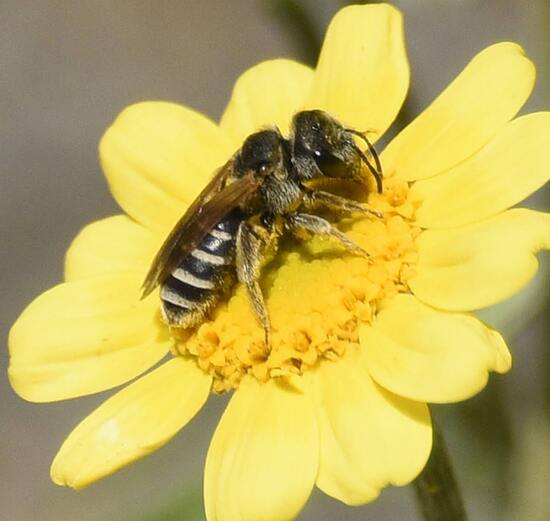
Furrow, or sweat, bees are the most abundant type of native bee. They are ground nesters, tunneling into bare soil to make dens for their larvae. This Ligated Furrow Bee is gathering pollen on her leg hairs from an Oregon Sunshine flower, a native aster.
The Xerces Society (xerces.org) has lots of information about this – not only for bees, but for other pollinating insects too. There are Facebook groups like Bee Friendly Gardening that have handy tips for helping bees and other wildlife in your yard: www.facebook.com/…
The basic principals for welcoming native bees into our gardens are easy:
Do not use insecticides – they kill indiscriminately, and most are not really effective anyway. Instead, go for natural ways to damp down insects you don’t want – such as aphids. Insect predators like spiders, ladybugs, and native wasps can take care of most infestations. You can of course use spot treatments in dire cases like hornet nests, but don’t broadcast pesticides.
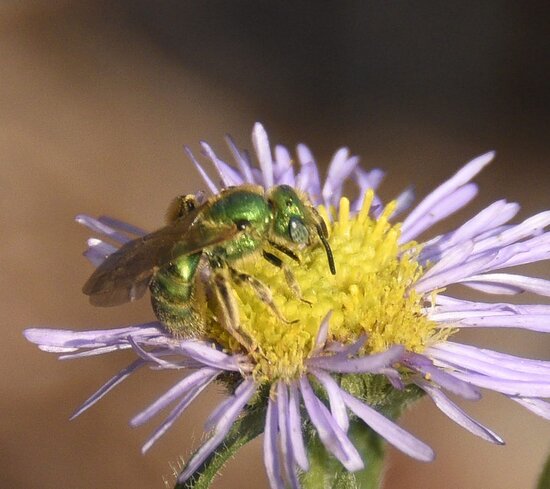
Some species of furrow bees are metallic green, like this female Fine Striped Sweat Bee on a flower of Showy Fleabane, a native aster.
Provide nectar and pollen for bees with diverse flowering plants (those native to your region are best) so that bees have blooms to visit from early spring to late fall. The Xerces Society has regional native plant lists: https://xerces.org/pollinator-conservation/pollinator-friendly-plant-lists Some bees, such as bumblebees, have long tongues that can probe down into tubular flowers, while other bees have short tongues that are best suited to flat flowers like asters. Many of our native bees are adapted to use pollen from specific native flowers to feed their larvae.
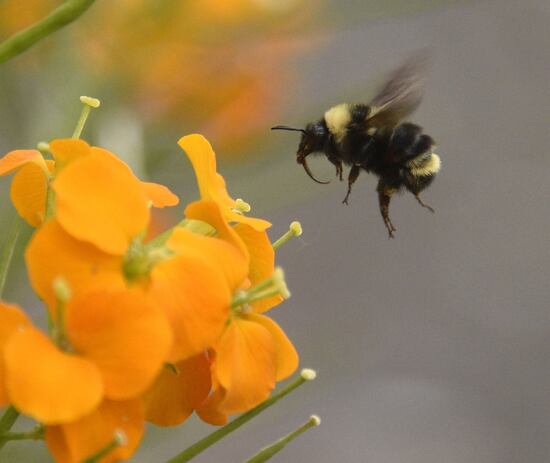
A California Bumble Bee with its long tongue hanging out to sip nectar from blooms of Western Wallflower, a native wildflower in the mustard family.
Provide habitat for bee nests – this includes bare soil areas in your garden for ground nesting bees to dig into, and dead stems for small cavity nesting bees.
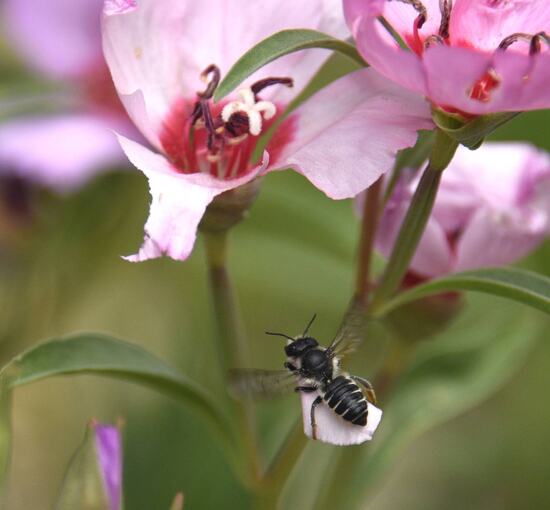
Another type of leaf cutter bee are petal cutters. This female Silver-tailed Petalcutter is flying off with a piece of petal she has just chewed from a Farewell to Spring flower to line her nest. Farewell to Spring is a wildflower in the evening primrose family native to western North America.
Stem nests are a multi season effort:
Fall/Winter: Resist the urge to prune your blooming plants (seed heads = bird food!).
Early Spring: Cut plant stems down to various lengths from 8 to 24 inches. This creates lengths and widths for different types of stem nesting bees, from small carpenter bees to larger leaf cutting bees.
Spring/Summer: Busy bees will prepare nests and lay eggs in the dry stems. Leave these stems intact for another year, so the babies can grow and hatch next spring and summer.
Dead wood — as logs, stumps, or snags — is also welcoming for larger carpenter bees to dig nests into — or help them out by drilling holes of various diameters that mimic the wood beetle holes that these bees like to use for their nests.
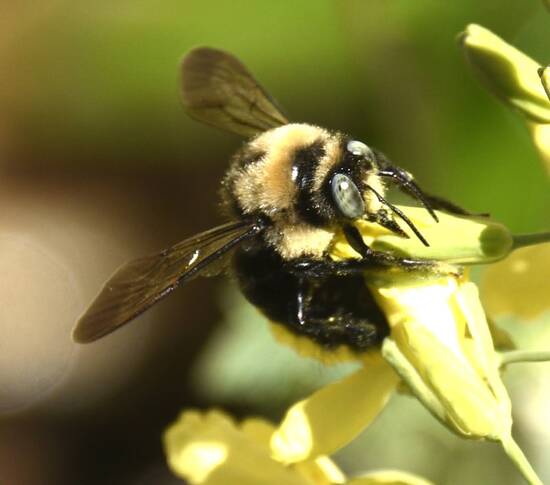
Not a bumblebee, but a large carpenter bee visiting flowers of curly kale in early spring.
Provide shallow dishes of moist soil and rocks for bee baths – bees and other insects can safely drink without drowning in larger bird baths. Some bees need moist mud and sand grains or tiny pebbles to make their nests.
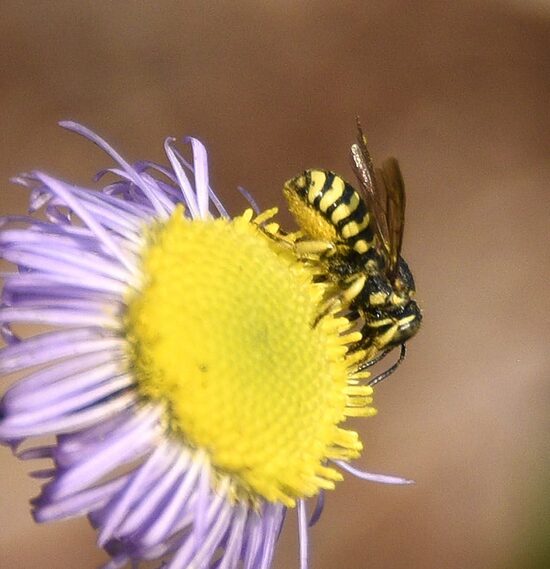
A female pebble bee with yellow pollen from Showy Fleabane flowers stored on abdomen hairs. Colorful pebble bees make their nests from sand and small pebbles glued together with plant resin.
Provide winter shelter for bees – and other bugs. Leave fallen leaves – or rake leaves into planting beds. Rock and brush piles also make wonderful shelters for overwintering insects.
Enjoy your buzzy visitors! I’ve had a great time learning about native bees – and other garden bugs – in my little urban yard in Eugene Oregon.
You can participate as citizen scientists by reporting sightings of species of bees on websites such as
iNaturalist (https://www.inaturalist.org/)
and
Bumble Bee Watch (https://www.bumblebeewatch.org/)
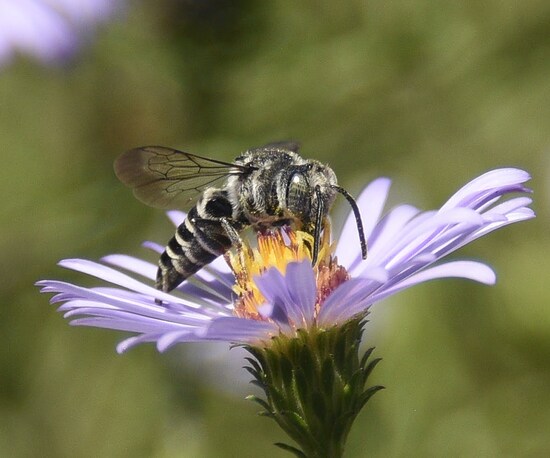
I learned that there are bees, like this sharp-tailed cuckoo bee sipping nectar from a Douglas Aster flower, that don’t need to gather pollen for their larvae. Cuckoo bees parasitize other bee species by laying their own eggs on pollen packets in the bee nests.
What do you do to encourage native bees in your garden? Have you seen any interesting bees — or other insects — in your yard or neighborhood? Photos welcome!
Comments are closed.