
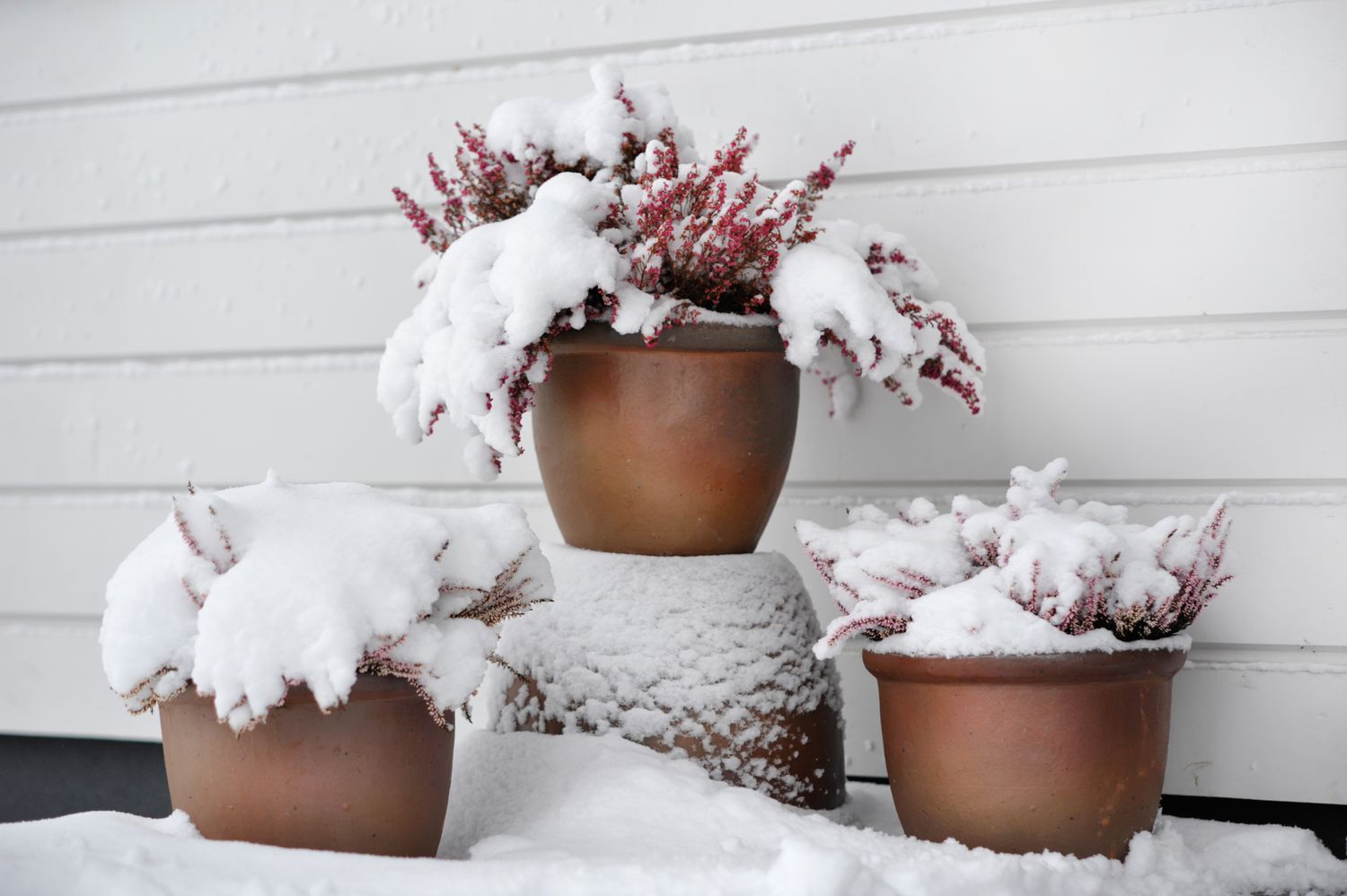
While prepping your outdoor plants for winter, make sure to take care of their planters too. Pots made from terracotta, ceramic, and plastic are all prone to cracking in winter thanks to the freezing and thawing of moisture in the soil. As temperatures dip to 32ºF or below, any water in the soil will freeze and expand, which can cause the pot to crack or break under pressure. While some outdoor pots are more resistant to freezing weather than others, all types can be affected by repeated freezing and thawing cycles over time. Learn how to protect outdoor planters from cracking this winter so they’ll be ready for spring planting.
What Outdoor Pots Are Best For Winter?
While pots made from durable materials are a safer bet outdoors in winter, they can still benefit from added care to protect them from harsh weather and help extend their life. Glazed ceramic, fiberglass, heavy-duty plastic, resin, stone, concrete, and wood can all remain outdoors if extra precautions are taken.
Pots made from porous materials like unglazed terracotta and ceramic, as well as some thin-walled plastic containers are susceptible to cracks and breakage from freezing temperatures. The pots absorb moisture like a sponge from the soil and the elements. As the moisture expands during freezing, it strains the structure of the pot and causes fissures. These pots should be moved indoors during winter if possible, or try some of the following measures for added protection.
How To Protect Pots In Winter
Whether empty or filled, make sure any pots left outdoors have drainage holes to allow water to escape rather than pooling in the bottom of the pot and risking freezing. Potted plants that can’t be moved indoors need insulation, while pots not in use should be emptied, cleaned, and stored for winter. Here are some ways you can protect your outdoor pots from damage.
Elevate Your Pots
If you have potted plants that can’t be moved indoors, whether due to space or size, stack them on bricks or beams to keep them off the ground. This way, water can drain from the pot without puddling around the bottom of it and potentially freezing.
Wrap For Insulation
For plants that need to remain outdoors over the winter, wrap the pots in bubble wrap, burlap, or blankets secured with rope. If possible, placing the pots inside a box or a larger container and filling the space between the pot and box with bubble wrap, straw, mulch, or other materials can add extra protection.
Bury Pots In The Ground
The ground offers better insulation from the elements than exposure to cold air. Before the ground freezes, dig a hole large enough to fit the entire pot and fill in the surrounding space with soil. As temperatures warm in spring, dig up the pot and resume regular care.
Add Mulch
For planters that remain outdoors, add a layer of mulch, bark, shredded leaves, or straw over the top of the soil for added insulation and root protection. This extra layer acts like a blanket to keep warmth from escaping and maintain soil temperatures.
When shopping for new pots, look for frost-resistant varieties that can handle challenging winter weather.
Move Pots Indoors
Any pots that are susceptible to freezing should be relocated indoors or to a sheltered area if possible, such as on a covered porch, under the deck, in a garage, or in a garden shed. If your pots have delicate plants inside, they need to be overwintered indoors anyway.
Store Empty Pots
Pots that are empty during winter can be stored with extra precautions to keep them from cracking from exposure to cold weather. Empty any soil from the pots, clean the planters thoroughly, then store them in a shed or garage. To store, wrap smaller pots with newspaper and nestle them inside larger ones. Use cardboard or towels between the pots for added cushion to prevent them from breaking. If you need to store pots outdoors, turn them upside down to keep them from filling with water and cover them with a tarp.
Comments are closed.