
Key Points
Growing sweet potatoes in containers lets you start earlier, manage space, and protect plants from frost.Choose compact, non-vining varieties like Bunch Porto Rico or Vardaman for easier container growth and space control.Use large, deep containers with good drainage—at least 18 inches deep—so tubers and vines can develop properly.
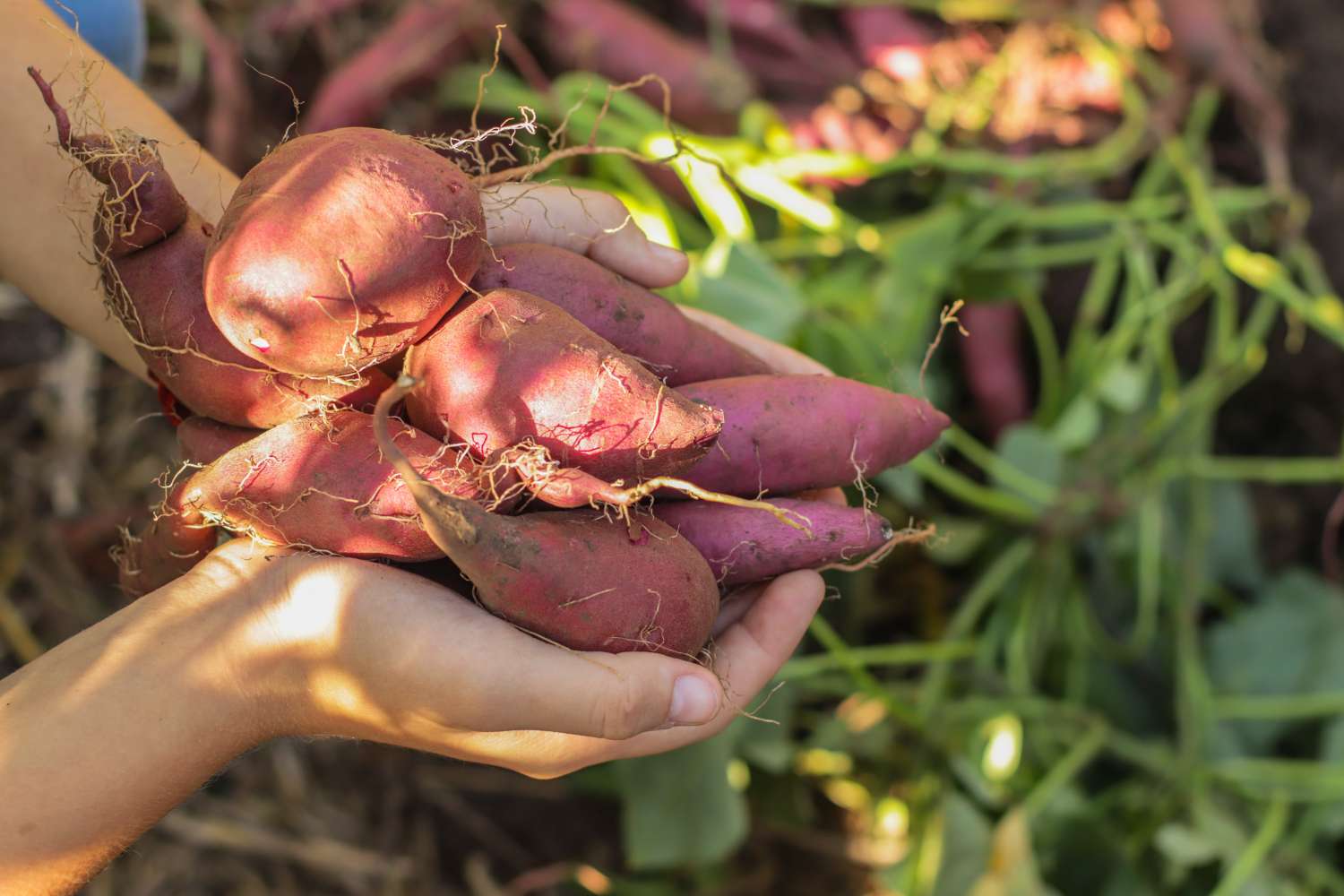
Sweet potatoes are one of the great joys of a vegetable garden. They’re also surprisingly easy to grow, and can even flourish in a container. Of course, there are a few special requirements when it comes to this method—namely, vessel size—that you should know before you start. Follow these instructions, though, and you’ll have a delicious harvest in no time.
Travis Key, founder of Lazy Dog Farm in Georgia
Cindy Funes, garden educator and owner of Garden Revelry, a container gardening company
Varieties to Grow
First, it’s important to choose the right variety.
“Traditional sweet potato varieties produce long, trailing vines that can quickly consume a large area,” says Travis Key, founder of Lazy Dog Farm. “When growing sweet potatoes in containers, choose non-vining varieties like Bunch Porto Rico or Vardaman. [Their] vines will still spill over the side of the container, but they won’t take over your entire garden.”
How and When to Plant
Don’t plant sweet potatoes like regular potatoes. Sweet potatoes are grown from slips, which are essentially seedlings. You can purchase them either live or as bare root stalks. Alternatively, you can start slips yourself by placing a sweet potato in water or soil and waiting for the sprouts to come—then, remove the subsequent slips from the donor. Plant them, and they’ll take root.
Slips dislike cold weather, so it’s usually advisable to wait until one month after your last frost date if you’re planting sweet potatoes in the ground. However, for containers, it may be possible to begin planting earlier, since you’ll be able to better control the soil temperature.
Therefore, container growing can give you a jumpstart on the growing season. “Sweet potatoes need approximately 100 days of warm weather to produce a quality harvest,” says Key, adding that the maturity date can vary depending on the variety, but generally ranges from 90 to 120 days. “Make sure you plant them early enough, so that they have enough warm days to grow.”
When your sweet potato slips are ready, plant one slip per 10-gallon container (you can fit more in larger containers). The soil should be rich, loose, and well-watered afterward.
Choosing a Container
Sweet potatoes are sprawling plants that produce large tubers, so you’ll need a larger container.
“For root vegetables, go big, go deep, and make sure the container has good drainage,” says gardening educator Cindy Funes. “Any food-safe material is a good option for growing sweet potatoes, but my top picks would be large fiberstone, fiberglass, metal, or plastic troughs—at least 36 inches in length.”
Fabric bags are also a great option due to their excellent drainage—especially ones designed for traditional potatoes, and that have flaps to check on the crop.
“Because sweet potato tubers grow underground and need space for root development and for their vines to grow, choose a container that at a minimum is 18 inches deep and wide,” she says. “But if you’re planting more than one, aim for at least 36 inches long so each plant gets about 18 inches of space.”
Care Instructions
Sweet potatoes are generally easy to grow, but they have a long growing season. However, container planting can be helpful in colder climates, as you may be able to avoid early frosts by moving the container.
“They love the heat, so they’re an excellent vegetable to grow in the mid-summer slot,” says Key. “Sweet potatoes will thrive when many other vegetables may suffer from the intense summer heat.”
Sun
Sweet potatoes prefer full sun for optimal results. They can get by with as little as 6 hours of sun per day, but thrive better with eight or more hours.
Water
Your container-grown sweet potatoes will have specific watering needs.
“Plants in containers need more watering than those in the ground simply because there’s less soil to hold moisture, and thus it dries out faster,” says Funes. “The goal should be for the soil to stay moist, but not soggy. Again, drainage is key here. Always make sure your containers have plenty of it.”
Soil
Generally, the soil should be light and well-draining. Heavier soils can work, as long as there’s some good organic compost mixed in.
Fertilizer
Too much nitrogen can cause sweet potatoes to overproduce leaves and stems, potentially at the expense of tubers. Potassium and phosphorus are more important, but if the soil is good, additional fertilizing may not be necessary.
Pruning
Your sweet potato plants need energy from their leaves to produce tubers, but understandably, in a container setting, the vines can get out of control. Trimming may become necessary for practicality, but leaving the leaves is better.
Pests
You might find a few pests bothering your container-grown sweet potatoes; prevention and elimination may be a bit easier than with a larger crop. Some common invaders include:
WhitefliesSweet potato weevilFlea beetlesCutwormsLeafhoppers
Comments are closed.