
Welcome to Botanic Haven — a place where plants come to life and gardening becomes a joy! 🌱 Here, you’ll find tips for growing flowers, vegetables, and houseplants, ideas for garden design, and inspiration for a green lifestyle.
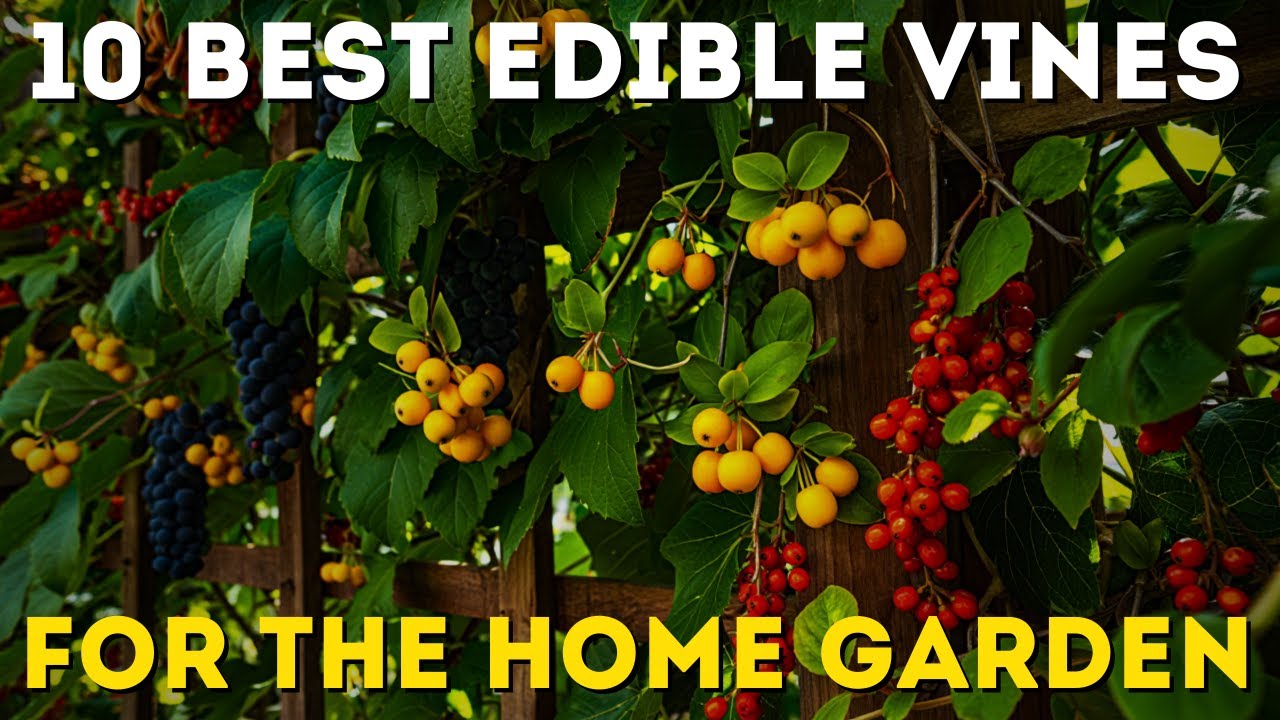
Hey there, fellow gardeners and plant lovers. Welcome back to Botanic Haven, your go-to channel for everything about gardening, plant care, and creating those beautiful green spaces both indoors and out. Today, we’re diving into something I’ve been absolutely fascinated with lately, and I think you’re going to love it, too. We’re talking about perennial edible climbers for small vertical gardens. Now, I know that might sound like a mouthful, but trust me, once you understand what these plants can do for your space, you’ll be wondering why you didn’t start growing them sooner. Whether you’ve got a tiny balcony, a narrow sideyard, or just a patch of wall that’s begging for some life, vertical gardening with edible climbers is going to change the way you think about growing your own food. Let me start by saying that vertical gardening isn’t just a trend or some fancy idea that looks good on social media. It’s actually one of the smartest ways to maximize space, especially if you’re working with limited square footage. I remember talking to my friend Daisy a few months back. She lives in a small apartment with just a balcony, and she was so frustrated because she wanted to grow vegetables, but felt like she didn’t have enough room. I suggested she try some climbing plants, and now her balcony looks like a little jungle paradise, and she’s harvesting fresh food regularly. The beauty of perennial climbers is that they come back year after year, so you’re not constantly replanting and starting from scratch. They establish strong root systems. They’re generally more resilient. And once they get going, they require less intensive care than annuals. Plus, many of them are incredibly productive, giving you harvests throughout the growing season. Now, when we talk about edible climbers, we’re looking at plants that naturally want to grow upward using supports like trelluses, fences, walls, or even other plants. They’re perfect for vertical gardens because they take advantage of that unused vertical space. Instead of sprawling out across the ground, they climb up, giving you more growing area without taking up more ground space. And the cool thing is, many of these plants are not only productive, but also beautiful. They add texture, color, and life to otherwise dull walls or fences. Some have gorgeous flowers. Others have interesting foliage. And of course, they all produce something delicious you can eat. So, you’re getting food, beauty, and functionality all in one package. Let’s talk about what makes a good perennial edible climber for small spaces. First, you want something that’s actually perennial in your climate zone. Some plants are perennial in warmer areas but might be annual in colder regions. So, it’s important to know your zone and choose accordingly. Second, you want plants that are relatively easy to manage. In a small space, you don’t want something that’s going to take over aggressively or require constant pruning and maintenance. Third, productivity matters. You want plants that give you a good yield for the space they occupy. And finally, versatility is a bonus. Plants that can handle a bit of shade, that aren’t too fussy about soil, and that can adapt to container growing are ideal for small vertical gardens. One of my absolute favorites, and I think this is where we should start, is the hardy kiwi. Now, when most people think of kiwi, they picture those big fuzzy fruits from the grocery store. But hardy kiwi, which is sometimes called kiwi berry or arctic kiwi, is a completely different beast. These are smaller, smooth skinned fruits that you can pop in your mouth, whole, skin, and all. They taste like a sweeter, more intense version of regular kiwi, and they’re absolutely delicious. Hardy kiwi vines are vigorous climbers, and they’re cold hardy, which means they can survive winters in much colder climates than regular kiwi. I’ve seen them thrive in zones as cold as zone 3 or four, which is pretty impressive for a fruitbearing vine. They do need a strong support structure because they can get quite heavy when loaded with fruit. But if you set them up properly on a sturdy trellis or arbor, they’ll reward you with pounds of fruit every year. One thing to note is that you typically need both a male and a female plant to get fruit, although there are some self-fertile varieties available. Now, they prefer full sun and well- drained soil, and once established, they’re pretty lowmaintenance. The vines can grow quite long, so you’ll want to do some pruning to keep them in check. But that’s really the only major task. Another fantastic option is the passion fruit vine. Now, this one is more suitable for warmer climates, generally zones nine and above. But if you’re in a slightly cooler area, you can grow it in a container and bring it indoors during winter. Passion fruit vines are stunning plants. They have these exotic, intricate flowers that look like something from another planet, and then they produce those iconic purple or yellow fruits that are just packed with flavor. The pulp inside is tangy, sweet, and aromatic, perfect for eating fresh, making juice, or adding to desserts. I remember my neighbor Oliver grew a passion fruit vine along his back fence, and by midsummer, it was completely covered in flowers and fruit. He said it was one of the easiest plants he’d ever grown, and the yield was incredible. Passion fruit vines love full sun and warmth, and they need regular watering, especially when they’re flowering and fruing. They grow quickly, so you’ll want to provide a trellis or wire support for them to climb. In the right conditions, they can be incredibly productive, giving you fruit for months. If this guide has helped you, write one in the comments, and if not, write zero. This way, I’ll know which tips are most useful for your garden. Now, let’s talk about something that might surprise you. Hops. Yes, the same plant that’s used to make beer. Hops are actually a fantastic edible climber and they’re often overlooked in the home garden. The young shoots called hop shoots are considered a delicacy in some parts of Europe and they taste a bit like asparagus. You harvest them in early spring when they first emerge and you can saute them, steam them or add them to salads. Beyond the shoots, the hop cones themselves can be used for brewing of course, but also for making teas or adding a unique flavor to certain dishes. Hops are incredibly vigorous growers. In fact, they’re known for being one of the fastest growing plants, capable of shooting up 15 to 20 ft in a single season. They’re perennial in zones 3 through 8, and they die back to the ground each winter, then come roaring back in spring. They prefer full sun and well- drained soil, and they need a strong vertical support like a tall trellis, pole, or even a rope system. The vines twine clockwise as they grow, which is kind of fun to watch. They’re lowmaintenance once established, and they can add a really lush green privacy screen to your space during the growing season. Grapes are another classic perennial climber that deserves a spot in any vertical garden. There’s something incredibly satisfying about growing your own grapes. Whether you’re eating them fresh, making juice, or even trying your hand at wine making, grapes are adaptable to a wide range of climates, and there are varieties suited to almost every zone, from cold, hardy varieties that can handle zone 4 all the way to heatloving types for warmer regions. Grape vines are vigorous climbers that need a sturdy support structure, typically a trellis or arbor. They prefer full sun and well- drained soil, and they benefit from annual pruning to keep them productive and manageable. I had a conversation with a gardener named Rose a while back, and she told me about her grape arbor. She trained two grape vines to grow up and over a simple wooden frame, creating this beautiful shaded seating area in her backyard. Every fall, she harvested buckets of grapes, and she said the shade from the leaves was a bonus during hot summer days. Grapes do require some attention, especially when it comes to pruning and pest management. But if you’re willing to put in the effort, they’re incredibly rewarding. Let’s shift gears and talk about something a bit less common. The chiote. Chiote is a tropical perennial vine that produces these pear-shaped light green fruits. The fruit has a mild, slightly sweet flavor and a crisp texture, kind of like a cross between a cucumber and a potato. You can eat it raw in salads, cook it in stir fries, or even stuff and bake it. The entire plant is edible. Actually, the young shoots and leaves can be cooked like greens, and the tuberous roots are edible, too. Chyote is perennial in frostfree climates, generally zones 8 and above, but it can be grown as an annual in cooler areas. The vines are vigorous and can easily cover a large trellis or fence. They prefer warm weather, full sun, and consistent moisture. In the right conditions, a single plant can produce dozens of fruits. My friend Lucas grew chiote one summer and he was amazed at how productive it was. He said the vines grew so fast he had to keep redirecting them and by the end of the season he had more fruit than he knew what to do with. Another great option for vertical gardens is the climbing nastersium. Now, ntoriums are often grown as annuals, but in mild climates, particularly zones nine and above, they can behave as perennials, coming back year after year. Climbing ntoriums have beautiful, bright flowers in shades of orange, yellow, and red. And both the flowers and leaves are edible. They have a peppery, slightly spicy flavor that’s fantastic in salads or as a garnish. Ntoriums are incredibly easy to grow. They’re not fussy about soil. They can handle partial shade and they’re quite drought tolerant once established. They climb by twining their leaf stems around supports, so they work well on trelluses, fences, or even over other plants. Beyond being edible, netoriums are also great companion plants because they attract beneficial insects and can help deter pests. They’re perfect for small spaces because they don’t get too aggressive, and they add a cheerful pop of color to any vertical garden. Now, here’s one that might be new to you. The Malabar spinach. Despite its name, Malabar spinach isn’t actually related to true spinach, but it’s called that because the leaves taste similar and can be used the same way. It’s a tropical perennial vine that thrives in hot, humid weather. In cooler climates, it’s typically grown as an annual, but in zones seven and above, it can sometimes overwinter, especially if protected. The leaves are thick, succulent, and slightly mucilaginous when cooked, which makes them great for soups and stews. There are green stemmed and red stemmed varieties, and both are beautiful plants. The vines can grow 10 to 15 ft in a season, and they produce small purple berries that, while edible, are more commonly used as a natural dye. Malibar spinach loves heat and humidity, and it prefers full sun, though it can tolerate some shade. It’s a fast grower, so it quickly covers trelluses or fences, and it’s surprisingly lowmaintenance. If you live in a hot climate and struggle to grow traditional greens in summer, Malibar spinach is a fantastic alternative. Let’s talk about something that’s both ornamental and edible, the scarlet runnab. These are perennial in mild climates, particularly zones 7 and above, though they’re often grown as annuals in cooler areas. Scarlet runner beans have gorgeous red flowers that attract hummingbirds and bees, and they produce long, flat bean pods that are delicious when picked young and cooked. The beans themselves, once matured and dried, can also be used like other dried beans. The vines are vigorous climbers, reaching 8 to 10 ft or more, and they’re perfect for covering trelluses, fences, or even creating a living screen. They prefer cooler summers and can struggle in intense heat, so they’re ideal for gardeners in temperate climates. The flowers alone make them worth growing, but the fact that they’re also productive makes them a double win. I’ve seen scarlet runner beans used to create beautiful archways and tunnels in gardens, and they’re always a showstopper. Another excellent choice is the climbing pee, specifically the perennial pea varieties. Now, most garden peas are annuals, but there are perennial types like the everlasting pee that come back year after year. These perennial peas produce edible pods, though they’re typically not as sweet or tender as annual varieties. However, they’re incredibly lowmaintenance and can handle tougher growing conditions. They have beautiful flowers, often in shades of pink or purple, and they’re great for adding nitrogen to the soil, which benefits other plants. Perennial peas are cold hardy and can thrive in zones 4 through 9. They prefer full sun and well- drained soil, and they climb using tendrils, so they need something to grab onto, like a trellis or netting. They’re perfect for filling in a vertical space without requiring much attention. Last but not least, let’s talk about the akabaya, also known as chocolate vine. A kabaya is a perennial climber that produces these unique elongated purple fruits with a sweet, mild flavor. The fruits are edible and the flesh inside has a texture similar to a passion fruit. The vines themselves are attractive with delicate leaves and small fragrant flowers that smell like chocolate, hence the common name. Aia is hardy in zones 4 through 8. And it’s a vigorous grower that can quickly cover a large area. It prefers full sun to partial shade and isn’t too picky about soil. The fruits typically ripen in late summer or early fall. And while they’re not a major food crop, they’re a fun and unusual addition to any garden. I’ve heard from gardeners who grow a conversation starter because most people have never seen or tasted the fruits before. Now, let’s talk about some practical tips for growing these climbers in small vertical gardens. First, support structures are crucial. You need to provide something sturdy for your plants to climb on. Whether that’s a trellis, a fence, a wall-mounted wire system, or even a freestanding obelisk. Make sure your support is strong enough to handle the weight of the mature plant. Especially for vigorous growers like grapes or hardy kiwi. In small spaces, vertical supports can be as simple as a few bamboo poles tied together or a piece of wire mesh attached to a wall. The key is to install your support early before the plants start growing so they have something to climb from the beginning. Second, consider your growing medium and containers. Many of these climbers can be grown in large pots or containers, which is ideal for balconies or patios. If you’re going the container route, make sure your pots are big enough to support the root systems. Generally, you’ll want containers that are at least 15 to 20 gallons for larger vines like grapes or kiwi. Use a highquality potting mix with good drainage and consider adding some compost or slowrelease fertilizer to give your plants a boost. Container grown climbers will need more frequent watering than those planted in the ground. So be prepared to check them regularly, especially during hot weather. Third, think about sun exposure. Most fruing climbers need full sun to produce well, which means at least 6 to 8 hours of direct sunlight per day. However, some like Malibar spinach or certain passion fruit varieties can tolerate partial shade. Take note of how the sun moves across your space throughout the day and position your plants accordingly. If you’re dealing with a shaded area, you might have better luck with leafy climbers like Malibar spinach or climbing nesters rather than fruing vines. Watering is another important consideration. Climbers, especially when they’re young or growing in containers, need consistent moisture. However, they don’t like to sit in waterlogged soil, so good drainage is essential. A general rule of thumb is to water deeply but less frequently. Encouraging the roots to grow down rather than staying shallow. Mulching around the base of your plants can help retain moisture and keep the soil temperature more consistent. If you’re growing in containers, you might want to set up a simple drip irrigation system or use self-watering pots to make your life easier. Pruning and training are skills you’ll develop as you work with climbers. Most vines benefit from some level of pruning to keep them in bounds, encourage fruit production, and improve air circulation. For example, grape vines require annual pruning to remove old wood and promote new fruing canes. Hardy kiwi vines need pruning to prevent them from becoming a tangled mess. The good news is that pruning doesn’t have to be intimidating. Start by removing any dead or damaged growth. Then thin out crowded areas to let light and air in. As you gain experience, you’ll get a feel for how each plant responds to pruning. Training involves guiding the vines where you want them to go, often by tying them loosely to your support structure. This is especially important early on as it helps establish the shape and direction of the plant. Fertilizing is generally straightforward with perennial climbers. Most will benefit from an annual application of compost or a balanced organic fertilizer in early spring just as they’re starting to wake up from dormcancy. Avoid overfertilizing, especially with high nitrogen fertilizers, as this can lead to lots of leafy growth at the expense of flowers and fruit. If your plants are in containers, they’ll need more frequent feeding since nutrients get washed out with regular watering. A diluted liquid fertilizer every few weeks during the growing season is usually sufficient. Pest and disease management is something to keep an eye on, though perennial climbers are generally quite resilient. Common pests like aphids, spidermitites, or caterpillars can sometimes be an issue, but they’re usually manageable with simple solutions like spraying with water, using insecticidal soap, or encouraging beneficial insects. Diseases like powdery mildew or fungal issues can occur, especially in humid conditions, or if air circulation is poor. Good spacing, proper pruning, and avoiding overhead watering can help prevent many problems. If you do notice issues, address them early before they spread. One of the things I love most about growing perennial climbers is the sense of continuity they bring to the garden. Unlike annuals that you plant and pull out every year, perennials become a more permanent part of your landscape. They establish deeper roots. They adapt to your specific conditions, and they often get more productive as they mature. There’s something really satisfying about watching a vine you planted a few years ago now covered in fruit, knowing that it’s going to keep producing for years to come. It’s a bit like investing in the future of your garden. I also want to emphasize that vertical gardening with climbers isn’t just about maximizing space. It’s about creating a more dynamic three-dimensional garden. When you add vertical elements, you’re not just growing plants flat on the ground. You’re adding layers, depth, and interest. A wall covered in a flowering passion fruit vine or a trellis dripping with grapes becomes a focal point, something that draws the eye and creates a sense of abundance. In small spaces, this is especially valuable because it makes the area feel bigger and more lush than it actually is. Don’t be afraid to experiment and try different combinations. Maybe you grow a grape vine for fruit and underplant it with climbing nesters for color and edible flowers. Or perhaps you mix a hardy kiwi with hops, creating a layered effect with different textures and harvest times. The beauty of gardening is that it’s always evolving and there’s always something new to try. If something doesn’t work out the first year, you can adjust and try again. That’s part of the learning process and honestly, it’s part of the fun. I think one of the biggest mistakes people make when starting with vertical gardens is thinking they need a huge elaborate setup. The truth is you can start really small. A single trellis against a sunny wall with one or two climbers is enough to get you going. As you gain confidence and see how well things grow, you can expand. Maybe you add another trellis on a different wall or you set up a freestanding structure in the middle of your space. The key is to just start. Don’t wait for the perfect setup or the perfect time. Get some seeds or plants, install a basic support, and see what happens. You’ll learn more from actually growing than from reading or planning. Another thing to keep in mind is seasonal interest. While most of these climbers are at their peak during the growing season, some offer interest at other times of the year, too. Grape vines, for example, have beautiful fall foliage before they drop their leaves. Hops die back in winter, but their dried cones can be left on the vine for a rustic look. Some climbers like Akibia have attractive bark or structure that adds visual interest even when they’re dormant. Thinking about what your vertical garden will look like year round can help you choose plants that offer multiple seasons of beauty. I want to circle back to the idea of edibility because I think it’s such a powerful motivator for growing climbers. There’s something incredibly rewarding about stepping outside and picking fresh food from plants you’ve nurtured. Whether it’s a handful of grapes, a few passion fruits, or a bowl of peas, that connection to your food is special. It reminds you of the cycles of nature, the patience required to grow things, and the simple joy of eating something you’ve grown yourself. Plus, homegrown food just tastes better. There’s no comparison between a store-bought grape and one you’ve picked fresh from your own vine. For those of you who are just getting started with gardening, perennial climbers are actually a great entry point. They’re generally forgiving. They don’t require constant replanting. And once they’re established, they’re pretty lowmaintenance. Yes, there’s a learning curve, but it’s not as steep as you might think. Start with something easy like nesters or scarlet runner beans, which are practically foolproof. As you gain confidence, you can move on to more challenging plants like grapes or kiwi. The important thing is to just begin and to enjoy the process. I also want to encourage you to share your experiences and learn from others. Gardening communities, whether online or in person, are incredibly supportive. People love to share tips, swap seeds, and celebrate successes. If you run into a problem with one of your climbers, chances are someone else has dealt with the same issue and can offer advice. Don’t be shy about asking questions or sharing what’s working for you. That’s how we all learn and improve as gardeners. As we wrap up, I hope this has given you some inspiration and practical ideas for growing perennial edible climbers in your own space. Whether you’re working with a tiny balcony, a small patio, or a narrow sideyard, there’s a climber that will work for you. These plants are versatile, productive, and beautiful, and they offer a fantastic way to make the most of limited space. Remember, gardening is a journey, not a destination. Each season brings new lessons, new challenges, and new rewards. Embrace the process. Be patient with yourself and your plants. And most importantly, have fun. There’s nothing quite like the satisfaction of watching a vine you planted grow, flower, and produce food. It’s a simple pleasure, but it’s one of the best things about gardening. So, grab your trellis, pick your climbers, and get growing. Your vertical garden is waiting, and I can’t wait to hear about your success. Happy gardening everyone and I’ll see you in the next video here on Botanic Haven.
Comments are closed.