
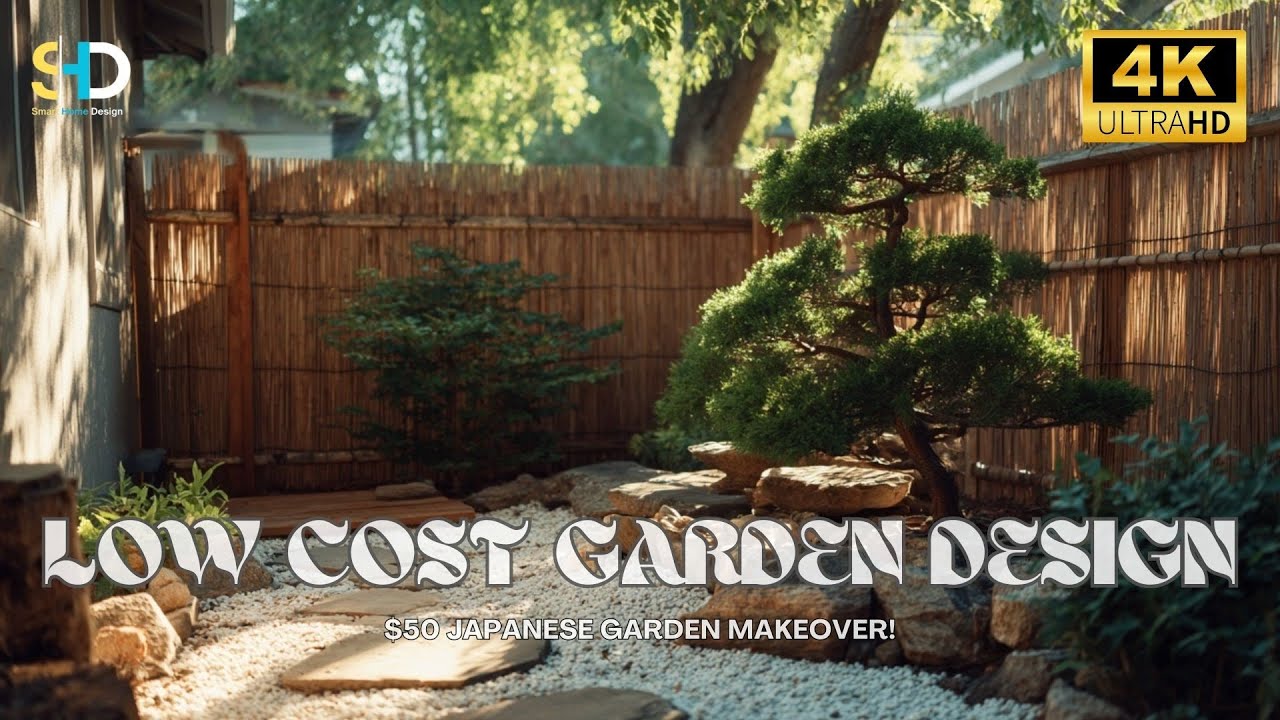
Creating a Japanese garden doesn’t have to cost thousands of dollars. In fact, with just $50, you can bring home elements that completely shift the atmosphere of your outdoor space. This video, “What $50 Can Actually Buy for a Japanese Garden – Real Examples”, explores sixty unique and practical ideas, each one achievable on a small budget. From symbolic stones to bamboo screens, from moss plantings to lanterns, you’ll see how low cost landscaping can transform even the smallest corner of your yard into a serene retreat.
A budget Japanese garden is not about cutting corners—it’s about seeing value in simplicity. In Japanese design, every detail carries weight. A single stone placed with intention can be as meaningful as an elaborate pond. For less than $50, you can add stepping stones that guide movement, smooth river rocks that suggest flowing water, or a dwarf pine that grows with the seasons. Each of these affordable zen design elements speaks to harmony, balance, and quiet beauty.
This video walks you through real examples of affordable zen design. Imagine buying a small resin lantern for $50 and placing it beside moss—suddenly your backyard feels centuries old. Or picture investing in a simple bamboo water ladle, a symbolic tool for cleansing the mind before entering a sacred space. These ideas show how modest purchases create timeless impact. Low cost landscaping isn’t about spending more; it’s about designing smarter.
We’ll show you how $50 can buy more than just objects—it can buy experiences. A bamboo wind chime turns the breeze into sound. A shallow ceramic dish becomes a mirror for the sky when filled with water. A bundle of cedar mulch brings warmth to a pathway, while also suppressing weeds. Each of these simple touches brings peace, proving that a budget Japanese garden is about atmosphere, not extravagance.
This video also highlights seasonal transformations you can create affordably. For $50, you could plant hostas for lush summer foliage, irises for elegant blooms, or moss for year-round softness. With each season, your garden tells a story, changing gracefully without requiring large expenses. Affordable zen design is rooted in patience, and these plants reward you with beauty that evolves over time.
One of the most powerful lessons here is that you don’t need grand gestures to capture the essence of Japanese garden design. Low cost landscaping emphasizes restraint. A single standing stone, a reclaimed wood plank used as a bridge, or a handful of polished pebbles placed thoughtfully—all within a $50 budget—carry more weight than cluttered décor. The true art lies in knowing when to stop.
In this one-hour journey, you’ll discover 60 unique ideas, each one under $50, that can transform your space. You’ll learn how to frame views with bamboo fencing, add depth with layered textures, and create symbolic rivers using gravel and stone. We’ll also explore how lighting can enhance mood: $50 can buy small solar lanterns that bring gentle evening glow to your budget Japanese garden. The balance of light and shadow is central to affordable zen design, and these subtle illuminations make your garden magical after sunset.
Whether you’re working with a large backyard or a small patio, this video proves that Japanese garden design is accessible to everyone. You’ll see how budget Japanese garden projects are not only possible—they’re rewarding. By spending thoughtfully, you create a space that feels intentional, calming, and deeply personal. Low cost landscaping ideas shown here are easy to replicate, and they demonstrate how to bring timeless beauty into your everyday environment.
By the end, you’ll understand that $50 is not just a number—it’s a doorway. With affordable zen design, you can craft a garden that offers peace after a long day, a place to sip tea, or simply a corner to breathe. This is the heart of Japanese garden philosophy: finding serenity not in excess, but in essentials.
If you’re ready to see how a small budget can create lasting calm, join us in this video. Watch the transformations, gather ideas, and let your own garden become a canvas of peace. A budget Japanese garden is waiting for you—proof that beauty doesn’t require extravagance, only intention. #garden #gardenideas #gardendesign #japanesegarden
[Music] Welcome. Imagine stepping into a small backyard where the sound of leaves and the wind feels like music. You don’t need thousands of dollars to create this piece. Just a vision to see what $50 can bring. In a budget Japanese garden, even a few stones placed with care can transform a corner. Today we explore real ways. Your modest budget becomes a sanctuary of calm and timeless beauty. [Music] For $50, you could bring home a cluster of smooth river stones, enough to create a miniature dry stream bed. In lowcost landscaping, these stones become more than decoration. They suggest movement, echoing the path of water dot dot in an affordable zen design. They guide the eyes, lead the steps, and invite the heart to wander quietly. [Music] a single stone lantern, even a small resin replica can be found within a $50 range. In a budget Japanese garden, placing this lantern near moss or gravel creates a focal point that feels centuries old. The soft shape of its roof, the shadow it casts, the way it blends with nature brings a sense of permanence to your lowcost landscaping. [Music] Consider bamboo lightweight, versatile, and rooted in tradition. For under $50, you can buy enough poles to build a short screen, hiding a fence or framing a view. In affordable zen design, the screen isn’t just privacy. It becomes a rhythmic backdrop. It’s vertical lines echoing tall grasses or trees making your garden serene. [Music] N [Music] $150 can also buy a set of stepping stones, each irregular in shape, inviting mindful movement. In lowcost landscaping, such a path naturally guides visitors through a budget Japanese garden. It encourages pauses at key viewpoints. The stones become anchors, each holding a story’s feet, pass over them, connecting present to the quiet history of the space. [Music] A small water basin sukubai can be purchased or even made for under $50. In affordable Zen design, the basin invites ritual, a place to scoop water, wash hands, and cleanse the mind before entering. Deeper parts of the garden, even without flowing water, a still basin reflects sky and leaves, turning lowcost landscaping into poetry. [Music] Heat. Hey, Heat. [Music] For under $50, a simple pine sapling or dwarf maple can join your garden. In a budget Japanese garden, a single tree is more than foliage. It’s a frame for the seasons. Spring buds, summer shade, autumn color, and winter silhouette. All from this modest investment. The tree grows with your space, shaping the story year after year. [Music] A bag of fine gravel carefully raked into soft waves can redefine a garden’s mood. Lowcost landscaping often begins with texture and gravel delivers it instantly. In a budget Japanese garden, the rake marks are brush strokes on paper, inviting quiet contemplation. Your $50 isn’t just spent, it becomes an ongoing act of art. [Music] Ceramic pots with weathered finishes can be found inexpensively. For $50, you might bring home two or three for shady corners. In affordable Zen design, these pots can hold moss, ferns, or flowers. They offer contrast between plant life and cool hard ceramic dot dot. Lowcost landscaping thrives on such juositions. Each element enhancing the other [Music] Imagine a slender wooden bench, simple and without ornament, costing less than $50. In a budget Japanese garden, this becomes a destination, a place to pause, breathe, and take in the entire scene. The bench’s grain warms in the sun. In affordable zen design, seating isn’t just functional. It’s an invitation to slow down and be present. Heat. Heat. [Music] [Music] under $50 can buy small solar lanterns with warm amber light in lowcost landscaping. Gentle illumination extends the garden’s magic into evening. A budget Japanese garden at dusk softly glowing feels like another world. Affordable Zen design values shadow and light where darkness isn’t banished but embraced as part of the beauty. [Music] For less than $50, you can purchase moss spores or starter patches in a budget Japanese garden. Moss is more than greenery. It’s the soft carpet that holds moisture, quiets sound, and reflects age. Affordable Zen design uses moss to link stones, soften edges, and create a living canvas that thrives without shouting. [Music] [Music] Lowcost landscaping can include reclaimed wood, often found for $50 or less. In a budget Japanese garden, such wood can become a narrow foot bridge or a plank walkway. The worn texture adds instant character. Affordable Zen design honors both material and history, proving beauty doesn’t need to be new. [Music] Terraota water jars. Found for under $50. Bring rustic charm to a garden corner. In a budget Japanese garden, they can sit beneath eaves to catch rain water. Their surface darkening with each storm. Lowcost landscaping thrives on multi-purpose elements. Practical and beautiful. Affordable zen. Design values resourcefulness as much as form. [Music] For less than $50, you can gather shrubs like ailas or chameleas in a budget Japanese garden. These plants offer bursts of color against evergreen stillness. Affordable Zen design uses contrast sparingly. When flowers appear, they feel like a gift, not a demand for attention. [Music] [Music] [Music] A $50 budget can bring home a set of flat slate tiles, perfect for creating a subtle threshold between garden sections. In a budget Japanese garden, such transitions are meaningful. They guide both footsteps and the gaze. Lowcost landscaping thrives when details mark a change in space. Affordable zen design. Even a small slate step becomes a gentle invitation to enter a quieter, more intentional part of the garden. [Music] [Music] for under $50 you could purchase a windchime crafted from bamboo or metal. Each tone soft and resonant in a budget Japanese garden. Sound is as important as sight. Lowcost landscaping with sound elements creates a complete sensory experience and affordable zen design using such chimes to weave the breeze into the space. Turning wind into music and stillness into a stage for subtle melodies. Yeah. Shoot. [Music] With $50, you can invest in a mix of ornamental grasses like hackonloa that’s swaying even the slightest breeze in a budget Japanese garden. These grasses create movement without clutter. Lowcost landscaping often relies on plants that work year round and affordable zen design appreciates the way these grasses catch light. The gentle arc reflecting the curve of a path or the bend of a nearby bamboo stock. [Music] A set of hand tools, brewing shears, rake, and small tri well can be purchased for under $50. In a budget, Japanese garden tools are not just for maintenance, but for mindfulness. Lowcost landscaping remains affordable because you can tend it yourself dot dot in affordable zen design. The act of pruning or smoothing gravel becomes part of the garden experience as calming as sitting among the plants themselves. [Music] for Less than $50, a few wellplaced river pebbles can create a symbolic shoreline beside a dry pond. In a budget Japanese garden, this suggestion of water transforms the space without the expense of actual plumbing. Lowcost landscaping uses such illusions to evoke vastness in small areas. Affordable Zen design thrives on metaphor, letting the mind wander to distant shores without leaving home. [Music] With $50, you can buy a single high-quality bonsai starter tree in a budget Japanese garden. This becomes a living sculpture growing slowly, shaped by your hand, lowcost landscaping benefits. From such centerpiece plants which provide years a visual interest, affordable zen design treats. Bonsai is a lesson in patience, balance, and the beauty of small-scale nature carefully tended over time. [Music] under $50 can purchase a bundle of cedar mulch to frame pathways and garden beds. In a budget Japanese garden, mulch adds warmth of color while suppressing weeds. Lowcost landscaping uses natural materials like this to unify the garden visually. Affordable zen design values the scent of fresh cedar, the way it softens footsteps and the organic way it weathers with the seasons. [Music] A stone water spout, even a small decorative one, can be found within a $50 budget. In a budget Japanese garden, this becomes the origin point for an imagined stream. Lowcost landscaping often thrives on suggestion and affordable zen design delights in creating focal points where stillness meets the idea of flow, inviting you to imagine water trickling into the unseen. [Music] For less than $50, you can invest in climbing ivy or creeping ground covers that hug stones and soften walls. In a budget Japanese garden, such plants erase harsh edges. Lowcost landscaping transforms with this living tapestry and affordable Zen design uses it to merge built structures into the natural world, blurring the lines between human intention and nature’s own work. [Music] A $50 purchase of reclaimed bricks can create a small terrace or seating area in your budget. to Japanese garden. Lowcost landscaping celebrates materials with history, and each brick may carry traces of time. Affordable Zen design uses this to ground the garden in a sense of place living. Visitors feel they’re stepping into a story already in progress. [Music] For under $50, you can collect driftwood pieces from a supplier or local shoreline in a budget Japanese garden. Driftwood’s twisted form and bleached tones bring a wabasabi elegance. Lowcost landscaping uses such found or repurposed materials to add authenticity, affordable zende sign treasures. The way drift would suggest journeys, tides, and a quiet hindrance of nature. [Music] A simple clay bird bath found within a $50 budget can become both ornament and wildlife haven in a budget Japanese garden. Lowcost landscaping gains life when birds visit, bringing gentle motion and song in affordable zen design. Sharing space with other creatures reminds us that gardens are not just for people. They are part of a wider living world. Heat. Heat. [Music] [Music] For $50, you can buy a set of flat river stones to edge a pond or gravel bed in a budget Japanese garden. Such borders bring definition without harshness. Lowcost landscaping values these transitions and affordable Zen design uses them to frame spaces. like a painters’s border allowing each scene within the garden to feel complete. [Music] A modest bamboo water ladle and rest can be purchased for less than $50. In a budget Japanese garden, this tool, often placed at a water basin, represents humility and preparation. Lowcost landscaping elements like this are small but powerful and affordable. Zen design integrates them as symbols of cleansing both body and mind before entering a secret space. [Music] [Music] Thank you for walking with us through these ideas. We’ve seen how a $50 bill can open doors to countless possibilities in a budget Japanese garden. Lowcost landscaping and affordable zen design are not about spending more, they’re about seeing more. If you found inspiration here, please subscribe, like, and join us again for more journeys into the peaceful art of Japanese garden design. [Music] With $50, you could buy a set of handcrafted ceramic teacups to place on a small garden table in A budget Japanese garden. These become part of the tea ceremony experience. Whether used daily or simply displayed, lowcost landscaping is not only about soil and stone. It’s about creating moments. Affordable Zen design sees value in objects that invite mindful gatherings amid the gardens. Quiet beauty. [Music] A packet of mixed seasonal bulbs, tulips, liies, or irises can be found for under $50. In a budget Japanese garden, these flowers offer a changing tapestry, blooming and fading with grace. Lowcost landscaping thrives on plants that tell a story through the seasons. Affordable Zen design. Let the flowers mark time gently, giving each year a rhythm that becomes part of the gardens. Soul [Music] For $50, you could buy a handcarved wooden tray for serving tea or displaying small stones and bonsai tools in A budget Japanese garden, even functional items carry artistry. Lowcost landscaping includes such details, extending the design philosophy beyond the plants and puffs. Affordable Zen design thrives when each object, no matter how small, contributes to harmony and calm. [Music] a small pagota style. ornament made of resin or lightweight stone can be purchased for under $50. In a budget Japanese garden, it becomes a focal point nestled among plants. Lowcost landscaping benefits from vertical interest. Affordable zen design uses such shapes to suggest timelessness, drawing the eye upward while keeping the spirit grounded in stillness. [Music] With $50, you can bring home a bundle of split bamboo fencing panels in a budget Japanese garden. They can conceal a utility wall or frame a section of the yard. Lowcost landscaping relies on such affordable solutions. Affordable Zen design appreciates the way. Bamboo’s golden tones soften sunlight and cast gentle striped shadows across gravel or moss. [Music] A set of small garden bells under $50 can be hung beneath a porch or along a path in a budget Japanese garden. Their gentle rigging on a breeze creates an unseen layer of design. Lowcost landscaping is elevated by sound. Affordable Zen design integrates this as part of the garden sensory language where wind, shadow, and tone are equally important. [Music] For $50, you can purchase a few sacks of polished black pebbles in a budget Japanese garden. They can fill the bed around a lantern or create striking contrast near pale gravel. Lowcost landscaping uses color and texture to add depth. Affordable Zen design values such contrast for its ability to sharpen awareness of shape and form. [Music] A shallow ceramic dish less than $50 could be filled with water and floating flowers in a budget Japanese garden. It becomes a transient artwork changing with each bloom. Lowcost landscaping embraces such movable beauty, affordable Zen design treasures and permanence, knowing each arrangement will fade, making it more precious in the moment. [Music] With $50, you might invest in small evergreen shrubs like dwarf pines or boxwood in In a budget Japanese garden, they provide year-round structure, holding the space steady through seasonal changes. Lowcost landscaping values plants that offer constancy. Affordable Zen design uses them as visual. anchors elements the eye returns to again and again. Even as flowers and leaves shift [Music] A single weathered stone chosen for its shape and surface can be purchased for under $50. In a budget Japanese garden, one stone can command as much presence as an entire arrangement. Lowcost landscaping teaches restraint. Affordable Zen design celebrates individuality, allowing natural forms to speak without being crowded by unnecessary additions. [Music] [Music] For $50, you could buy a pair of low woven reed mats to place beneath seating or as decoration near the entry in a budget Japanese garden. These mats add texture underfoot and invite barefoot connection to the ground. Lowcost landscaping can incorporate traditional materials. Affordable Zen design values the sensory experience of natural fibers against skin. [Music] A few clumps of hostess costing under $50 can bring lush green abundance. lets to shaded areas of a budget Japanese garden. Lowcost landscaping benefits from plants that thrive with minimal care. Affordable Zen design uses their broad rib leaves to create quiet rhythm along pathways, drawing the eye slowly from one curve to the next. Heat. Heat. [Music] [Music] [Music] For less than $50, a simple stone named plate or engraved plaque can be added to your garden. In a budget Japanese garden, naming the space gives it personality and identity. Lowcost landscaping elements like this mark your garden as a place of intention, affordable zen. Design appreciates the ritual of naming as part of making a space truly yours. [Music] A $50 purchase of Japanese iris plants can bring tall, elegant blooms to the edges of water features or gravel beds. In a budget Japanese garden, their sword-like leaves and seasonal flowers add grace without clutter. Lowcost landscaping thrives when plants contribute both form and color. Affordable Zen design uses vertical accents to balance horizontal expanses. [Music] With $50, you can buy a small handwoven basket to gather leaves or clippings in A budget Japanese garden. Even maintenance tools can be beautiful. Lowcost landscaping doesn’t ignore the working side of a garden. Affordable Zen design treats each act. Sweeping, pruning, carrying as an extension of the aesthetic and meditative experience. [Music] A set of three modest stone markers under $50. can be placed at path junctions. In a budget Japanese garden, lowcost landscaping uses them as subtle guides. Affordable Zen design sees them as way points in a journey. Reminders that in a garden, as in life, every path taken has meaning. [Music] [Music] for $50 you might bring home a small wooden Tory gate ornament in a budget Japanese garden. It becomes a symbolic threshold marking the transition from everyday space to sacred retreat. Lowcost landscaping welcomes such cultural symbols. Affordable Zen design values the sense of arrival they create even in the smallest gardens. [Music] Heat. Heat. [Music] [Music] [Music] A modest rain chain costing under $50 can replace a down spout in a budget Japanese garden. Lowcost landscaping turns function into beauty, letting rainwater trickle down in shimmering threads. Affordable Zen design finds poetry in this movement. Turning a storm into a performance of light, sound, and flow. [Music] With $50, you can collect a small set of drifted stone slabs to create a minimalist bench in a budget Japanese garden. This raw seating blends into the earth. Lowcost landscaping often favors such natural forms. Affordable zen design values the way uncut stone invites both rest and contemplation without breaking the garden’s quiet spell. [Music] For less than $50, you can install a small low rub hedge to frame the Garden’s edge. In a budget Japanese garden, such framing creates a sense of enclosure. Lowcost landscaping uses hedges to define space. Affordable Zen design sees them as a soft boundary offering protection without isolation. [Music] A $50 purchase of paper lanterns can Turn a summer evening in your budget Japanese garden into a celebration of light. Lowcost landscaping includes temporary decor that still feels timeless. Affordable Zen design uses the glow of paper to warm the air, casting gentle light over pathways and creating shadows that dance with the wind. [Music] A $50 purchase of paper lanterns can turn a summer evening in your budget Japanese garden into a celebration of light. Lowcost landscaping includes temporary decor that still feels timeless. Affordable Zen design uses the glow of paper to warm the air, casting gentle light over pathways and creating shadows that dance with the wind. [Music] With $50, you can buy a set of shallow Planting trays for creating mini moss gardens in a budget Japanese garden. These trays can be moved seasonally, placed on tables or steps. Lowcost landscaping enjoys flexibility. An affordable Zen design appreciates the intimacy of a small portable patch of green that can be admired up close. [Music] For $50, you might invest in an assortment of ceramic plant markers for herbs or flowers. In a budget Japanese garden, these add subtle detail while keeping plantings organized. Lowcost landscaping doesn’t overlook practical touches and affordable zen design embraces them when they are made with care and beauty. [Music] Heat. [Music] Hey, Heat. [Music] for $50. You might invest in an assortment of ceramic plant markers for herbs or flowers in a budget Japanese garden. These add subtle detail while keeping plantings organized. Lowcost landscaping doesn’t overlook practical touches and affordable zen design embraces them when they are made with care and beauty. [Music] With $50, you can purchase a single tall standing stone to mark the entrance to your budget Japanese garden. Lowcost landscaping uses such monoliths as guardians of space. Affordable Zen design respects their presence, treating them as silent witnesses to the garden’s changing light, weather, and seasons. [Music] for less than $50. A small rustic ladder made of bamboo can be leaned against a wall or fence in a budget Japanese garden. Lowcost landscaping uses it as a trellis for climbing plants. While affordable Zen design enjoys it as an abstract form suggesting upward movement, aspiration [Music] [Music] For less than $50, a small rustic ladder made of bamboo can be leaned against a wall or fence in a budget Japanese garden. Lowcost landscaping uses it as a trellis for climbing plants. While affordable Zen design enjoys it as an abstract form, suggesting upward movement and aspiration. [Music] With $50, you can collect several small glazed ceramic bowls to catch rainwater for birds or as plant accents. In a budget Japanese garden, these become moments of color and reflection. Lowcost landscaping values such small features. An affordable Zen design sees them as vessels holding both water in the passing sky. [Music] [Music] [Music] For under $50, a bundle of tall reads can be added along the fence or pond edge in a budget Japanese garden that bring height and movement to the scene. Lowcost landscaping appreciates their swaying grace, while affordable zen design sees them as a reminder that beauty is often found in the simplest form standing quietly moving gently in harmony with the wind. [Music]
Comments are closed.