
Key Points
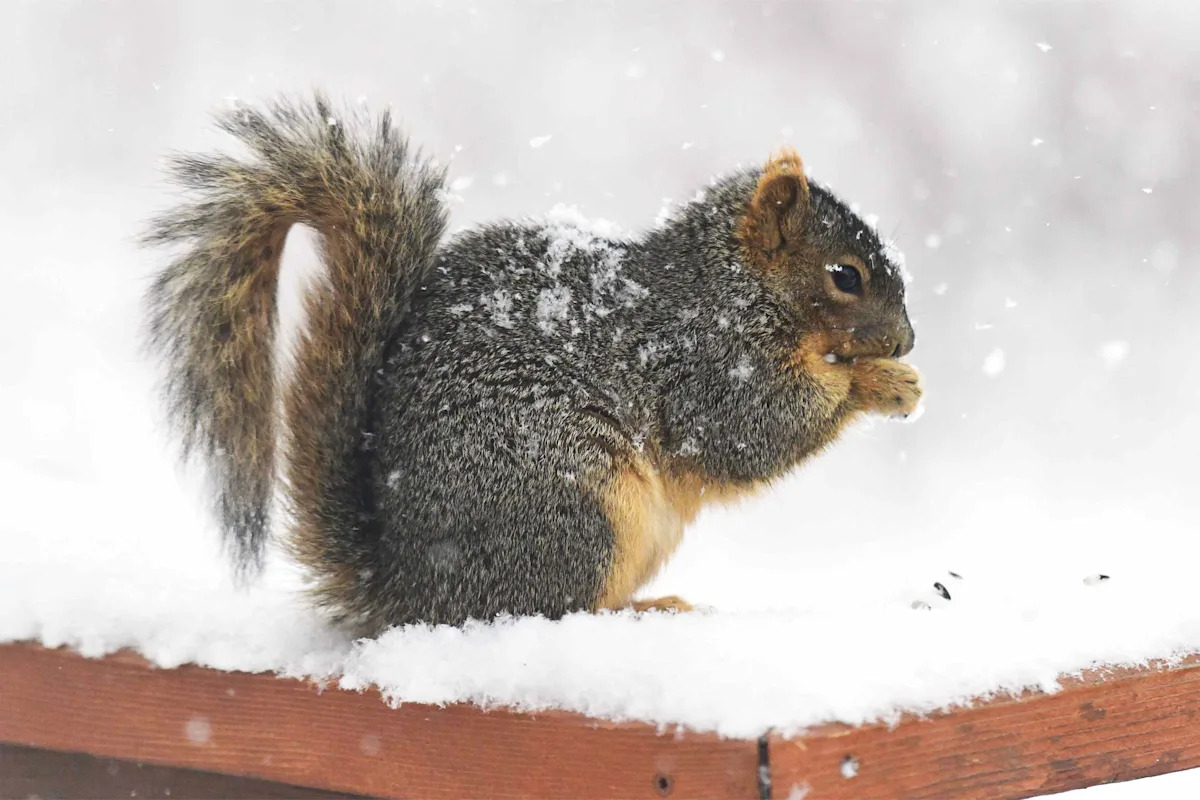
Keeping squirrels out of winter beds matters because these curious critters can dig up bulbs and damage young plants.
Covering beds with hardware cloth or dense plants blocks digging and removes easy paths for squirrels to slip inside.
Strong smells and alternate food sources can pull a squirrel’s attention away from your beds and toward safer spaces.
Squirrels can be an asset to your garden. They spread seeds and eat potentially harmful insects; however, they can become pests in certain scenarios. These furry fiends dig up bulb plants and nibble on tender baby plant shoots, making them a real menace in a garden bed.
During the winter, when temperatures drop and many plants go into dormancy, these concerns are even more top of mind. Fortunately, there are many natural, humane methods that will keep squirrels away from your garden beds.
Meet the Experts
Related: How to Stop Squirrels From Moving Into Your Attic This Winter
Use Wire Mesh or Hardware Cloth Covering
Squirrels dig and burrow through terrain to find and store their food, causing disruptions in the garden. Cutting off these access points can keep them at bay. “If you get a wire mesh or hardware cloth covering on your garden beds early enough, then you may completely deter squirrels,” says Ed Dolshun, chief trapping officer and technical director at Catchmaster.
Add these sooner rather than later. It can be hard to keep squirrels away once they’ve already sampled your vegetation, and they know that prizes lie behind the barrier.
If you’re using hardware cloth, measure it out and fasten it down into the ground with either pins or bricks. For wire mesh, you’ll need to dig down into the ground and secure it a bit deeper to stop squirrels from burrowing underneath.
Add Dense Ground Cover
While sturdy hardware cloth and netting are reliable defenses, they’re not exactly charming.
“To keep things pretty and protected, try planting dense ground covers as a living barrier,” says Wendy Overbeck Dunham, the director of horticulture at Frederik Meijer Gardens & Sculpture Park. Adding boxwood shrubs may seem like overkill for a smaller bed, but their dense foliage will keep out even the most inquisitive of squirrels.
For the most success, make sure your shrub plant’s thickness stays the same. Plant more to fill in for some of the sparser shrubs. “Don’t forget to check back on your efforts and reapply or refortify when needed,” Dolshun adds. “Squirrels are extremely persistent, and they will absolutely find your weak points.”
Overwhelm the Squirrel’s Senses
You can also distract squirrels with smells. Dolshun recommends covering the beds in mulch. “While this is easy enough for a squirrel to get through, what you’re doing here is masking the smell of your bulbs or roots,” he says.
Alternatively, you can use spices, herbs, and even natural oils on your flower beds. Try planting mint or garlic—both of which deter these animals—sprinkle cayenne pepper, or spray peppermint oil. “You’re really not going to fully deter squirrels with this method alone,” says Dolshun, “However, with other ideas—like the heavy ground coverage plants and mulch—this could be another layer of distraction.”
Redirect the Animals’ Feeding Habits
If you’re not worried about keeping squirrels out of your trees, then you can plant fruit or nut trees to distract them. This will lure the squirrels away from your garden beds and toward other sources of food. Make sure to plant native trees like chestnuts, walnuts, or hazelnuts, says Andrew Marshall, a wildlife-friendly gardener at Go Wild Landscapes.
Plant the trees far away from your flower beds. “There is a fine line between luring squirrels away and then providing reliable food and potentially drawing more in,” warns Dolshun. “No one wants to be the neighbor that invites all the squirrels to stay.”
Read the original article on Martha Stewart
Comments are closed.