
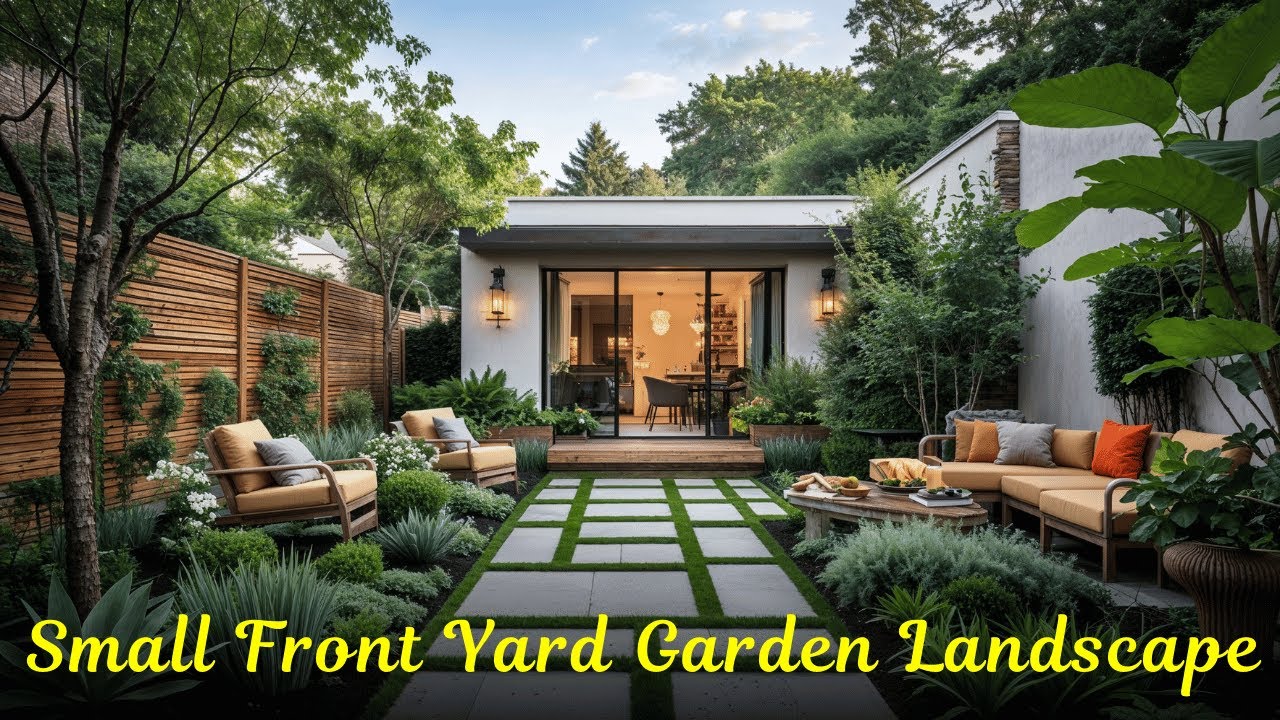
Small Garden Ideas 2025 | Front Yard Landscaping & Creative Compact Garden Design Tips
Transform your compact outdoor space with stunning small garden ideas for 2025 featuring creative front yard landscaping, space-maximizing techniques, and beautiful design solutions perfect for tiny backyards, balconies, patios, and limited areas. Discover 10 creative small garden ideas maximizing your space including vertical gardens bringing nature indoors while saving floor space, container gardening perfect for patios and balconies, miniature zen gardens creating peaceful retreats, indoor herb gardens, fairy gardens, and living walls with modular planters growing leafy greens and strawberries.
Learn colorful small garden tour featuring rustic and creative gardening ideas with simple unique budget-friendly designs transforming tiniest spaces into beautiful green paradises through rustic decorations, creative layouts, and charming arrangements perfect for any home. Master top 10 low-maintenance front yard garden design ideas including succulent showpiece gardens with drought-tolerant sculptural plants, native plant havens with kangaroo paw grevillea and banksia, mulch-based garden beds reducing weeds and watering, courtyard-style paving framed by tall potted plants, and vertical green walls perfect for tight urban spaces.
Explore 16 small garden design ideas elevating your plot through utilizing vertical space with wall planters hanging baskets plant theatres and arches drawing eyes upward, laying narrowing paths creating illusions of depth, creating zones with decking pergolas and borders giving structure, using mirrors reflecting light and greenery making spaces feel larger, and choosing compact plant varieties suited to smaller scales. Discover front yard landscaping ideas considering scale, mature plant sizes, seating arrangements, and walking around neighborhoods for inspiration including porch swings, decorative containers, accessories, and appropriate fencing.
Perfect for any aesthetic including modern minimalist sophistication, cottage garden charm, rustic natural beauty, contemporary urban style, Mediterranean warmth, Japanese zen tranquility, tropical paradise, English country elegance, sustainable eco-friendly, and coastal relaxed living. Master essential design elements including raised beds allowing soil control and functional growing, arched trellises adding vertical interest, hammocks and swings creating relaxation spots, wind chimes adding sensory appeal, plant markers organizing spaces, multi-level terracing on slopes, strategically placed lighting, self-watering systems for convenience, and mixing textures through foliage colors creating visual depth without requiring extensive space.
Subscribe for more small garden inspiration, front yard landscaping ideas, and compact garden design tips transforming limited spaces into lush sanctuaries!
#SmallGardenIdeas #FrontYardLandscaping #CompactGarden #VerticalGarden #ContainerGardening #BalconyGarden #LowMaintenance #TinyBackyard #GardenDesign2025 #UrbanGardening
Visit my website https://www.housedecordesigns.com for more interior designs and ideas #housedecordesigns
✌ Thanks for watching. If you like this video please ☞ “SUBSCRIBE” – “LIKE” – “SHARE” -“COMMENT”
======================================================
■Facebook : https://bit.ly/2zq53FT
■Pinterest: https://bit.ly/2M9hFUh
■Instagram: https://bit.ly/2AgDNtb
■Telegram : https://bit.ly/2X4HsDC
■Twitter : https://bit.ly/2M46kF7
■Youtube : https://bit.ly/subscribeforinterior
======================================================
Disclaimer:
We spend several hours in making these videos. We collect the pictures from different sources, crop them or edit them to suit our video format and arrange them sequentially to create our unique videos. These videos have never been used by any other users or have never been posted on any other social media. They are our own creations unique to our channel. We acknowledge all those who contributed by making the pictures available on the internet for use by the general public.
If you are an owner of any photo and if you wish to delete that photo then you can contact us at: housedecordesigns@gmail.com
Fair Use Policy Disclaimer.
Copyright Disclaimer Under Section 107 of the Copyright Act 1976, allowance is made for “fair use” for purposes such as criticism, comment, news reporting, teaching, scholarship, and research. Fair use is a use permitted by copyright statute that might otherwise be infringing. Non-profit, educational or personal use tips the balance in favour of fair use.
[Music] The narrative of modern landscaping has shifted away from the sprawling highmaintenance estate toward the curated intimacy of the small garden. In 2025, the limitation of square footage is no longer viewed as a deficit, but as an invitation to create a jewel box, a space where every detail is considered. Every plant has a purpose, and the connection between the architecture and the earth is seamless. The small garden offers a unique opportunity for immersion. Unlike a vast lawn where the eye sweeps quickly over the green expanse, a compact courtyard or front yard forces the viewer to slow down, engaging with the texture of a leaf, the grain of the stone, and the play of light on a rendered wall. This is design on a human scale where the enclosure feels like a warm embrace rather than a confinement and where the boundary between the interior living space and the outdoor sanctuary dissolves into a single cohesive experience. [Music] [Music] The journey begins at the curb where the front yard has undergone a radical transformation. The days of the obligatory patch of thirsty turf are fatting, replaced by the concept of the arrival garden. This space is the home’s handshake, setting the tone for everything that lies within. In modern small landscape design, we are seeing a move towards structured geometric layouts that maximize curb appeal without clutter. Permeable paving is a dominant trend here. Often utilizing light colored granite or limestone pavers set into a bed of dark decorative gravel or basalt chips. This contrast creates a crisp graphic look that feels immediately sophisticated. The crunch of the gravel underfoot provides an auditory transition, signaling the shift from the public street to the private realm. Pathways in the small front yard are no longer just functional straight lines. They are designed to create a journey. A dog leg path or a staggered stepping stone arrangement forces a slower pace, allowing the visitor to appreciate the layering of the planting. Flanking these paths, we see a move towards structural evergreen planting that looks good year round. [Music] [Music] Boxwood balls, Japanese holly or dwarf pines provide a green backbone that holds its shape. even in the depths of winter. Interspersed with these are drifts of ornamental grasses like Mexican feather grass or fountain grass that soften the hard edges of the paving and catch the light of the afternoon sun. The front yard is also becoming a social space in its own right. A small bistro set placed on a mini terrace near the entry invites interaction with neighbors, reclaiming the front of the house as a usable morning coffee zone rather than just a visual buffer. Privacy in the front yard, particularly in dense urban environments, is achieved through veil planting rather than solid fortress walls. Slatted timber fencing, often in horizontal bands of cedar or stained black pine, allows light and air to pass through while screening the view from the street. Pleached trees, trees trained on high frames to form a hedge on stilts, are gaining immense popularity. They provide a green screen at eye level for those inside the house while leaving the ground plane open for underplanting, effectively doubling the greenery in a narrow footprint. Behind this semi-transparent barrier, the front entry becomes a focal point. [Music] [Music] Oversized planters are key here. A common mistake in small spaces is using many small pots, which creates clutter. Instead, one or two massive architectural vessels, perhaps in a dark glazed ceramic or a raw weathered steel anchor the space and provide a home for a statement tree like a multi-m olive or a Japanese maple whose delicate foliage casts intricate shadows against the front door. As we move through the sideyard, often a neglected dead zone in residential design, we find it reimagined as a functional and aesthetic corridor. In 2025, the side return is celebrated as a fern alley or a meditative walk. Because these spaces are often shaded, they are perfect for lush woodland style planting. Shade loving hostess, ferns with their prehistoric unfurling fronds and climbing hydrangeas turn a narrow concrete strip into a verdant tunnel. [Music] [Music] The ground here might be covered in stepping stones surrounded by soft moss or baby’s tears, creating a carpet that feels cool and soft. Lighting is crucial in these narrow passages. Low-level path lights or recessed fixtures in the wall wash the ground with light, ensuring the space feels safe and inviting rather than dark and foroding. Emerging into the backyard, the philosophy of zoning becomes the primary design tool. Even in a plot that measures only 20 feet by 20 feet, distinct areas can be created to give the illusion of a larger space. Changes in floor material are the most effective way to define these zones without using vertical barriers that would shrink the view. A dining area might be paved in large format porcelain tiles that mimic the interior flooring, creating a seamless flow from the kitchen. Adjacent to this, a lounge area might be defined by a timber deck raised slightly by 6 in to create a subtle hierarchy. A third zone, perhaps a reading nook or a spot for a fire pit, could be surfaced in crushed granite or decomposed granite, adding a rustic textural contrast to the sleekness of the tile and wood. [Music] The furniture in a small landscape is chosen for its visual lightness. Bulky solid sofas block the eye and eat up space. Instead, we see a trend toward wireframe furniture or pieces woven with marine grade rope. These designs allow the eye to travel through the furniture to the paving and planting beyond, maintaining a sense of openness. Built-in seating is another brilliant space saver. A bench constructed out of rendered masonry or timber tucked into a corner or running along a retaining wall eliminates the need for chairs and can double as waterproof storage for cushions and gardening tools. This floating bench often features LED strip lighting underneath, making the structure appear weightless at night. Vertical gardening is the secret weapon of the small garden designer. When you cannot build out, you must build up. The boundary walls are no longer just property lines. They are vertical canvases. Living walls, once the domain of commercial lobbies, have been simplified for residential use with modular pocket planters that can cover an unsightly fence in a tapestry of hukuras, ferns, and sedums. [Music] [Applause] [Music] [Music] Alternatively, simple wire trelluses arranged in geometric diamond or grid patterns support climbing vines like star jasmine or clemetus, turning a flat wall into a fragrant blooming surface. Mirrors are also making a comeback in small garden design, but with a modern twist. An antiqu mirror placed behind a trellis or nestled into a dense hedge reflects the greenery and bounces light back into the shady corners, effectively acting as a window into an imaginary garden beyond. Tricking the brain into perceiving more depth than actually exists. The planting palette in a small garden requires immense discipline. A riot of too many colors can feel chaotic and claustrophobic in a tight space. The most successful small gardens of 2025 utilize a restrained, often monochromatic palette. Shades of green, white, and perhaps one accent color like purple or chart. This creates a sense of calm and order. Texture becomes more important than bloom. The glossy plateike leaves of a fatsia japonica contrast beautifully with the feathery fronds of a fern or the needle-like foliage of rosemary. [Music] [Music] [Music] Thank you. [Music] This interplay of textures keeps the eye interested without overwhelming the senses. We are also seeing a rise in matrix planting on a micro scale where a limited mix of perennials and grasses are repeated in a random pattern creating a naturalistic metall-like effect that looks wild yet curated. Water is a transformative element in small landscapes not for its visual scale but for its acoustic power. A massive roaring waterfall is out of place here. Instead, we look to the N fountain or the water wall. A simple sheer descent of water down a textured stone wall or a bubbling millstone tucked into a bed of pebbles provides a constant soothing white noise. This sound is vital in urban environments, masking the hum of traffic or the conversation of neighbors and creating a psychological bubble of isolation. The water feature often becomes the focal point of the view from inside the house. lit dramatically at night to shimmer and dance, bringing movement to the stillness of the garden. The concept of the edible landscape has also been adapted for small spaces. It is no longer about having a separate vegetable patch. It is about integrating food production into the ornamental design. Herbs like thyme, sage, and oregano are used as edging plants along the path, releasing their scent when brushed against. Aspaliard fruit trees, apples or pears trained to grow flat against a wall provide spring blossoms, summer shade, and autumn fruit, all while taking up only inches of ground depth. [Music] [Music] Blueberry bushes with their fiery red autumn foliage are planted in containers as ornamental shrubs. This dualpurpose planting maximizes the utility of the land, proving that a small footprint does not mean sacrificing the joy of harvesting one’s own food. Hardscaping materials in 2025 are leaning toward the natural and the sustainable. We are seeing a move away from perfect man-made composits toward materials that show the hand of the maker. Clay pavers laid in herring bone or basket weave patterns bring warmth and a sense of history to a small courtyard. Son sandstone or limestone with their natural fossil inclusions and variations in tone make a small patio feel luxurious and bespoke. The grout lines are often kept minimal or planted with ground cover to blur the grid, making the surface feel like a living part of the garden rather than a sterile slab. In very small spaces, laying paving stones on a diagonal bias can physically trick the eye, drawing the gaze to the longest dimension of the space and making the yard feel wider than it is. [Music] [Music] Lighting transforms the small garden into an outdoor room that is usable long after sunset. In a confined space, the lighting must be subtle. A few well-placed fixtures are far more effective than a flood of light. Moonlighting. Placing a fixture high in a tree to cast shadows down through the branches is particularly effective in small yards as it creates patterns on the ground that add interest. Uplighting is used to emphasize the architectural qualities of the plants. The trunk of a birch tree, the spikes of a yucka, or the texture of a bamboo screen. Linear LED strips hidden under benches or steps add a layer of safety and modern sophistication. The goal is to create pockets of light and shadow, adding mystery and depth rather than illuminating the entire space evenly, which would reveal the boundaries too clearly. The transition between the indoor living room and the outdoor garden is the holy grail of small space design. Bofilic design principles encourage the use of large sliding glass doors or biffold doors that stack away completely physically removing the wall. [Music] It’s supposed to be [Music] [Music] To enhance this connection, designers are continuing the interior flooring material to the outside using a slip resistant version of the same tile. This blurs the threshold, making the brain perceive the patio as merely an extension of the living room. Even the color palette of the interior decor is pulled through to the outdoors. If the living room features teal cushions, the outdoor sofa will feature teal accents, creating a unified visual language. As we consider the microclimate of a small walled garden, we realize it offers unique planting opportunities. These sheltered spaces are often warmer than open fields, allowing for the cultivation of tender, exotic plants that might not survive elsewhere. A small urban courtyard can become a tropical oasis with hearty bananas, tree ferns, and can of liies, their oversized leaves creating a lush jungle-like atmosphere that completely obscures the fencing. This tropicalismo trend is huge in 2025, offering a form of escapism where the homeowner can step out of their back door and feel transported to a different latitude. The concept of the flex space is also vital. In a small yard, a single area must often serve multiple functions. A flat paved area might serve as a yoga studio in the morning, a dining room in the afternoon, and a cocktail lounge at night. Furniture that is lightweight and movable or foldable allows for this reconfiguration. [Music] [Music] [Music] [Music] We are even seeing retractable awnings and louvered pergolas that can completely close off a space from the rain, effectively adding another room to the house that can be used in all weathers. These structures are sleek and minimalist, often made of powdercoated aluminum that matches the window frames of the house, ensuring they feel like an architectural feature rather than a bolt-on addition. Sustainability in the small landscape is achieved through intensity. Because the space is small, the soil can be improved to a high standard, retaining moisture better and supporting dense planting that suppresses weeds. Rain chains are used instead of ugly plastic downspouts, guiding water from the roof into decorative stone basins or rain barrels that are aesthetically pleasing. These water harvesting systems are integrated into the design, often hidden behind timber screens or used as plinths for potted plants. The small garden is also a haven for pollinators. By densely planting nectar- richch flowers like salvia, lavender, and echynatia, even a tiny front yard can become a vital stepping stone in an urban wildlife corridor. [Music] [Music] [Applause] [Music] Fire elements in small spaces have evolved to be compact and safe. The massive stone fireplace is replaced by the portable fire bowl or the bioethanol table fire. These burn clean without smoke or sparks, making them perfect for tight courtyards where smoke would be a nuisance to neighbors. The flicker of the flame draws people together, creating a natural center of gravity in the garden. Surrounding this fire feature, the paving might shift to a darker color, creating a rug effect that defines the lounge zone without walls. Finally, the small garden relies heavily on the element of surprise. Because the entire space can often be seen in one glance, designers use screens, tall grasses, or strategically placed shrubs to obscure parts of the view. A winding path that disappears behind a clump of bamboo invites curiosity. Where does it go? Even if it only leads to a small compost bin or a garden shed, the suggestion of more expands the mind’s map of the space. This layering of foreground, middle ground, and background is a painterly technique applied to three-dimensional space, ensuring that the small garden never reveals all its secrets at once, but unfolds slowly, rewarding the observer who takes the time to Look. [Music] [Music] The journey begins at the curb where the front yard has undergone a radical transformation. The days of the obligatory patch of thirsty turf are fatting, replaced by the concept of the arrival garden. This space is the home’s handshake, setting the tone for everything that lies within. In modern small landscape design, we are seeing a move towards structured geometric layouts that maximize curb appeal without clutter. Permeable paving is a dominant trend here. Often utilizing light colored granite or limestone pavers set into a bed of dark decorative gravel or basalt chips. This contrast creates a crisp graphic look that feels immediately sophisticated. The crunch of the gravel underfoot provides an auditory transition, signaling the shift from the public street to the private realm. Pathways in the small front yard are no longer just functional straight lines. They are designed to create a journey. A dog leg path or a staggered stepping stone arrangement forces a slower pace, allowing the visitor to appreciate the layering of the planting. Flanking these paths, we see a move towards structural evergreen planting that looks good year round. [Music] [Music] Boxwood balls, Japanese holly, or dwarf pines provide a green backbone that holds its shape even in the depths of winter. Interspersed with these are drifts of ornamental grasses like Mexican feather grass or fountain grass that soften the hard edges of the paving and catch the light of the afternoon sun. The front yard is also becoming a social space in its own right. A small bro set placed on a mini terrace near the entry invites interaction with neighbors, reclaiming the front of the house as a usable morning coffee zone rather than just a visual buffer. Privacy in the front yard, particularly in dense urban environments, is achieved through veil planting rather than solid fortress walls. Slatted timber fencing, often in horizontal bands of cedar or stained black pine, allows light and air to pass through while screening the view from the street. Pleached trees, trees trained on high frames to form a hedge on stilts, are gaining immense popularity. They provide a green screen at eye level for those inside the house while leaving the ground plane open for underplanting, effectively doubling the greenery in a narrow footprint. Behind this semi-transparent barrier, the front entry becomes a focal point. [Music] [Music] Oversized planters are key here. A common mistake in small spaces is using many small pots, which creates clutter. Instead, one or two massive architectural vessels, perhaps in a dark glazed ceramic or a raw weathered steel. anchor the space and provide a home for a statement tree like a multi- stemmed olive or a Japanese maple whose delicate foliage casts intricate shadows against the front door. As we move through the sideyard, often a neglected dead zone in residential design, we find it reimagined as a functional and aesthetic corridor. In 2025, the side return is celebrated as a fern alley or a meditative walk. Because these spaces are often shaded, they are perfect for lush woodland style planting. Shade loving hostess, ferns with their prehistoric unfurling fronds, and climbing hydrangeas turn a narrow concrete strip into a verdant tunnel. [Music] [Music] [Music] The ground here might be covered in stepping stones surrounded by soft moss or baby’s tears creating a carpet that feels cool and soft. Lighting is crucial in these narrow passages. Low-level path lights or recessed fixtures in the wall wash the ground with light, ensuring the space feels safe and inviting rather than dark and foroding. Emerging into the backyard, the philosophy of zoning becomes the primary design tool. Even in a plot that measures only 20 ft by 20 ft, distinct areas can be created to give the illusion of a larger space. Changes in floor material are the most effective way to define these zones without using vertical barriers that would shrink the view. A dining area might be paved in large format porcelain tiles that mimic the interior flooring, creating a seamless flow from the kitchen. Adjacent to this, a lounge area might be defined by a timber deck raised slightly by 6 in to create a subtle hierarchy. A third zone, perhaps a reading nook or a spot for a fire pit, could be surfaced in crushed granite or decomposed granite, adding a rustic textural contrast to the sleekness of the tile and wood. [Music] [Music] The furniture in a small landscape is chosen for its visual lightness. Bulky solid sofas block the eye and eat up space. Instead, we see a trend toward wireframe furniture or pieces woven with marine grade rope. These designs allow the eye to travel through the furniture to the paving and planting beyond, maintaining a sense of openness. Built-in seating is another brilliant space saver. A bench constructed out of rendered masonry or timber tucked into a corner or running along a retaining wall eliminates the need for chairs and can double as waterproof storage for cushions and gardening tools. This floating bench often features LED strip lighting underneath, making the structure appear weightless at night. Vertical gardening is the secret weapon of the small garden designer. When you cannot build out, you must build up. The boundary walls are no longer just property lines. They are vertical canvases. Living walls, once the domain of commercial lobbies, have been simplified for residential use with modular pocket planters that can cover an unsightly fence in a tapestry of hukuras, ferns, and sedums. [Music] [Applause] [Music] [Music] [Music]
Comments are closed.