
By Julio Estrada
For The Union-Tribune
As a symbol of hope and resilience, the Cuetlaxóchitl, Flor de Nochebuena (Christmas Eve flower) or poinsettia, has traversed centuries; its story is woven with myths, legends, and history. From pre-Columbian times to the present, this resilient plant represents a thriving $213.7 million industry.
What can we learn from its enduring legacy? Reflecting on my journeys through Mexico’s scenic landscapes, I recall the majestic “Noche Buena” trees, and think of them as a testament to nature’s beauty and the power of tradition.
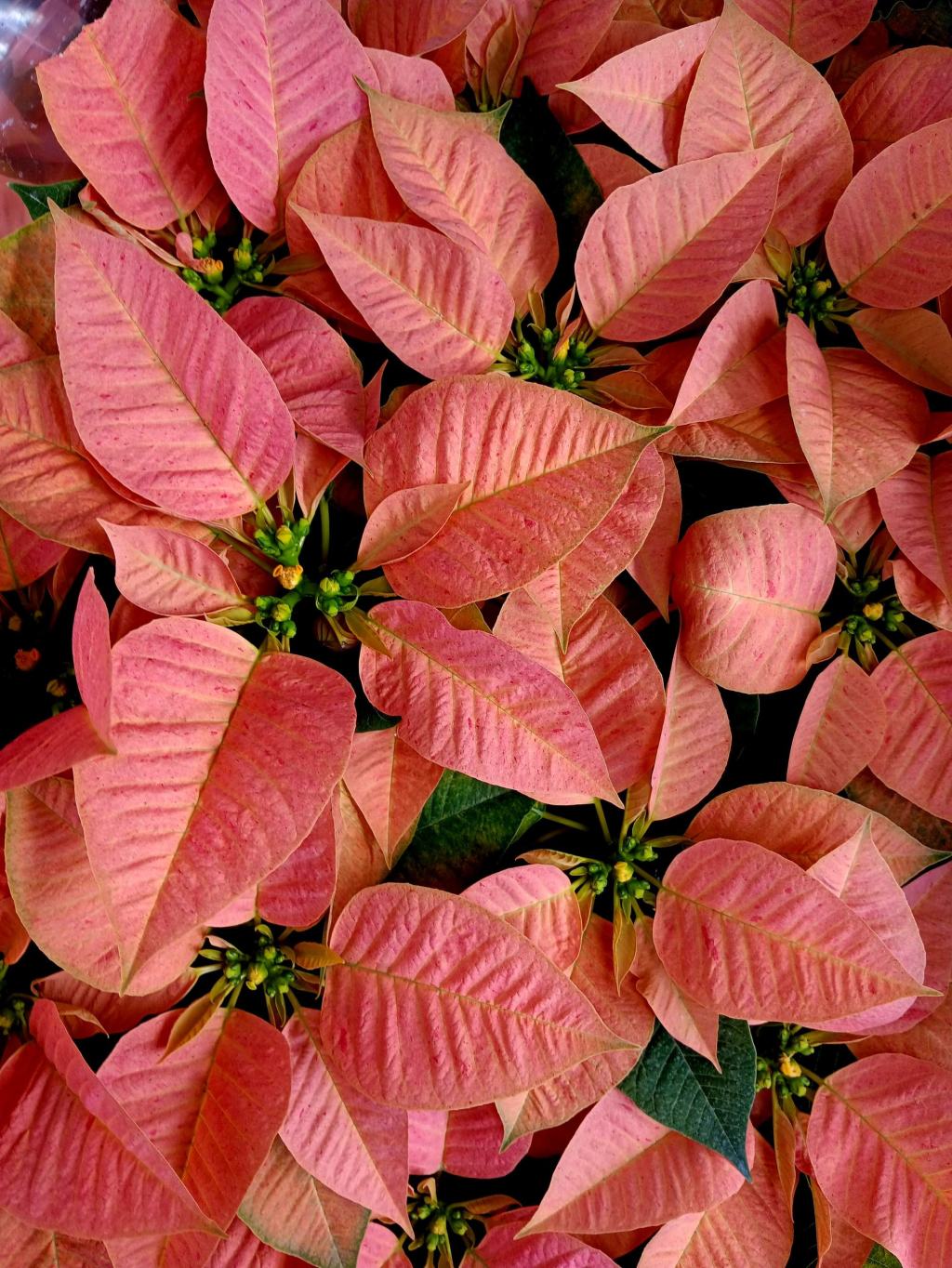
The poinsettia is a beloved member of the spurge family (Euphorbiaceae). The botanical name is Euphorbia pulcherrima, Latin for “the most beautiful euphorbia.” This resilient plant flourishes in moist, wooded ravines and rocky hillsides. Its rich history is now reflected in various cultivated varieties, with white, pink, mottled, and striped bracts, yet solid red shades remain the most coveted during the holiday season.
The origin of the poinsettia flower dates back to the native people of Mexico. For the Mexica (Aztecs), the cuetlaxóchitl symbolized the purity and new life that warriors killed in battle obtained. It was thought that they returned to earth to drink the honey of this plant, which is why it was placed on the altars dedicated to warriors who died during battle, and later why the Spanish friars placed them in Nativity scenes.
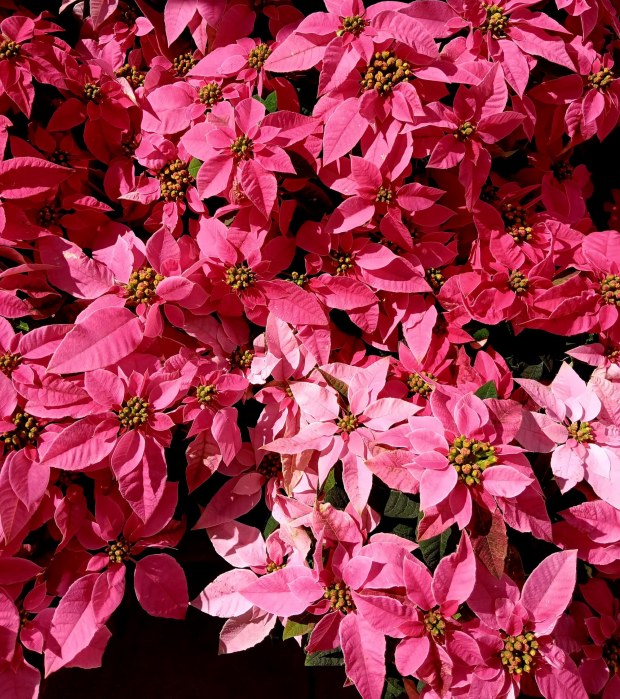 A color comparison between different species, where the amount of light determines the intensity of the coloration, depending on the poinsettia variety. (Julio Estrada)
In pre-Colombian times, the scholar, philosopher, warrior, architect, poet and ruler (tlatoani) Nezahualcóyotl (1402-1472 AD) founded the first known botanical garden in the world, in which he gathered a magnificent plant collection and had the plants and flowers that he could not obtain painted to ensure a record of them. The diversity and beauty of plants and flowers, particularly the cuetlaxóchitl, impressed the Spanish invaders, who noticed the multiple uses that the Indigenous people gave them: ornamental, medicinal, as food, and for ritual ceremonies such as celebrations of their extensive festive calendar.
In addition to ritual ceremonies, the Aztecs cultivated the cuetlaxóchitl to extract ink from its crushed bracts for their textiles and leather. Through the use of poultices or potions, its sap was used in the treatment of fevers and some skin diseases (Note: a treatment no longer in use).
Joel Roberts Poinsett (March 2, 1779 – Dec. 12, 1851) was an American physician, diplomat and botanist and was the first U.S. minister to Mexico. After visiting an area south of Mexico City, in the state of Guerrero, Poinsett saw what later became known in the U.S. as the poinsettia. Poinsett sent samples of the plant to the U.S., and by 1836, the plant was widely known as the “poinsettia.”
This decorative spurge is mildly toxic so should not be eaten and it should be avoided by those with latex intolerance. Poinsettias come in many colors and they change color in response to shorter winter days. Poinsettia flowers are made up of the bracts, which look like petals, and the tiny yellow flowers in the center, called cyathia. The colorful bracts attract insects to the flowers and will drop after pollination.
Poinsettias can be grown as attractive green plants, but most people are interested in making their poinsettia colorful again and ready for the holidays.
Poinsettias prefer an acidic soil, and growing them is not an easy task. It requires keeping the plant healthy by excluding light from the plant for some time to prevent the plant from producing chlorophyll, the pigment that makes plant parts green. This changes the bracts to red, pink or white, depending on the poinsettia variety.
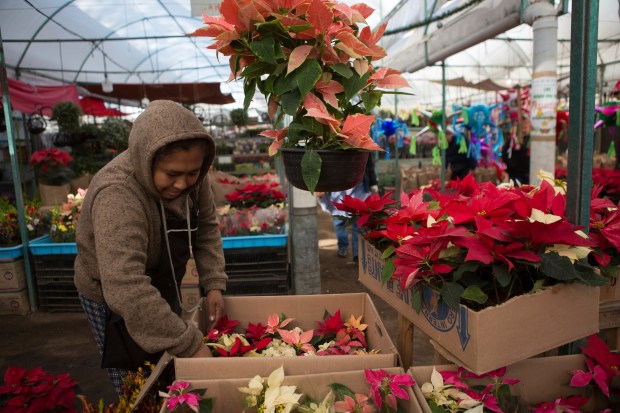 Vendor Braulia Brito tends to her potted poinsettias at her stall in the Xochimilco borough of Mexico City, Saturday, Dec. 10, 2022. Despite being a universal Christmas icon, few people are aware the Christmas Eve flower, commonly known as the poinsettia, is native to Mexico. The cuetlaxochitl (as it is called in Nahuatl) is a native of the states of Morelos and Mexico City, and more precisely, from Xochimilco. (Ginnette Riquelme / AP file)
Light requirements
Outdoor light: Part sun, four to six hours daily.
Watering
• Keep soil moist.
• Water plant when the soil feels dry to touch or the pot feels lightweight when lifted. Never allow poinsettias to get dry or they will wilt.
– Remove from foil or outer pot before watering.
– Make sure your plant is in a pot that drains well.
– Set the plant in a sink and water thoroughly, allowing the plant to drain.
– Never allow poinsettia to sit in excess water. Constant wetness will rot plant roots.
Fertilizing
• Fertilization is not needed during the holidays.
• Start fertilizing when you see new growth (new green leaves, stems, bracts).
• Fertilize with an all-purpose plant fertilizer. Mix with water at half the recommended strength. Feed your poinsettia every 3 to 4 weeks.
Transplanting
• In late spring or early summer, transplant the poinsettia into a larger container (about 2 to 4 inches bigger than the original pot) or in a part-sun garden bed.
• In pots, use a soil mix with a good amount of organic matter such as peat moss. Make sure the pot has good drainage.
• In the garden, plant into a garden bed with well-drained soil (mixed with organic matter such as peat moss or compost) that gets 4 to 5 hours of sun per day. This will help maintain soil moisture and create a good growing environment for the roots.
• Water your poinsettia thoroughly after transplanting.
Find a yearlong calendar for poinsettia care at extension.umn.edu/houseplants/poinsettia
May the beauty of the Flor de Noche Buena warm your heart during this beautiful season. Wishing you happy holidays and many blooms!
Yearlong calendar for poinsettia care: Your simple guide to reblooming
These instructions from the University of Minnesota Horticulture Extension can help you ensure a repeat showing of holiday color.
New Year’s Day
• Fertilize if you see new growth.
• Continue to provide adequate light and water for a prolonged bloom for several weeks.
Valentine’s Day
• Check your plant for signs of insects, such as white fly, and manage them accordingly.
• If your plant has become long and leggy, cut back to about five inches tall to promote more compact growth.
St. Patrick’s Day
• Prune off faded and dried parts of the plant.
• Remove leaves from the soil, and add a little more potting soil if the roots are visible.
• Continue keeping the plant in a bright, sunny window.
Memorial Day
• Trim off 2 to 3 inches of branches to promote side branching.
• If you plan to continue growing your poinsettia as a potted plant, pass it into a container.
Father’s Day
• Move the plant outside for the summer and place in indirect light.
• You can also transplant it directly into your garden.
Fourth of July
• Trim the plant again.
• Move it into full sun.
• Continue to water and fertilize but increase the amount to accelerate growth.
Labor Day
• Move indoors to a spot that gets at least six hours of direct light daily, preferably more.
• As new growth begins, reduce the fertilizer to one-quarter the recommended strength.
Fall equinox
• Starting on or near Sept. 21, give the plant 16 hours of uninterrupted darkness (put the plant in a closet, basement or under a box) and 8 hours of bright light every day. During the dark period, the plant cannot receive even the slightest bit of light at any time.
• Maintain night temperatures in the low 60 degree range.
• Continue to water and fertilize at a reduced rate.
• Rotate the plant daily to give all sides even light.
Thanksgiving
• Discontinue the short day/long night treatment.
• Put the plant in a sunny area that gets at least six hours of direct light.
• Reduce water and fertilizer.
Source: extension.umn.edu/houseplants/poinsettia
Estrada is a physician from Mexico who served the county of San Diego as the chief medical examiner investigator for more than 20 years. Right after retirement, he became a Master Gardener and now devotes his time to the care of his elderly father and as a volunteer for the UC Master Gardeners of San Diego County.
For questions on home gardening, contact the UC Master Gardeners of San Diego County Hotline at (858) 822-6910 or by email at help@mastergardenerssandiego.org.
Comments are closed.