
For The Union-Tribune
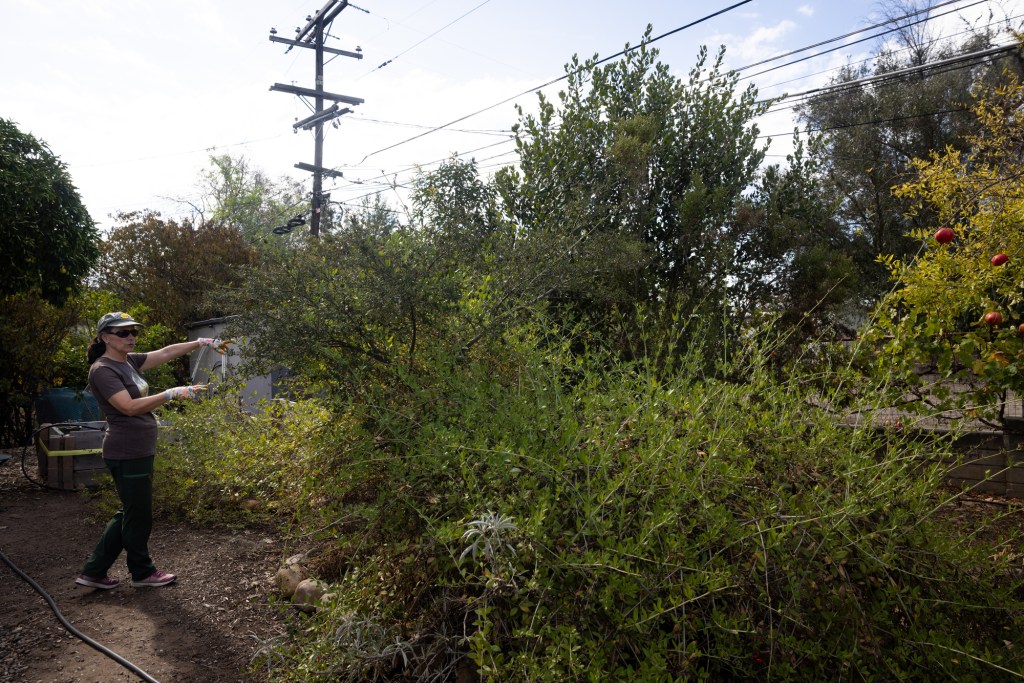
About a year or so after Sherry Ashbaugh and her husband moved into their home on a sprawling corner lot in El Cajon, they began to focus on creating a native garden. The couple had both worked in the U.S. Navy doing environmental planning, among other things, so they already had an affinity for the outdoors. And Ashbaugh has a degree in biology and ecology.
Ashbaugh was initially drawn to the idea of growing native plants on a meta level.
“Development is progressing,” she noted. “Population is growing. So it might not seem like much in terms of space, but every little bit helps. I’ve learned that even if you plant something in a pot or container to have on your balcony, the animals will find that. Bees will find that. Butterflies, hummingbirds, they’ll find that one single plant on your balcony.So every little bit helps.”
As she became more engaged, she joined San Diego’s chapter of the California Native Plant Society (CNPS) and is now chair of their public outreach committee, answering questions at events and encouraging people to start their own native garden.
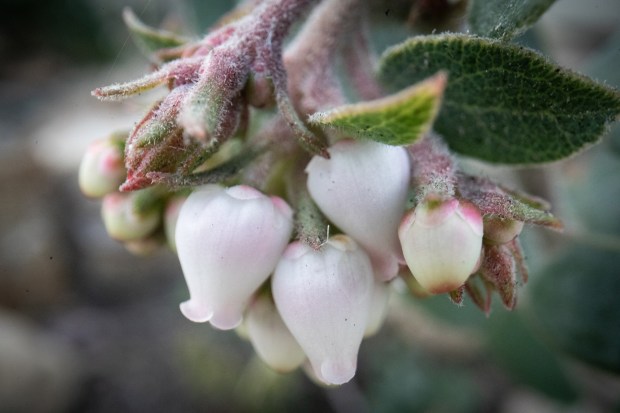 Manzanita blooms hang in graceful, lantern-shape clusters in Ashbaugh’s garden. (Ana Ramirez / The San Diego Union-Tribune)
With water becoming ever more expensive and San Diego seemingly chronically in drought, it can feel harder to justify planting a garden filled with thirsty species. The great news is that there are plenty of resources for both homeowners and renters who want to migrate to growing native plants, and it doesn’t have to be an either/or decision. If you understand your plants’ needs, you can grow natives and have a vegetable garden, citrus trees or ornamentals that you love.
Let’s say you’re a big hummingbird fan, with several feeders hanging around your garden or from your balcony. Here’s the thing, as Ashbaugh explained: “The hummingbirds don’t need just nectar. They actually need a source of protein. They pick out the little bugs and gnats and whatever is stuck on the spider webs on plants. And then they take the spider webs for their nest.”
Basically, hummingbirds need a holistic environment in which to thrive, and native plants have a role to play there. Yes, they feed on flowers like Fuchsia. But they also like chaparral mallow, an evergreen shrub with pale pink flowers, and Galvezia, or island snapdragon, a vinelike perennial with trumpet-shape red flowers. These are just two species of native plants, and the island snapdragon even grows in pots.
There’s a lot to learn about diving into establishing a native garden. A little research can go a long way.
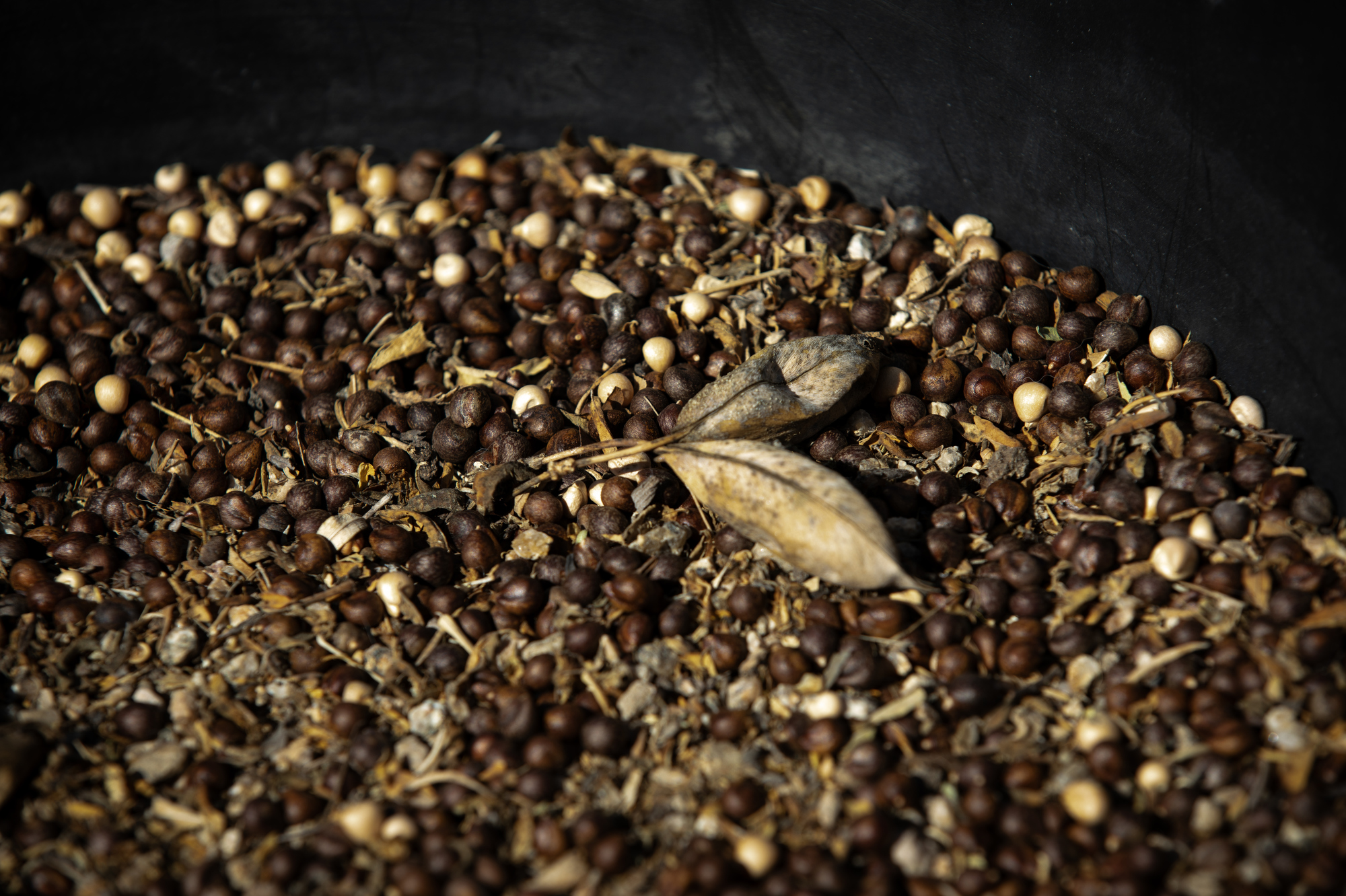
Bladderpod seeds yield what Calscape calls “one of the easiest California natives to grow.” (Ana Ramirez / The San Diego Union-Tribune)
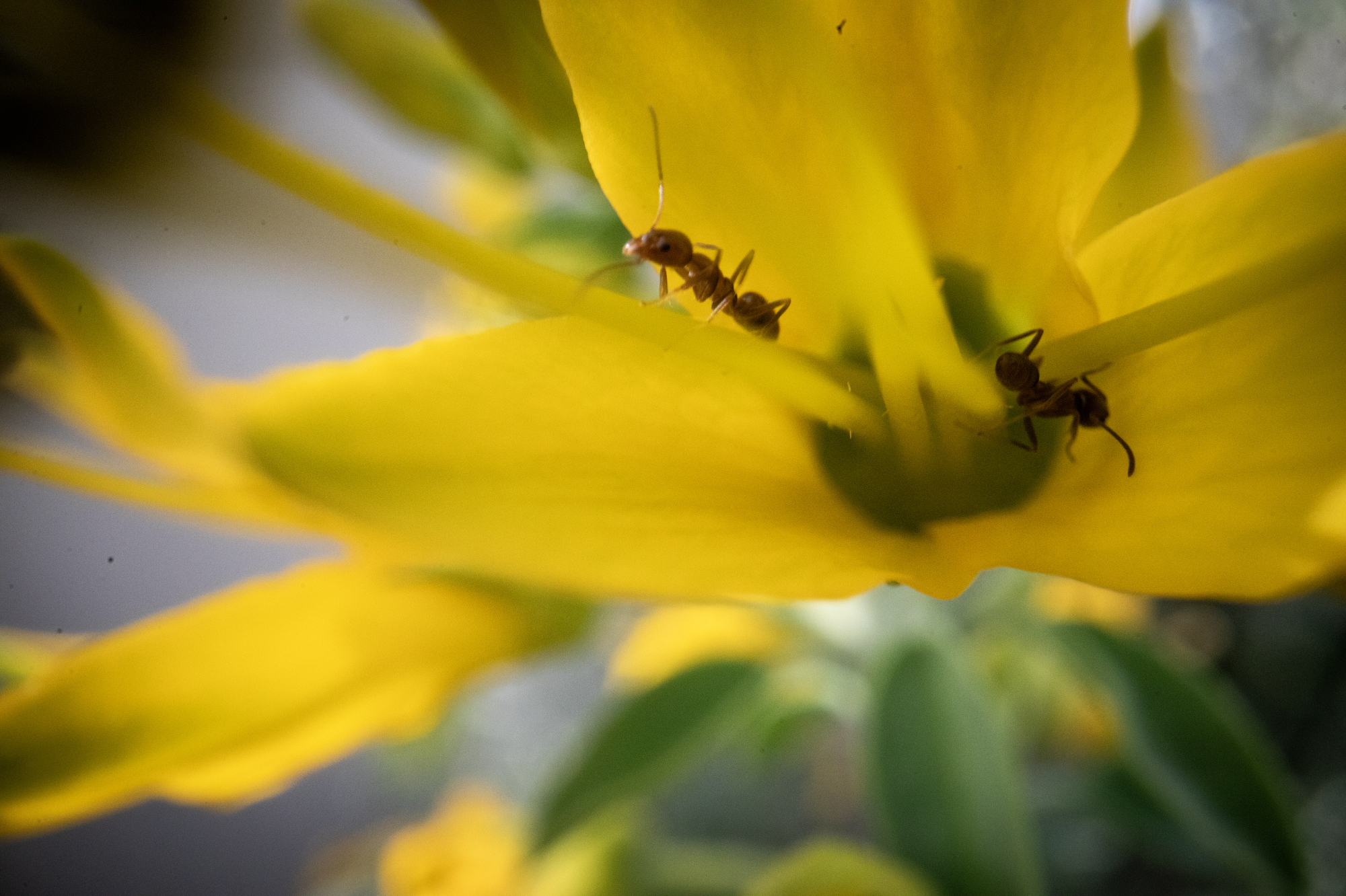
Ants crawl across a bladderpod flower. (Ana Ramirez / The San Diego Union-Tribune)

Buckwheat blooms in Sherry Ashbaugh’s El Cajon yard. (Ana Ramirez / The San Diego Union-Tribune)
Show Caption
1 of 3
Bladderpod seeds yield what Calscape calls “one of the easiest California natives to grow.” (Ana Ramirez / The San Diego Union-Tribune)
Expand
Lucy Warren is a master gardener and the co-author with Greg Rubin of “The Drought-Defying California Garden: 230 Native Plants for Lush, Low-Water Landscape” and “The California Native Landscape: The Homeowner’s Design Guide to Restoring Its Beauty and Balance.”
As you first begin considering your approach, Warren has some suggestions.
“What you need to do to have a sustainable garden is to create a palette of plants that are evergreen, perennial plants,” she explained. “You probably want 75% of your garden to include those types of plants. Many of them also bloom. If you have seasonal plants, you have seasonal color. But if you select your plants correctly, you have different leaf shapes, you have different tones of green. Some of them have really lovely colors of green themselves.
“Then when you have that palette done, you supplement the remaining 25% with the ones that have those pops of color seasonally, and you select plants that have their color in different times of the year.”
Warren also pointed out that not all native plants are drought tolerant. That makes sense when you consider that some are riparian plants, meaning they live and thrive by streambeds, while others have developed to live in harsher, drier conditions. So, consider where you live within San Diego County. Coastal? Inland? In the mountains? Do you get a lot of intense midday sun and heat or some shade? Do you have any water elements on your property? Do you have a slope?
And, of course, if you choose to grow thirstier plants — citrus or fruit trees or vegetables — there’s nothing saying you can’t do that within a native garden. Just grow them far enough apart from drought-tolerant natives so that both types of plants will thrive with their distinct water needs.
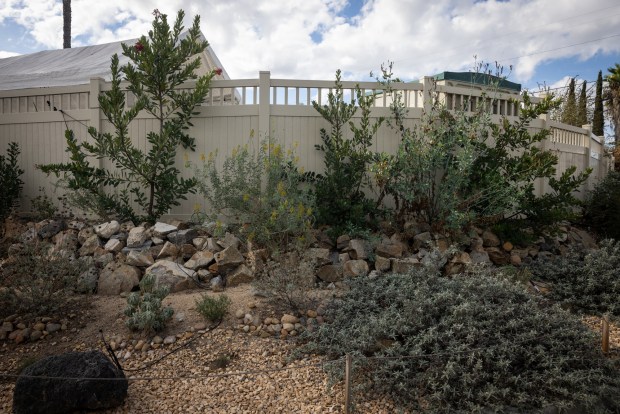 California native plants including buckwheat, manzanita and sagebrush grow in Ashbaugh’s backyard. (Ana Ramirez / The San Diego Union-Tribune)
Christine Hoey is the chair of the CNPS San Diego chapter’s Native Gardening Committee and a board member. She regularly holds workshops to teach people how to care for their native gardens, including how native gardens can increase food harvests.
“Depending on what you’re planting, you can increase your food harvest up to 75%, so native gardens are really advantageous to natural pollinators. And native pollinators are much more effective at pollinating than, for instance, honeybees,” Hoey pointed out. “People don’t realize that. They think it’s all about the honeybees, but bumblebees are actually more efficient. You’ve got your hummingbirds, and your moths and bats are even pollinators. We have dozens of native bees that are great pollinators, butterflies, wasps, beetles, flies — so lots of wildlife out there that can increase pollination for food gardens.”
Another key to growing a sustainable native garden is to take the time to research the plants you’re interested in, Warren said.
“You have to pay attention to the size of the plants, the type of the plants and the placement of the plants,” she emphasized. “One of the mistakes that people make is they see this pretty little plant in a pot, and they just put it wherever they put it, and don’t pay attention to the fact that this little plant in this 1 gallon pot is going to be grow six to eight feet. So you want to plant your plants to their mature size. You want to know how big it’s going to be once it grows up.”
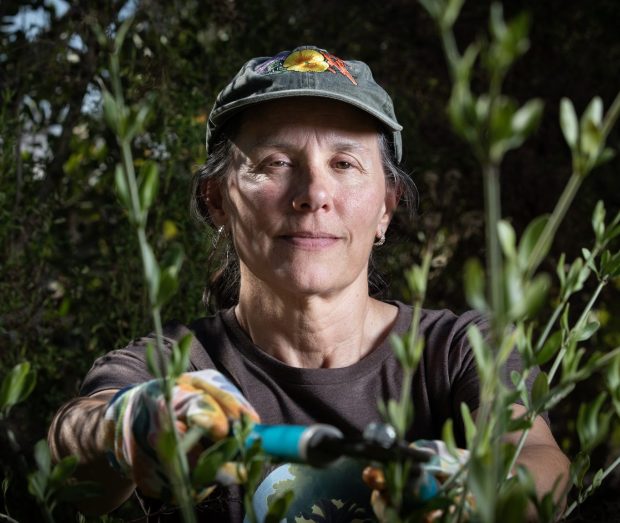 “Butterflies, hummingbirds, they’ll find that one single plant on your balcony. So every little bit helps,” Sherry Ashbaugh said. (Ana Ramirez / The San Diego Union-Tribune)
Are native plants easier to maintain than plants we bring in from other areas in the country or the world?
They should be, said Warren. “If the garden is properly designed, there’s very little maintenance. There’ll be maintenance the first year, because you’ll probably still have a seed bank in your soil the first year or so.”
Meaning that if you’ve pulled out a lawn or other plants, you’ll still have seeds from those plants — unless you strip the soil. Warren said you could have thousands of seeds in the soil, including weeds, of course.
“Weeding is one of the main tasks that you’ll have in transition,” she pointed out. “Once the plants grow, they’ll outcompete the weeds. But weeds are very competitive, and the first few years, you’re going to be probably inundated.”
That’s where good mulch comes in. About 4 inches’ depth in mulch will go a long way in contributing to the health of your plants and the soil.
“All the money you save on buying smaller plants, use to invest in really good quality mulch,” Warren said. “One of the best mulches for California native plants is shredded redwood bark, because it comes from a native plant, and it breaks down very slowly. Even though it’s five to 10 times more expensive, it will last for a good five to eight years.”
The other key part of any garden is irrigation. Some people rely on rain alone to irrigate their plants, but especially for young plants and those that are not totally drought tolerant, you need to have water available. But it shouldn’t be delivered the way you think. Drip irrigation lines are great for vegetable gardens, but native plants still establishing their root systems need a method that mimics rain. It could be hand watering with a hose or watering can or lines with micro spray heads.
“I suggest that people do have an irrigation system,” said Warren. “And my recommendation is the Hunter MP Rotator. It delivers a micro spray, and it washes the leaves of the plants. It’s the equivalent of a Pacific mist, actually. It wets the mulch, and the mulch then delivers the moisture to the plants in the soil.”
Warren explained that the goal is to establish mycorrhizae, which are a fungi with a symbiotic relationship with a plant’s roots. The fungus helps with the growth of the root system by breaking down the soil particles so it can access nutrients like phosphorus and nitrogen. The plant, in turn, provides the fungus with sugars from photosynthesis.
“The whole key to doing a native landscape is that it’s not just planting plants,” she said. “It’s an ecosystem. And the ecosystem includes the plants and the microbes that are in the soil and the mycorrhizae that connect the roots of the soil. The mycorrhizae essentially extends the root system of the plants probably 10 times what the roots do. Watering the first couple of years establishes that ecosystem.”
If you apply fertilizer, you’re applying too many nutrients and too much water, said Warren. Not only will they drop the mycorrhizae, but all the defenses they provide are dropped, too, and they’re subject to all sorts of viruses and bacteria.
Also important is defeating a major enemy of native plants: Argentine ants. The ants damage the roots and bring in other pathogens that sicken and kill the plants. Ashbaugh has a simple solution. She saves little plastic condiment containers and their lids, fills them with a cotton ball moistened with borax, sugar and distilled water, pokes a hole in the lid and places them near but not on their trail for the ants to discover, climb in and bring back the borax to the nest.
“The goal is they feed the queen and once you kill the queen, then the colony will die.”
But perhaps you don’t have actual land to grow natives. How well do they do in pots?
Obviously, it depends on the plants you select, but Hoey is a big advocate of container planting for natives.
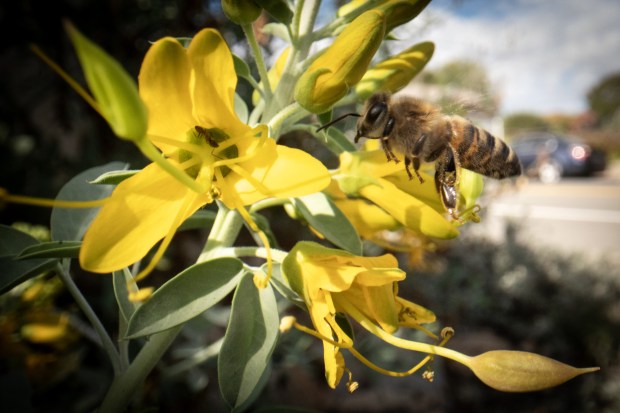 A bee takes pollen from a bladderpod flower in Ashbaugh’s native garden. (Ana Ramirez / The San Diego Union-Tribune)
“In San Diego County, 50% of our residents rent rather than own, and so we have 50% of the population who doesn’t have a piece of land to do a native garden, or even fruit gardens. And so my big thing is trying to tell the other 50% of the population who rent, ‘Hey, you can have a native garden on your balcony or your front porch or right out your back door using containers.’ And I’ve got a whole class that I’ve dedicated to teaching people how to do this, because it’s not hard to do.
“The thing is, if you plant, a thing will come, and container gardens are no different. And you look for plants in which something is blooming year-round, and you will have a constant flow of pollinators visiting your native container garden.”
Huey has a handout for mini habitat gardening with native plants that explains the right location to choose, the type and size of containers, drainage, soil, watering and feeding, top-dress and maintenance — and a list of native plants that thrive in containers. These include bush monkey flower, desert mallow, California Fuchsias and red buckwheat for full sun; and Douglas’ iris, island snapdragon, hummingbird sage and woodland strawberries for part shade.
As for the needed mycorrhizae, it turns out, said Hoey, that the fungi you need are sold at a lot of nurseries or online.
“You can buy a package of a variety of these fungi, and you just sprinkle a little bit and mix it into your soil,” she said. “Or if you’ve got any native soil available nearby, just take a shovelful and add it to your soil, and then you’ve got mycorrhizae from nearby that will populate your soil.”
All this will not only give you a beautiful garden but will also attract pollinators. Hoey suggested adding a water source, like bubbler fountains, a solar-generated mini fountains or a simple bird bath to attract birds.
Looking for help? Start here
It’s clear that the CNPS is a good resource for information — and plant and seed exchanges, too. Here are a few other resources, and demonstration gardens that you can visit.
ADVICECalifornia Native Plant Society – San Diego chapter: cnpssd.orgCalscape: Search criteria such as plant type, sun exposure, soil drainage and ease of care; calscape.org
PLANTS AND SEEDSThe Little Barn at Native West Nursery: nativewest.com/retailBlue Moon Native Garden: bluemoonnative.comMoosa Creek Nursery: moosacreeknursery.com
GARDEN INSPIRATIONThe Water Conservation Garden at Cuyamaca College: thegarden.orgBird Park Learning Garden: cnpssd.org/learning-gardenParadise Hills Native Garden: paradisegardeners.org/native-garden
Comments are closed.