
 NOT SO MANY years ago, relative to the history of horticulture, even a now-ubiquitous phrase like “pollinator plant” wasn’t part of our everyday gardening language and mindset the way it is today. Our collective consciousness about the importance of native plants has grown fast, and with it have come more new words for our vocabulary.
One phrase that I’ve heard a lot lately is “keystone plant”—an expression I probably didn’t even know five years ago—describing native species that are disproportionately important to local ecosystems, the sort of powerhouse plants of all.
I wanted to learn more about just what keystone plants are, and which ones belong in my garden and why, and Uli Lorimer, director of horticulture at Native Plant Trust, helped explain all that to me.
Uli, who has devoted his career to native plants, is the director of horticulture at Native Plant Trust in New England, and he also writes the “Ask the Gardener” column for “The Boston Globe.”
Read along as you listen to the Dec. 15, 2025 edition of my public-radio show and podcast using the player below. You can subscribe to all future editions on Apple Podcasts (iTunes) or Spotify (and browse my archive of podcasts here).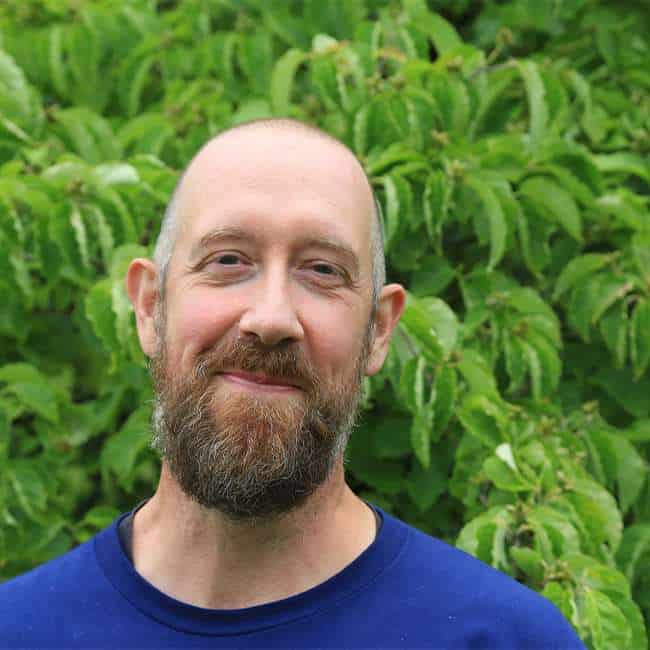
keystone plants with uli lorimer
Download file | Play in new window | Duration: 00:26:25 | Recorded on December 12, 2025
Subscribe: Apple Podcasts | Spotify
Margaret Roach: How are you over there across Massachusetts from me?
Uli Lorimer: Trying to stay warm [laughter], but delighted to be here.
Margaret: Good luck with that. So as I said in the introduction, I think the phrase keystone plants—it’s one that’s spoken a lot lately. Do you remember the first time you heard it?
Uli: I probably put myself in your camp, maybe about five to seven years ago, and would also really credit Doug Tallamy for bringing this to sort of more of the public’s awareness.
In researching the concept itself, it dates back quite a ways, several decades ago, when it was first coined, and it came out of oceanographic research. And I think it’s one of these concepts that I think has generated a lot of discussion, at least in the ecology world, generated lots of associated terms like indicator species and flagship species and functional groups and all these sorts of things that I think have really helped move the needle in how we think about the role of gardens and the environment and how they interact with each other.
Margaret: So even before it had this name keystone plants that, as you said, Doug Tallamy of the University of Delaware and the Homegrown National Park nonprofit, has helped popularize in more recent years, it was kind of out there. I forgot it came from the ocean [laughter]; I forgot that.
Uli: A Dr. [Robert] Paine coined it, and had discovered that when you remove one particular species in this system that he was studying, it had a sort of cascade of negative effects. And he thought, wow, this is sort of akin to that keystone that sits at the center of an arch and keeps the whole thing together. And if you remove it, then these ecosystems collapse.
Margaret: And so originally, I guess as native plants have become more and more the subject of research and more widely used and so forth, a lot of the research initially was probably comparing the impact on the ecosystems of native versus non-native plants, I would imagine; that’s probably where it began. And then more like natives compared to one another. And from there we found the keystones, the ones that were the most impactful.
Uli: Yeah, I think that’s generally the-
Margaret: I’m oversimplifying; excuse me [laughter].
Uli: Well, but I think that what I’ve come to recognize nowadays is that ecological horticulture is really multidisciplinary, in which you have to draw from data sets and pools of information and expertise from the entomology world, from the ornithology world, from those who study fungi, and that the interactions of particular insect group with plants has probably long been well known, but unknown to the horticultural world until we started putting together these pieces and connecting the dots as you just did.
Margaret: And once these research studies happened, including by Doug Tallamy’s team and other colleagues in the native plant world, I mean, some of the statistics, some of the numbers, are pretty astonishing. I remember the one, because he has focused us a lot on the importance of caterpillars—of the Lepidoptera—and the caterpillars and how they support the food webs so critically. And I think it was like 14 percent of native plant species support 90 percent of the caterpillars, that then in turn support the terrestrial food web. It’s this small number. And again, those sort of “keystones.”
Uli: Yeah. I mean, if we could define this in the modern sense as something that has a disproportionate impact on biodiversity far beyond its abundance on the landscape. And I think that drawing the connections with butterflies and moths and the earlier stages of their lives, and the fact that I read 96 percent of all songbirds need insects to be reproductively successful. And I was really astonished to hear that.
And then a friend of mine, Dr. Desiree Narango, published a study a few years back kind of quantifying this for Carolina chickadees. And I often cite this research that a pair of chickadees requires more than 5,000 caterpillars to raise a brood of chicks in a season, which is just a stupefying amount of caterpillars, if you think about it. And where are they going to find it?
Margaret: I always say that caterpillars are the baby food of the songbird set; that’s my popular way of saying it [laughter]. Because really that is even bird species, songbird species, who are not as adults as predominantly insectivorous, at that time in their life cycle, in their life history, when they’re raising a brood, that is the baby food, that is the go-to stuff. Even if they use seeds much more or other creatures, other things, other sources of food, much more, especially seeds.
Uli: It stands to reason that seeds and fruit are resources that are more abundant in the later parts of the year. And there’s this sort of beautiful convergence of not only plants emerging and flowering, but also all that insect life and biodiversity and biomass that’s so well timed with the plants, all coming together at the same time. And I was just thinking that despite the fact that a pair of chickadees might clean out 5,000 caterpillars in the immediate vicinity, there’s still more for all of those moths and butterflies to complete their life cycle. So I mean, there must be literally tens of thousands hiding in the forest, if not more, that we never see because they’re all up high in the canopy.
Margaret: And apparently the caterpillars are protein-packed, I guess. They are a really dense form of nutrition. So that’s critical for those little babies, too, I think.
Uli: But I think one of the big shifts here, I think, is that we may have assumed that adjacent, nearby natural spaces were intact enough to support all of these organisms, and that we could really focus our gardens on just being pretty. And I think that there’s a growing realization that the health of forests and meadows and so forth isn’t maybe not as great as we thought, and that gardeners who really wish to make a positive impact are thinking, what kind of intentional choices can I make in my gardens to help? To help create wildlife corridors or provide resources that just aren’t reliably in the environment anymore? I think a lot of this is what drives this movement forward.
Margaret: So at Native Plant Trust, and then dot dot dot, if we can translate some of the lessons of how you use and how you think about deciding what plants to use when you and your team go about the work that you do. You have propagation operations, you have a lot of different things going on besides two properties and more I guess that you’re also conserving, but the two primary locations. How do you decide what the role of keystone plants is—how often does this come up in your work, and how should we gardeners be thinking about keystone plants? Because I mean, can we even list the keystone plants? It’s not the same in every region.
Uli: I think about one of our core missions is also to educate the public about all the stories around native plants. And so we do quite a lot of research in the winter to try to uncover what those relationships are between a particular species and maybe an insect herbivore or a specialist bee or specialist pollinator, or if it’s a host for a particular butterfly or moth. And I think that we strive to find ways to incorporate those plants into our displays with the belief that we are providing not just something beautiful for humans to enjoy and a sense of place, but also a missing resource for these organisms.
The challenge I think, in any garden, is how do you find the balance between species diversity and biodiversity? And you could make the argument that lots of different things is a net benefit for the wild, versus a design that is legible to us that we can make sense of, and that there’s sort of a balance and a middle ground between what we get out of gardens and what we’re providing for the local wildlife. And so I think that’s always a little bit of a push and pull where we love plants, we want to grow everything we possibly can, but sometimes the site conditions don’t allow us to grow everything. And so you have to make hard choices sometimes.
Margaret: And finding out which ones though are the keystones of our area—I mean, it feels like that’s a really good educational first step. Understanding that, knowing what they are, both the woody plants and the herbaceous plants. I mean, I know that Doug Tallamy, he wrote a whole book about oaks, and oaks are, in various habitats, powerhouses, definite powerhouses, and it all makes sense. And then there’s other woody plants, but also again, herbaceous perennials and so forth.
 Uli: A lot of herbaceous perennials, too [above, Monarda fistulosa visited by Hemaris thysbe]. And there’s some good resources. The National Wildlife Federation has some great lists that are based on his work. I’ll say that there’s not like a one-stop shop to figure out everything that there is. And a lot of the research now is skewed towards caterpillars, which we’ve connected really well with bird life. But there’s still a whole lot we don’t know about insect herbivores, other stem-cavity nesters—organisms that use plants as habitat, not necessarily just as food.
All of this, if I take a step back, I think that we are all trending towards this greater awareness because there’s a realization that our choices have real positive impacts for the environment. I think that’s really what this boils down to. And that welcoming native plants is a welcome step, but you don’t have to be a purist about it in your gardens.
Horticulture has introduced a lot of really beautiful plants from other parts of the world. Some of them, we’ll say, have turned out to be harmful as they have escaped, but the reality is that wildlife interacts with all of them in one way or another. And I think that Doug Tallamy’s message of aiming for 70 percent native is a really good one, because it’s a goal; it’s a journey upon which each individual gardener can decide how fast and how quickly they work towards it. As long as you don’t lose that intention of trying to make a forward-thinking choice, that’s going to help protect what remains.
Margaret: I think one thing that I’m hearing you say is that the keystone plants for caterpillars might be a little bit different than the list of keystone plants for say, bees—like for pollinators. So if I wanted to think about pollinators, for instance, and I wanted to think about perennials, herbaceous perennials, flowering perennials, would I be looking probably—and I’m going to guess—in the Aster family, the sort of daisy-like flowers, and also maybe the mint family, because that’s where I see a lot of the action in my garden?
 Uli: I’d throw in the carrot family too, the Apiaceae. [Above, pollinator on Cicuta maculata (Apiaceae)]
Margaret: Oh, right. The umbels.
Uli: The umbels are really wonderful. But what a lot of those, particularly the Aster family, what they share is a general flower shape that accepts all comers. It doesn’t matter if you’re a big muscular bumblebee or a small sweat bee or something.
Margaret: Accessibility [laughter].
Uli: Accessibility. And now because of this long relationship that flower shape and insect shape have driven specialization, it’s good to have the generalists in there. And you also need to provide for are specialists that need not just flower shape. I was just thinking about spring beauties [Claytonia virginica] and the spring beauty mining bee, and here’s a really close little relationship that bee needs the particular nectar and pollen of that plant to be reproductively successful, and nothing else—there’s no substitute for it. And so I think this is where favoring a native species to support those specialists is really good; there’s a strong argument to made for that. [Below, spring beauty mining bee on Claytonia caroliniana.]
 Margaret: Because the generalists could use that as well as many other things.
Uli: Absolutely. You could have a lawn full of crocuses and spring beauties and you get both the support for the specialist and maybe a little bit more design choices with the crocuses, but we know crocuses aren’t going to take over the world, and even if they did, that wouldn’t be so bad.
Margaret: Right. But what we’re saying is we’re going to look in the case of perennials, for instance—and really no matter where we are, because morphologically structurally, those three groups of plants that we just named as families are, there’s structurally there, again, accessible—we’re going to look probably in those families. And I can give the links; you alluded to some of the websites that may have lists by bioregion of keystone plants and so forth where people can do a little homework. But again, you have to know what your keystone plants for what you’re looking for, which is a little more complicated.
Uli: Well, for pollinators, I think there’s another really fantastic resource, that’s by a man named Jarrod Fowler.
Margaret: Oh, yes.
Uli: And he has these really wonderful lists of native perennials and all of the bee species that they support or that they’ve known to associate with. And there’s plenty of options in Composite family and mint and carrot family and then loads of others. And that gives you, again, that sort of research-based, data-based background to inform your choices in a garden of which perennials you can include to support not only the generalists, but also with an eye to the specialists.
Margaret: And in woody plants, I mean, I mentioned that Doug has taught us so much about the oaks, but in woody plants, are there some… I mean, for instance, in your work at Native Plant Trust, are there some genera of woody plants that you feel like are real powerhouses that you see their contribution as outsize, kind of?
 Uli: Yeah. I think of the first one comes to mind are viburnums, and viburnums I think are, there’s a good deal of diversity. The flowers support a lot of pollinators. There are a number of Lepidoptera that host on viburnums, and then you have the added benefit of really nutritious fruit that birds rely on in the fall. And so you really get a whole different sets of interactions as the season goes by. And then I think from the human perspective, they’re beautiful shrubs. They’ve got wonderful fall color. If you want an alternative to your burning bush, like put in a Viburnum nudum and you won’t be disappointed. So that comes to mind. [Above, Viburnum dentatum in fruit.]
A lot of the Vaccinium–
Margaret: I was going to say crazy about blueberries; I’m crazy about blueberries, yeah.
Uli: Yes. And for all the same reasons that the flower support a variety of pollinators; the birds love the fruit. You have to compete with them a little bit to get the fruit, but fall color is exceptional. I mean, there’s all these things that kind of converge and I think make them real keystone species in a garden.
Margaret: And with the blueberries, I’ve never really picked any. I’ve had some of them for the shrubs for 30-plus years, but I sort of tucked them all in these kind of what I call biohedges, at the borders of the property, all these woody plant combinations; they’re everywhere. There’s a few here and a few there and a few everywhere. And the insects and the birds love them. They’re not for me. And what is for me is that gorgeous red fall color, and they’re beautiful. They’re beautiful plants, but they don’t need really much attention, yet they draw in all the wildlife.
Uli: Yeah. I think this is a good segue, too, to the idea of the right balance between what I would call necessary maintenance in gardens—so making sure that there aren’t leaves on your stone patio that are going to cause you to slip and fall—and that balance with what I would think of as really ecologically forward practices. Like leaving stems, leaving the leaves, the idea of creating soft landings, your intentional hedges that are not for you to harvest from, but are for the wildlife, or intentional brush piles. Or my friend Edwina von Gal and her snake habitat that she created. I love that. I absolutely love it.
So I think that’s sort of another perspective to bring into this conversation, that you can really maximize the impact of keystone species by pairing those plants with a balanced approach of how you maintain your garden. Because there’s not much point in planting a viburnum if you’re going to then blow all the leaves away in the fall and rake it up and then replace it with wood chip mulch.
Margaret: Let alone an oak tree, where goodness knows how many creatures are going to be in the leaf litter of that tree that’s going to be fairly persistent.
Uli: Absolutely.
Margaret: You don’t want to try to let that be, as you say, like a soft landing, a place that can perpetuate and be largely untouched.
Uli: Yeah. And I think you start to put together this concept of a real workhorse species. That idea, and the fact that gardens aren’t just for us anymore, and combined with some really conscientious and ecologically sensitive maintenance practices, and the result is a garden that bursts with life, that provides all of these wonderful opportunities for you to observe, to be inspired, to gain all of the benefits of gardening, which we know is less stress and more happiness.
Margaret: One more tree or shrub for instance, that you want to shout out, because I just think the woody plants are so important and they’re permanent fixtures in the garden.
Uli: I’m going to call out dogwoods.
 Margaret: Yay. Good, good.
Uli: Because I think you have both the beautiful small-flowered Cornus florida [above] and its red fruit again, and the interactions. And then all of the wonderful shrubby ones that exist in our wetland margins that have similar to the viburnums, the ability to draw different groups of organisms throughout the season. So my top two are going to be dogwoods and viburnums.
Margaret: O.K. Well, Uli Lorimer it’s always fun to talk to you. And yeah, keystone plant: I think it’s been one of the phrases of the year for sure. I’ve heard it more and more and more all the time. Thanks for making time today. Stay warm over there.
Uli: Will do. You do the same.
(Photos from Uli Lorimer; used with permission.)
prefer the podcast version of the show?
 MY WEEKLY public-radio show, rated a “top-5 garden podcast” by “The Guardian” newspaper in the UK, began its 16th year in March 2025. It’s produced at Robin Hood Radio, the smallest NPR station in the nation. Listen locally in the Hudson Valley (NY)-Berkshires (MA)-Litchfield Hills (CT) Mondays at 8:30 AM Eastern, rerun at 8:30 Saturdays. Or play the Dec. 15, 2025 show using the player near the top of this transcript. You can subscribe to all future editions on iTunes/Apple Podcasts or Spotify (and browse my archive of podcasts here).
;
Comments are closed.