
Breadcrumb Trail Links
HomesNew Homes and Condos
Published Dec 12, 2025 • 3 minute read
You can save this article by registering for free here. Or sign-in if you have an account.
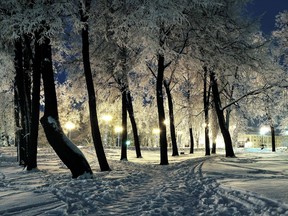 You might not be able to prevent the worst ravages of Old Man Winter – but there are a few things you can do to help your trees make it through to spring.Article content
Reviews and recommendations are unbiased and products are independently selected. Postmedia may earn an affiliate commission from purchases made through links on this page.
When the weather outside is frightful, imagine what it’s like for your trees
Advertisement 2
This advertisement has not loaded yet, but your article continues below.

THIS CONTENT IS RESERVED FOR SUBSCRIBERS ONLY
Subscribe now to read the latest news in your city and across Canada.
Unlimited online access to articles from across Canada with one account.Get exclusive access to the Toronto Sun ePaper, an electronic replica of the print edition that you can share, download and comment on.Enjoy insights and behind-the-scenes analysis from our award-winning journalists.Support local journalists and the next generation of journalists.Daily puzzles including the New York Times Crossword.
SUBSCRIBE TO UNLOCK MORE ARTICLES
Subscribe now to read the latest news in your city and across Canada.
Unlimited online access to articles from across Canada with one account.Get exclusive access to the Toronto Sun ePaper, an electronic replica of the print edition that you can share, download and comment on.Enjoy insights and behind-the-scenes analysis from our award-winning journalists.Support local journalists and the next generation of journalists.Daily puzzles including the New York Times Crossword.
REGISTER / SIGN IN TO UNLOCK MORE ARTICLES
Create an account or sign in to continue with your reading experience.
Access articles from across Canada with one account.Share your thoughts and join the conversation in the comments.Enjoy additional articles per month.Get email updates from your favourite authors.
THIS ARTICLE IS FREE TO READ REGISTER TO UNLOCK.
Create an account or sign in to continue with your reading experience.
Access articles from across Canada with one accountShare your thoughts and join the conversation in the commentsEnjoy additional articles per monthGet email updates from your favourite authors
Article content
I’ll never forget the ice storm that hit southern Ontario just over a decade ago. After an extended period of heavy sleet followed by a sudden deep-freeze, street after tree-lined street acquired a lacy, terrible beauty, thanks to a centimetre-thick coating of ice on branches and trunks.
Article content
Recommended Videos
Article content
The lightest wind gust produced an eerie, almost musical tinkling, cracking sound, as stiffened twigs and limbs knocked against each other.
But the worst of it came over the next few days. The damage to the city’s trees was heartbreaking and irreversible; on my street alone, several ancient, towering cedars snapped and came down, and across the neighbourhood, houses and cars suffered serious damage from falling limbs.
Ice storms are a serious, though fortunately uncommon, natural occurrence. But they are an extreme example of what all urban trees go through during winter. You might not be able to prevent the worst ravages of Old Man Winter – but there are a few things you can do to help your trees make it through to spring.

Your Midday Sun
Thanks for signing up!
Article content
Advertisement 3
This advertisement has not loaded yet, but your article continues below.
Article content
Winter pruning
If you have mature trees on your property and it’s been a while since you had them professionally trimmed, December is actually a good time to call in an arborist. With the leaves off the tree, it’s much easier for a trained eye to spot dead, diseased, weak or crossing branches, and remove them before they cause trouble (to the tree, or to anyone below).
In the city of Toronto, the municipality is generally responsible for trees that grow up to about fifteen feet back from the sidewalk; but right now the waiting list for non-emergency pruning care can be as long as a year or more.
However, you can apply for permission to have a private company prune your city tree at reduced cost. If you can afford it, it’s a route I recommend, since many of our local trees are reaching maturity, and very vulnerable should we get another ice storm.
Advertisement 4
This advertisement has not loaded yet, but your article continues below.
Article content
Mulch
Trees love a cozy mulch blanket as much as your garden does. A one- or two-foot circle about two or three inches thick creates a nice insulated layer that protects the roots nearest the tree from sudden freeze-thaw cycles. Be careful not to let the mulch actually touch the sides of the tree, which can lead to rot.
Tree guards
With younger trees, bark near the base can be very tempting to small animals (and sometimes larger ones, like deer) foraging for scarce food. A plastic or mesh tree guard or wrap on the lower couple of feet or so can protect them, as long as you don’t wrap it too tight, which can strangle the tree! Be sure to remove it as soon as the weather warms up.
Burlap
Burlap can protect young evergreens and shrubs from bitter winter winds and driving snow – but it can also smother them. Don’t wrap the burlap too tight; allow for air circulation between the burlap and the tree. An alternative is to create a mini-tent, by driving four stakes in the ground around the shrub and wrapping the burlap around those.
Advertisement 5
This advertisement has not loaded yet, but your article continues below.
Article content
Everyday care
If you live on a busy street, consider erecting a burlap “fence” across the front of your property to protect against spray from passing cars, which can cause significant damage to your trees, lawn and garden.
After a snowstorm, gently brush heavy snow off branches and shrubs, using an upward motion. Don’t shake or knock them, which can break them. Also, keep de-icing salt away from the base of your trees, lawn and flower beds; it’s lethal. Non-salt de-icers like Paw Thaw are harmless to growing things, and kinder to the paws of the neighbourhood pooches.
Please feel free to write in with questions, to comment or to share your own city gardening adventures
with Martha. Write to her at marthasgarden07@gmail.com.
Article content
Share this article in your social network
Comments are closed.