
The Three Sisters planting method: planting corn, beans, and squash together, also speaks to a deeply rooted tradition of smart gardening. In that system, corn provides a structure for climbing beans, beans fix nitrogen in the soil (fertilizing the crops naturally), and squash spreads across the ground with large leaves that suppress weeds and help retain moisture in the soil. This method shows how Indigenous gardeners understood and worked with plant communities and soil health long before modern agriculture (Hill, C.G., 2016).
Trying to stay true to the “roots” of the era, EMGV Jeannie Holmes, curator for the Children’s Garden, has spent a lot of time researching the plants that were grown in that time. She has been able to source seed from various historic places that also continue to grow and collect seed to continue sharing the history of our founding farmers.
Youth and adults that have visited the Children’s Garden during programming were able to not only see the growth of these plants, but also harvest items (if they were ready) to take home and prepare themselves.
Interactive Spaces for All Ages
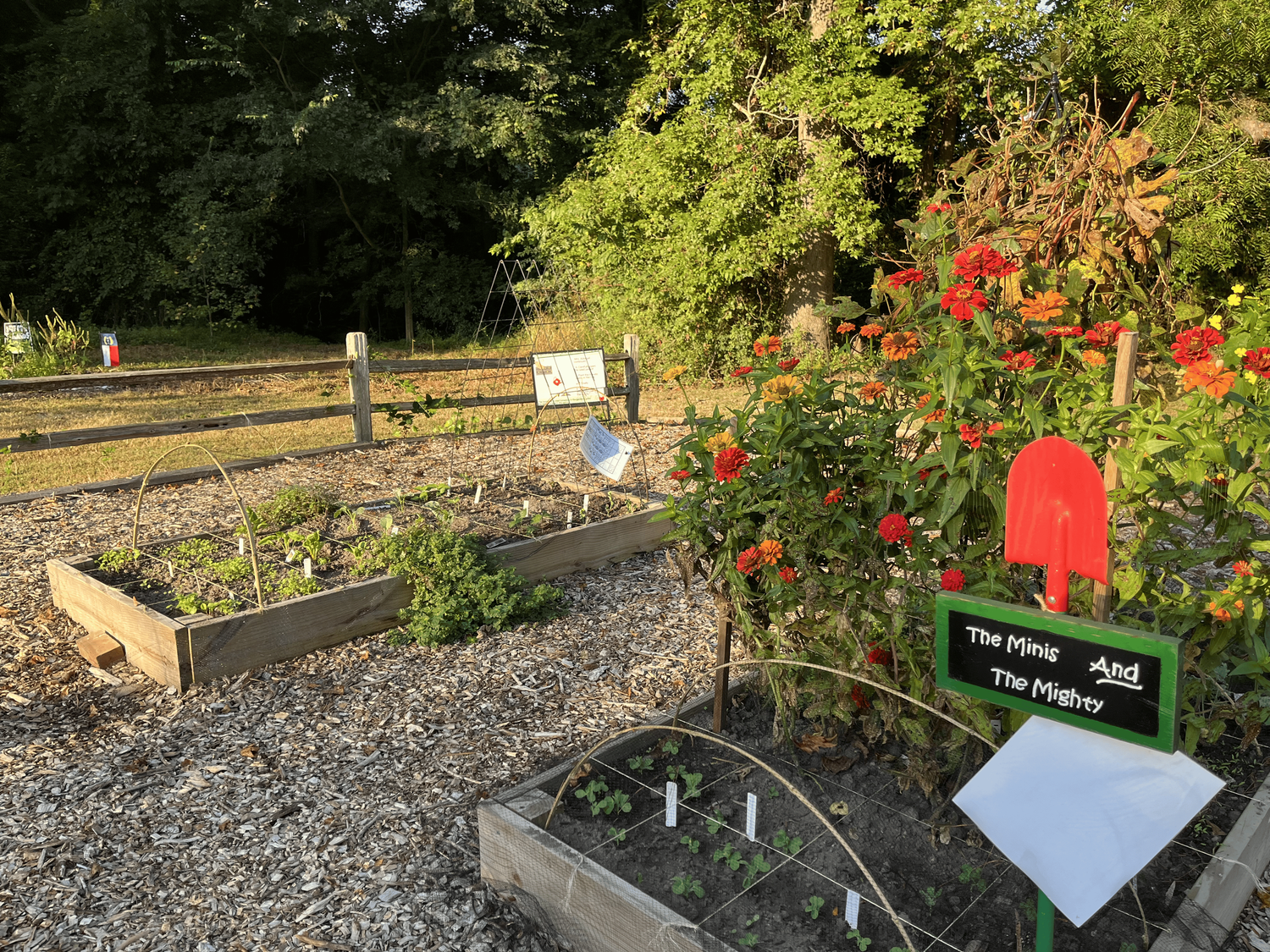
While the row garden is traditionally filled with historical items, the garden also features raised beds. These are more traditional and were planted using the square-foot method, allowing youth to easily see spacing and learn plant identification. The ABC Garden, featuring plants A through Z, trails along another learning space complete with a gazebo and picnic tables, and remains a favorite spot for younger children. A berry patch, reading log circle, and meeting barn are also on site to add to the charm and educational reach of the space.
Programs That Inspire
Garden programs continue to grow! Six summer camps were hosted this summer (2025) and many site tours throughout the spring, summer, and fall have brought over 100 youth and adults into the garden for hands-on learning. The summer camps were themed each week such as, “garden explorations,” “blueberry buds,” the dirt on worms,” “cool as a cucumber,” “digging into carrots,” and “watermelon wonders!” Activities were chosen to connect gardening with literacy, science, and history. With themed planting in the raised bed area inspired by children’s books like Who Grew My Soup? and The Tale of Peter Rabbit, the garden space also blends imagination with real-life gardening skills.
Growing Together
A key lesson learned this year is the importance of teamwork. The garden is the result of many hands and many ideas working together, reminding us that big dreams grow best when shared. The Extension Master Gardener Volunteers of Lenoir County, the agents at the Lenoir County Cooperative Extension, Boy Scout Troop 41 (sponsored by Gordon Street Christian Church), and community partners continue to play a vital part in bringing the ever growing visions in the garden to life.
A recent Eagle Scout project added yet another educational feature to the Children’s Garden. This project included a dedicated outdoor classroom complete with benches and a framed chalkboard, providing an additional space for teaching, gathering, and hands-on learning
Looking Ahead
As the garden continues to grow, so will the programs and opportunities it offers. We look forward to welcoming even more youth and families into this unique space where history, horticulture, and hands-on learning flourish side-by-side. We encourage all to stop by and see the area. For a more formal program or tour, contact the Lenoir County Cooperative Extension Office and speak with Paige Petticrew, the advisor for the Extension Master Gardener Volunteers of Lenoir County & Consumer Horticulture Agent at 252-527-2191 or send an email with your inquiry to paige_petticrew@ncsu.edu
Written by: Paige Petticrew, Lenoir County Extension Consumer Horticulture Agent & Advisor to Extension Master Gardener Volunteers of Lenoir County
Sources:
Favero, J. 2022. The History of Scarecrows. Thanksgiving Point.
Hill, C.G. 2016. Pre-Colonial foodways. In Wallach, J.J., Swindall, L.R., & Wise, M.D. (Eds.) The Routledge History of American Foodways (pp. 9-22). London: Routledge Press.
Guise, G. 2023. Colonial Garden. Fairfield Museum and History Center.
Infantree. 2024. Guardians of the Harvest: The History of the Scarecrow. Lancaster Farmland Trust.
Zvirovski, J. 2022. Where Did the Scarecrow Come From?. Jamestown Sun.
Comments are closed.