
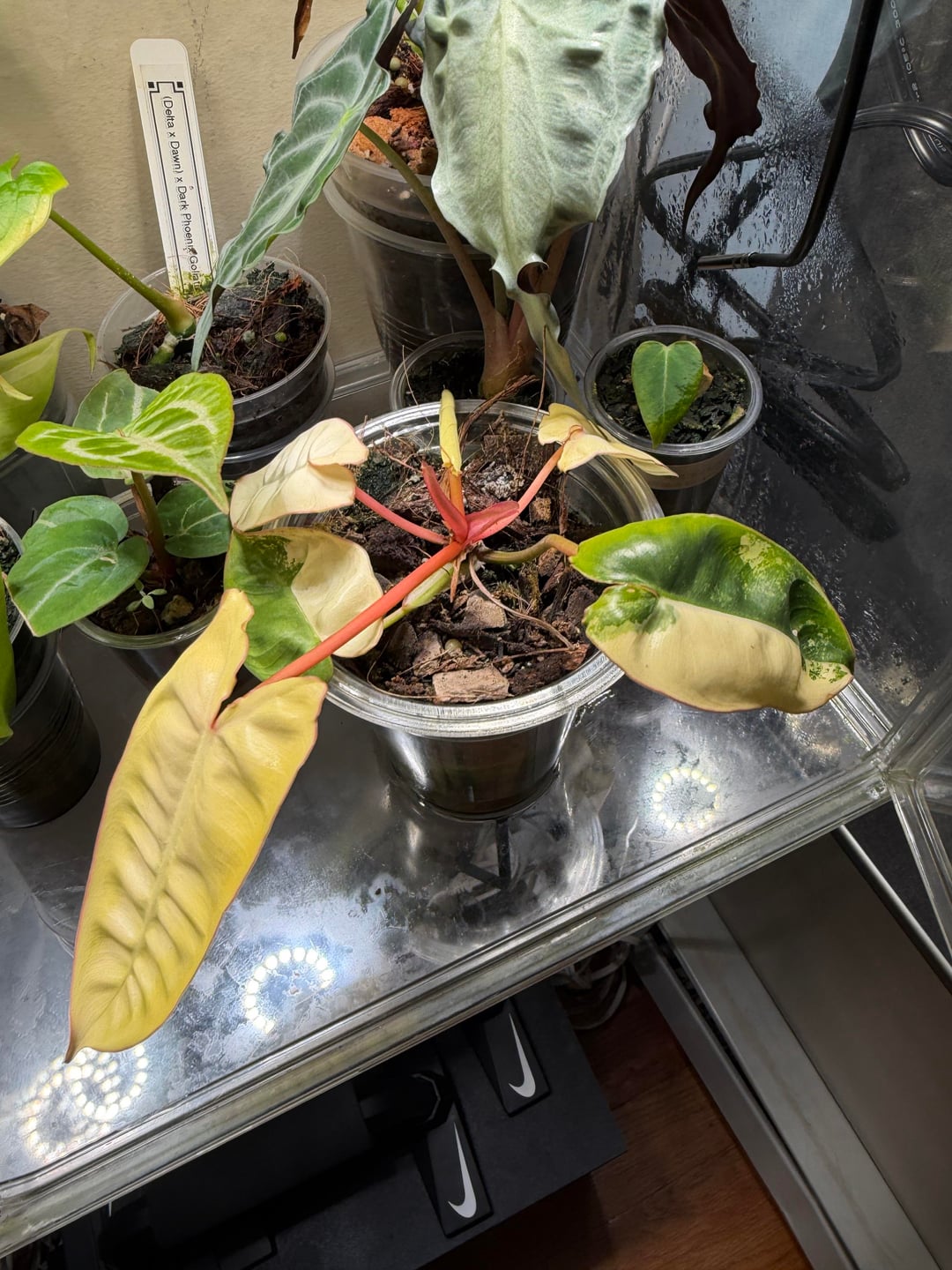
I’m hoping someone here has experience saving a Philodendron Billie ‘Variegated’ that’s gone way too variegated.
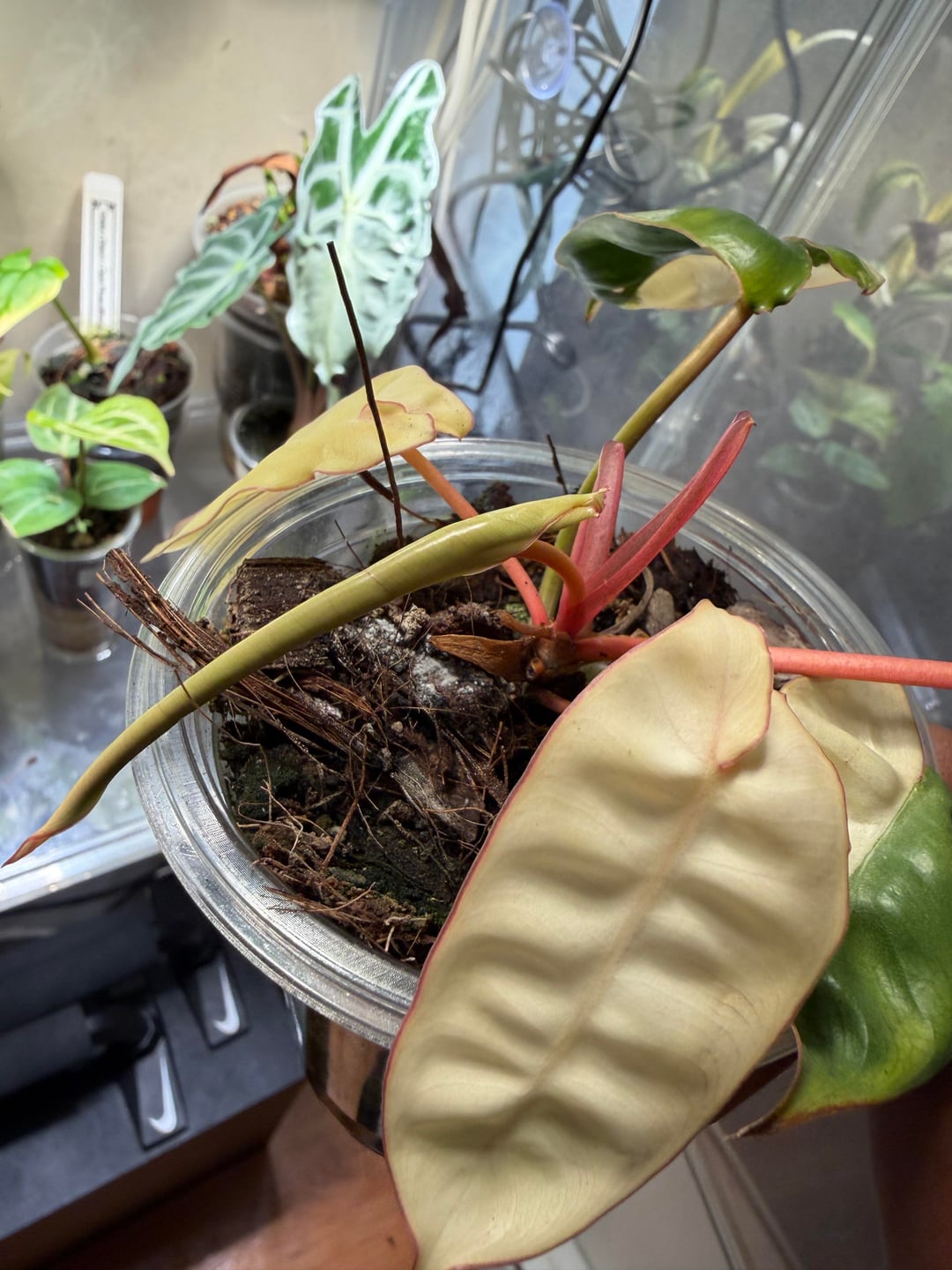
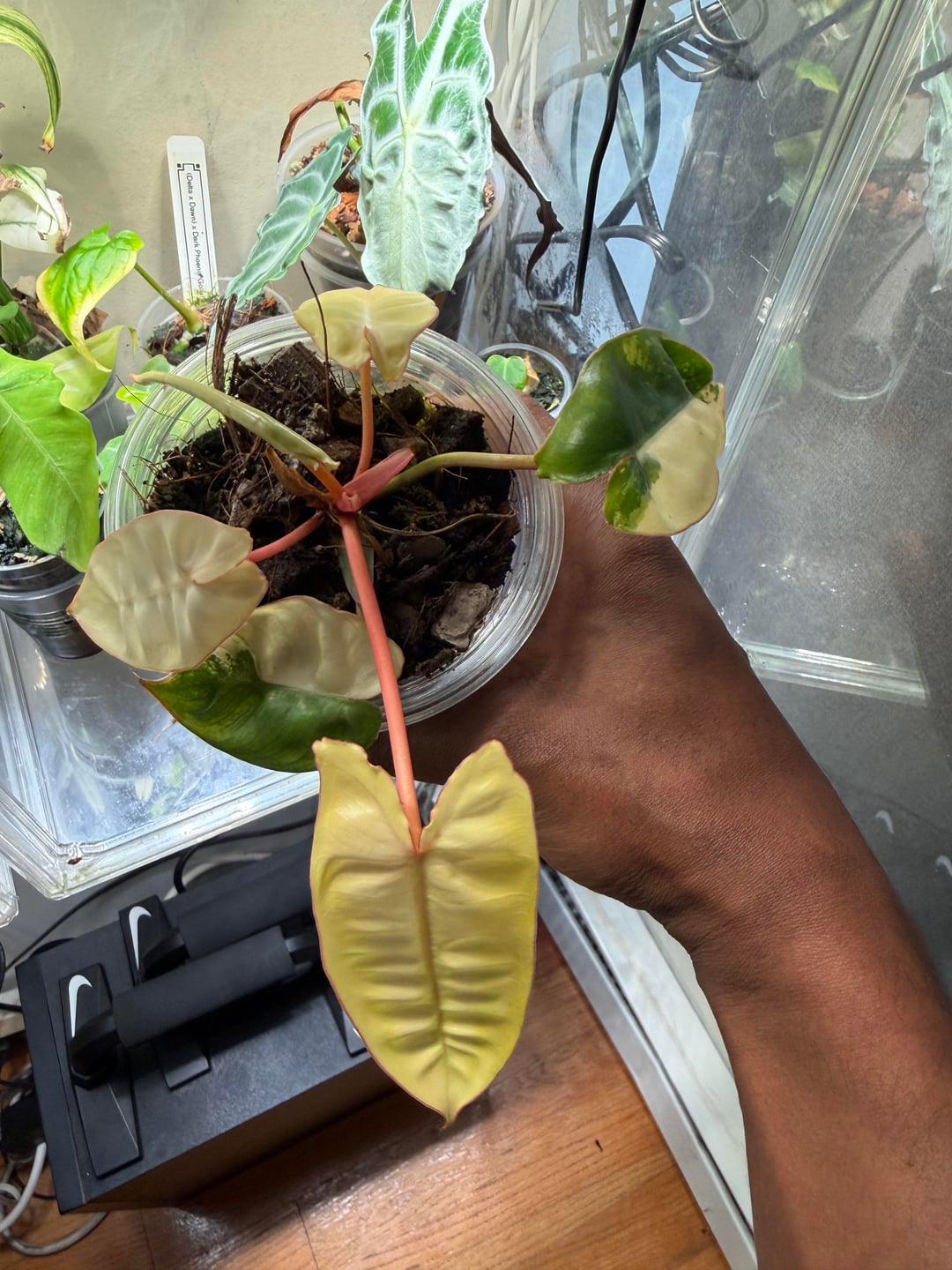
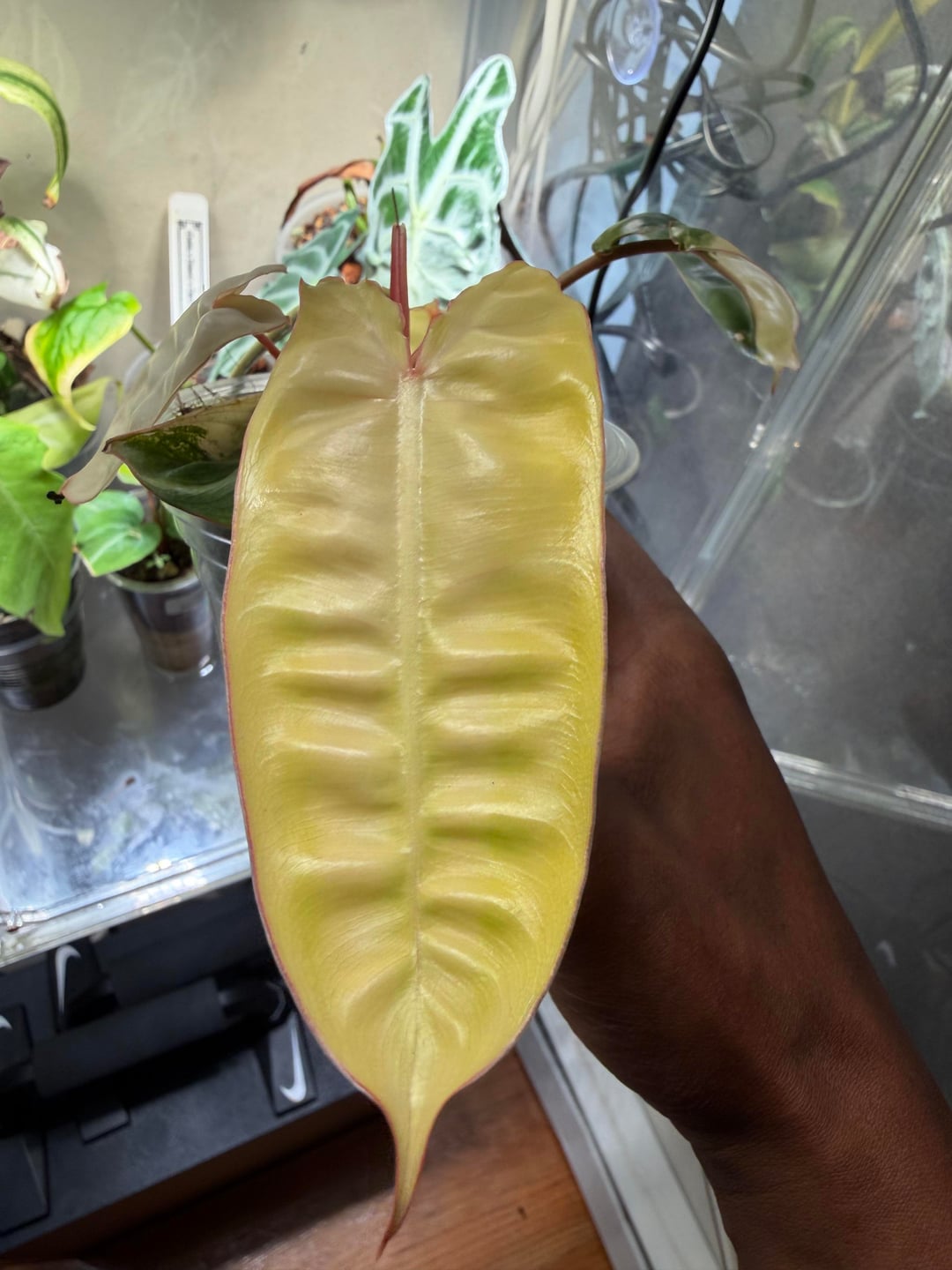
I paid $150 for this as a tiny baby, and it’s been growing in my mini greenhouse. It’s sizing up nicely, but I think it may have been under too much light, because the last several leaves have come in almost completely white. This new one is basically full-albino.
I know once a Philodendron starts stacking several white leaves in a row, it can eventually starve out.
Is there any coming back from this before it declines?
Cutting it back looks really hard based on how it’s growing, so I’m not sure where the best node even is.
Questions for anyone who’s dealt with this:
– Can increasing or decreasing light bring the green back?
– Has anyone had success forcing a greener leaf before cutting?
– Where would you cut this plant if it came to that?
– Is there hope or is the meristem basically gone?
Photos attached for reference any advice or rescue strategies would be appreciated!
by Quirky-Customer5758
5 Comments
I recently bought one of these and don’t have it yet so I don’t have experience with only with the regular ones in which I have two massive ones. Hopefully, someone with experience with the variegated version will chime in.
Personally, I would try taking it out of the greenhouse and putting it somewhere else where it’s not as close to the light but still getting adequate light. It’s going to get so huge that it won’t fit in there anyway, so you may as well get it acclimated to wherever you plan to keep it when it’s larger. Have the leaves hardened off yet? As they age, they get darker and you may see some actual green in them. That big cream one looks like it has an undertone of yellow-ish green so you may be ok with that one. I wouldn’t do anything to it other than move it to a new location and monitor it to see what it produces. Definitely wouldn’t cut it back right away. But again, that’s just me.
I think the idea that increasing/decreasing light affects variegation (at least sectoral variegation) in philodendrons is a myth. Variegated plants typically require more light (since they can’t photosynthesize as well) and that fact plus a lot of wishful thinking is how you end up with that kind of story. The leaves on these things grow in a predictable manner, rotating around the stem. If there’s two colours on the part of the stem from which the leaf grows, you get variegation. If there’s only one, you get whatever that colour is.
Three white leaves in a row strongly implies there’s no green left in the stem anywhere, so you’re not going to get any more from this point forward. Your only option is to cut it back. I would cut it back to right after the last leaf with green in it (try propagating the white leaves just in case, of course, but don’t expect much).
I agree with taking it out of the cabinet and acclimating to less light. Also, when the white leaves give out and fall off, you’ll have more room on the stem to cut if you absolutely need to.
I’m pretty sure for billietiae the variegation is chimeric. This means there are two cells lines co-existing in the plant, the “regular” cells and the “variegated” cells. When a plant reverts or converts entirely, like yours has done by turning white, it typically means that the cells along the growing point/stem have become entirely of one type. In the case of reverting, it turns entirely green, or converting, it turns entirely white (which is what you have). With a converted plant, the new growth cannot produce energy (or only a tiny amount) and thus new new growth is actually parasitic to the main plant. Don’t worry, your plant will be fine and it’s very likely you’ll have no trouble getting the variegated green/cream leaves back.
Since it has put out three solid coloured leaves in a row, it typically indicates that you are unlikely to see a resurgence of green as there is so little or no green cell lines in the apical growth. What you will want to do is remove all growth beyond the best variegated leaf. Inspect the stem, you want the next growing node (typically the one before you cut the plant) to have a good balance of green and cream colour in the stem itself, if you can inspect that, as the growth appearing from that node will carry both cell lines in equal amounts then. With your billietiae it can be hard to tell, which is why you can also go by the leaf. Do your best to cut it precisely (and cleanly!) but honestly just removing the apical growth is already a help here. You are welcome to severe up the removed portion and try to propagate each, but expect only more white leaves and for the props to ultimately fail.
Light will not bring the green back, in fact light has only a small effect on the balance of variegation and that’s because of complex intercellular dynamics (not epigenetics) but it’s not a rule and the plant cannot tell which parts of it are variegated or not. Selective pruning (what I described above) is the single most effective way to control the amount of variegation new growth has.
It’s frequent that a single leaf (or two, or alternating) are solid coloured but new growth can still have variegation, which is why I usually wait until after 2 or three leaves are fully converted or reverted. that’s because the cell lines in the apical growth differ from those in the leaf, but if the cells in apical growth are all one colour, then the new leaves will always be that colour too.
Lots of hope, this plant will be fine and you’ll get your variegated leaves back with some patience and selective pruning. Keep an eye on the new growth and don’t be afraid to cut it back again if it’s not behaving. A similar process can be used to bring back lost variegation in chimeric plants, or amplify variegation that is weak.
Hope this helps!
Thank you everyone for the detailed and well thought out responses. I’m going to bite the bullet and attempt to cut this plant back to where the variegation was last seen. Sad because it grows rather slowly and I’ve had it for a while now.