
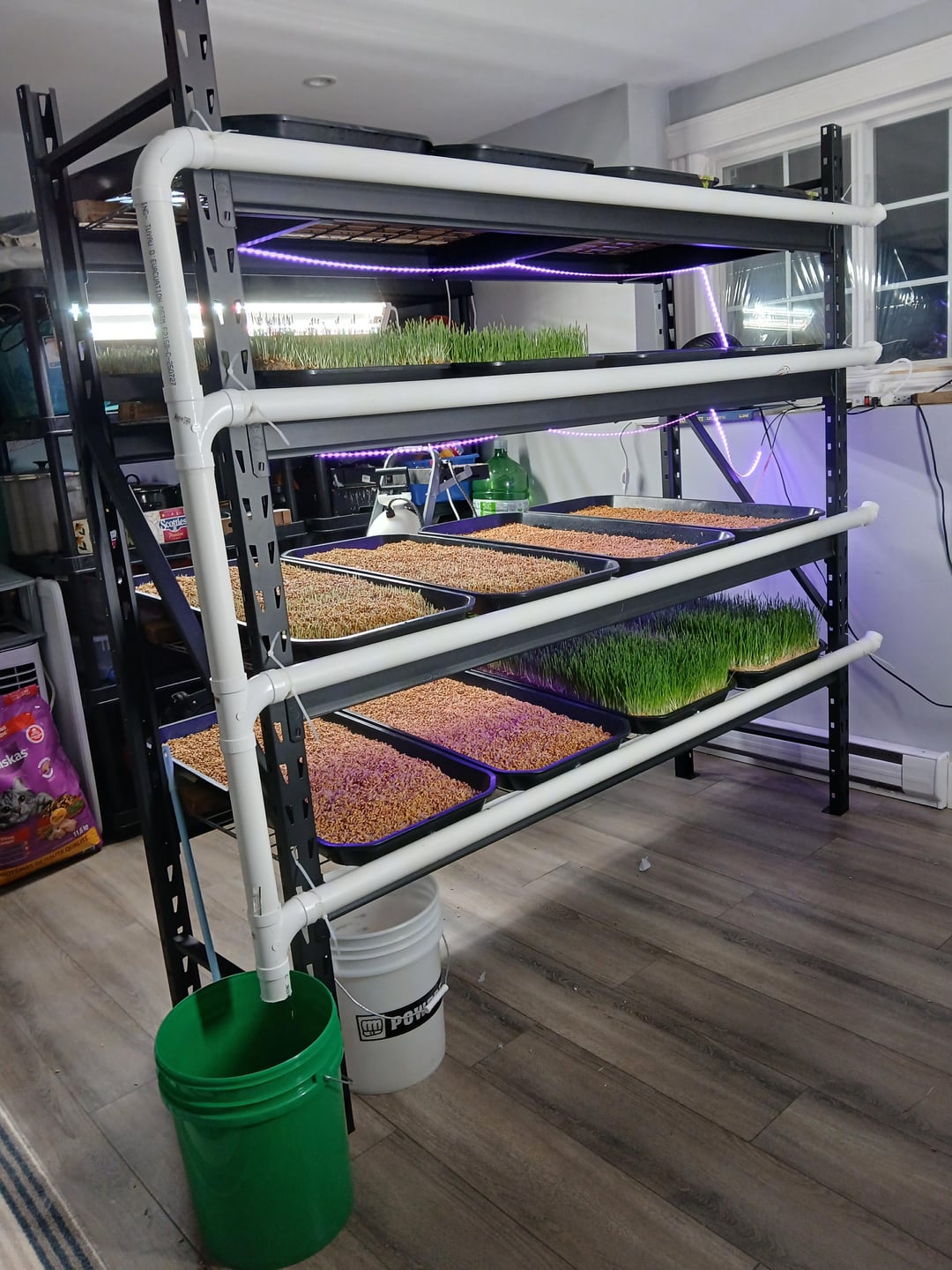
We've been working on a DIY barley fodder system for the past month or two and seem to have it all sorted out now, and just wanted to share our progress.
The setup cost around $500-$600 CAD or so to put together. Most of that is the shelves ($230 at Home Depot) and the trays (boot trays from Costco at $10 each). The rest is the PVC tubing (we used tubing for a central vacuum system rather than plumbing, since it's a little cheaper), lights (scored some on clearance), and the odds and ends like connectors and caulk and such.
We experimented with a few different routes before committing to scaling it up, but simple seems to work best. One hole is drilled at the end of each tray, with a sawn in half PEX hose connector glued and caulked into it, and some cheap window screen mesh tape over it to keep any looses seeds from escaping. The connectors then fit into a hole drilled in the PVC. Everything is slightly angled so water runs from the back end of the trays down to the spout, and then through the PVC down to a 5 gallon bucket, which just slides out and either gets reused or dumped down the drain. Come spring we'll use it to water raised beds and landscaping, which should eliminate the waste completely and also provide a little bit of extra nutrients for those plants. We kept the non-bucket end of the horizontal PVC pipes open to help with airflow and also allow us to dump a little hydrogen peroxide in every now and then, just to help keep it clean.
Barley seeds are purchased for around $18 per 25kg bag from our local feed store, which is enough for about 40 trays. We usually put down two trays worth each day, having soaked the seeds in water overnight. Tip for soaking: Get two buckets, drill holes in the bottom of the one that holds the seeds, and then place that in an undrilled bucket. Fill with seeds and water, and then draining is as easy as pulling the buckets apart in a sink, without having to mess with spilling seeds and/or water everywhere.
The whole setup is in the corner of our finished basement. The lights (all LED, so minimal power costs) are on a timer, with a couple large ones on either side of the setup a few smaller strips running underneath the shelves. We have a few fans running to help keep the airflow going, and one of the heaters for the basement is right next to the shelving so temperature-wise it stays nice. Watering is done with a hand-pump pressurized tank, usually running about 2 gallons through three times a day with additional mistings from a spray bottle whenever we walk by and have a spare moment. We're on well water and have both a sediment and UV filter, so it's clean water at minimal cost.
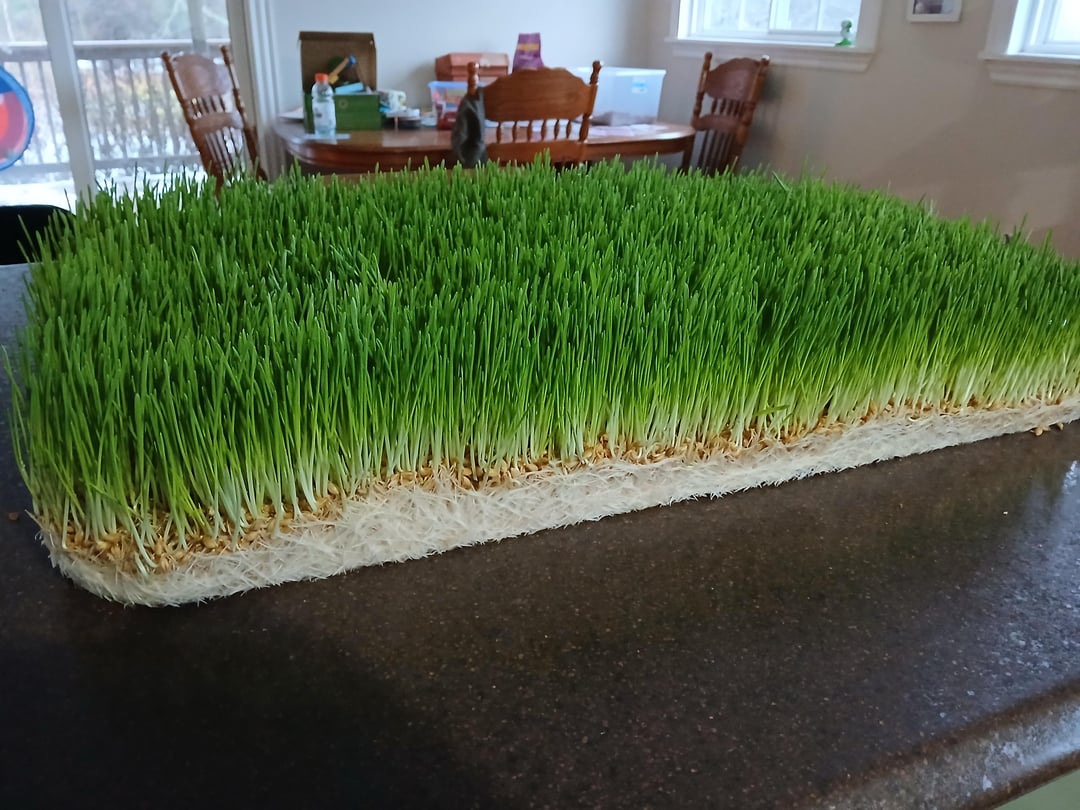
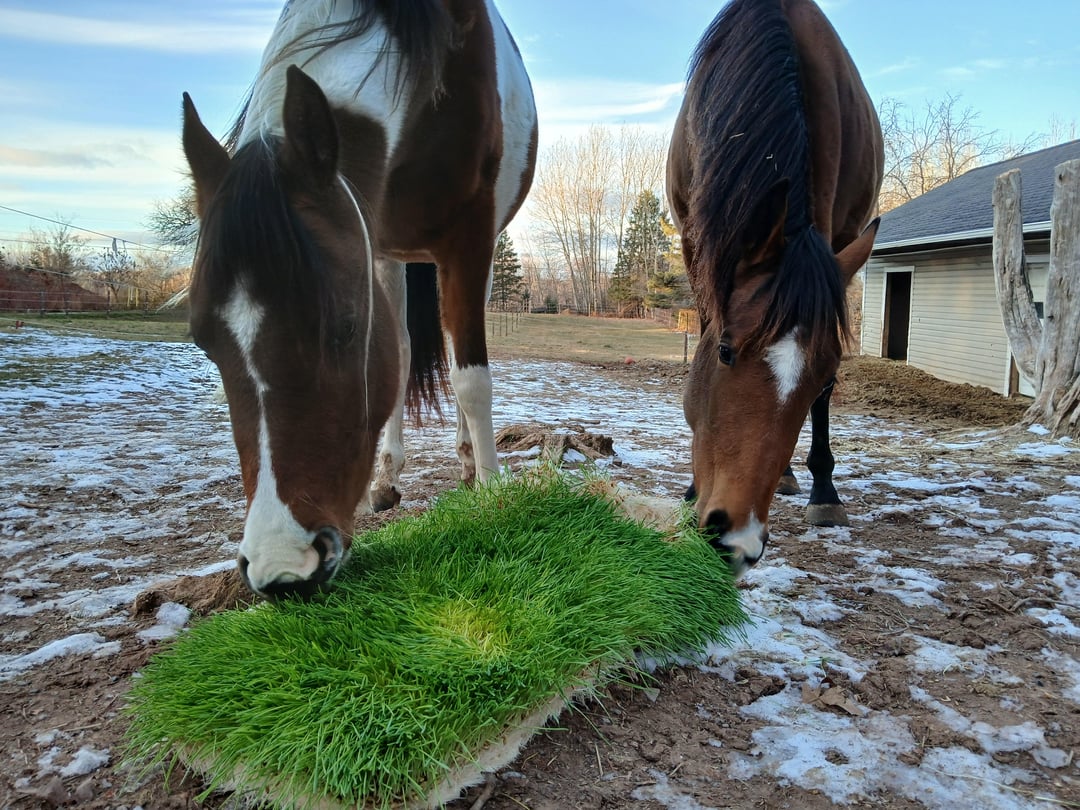
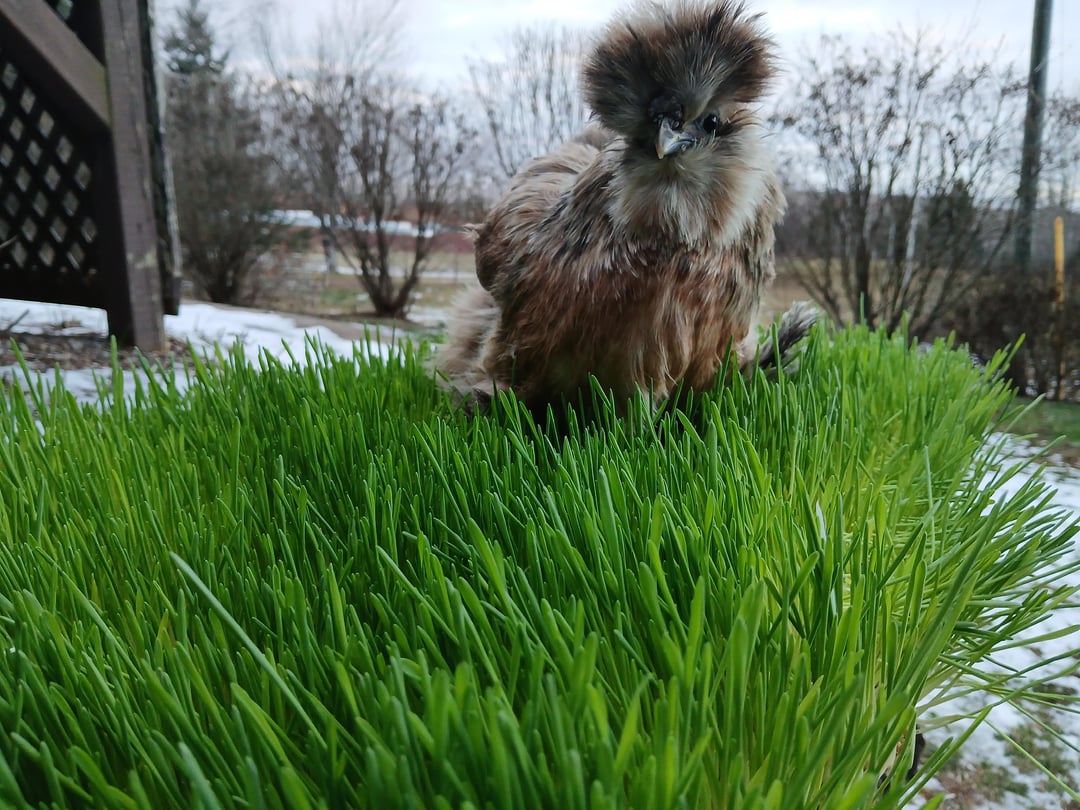
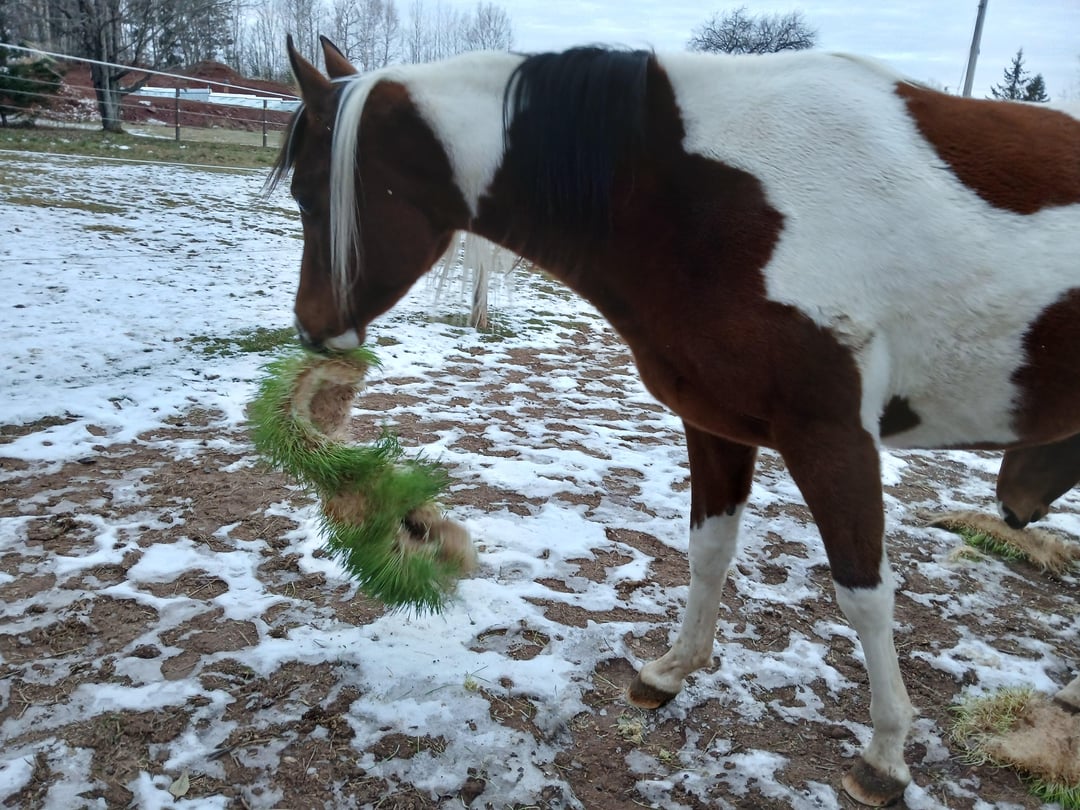
It takes 7 or 8 days for each tray to germinate and reach 4-6 inches in height, at which point we pull the whole thing and feed it to the horses, roots and all. We give them a good shake outside before feeding so that most of the unsprouted seeds come off (which the chickens like to gobble up). Then we scrub the trays, refill them with last night's soaked seed, and do it again.
All in all, now that we're fully set up it costs us about $0.50 per tray and 20-30 minutes a day of watering and messing with the seeds, and in exchange we get about 50 pounds of fodder (two trays worth) most days. This helps stretch our horses hay (we've noticed that we're getting a couple extra days out of each round bale), gives them some different nutrients through winter when there's no pasture to munch on (we also supplement with a bit of alfalfa cubes for further nutritional diversity), and also gives them something to keep them entertained for a bit, as they tend to throw around the mats of fodder to break it apart. The chickens get some of it now and then as well, and they particularly love the partially sprouted seeds.
Overall, it's been a neat experiment. It'll never replace the damn hay bill completely, no matter how much we ultimately scale it up (they need a certain amount of dry matter and fresh fodder only contains so much), but providing our horses some additional nutrition and food throughout the year is nice to be able to do out of a corner of our basement.
Any questions, feedback, or suggestions are welcome!
by cmcdonal2001
4 Comments
Dont have much exposure to this sort of setup, wondering what the nutrient content is in this sort of feed without any soil to draw from.
Very nice.
We have a similar fodder system. Love it for the farm. It’s definitely a side chore, but value level is high.. Especially the farther you get from water abundance or distances to other feed sources.
Raising, cows, donkeys, goats, rabbits, poultry…
This is awesome.