
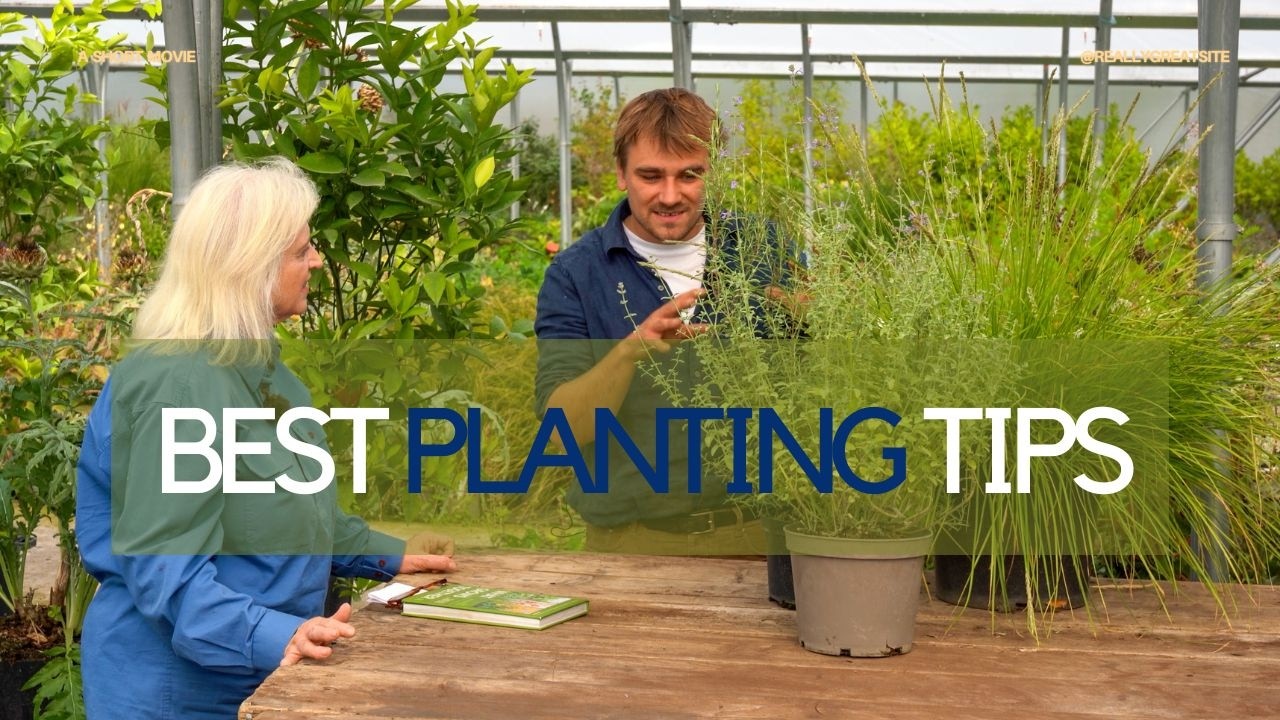
Garden designer Jamie Butterworth, author of What Grows Together and co-designer of the RHS Chelsea Dog Garden with Monty Don shares expert tips on planning borders and combining plants.
In this video, Jamie explains:
How to choose plants that will both look good and thrive together
Simple rules for planning a border that looks good all season
Ready-made “planting recipes” you can copy in your own garden
If you’ve ever wondered which plants really work side by side, this video is packed with practical advice and inspiring ideas.
📖 Find Jamie’s book What Grows Together here https://amzn.to/42BLOmS (affiliate link, see below)
🌿 More design tips on The Middlesized Garden blog https://www.themiddlesizedgarden.co.uk/
00:00 Welcome
00:18 Form Plants: https://www.formplants.com/
01:20 What are the general principles of putting plants together
06:00 How Jamie put the big border at Form Plants together
09:32 Beech and hornbeam topiary balls
10:30 Plant combination recipes
For garden ideas, gardening advice, garden design and landscaping ideas for your garden or backyard, subscribe to the Middlesized Garden YouTube channel here: https://www.youtube.com/c/ThemiddlesizedgardenCoUk
Whether you love English garden style, cottage gardens or contemporary urban gardening, The Middlesized Garden has gardening advice and garden ideas for you.
Weekly videos cover gardening advice and garden design – from small space gardens to middle-sized garden landscaping – plus garden tours and tips for container gardening.
The Middlesized Garden practices sustainability, wildlife gardening and no till methods. If your garden backyard is smaller than an acre, join us and enjoy your garden even more!
The Middlesized Garden Complete Guide to Garden Privacy is available in Kindle or paperback in 13 countries (in English only). If you’d like your garden to feel more private, click here for availability in your country: https://www.themiddlesizedgarden.co.uk/books/the-complete-guide-to-garden-privacy/
#gardening #gardendesign #backyardgarden
For small and middlesized backyards and gardens….
See The Middlesized Garden blog: http://www.themiddlesizedgarden.co.uk/
For Amazon storefront see: https://www.amazon.com/shop/themiddle-sizedgarden
Note: links to Amazon are affiliate which means I get a small fee for qualifying purchases. It doesn’t affect the price you pay and I only recommend things I use myself or really think you’d like!
More garden ideas on Pinterest:https://www.pinterest.co.uk/midsizegarden/boards/
Twitter: https://twitter.com/midsizegarden
Facebook: https://www.facebook.com/themiddlesizedgarden/
The secret to a brilliant border is knowing what
grows together. And that’s the title of a book by garden designer and plantsman Jamie Butterworth.
It’s Alexandra here from The Middle-Sized Garden YouTube channel and blog. And I went to talk to
Jamie about combining plants at his nursery Form Plants, which is a wonderful place to visit.
The team and Jamie actually made the offices themselves out of recycled shipping containers.
And the room dividers are shelves full of vintage gardening books. You may know Jamie because he
co-designed the dog garden at RHS Chelsea with Monty Don. And indeed, you will see some tails
wagging in the corner of this video from time to time. Or you may have seen his garden at
RHS Hampton Court with Anya Lautenbach, the Garden Fairy, or some of his own show gardens. The
reason why Jamie wrote What Grows Together is that he wanted to emulate another Jamie, Jamie Oliver,
who had a cookery book called Five Ingredients, which put together very simple recipes that
people who are time poor or beginners could understand. So that was Jamie’s aim in creating 60
recipes for putting plants together in What Grows Together. So if you’ve ever gone into a garden
center and wondered, I wonder what would look good planted next to what? then this conversation
should have some great tips and ideas for you. So, what are the general principles of putting plants
together? If you’re going into the garden center, you’ve got your trolley – what do you do? Buy
my book. Absolutely. No. Joking aside, well, I’ve been gardening and playing with plants my
entire life, and I work with garden designers and the most amazing planting designers, and I
have the luxury of doing projects – everything from Chelsea Flower Show with Monte Don through
to working on the nicest domestic gardens – and everything in between. So I think slowly but
surely over time I’ve worked out what plants I think both grow well together, because you’re
looking at two – for they’ve got to look good together but they’ve got to physically be able
to grow well together, and survive together. So I think the first one is don’t get overwhelmed.
Plants will die. I’ve been doing this my entire life and I work with people that have been
doing it for far longer than I have. And fundamentally plants die, and we need to be okay
with that and accept that some things will work, some things won’t. And actually the things that
don’t work provide us with an opportunity to plant something else in there. It’s very similar to
cooking in many ways, but also a little bit more difficult in that it might take six months for you
to know if you’ve actually got it right or not. But not being afraid of it not working, I think is
the first hurdle to overcome. Secondly, choosing plants that physically work in the environments
that you’ve got. So, every garden is slightly different. And I’m very conscious that the moment
you start saying north facing, south facing, east facing, it can become quite complex. And
I’ve deliberately tried to stay as clear from as much horticultural jargon as possible in the book.
So, we don’t go into pH levels necessarily in the main book, but at the back there’s an index that
says if you like this combination actually just double check you do have these requirements. But
fundamentally, if you have a sunny garden, making sure that there are plants that like growing
in sun. If you have a shadier garden, making sure there are plants that tolerate the shade.
Yes, you can go as deep into it as possible. I worked on a a Korean garden at Chelsea two years
ago for Jihae Hwang, and she said there’s not four aspects, there’s 12, because each different aspect
creates its own different aspect. And actually you might be south facing but behind a tree, which
is all very lovely, but ultimately if you’re planting up a container in your front garden –
wherever that might be – you can just loosely go: is it sunny, is it shady, and run with it. Then
what actually looks good together? Well, I guess it’s purely subjective. And there are some rules
in planting design, and there are books purely on: you should plant this spire with this umbril with
this dahlia. There are about eight different types of flowers, but I won’t get into that because
ultimately it is subjective, and I’ve picked the ones that I think grow well together. And
quite often I think keeping it simple is often the solution. So having if you’ve got say some
containers in your garden, picking one plant per pot – but having three pots next to each other can
be much more powerful than trying to cram it full of different plants. Going with perennials that
will give you much more year after year interest. But also the only way you will know if it does
look good together other than having a book like this – where you can sort of go: Oh I really like
the way that this pennisetum and this echinacea look good together – is through trying it, and
I think is part of the fun. This might sound a bit wishy-washy, but one of my favourite
things about gardening is what’s to come, and sort of I’m a bit of a dreamer, and I’ve never
once stood in a garden and gone this is brilliant, this is exactly how….I’m always looking at going
“Oh, actually, wouldn’t it be lovely to add some more height here, or something tumbling there,
or a bit more white there?” That’s personal, that’s entirely subjective to me. And so I’m
always looking at the year ahead and never been quite settled. But I think fundamentally if
you’re putting plants together yourself, don’t be afraid of getting it wrong. It’s fine. They’re
plants, and it will go wrong in some instances, but embrace that. Finding plants that will
grow well together in the space that you have. So fundamentally that if it’s a drought tolerant
plant, you’re not putting it in a woodland. Just a little bit. But then thirdly, have fun with
the shapes and the colours. It’s not for me to say you should just have a blue and yellow
garden. But if you want a blue and yellow garden, that’s brilliant. If you just want a white garden,
that’s brilliant. If you want to just go with globe shaped flowers, that’s fine. But also, there
is no wrong way of doing it. So when you’ve done this very beautiful border out the front here,
how did you put that together? What sort of rules and instincts did you follow? When I’m planting or
designing planting, and taking this as an example, I consider it almost like a painting, but you’re
essentially playing in a fourth dimension – so painting is two-dimensional, 3D because we’re
bringing the plants up, but this border will change and adapt in May. It’ll look completely
different to what it does now. It looks completely different now to what it did two weeks ago, and in
a month’s time it will look completely different again. And I always try to – I probably look a bit
mental when I’m doing it – but try to picture what that border will change for the year. So trying to
make sure that I’ve got enough interest in there, enough structure in there. So fundamentally
I started with the trees and the topiary. If you have a decent sized border like the one
we’ve got out at the front, actually adding structure in there, I think is primarily the best
starting point, because it adds form, structure, architecture to the space year round. So we’ve got
cornus kousas in there and then….but actually the cornus kousas haven’t done that well this
year. But again that’s a learning curve as well. It’s getting hotter and hotter and it’s probably
a bit too exposed out there. But then we’ve got a mixture of beech balls and hornbeam balls and
purple beech balls. I love topiary. I think it provides such punctuation to a border, but also
allows you rhythm within the space and something for the perennials to bounce off. James Alexander
Sinclair said to me probably about a decade ago, when you’re designing planting, there’s two
fundamental basics. There’s form, which is your trees and your structure, and there’s fluff,
which is your perennials. It’s why I call my nursery Form Plants because actually that is the
barebone starting point to planting up a garden, I think, and so does James. When it came to the
planting then I was really keen that it was a diverse functional space that provided a beautiful
entrance to the space – but having structure in the perennials with height and form, through
plants like miscanthus and grasses, but then height through plants like the verbenas as well,
and the helianthuses. So it….because it’s a big deep border – it’s about 10 m deep – I’ve got the
luxury of being able to add quite a bit of height in there. You could absolutely do that at home.
You probably wouldn’t work on a smaller scale, but when customers come here, I often take them
out and go: actually ignore the space as a whole, but do that and look at a specific thing. And
be it the colour combination of that salvia with that echinacea, or be it the form of the wild
carrot that’s in there in spring bounces off the alliums. It’s the same – I tell people when we
go to Chelsea Flower Show that actually, yes, the garden as a whole might be lovely in whichever
garden you’re looking at, but there’s something for everyone in every garden. Actually, you can
take such inspiration from just going, I really like that or I really like that. Like, we can
talk about clumps and drifts and different flower types, but more so I’ve had fun, and sometimes
too much is never enough. And that’s absolutely the principle we’ve applied out there. I sort of
let loose on the colours and just had a bit of fun. And I had a palette of plants that were left
over from Hampton Court last year and in need of a home. So, actually, would I necessarily have
put that many fennels in there? Maybe I would, maybe I wouldn’t, but I had them so I’ve put them
in there and they’re working really well. I love, as you do, the beech balls and the hornbeam balls.
And actually, they’re bigger here than I’ve seen them in the shows and things. They’re impressive
things in the border, aren’t they? They’re impressive things. And if you have the luxury of
a budget and you can go out and buy topiary balls, then that’s a beautiful thing. But also, beech is
such an easily manipulative plant in that you can, if you left it, it would grow into a tree. You can
clip it into a hedge. You can have it as a ball. You can do just about anything you want with it.
So, you could start off with an 8 pound shrub from a garden center and grow it into a ball if you
want to. That’s all somebody’s done with these out there. But we’ve just skipped a bit because
I’m impatient and gone instant. So we could get our shrub and we can get our clippers. How often
a year would you clip to get this lovely? I think in its formative stages, once a year would be fine
to sort of just keep getting the shape and keeping it back in. Maybe a couple of times a year if you
really want to sort of keep it tightly clipped, and to get a really tight shape in there. But it’s
not a hard thing to do. So, I think you’re going to show us some recipes, aren’t you? And what
you’re thinking is on each of those recipes, why they work together. So, shall we go
across and do that? Let’s do that. Yes, let’s do that. So, Jamie, you’re going to put
together some recipes for us, aren’t you, with using maybe three or five plants, and tell us how
they go together, and why you put them together like that – so that we can copy them for our own
gardens. Absolutely. So yeah, this is literally the premise of the book – looking at what plants
look good together and will grow together. And actually having a whole nursery of plants to
choose from can even be really overwhelming for me. And one one of the things that I struggled
with the most in the book was just pairing it back to six different combinations. So I’ve pulled
one up here actually as a starting point. And these are just three plants, but three plants
that individually are brilliant and would grow really well in your garden. So we’ve got rosemary,
and this is just rosemary officinalis. So it’s an upright one. It’s not a tumbling one. It’s got
brilliant blue flowers but also great for the kitchen as well. We’ve got catmint which is one
of my absolute favourite perennials because it just keeps going all year round, pretty much. It
starts flowering in May and if you cut it back, which is what we’ve done with this plant, cut
it right back, it will then flower again at this time of year. And if we cut this back again now at
this time of year, it would come back and flower again in September, October. It smells brilliant.
Obviously, the cats love it, but the foliage is lovely. The flowers are great. I think against the
rosemary it’s brilliant. And then I’ve included this sesleria , which is sesleria autumnalis. It’s
quite a big one actually. Now this in….if we’re looking at a small garden, maybe you don’t have
the luxury of adding topiary in there or a tree in there. Actually, grasses can add architecture
and structure into a garden, and sesleria provides a foil for other plants to pop in front of.
Yes, it’s got these most brilliant seed heads at this time of year. It goes an amazing colour
in the autumn. So a standalone brilliant plant, but actually with the nepeta coming up through
it, and then the structure of the rosemary going through it as well – maybe you’d clip the rosemary
– three individually great plants, but together I think the light lime green of the foliage of the
sesleria, the silveriness and the blue of this, and also then the silveriness and the blue flowers
of that, they complement each other really well. They’re going to be quite resilient plants, so
you don’t need as much water as maybe some other plants. I think they’d look great in most gardens.
Brilliant. So this is one actually from the book itself, and it’s a very resilient combination –
I can see that will grow almost anywhere. That’s the idea, and also a fairly timeless combination.
Sometimes if you’ve got the luxury of space and you want to play with colours, that’s great,
but sometimes less is more, and keeping the palette really simple and really sophisticated
can be the way to go. So it’s actually one of my favourite combinations in the book, and
we use it a lot on clients gardens as well. It’s a yew ball. So this is – I know we talked
about structure and topiary – actually you can get yew at a really small size. It’s much more
affordable and I don’t think there’s a balcony or a garden that’s too small that you wouldn’t be
able to fit this in there. Hakonechloa macra to soften up the edges. This is Japanese forest grass
and this will grow out to about this sort of size and provide you with lots of fluff and softness.
And then one of my all-time favourite plants. Some designers have, I think, something called plant
snobbery whereby if a plant grows really well, it’s really easy to grow, really easy to find,
they don’t like to use it because it’s probably a bit too easy. But actually, I think erigeron –
which would probably fall into that – it’s one of the best plants you could possibly use, for all of
those reasons. It is easy to find, easy to grow, and will just keep looking good all year round.
So, a really versatile mix that will work hard, easy to grow, but put together – again, really
simple – but I think looks really good. And actually, I noticed this one needs a clip. So,
just to show how easy you can sort of just keep these balls in shape. It doesn’t need to be
a chore. In a matter of minutes, you can have nipped out from your front door and just given
this a light once-over. And it keeps the gardening fun then as well, doesn’t it, as well when it’s
nice and easy. And whenever your guests come to visit your house, friends or family, they’re
going to think this looks great I think. Yeah, I think that’s brilliant. Right. So now number
three. So this is a really pretty combination. This is for the romantics, I think isn’t it? So
tell us about how to put this together. I wish I’d have used that description when I wrote the book,
but that’s a lovely way of putting it. This is a combination of perennials. And perennials are a
brilliant plant because they come back year after year. But this is more for late summer, early
autumn, extending the interest of gardens. I think so many times we look at spring, we go out to the
garden center at Easter, buy plants that flower in May or June, and then there can be a bit of a lag
for the rest of the year. And I love this time of year – I think it’s one of my favourites, as we’re
entering sort of like late August, September, October – so a palette of plants that don’t just
flower at this time of year, but really look good together at this time of year. So we’ve got asters
here. This is a frikartii monch which is….I mean asters have completely all changed their names,
and I don’t know nor care for their new names, but good old traditional daisy – which is
brilliant. And this will – it’s quite a small plant now – but if you planted this now,
by next year this is going to be up here – give you some real sort of definition and structure in
there. And it’s obvious pairing, I always think, is this anemone – and this one’s honorine jobert
– you’ve got andrea atkinson as well. But I think the centres of the anemone versus the aster
work really well together. Similar flower shape. They’re like little egg yolks. And again,
Japanese anemones are going to get quite tall, so they’re going to give you good value for money.
Some frothiness of a gaura. Gauras I tend to treat more like an annual short-lived perennial. If you
get two years out of a gaura, you’re doing well. But if you can find the plants for five, six quid
a plant, then actually consider them the same as you would do an annual, or a cosmos, or that sort
of stuff – or propagate them yourself. Because I think although they don’t live for that long, the
value for money they give you while they are going is brilliant. This is gaura whirling butterflies,
and the flowers do look like little whirling butterflies, and it will dance through the rest
of the planting. Another one of my favourite plants – they’re all my favourite plants, they’re
all like old friends – agastache blue fortune. And I use agastache. I used agastache at Chelsea in
the Dog Garden with Monty Don. I’ve used agastache at Hampton Court. And I’ve used agastache in
projects that needed to look good in September. So, it’s one of those plants that just does great
all year round, looks after itself. And again, same as we talked about some of the plants
earlier, if you cut it back, it will come back as well. And the bees and butterflies love
it. And then this big beast in the background, it’s in quite a big pot, so it’s deceptive, but
this is miscanthus. And again, the same way we did the sesleria, obviously this much bigger,
but we’re using the miscanthus here to provide structure and to hold this planting together.
So, it’s acting as a foil, it’s providing us with form. But also as we head into the winter
months, we’ll keep this and all the perennials intact. Everything will go that lovely crisp
chocolaty brown as it fades away into the winter months. And we’ll cut it back in February. So,
actually, there is only eight or ten weeks a year where this isn’t doing something. And if you were
to litter this with some spring flowering bulbs, it would look great – well, I think, look great.
So, a bit more complex than the last one we looked at, but equally when you split it down into its
component parts, nice and easy to do. And I think one thing that’s worth talking about in terms of
positioning – what goes where, and how you plant them, putting things into groups, be it a clump of
three or five proportionate to your space – if you only had a pocket this big, just do ones, because
actually that’s fine. If you’ve got a border, say this table, actually I’d do three of the anemones,
I’d do three of the agastaches. If it’s bigger, do groups of 12. Why not? And you’ve given planting
a when-to-plant advice in the book. With this lot, supposing I was wanting to fill a gap in my
border now, for this – all of which does flower reasonably late. Could I plant them now in the
middle of summer or is that just not ideal? It depends how around you’re going to be. The trouble
with summer is obviously (a) it’s very hot, but also we all tend to go off on holiday. So,
it’s bad for all that reason. It’s not advisable to do it when it’s a drought because it’s quite
stressful for a plant. By the time you’ve you bought it, brought it home, put it in the ground,
it needs a lot of water. So, if you can afford, if you can give it a lot of water, then it’s fine.
But if you hold on for just another four weeks, the light levels stay roughly the same, but
the temperatures drop and the ground is much moister and it’s a much better time to plant.
So my book comes out on the 11th of September, and we did that deliberately because I consider
that to be the start of the new planting season. And I plant through till April or May – I think
still fine. We often plant later some years – you sometimes have to – but if you can, autumn’s the
best I think. Should I mix perennials, shrubs and annuals or keep to one thing? It’s entirely
subjective. If it was me, I’d always throw a multi-stem tree in there, because I think it helps
to hold the space a little bit better, and you’ve got to work a little bit harder about it. But
absolutely, you can mix all three. Absolutely, you could just have a garden of annuals. You could
just have a garden of perennials. You could just have shrubs. I mean, we’ve gone through eras
over the years. You and I were just looking at gardening books from decades gone by. And I’m sure
if we went back to some of the books from the 70s, it would just be about shrubs. And I think where
we are now – with the luxury of being able to look back on all these different planting designs and
trends – is actually we can pick and choose what we want to do and nobody’s going to judge us for
it – or at least I won’t. As Jamie said, trees are a really important element in the design of any
garden or any border, even in a small garden. And the previous video we did with Jamie, which was
called Trees for Small Gardens, has been one of the most successful Middle-Sized Garden YouTube
videos. So, if you’re thinking about choosing a tree for your garden, don’t miss this video coming
up next. And thank you for watching. Goodbye!
48 Comments
Thx! Love his work!
Thank you for your channel! It's helping me plenty as I get to grips with my garden.
Great interview with a great guest!
which is really great and very interesting, friend….
I live in S Florida and grow most of my plants in containers, this allows me to control the amount of water and sun they get. A lot of plants I like won’t grow here due to the heat and humidity. If you use containers, you can also play with the color and shape of them. I like topiary as well and it holds up well in this climate. An expat in Ft Lauderdale.
I love how you promote the idea of plants growing into each other to create a new look. I try to do this in my garden and love the surprise! I live in California, and we have many of the same plants that you were talking about. I cannot, however, plant grasses in the ground because the gophers will just destroy them, even if I put them in what we call gopher cages. Thanks for the lovely video. I will check out your book.
Everybody has to write a book! Having said that, I do like J. B.
Thank you for this interview. I like your channel and get a lot of inspiration from it.
Thank you.
May God's blessings always be with you. I am writing to express my sincere appreciation for your great work.
I look forward to witnessing more of your beautiful work unfold. Best of luck to you, and may you always find happiness and health in all that you do. Warm regards.
Perfect video, perfect timing! I'm putting together a new, very small garden, mostly perennials, and Jamie has given me ideas for using some of the plants I already have in different ways. I had planned to have a clump of delphiniums at the back for height and color, but gardeners with more experience in this area have convinced me they just don't "do" for them here. But I have agastache that I grew from seed this year, and I have Japanese anemone starts from a friend. Problem solved? Fingers crossed.
Thank you, Alexandra, for providing us with fantastic insights and valuable information.
Interesting plant combinations. My favorite surprises are when one plant arranges itself through another..
Enjoyed this talk with Jamie. His addition of balls and grasses to a grouping is what makes his combinations unique. I think that multilayered look is great!
Interesting content, beautiful border!
You're such a good interviewer. I learn so much from your interviews (and of course Jamie's a real charmer and love his style. The book is o my Xmas wish list. . .).
Thanks for another great video ❤
Enjoyable and informative video.
Can’t wait to get his book! Jamie is such a delight to hear from and he’s very inspirational
This has been one of my favourite interviews . It also explains why , when i tried to buy some more sesleria recently it was out of stock. I suspect fans of Jamie have been snapping it up.
Beware of Japanese anemone…..unless you're careful, you'll be digging it out for decades….
I have kept gauras for years on very drained sunny borders. Lindheim is thebest.
Thanks again for this and all of your interviews. I would never have thought of turning Fagus sylvatica f. purpurea into a ball what a fabulous idea . I've bought a batch of these bare root very inexpensive now I know what I'm going to do with them. Can't wait to get them into the ground with this new idea.
Best thing you can do for this time of year. Listen carefully: 1. Get a big pot with dirt on the first of July; 2. put tons of zinnia seeds on top of the dirt/ potting mix; (whatever) 3. Keep it watered (whatever); 4. That's it. Except you'll regret not doing 6 or 8 pots and putting them all over your sad summer garden in decline. Before frost cut the flowers off and save the seeds for next year. I've been doing this for years with an initial investment of 2 packs of dollar-store seeds. Neigbours think I'm a gardening genius whilst I'm only a cheap bastard with not much time on my hands.
Sehr interessant! Dieses Buch werde ich kaufen!
Thanks Alexandra, your weekly programme is a jewel worth waiting for and watching. Many thanks from a New Zealand gardener.
Clever guy! Great ideas for us all, another ep to tuck away for repeat viewing, thanks as ever Alexandra.
At first I thought he was talking about beach balls (eg just a big spherical blob), then I figured out they were beech balls!
Just found this channel but it's super interesting and helpful. Thank you for making these!
Another great interview. Thanks
Universally applicable – while plant selections vary by region, the concepts are helpful. Thanks from Texas!
I think ( like you pointed out before) it is key to do your homework at home and not at the gardencentre. Otherwise , although well informed, I would still come home with combinations that make no sense 😏.
I would like to add to the viewers wishlist : In the garden of my future home ( in the middle of France) I will surely want to create hedges and would love to be advised about the possibilities because apart from the traditional ones there are, I guess, all sorts of shrubs and combinations with perennials that can be used nowadays depending on function and location of the hedge. And thank you for this one !
Thank you for bringing this book to our notice. Thoroughly enjoyed your discussion with Jamie. Really helpful 😊
When I was in my late 20s and renting a small house with my new husband, I'd run into elderly folks while going up and down the aisles at various garden centers and nurseries. Always a pleasant hello, and what are you buying today? Oh, I have that rose, it's my favorite! Those tomatoes grow really well here! Be careful of that one, it will run amuck! One of my favorite things about gardening is that it brings together people of all backgrounds and age groups. Lovely to see Jamie so excited about his plant combos, and so wonderful to know that he worked with Monty Don, who is adored by many Americans here. Jamie's nursery is modern, yet timeless. Always nice to see you, Alexandra, and hear from your guests. Cheers!
Thank you so much for these videos and advices! I've just came across your channel and it's so helpful! One concept that keeps coming across in many videos is cutting back plants in certain seasons. Could I ask what does it mean? Cutting down to the soil level? Why is that necessary?
You have certain videos that I watch over and over. This one will be on that list!❤
This just touched me to the core. Plants will die. It really upset me starting out last year. Now I’ve had a few do really well I feel so much better. I’ve been using all natives because they should like my area better. I heard another quote “Right plant, right place” I’m learning. Slowly but surely
Brilliant, thank you! Greetings from Prince Edward Island. 😀
I’m going to get Jamie’s book! With my heavy acidic clay, I oftentimes find many flowers struggle, even in the sunnier aspects of my garden. I feel so guilty digging a dead plant up. I hate it. I feel like a Bad Plant Mummy😢
😂
Leaves emerged between my paving slabs but before I hoiked them out I identified them as Purpletop vervain.
I let them be and have been rewarded with a tall plant with delightful purple flower heads which have remained nearly two months so far.
Jamie is lovely- really genuine and so humble. He’s top in the next generation of plantsmen and it’s so great to see him do well. Thanks for having him on Alexandra.
Wow
❤❤❤ thanks 👍👍👍
Thank you for bringing this forward. It’s just beautiful and I look forward to reading the book!
I have just bought Jamie’s book here in Australia and now planning some of the plant combinations that he suggests, replacing a few things that are difficult or impossible to get here in Tasmania with other plants. I love that it is easy to do that once you know why he is recommending a plant, be it for flower colour, leaf shape, season of interest etc. Thanks for a truly useful video and to Jamie for an excellent, practical book.
❤❤❤ this Channel
thank you
Wonderful interview. The book looks great. I enjoy his easy-going style of planting. I have great ideas already. Thank you!