
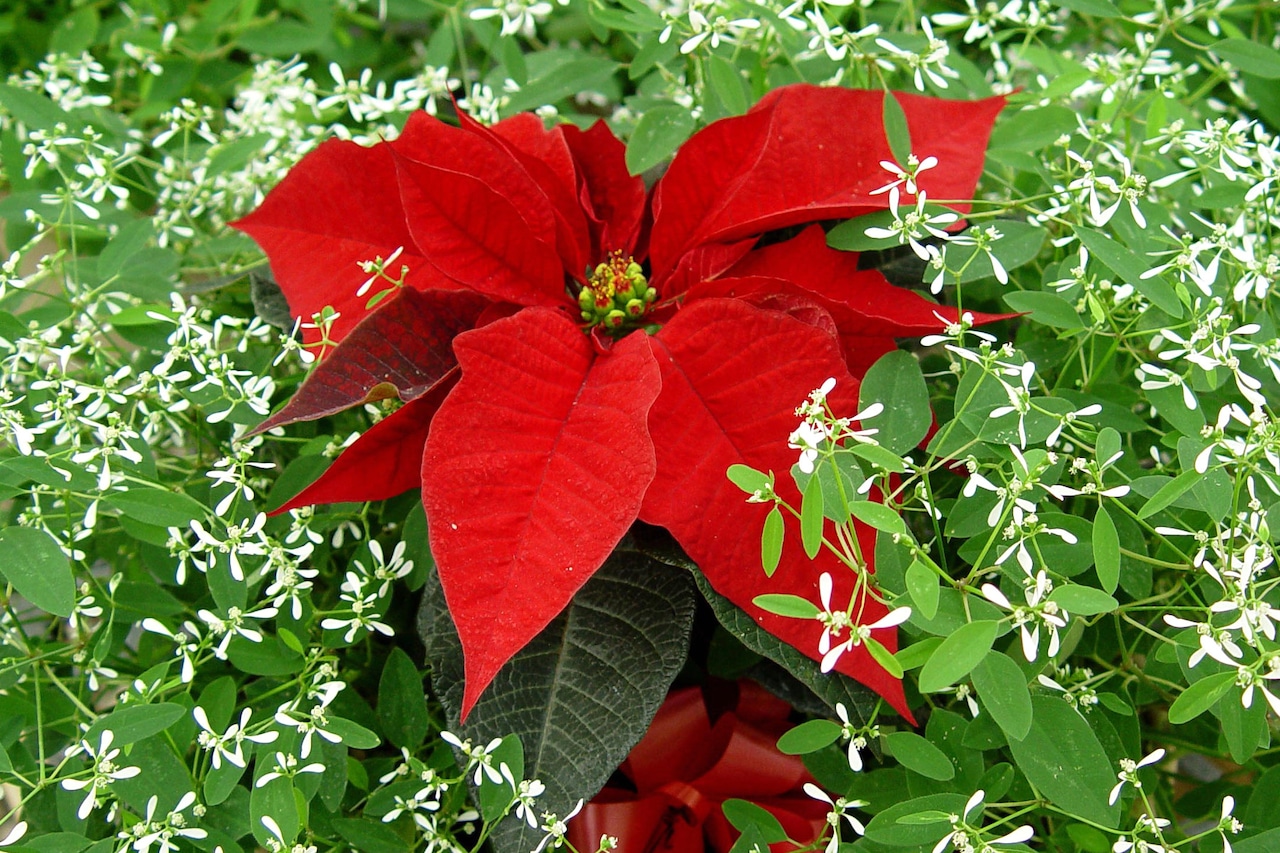
For a plant that’s displayed in so many homes this time of year, the poinsettia comes shrouded in a variety of myths and misconceptions.
In honor of Dec. 12’s National Poinsettia Day (yes, the poinsettia has its own official, U.S.-proclaimed day of recognition), let’s have a look at 10 of them.
Poinsettias are not poisonous
The belief that poinsettias are toxic traces to the misdiagnosed death of a Hawaiian 2-year-old in 1919.
Even though widespread research has long debunked that as a myth, about half of Americans still believe that poinsettias are poisonous if eaten.
The American Journal of Emergency Medicine tried to put the question to rest in a study of 23,000 cases of people eating poinsettia parts. It found no fatalities, and in 92 percent of the cases, no adverse symptoms at all.
When there was a reaction, it was mainly a skin rash in people with sensitivity to the plant’s milky sap. A few cases involved mild nausea.
Here’s what Washington State University’s College of Veterinary Medicine has to say about poinsettias and pets: “Poinsettias have received bad publicity in the past whereas in fact, poinsettias are not very toxic to pets. They do contain a milky sap that can irritate the mouth, but if signs develop, they are usually mild.”
WSU says that mistletoe and even holly berries are far more toxic holiday plant parts than poinsettias.
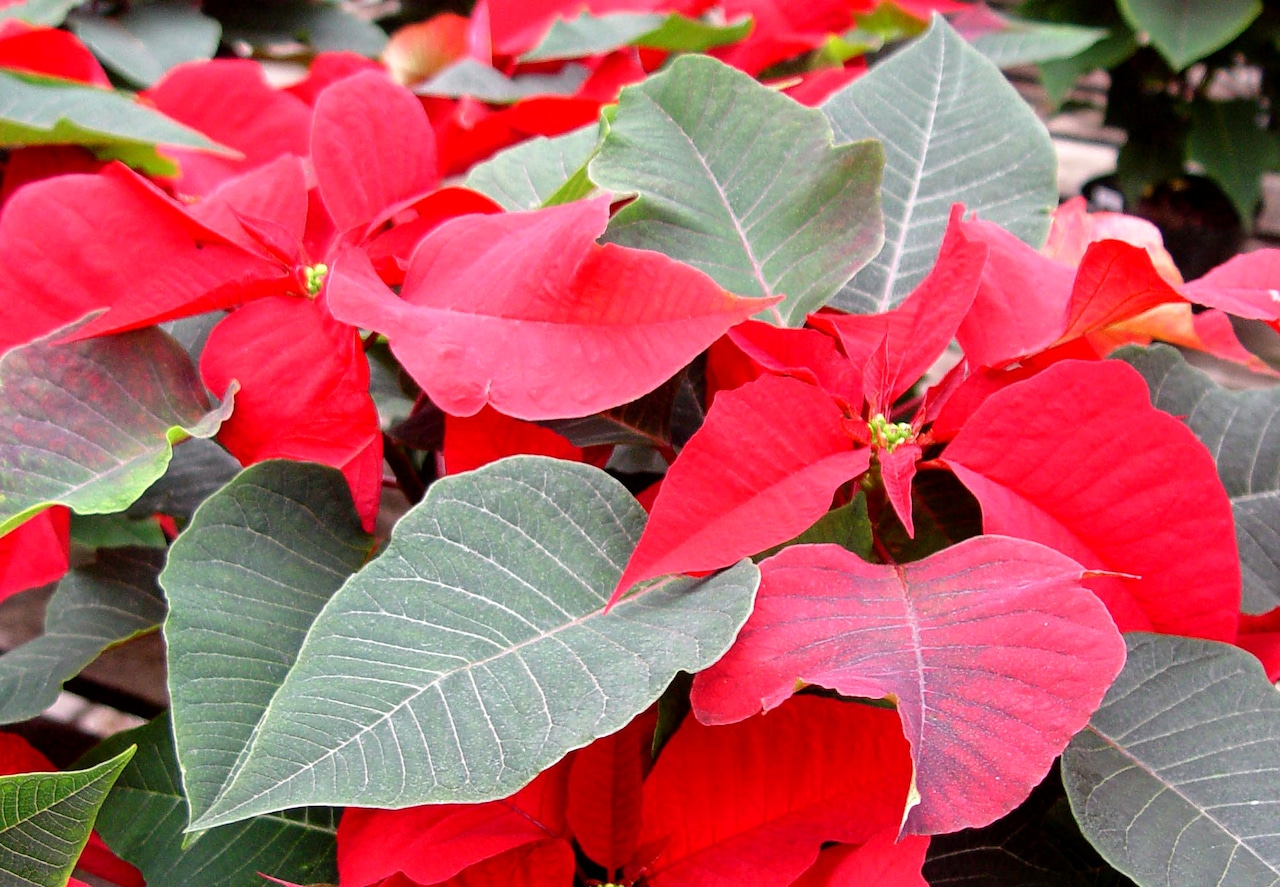 Look closely and you’ll find that the red part of this poinsettia isn’t a true leaf or a flower. It’s a leaf-like part known as a bract.George WeigelThose red ‘leaves’ really aren’t leaves
People like poinsettias for their festive, bright-red color – perfect for holiday decorating.
But if you look closely, you’ll find that the red leafy parts are growing in a sort of bouquet atop a bed of dark-green leaves, which are the plant’s true leaves.
The colorful parts aren’t flowers either.
If you look in the center of the main color, you’ll see little, yellow, button-like clusters that are poinsettia flowers, known as cyathea.
So what are the red things? They’re leaf-like growths known as bracts.
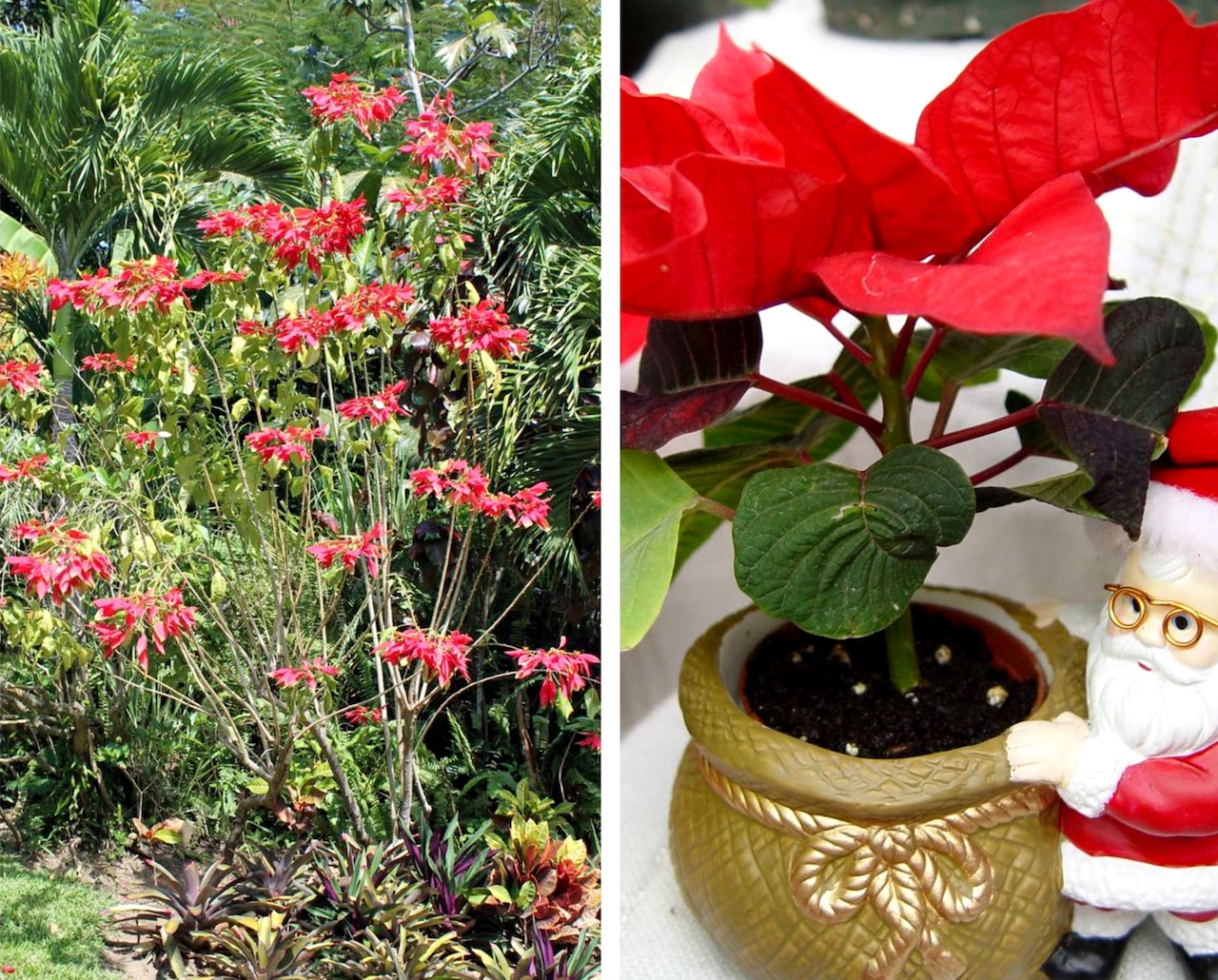 Poinsettias grow into gangly small trees in their native warm-winter habitats, left. Growers shrink them for use in holiday pots.George WeigelPoinsettias grow into small trees in their native habitat
We know poinsettias as bushy, compact plants that grow in pots for a few weeks around Christmas and then go in the trash soon after.
In their native Mexico and central America, though, this species of euphorbia is a semi-evergreen plant that grows outside year-after-year and becomes a somewhat gangly, bare-legged, 10- to 12-foot tree. Wild poinsettias are usually found as under-story plants in wooded areas.
They color naturally late in the year when nights grow longer than days.
Our poinsettias are table-top-sized because they’re young (started from cuttings each summer) and kept compact in greenhouses by a combination of pinching and growth-regulating chemicals.
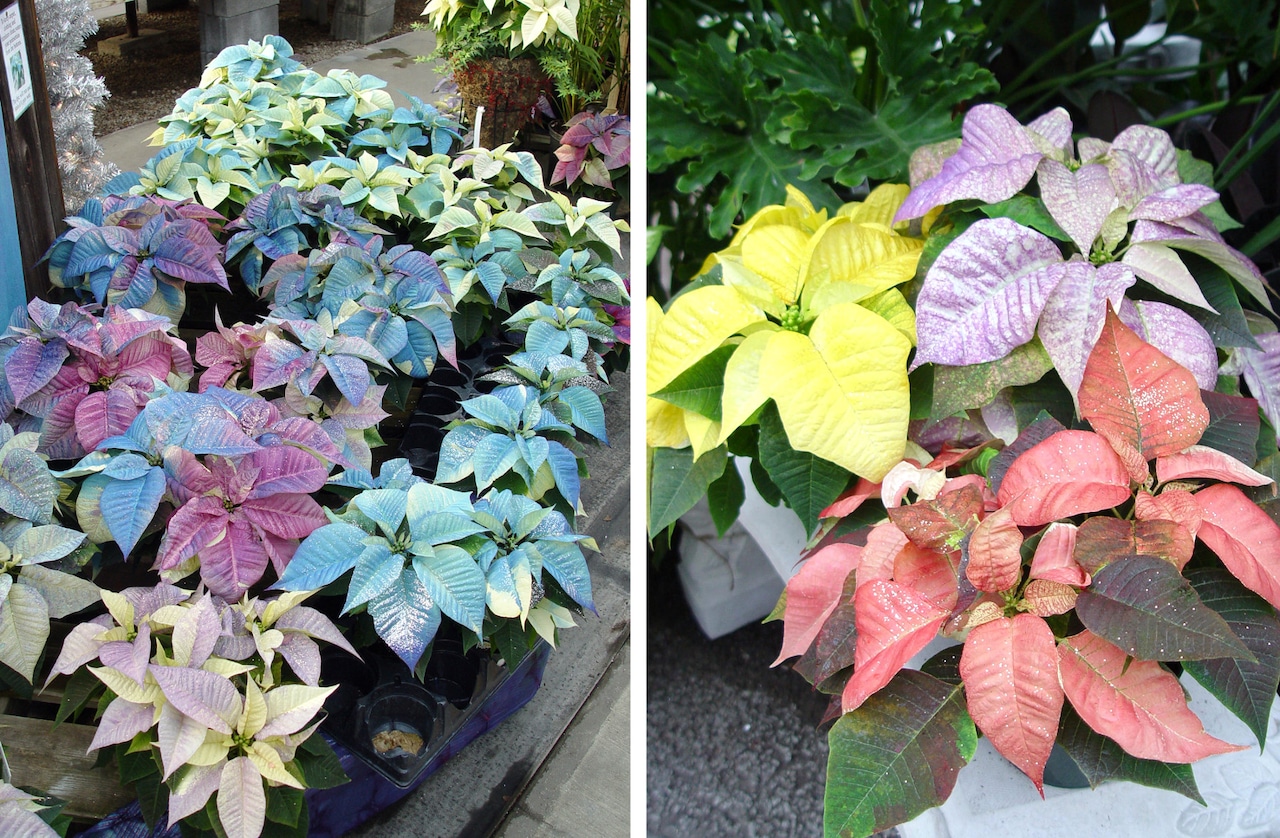 Poinsettias come in a variety of natural bract colors, but blue, purple, and rainbow ones are spray-dyed white varieties.George WeigelThose blue and purple poinsettias are fakes
Red is the natural bract color of poinsettias and the choice of at least three-quarters of the 42 million poinsettias sold each year as potted plants — mostly in the six weeks leading up to Christmas.
Breeders also have developed white- and pink-bracted poinsettias, and lately they’ve branched out into novelty shades of apricot and salmon as well as varieties with variegated leaves and curled, rose-like bracts.
But those purple, blue, bright-orange, and other boldly colored versions are the work of sellers wielding cans of spray-dye and applying the chosen colors to white poinsettia bracts.
Needless to say, varieties adorned with glitter also are “accessorized.”
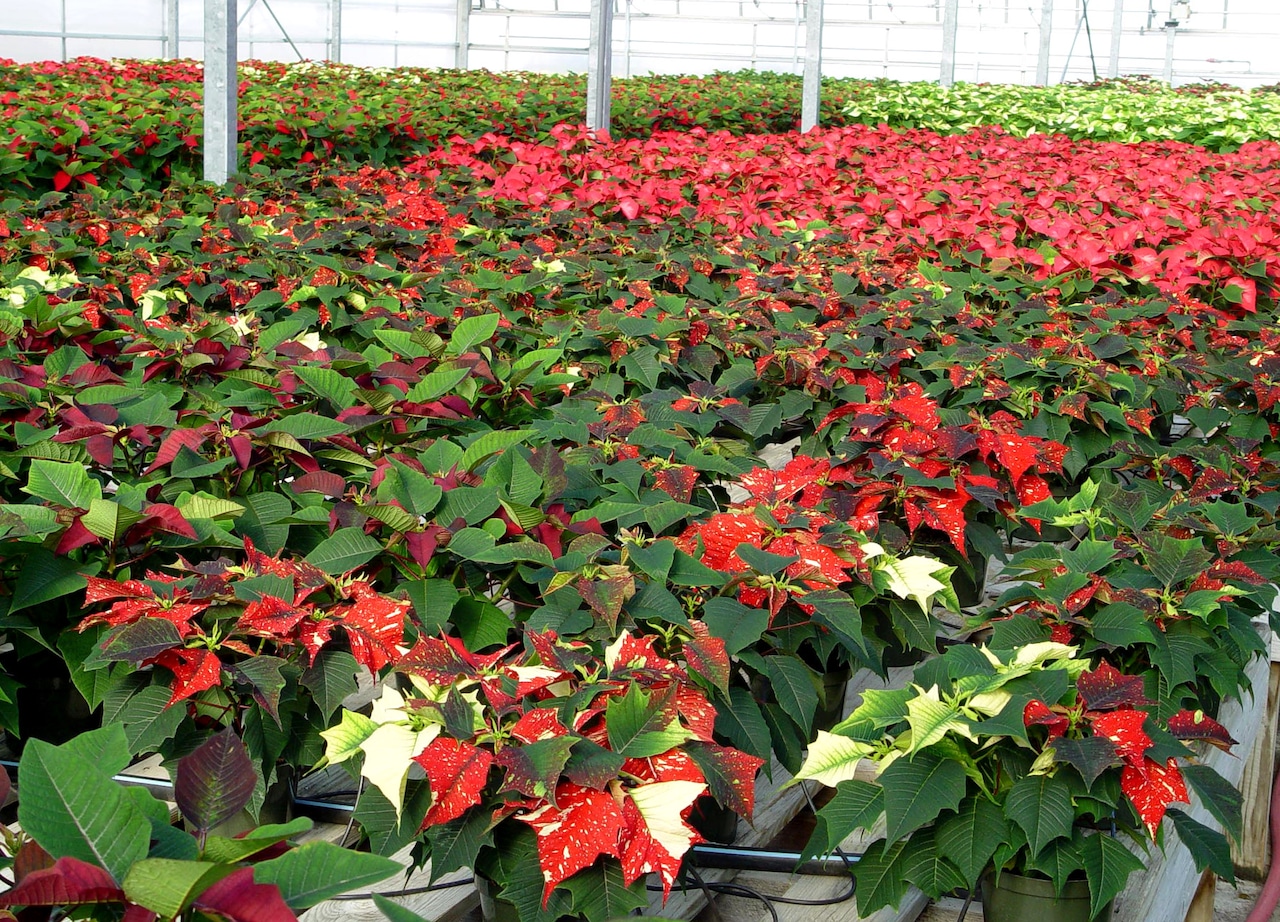 These poinsettias are in the tricky process of “coloring up” on cue for holiday sales.George WeigelPoinsettias are notoriously hard to grow
You might think poinsettias are easy to grow since they show up relatively inexpensively in garden centers, box stores, and even supermarkets everywhere this time of year.
Not so.
Not only are poinsettias picky about soil type, temperature, and humidity, they’re susceptible to a range of potential greenhouse troubles, including root rot, powdery mildew, poinsettia scab, mosaic virus, botrytis blight, bacterial leaf spot, and attacks of white flies and mites.
Trickiest of all is that greenhouse-grown poinsettias must go in complete and uninterrupted nighttime darkness for eight to 10 weeks, starting in late September, in order to induce bract coloring on cue for holiday sales.
Even a brief night-lighting or stray soft lighting from outside street lighting is enough to derail the process.
Getting all of those millions of poinsettias from greenhouse to store at a compact size, in full color, and without bugs or disease is a feat that requires top-notch know-how.
 The poinsettia was named after the United States’ first minister to Mexico, Joel Roberts Poinsett, who sent cuttings of the plant back to his South Carolina greenhouses.Painting by Hugh Bridport/Wikimedia CommonsHow the poinsettia morphed from tree to potted curiosity
Botanist, physician, and South Carolina Congressman Joel Roberts Poinsett was impressed by the showy red bushes he saw growing on the hillsides near Taxco in southern Mexico while serving as America’s first minister to the new Mexican nation.
In 1828, he sent cuttings back to his home greenhouses in Charleston as well as to selected botanical gardens and horticulturists elsewhere in the U.S.
One of the plants made its way onto display in the debut Philadelphia Flower Show the following year — thought to be the first time the American public got a look at this future star.
People began calling it the “poinsettia” in honor of Poinsett, but it wasn’t until the 1960s that the plant became the holiday icon as we know it.
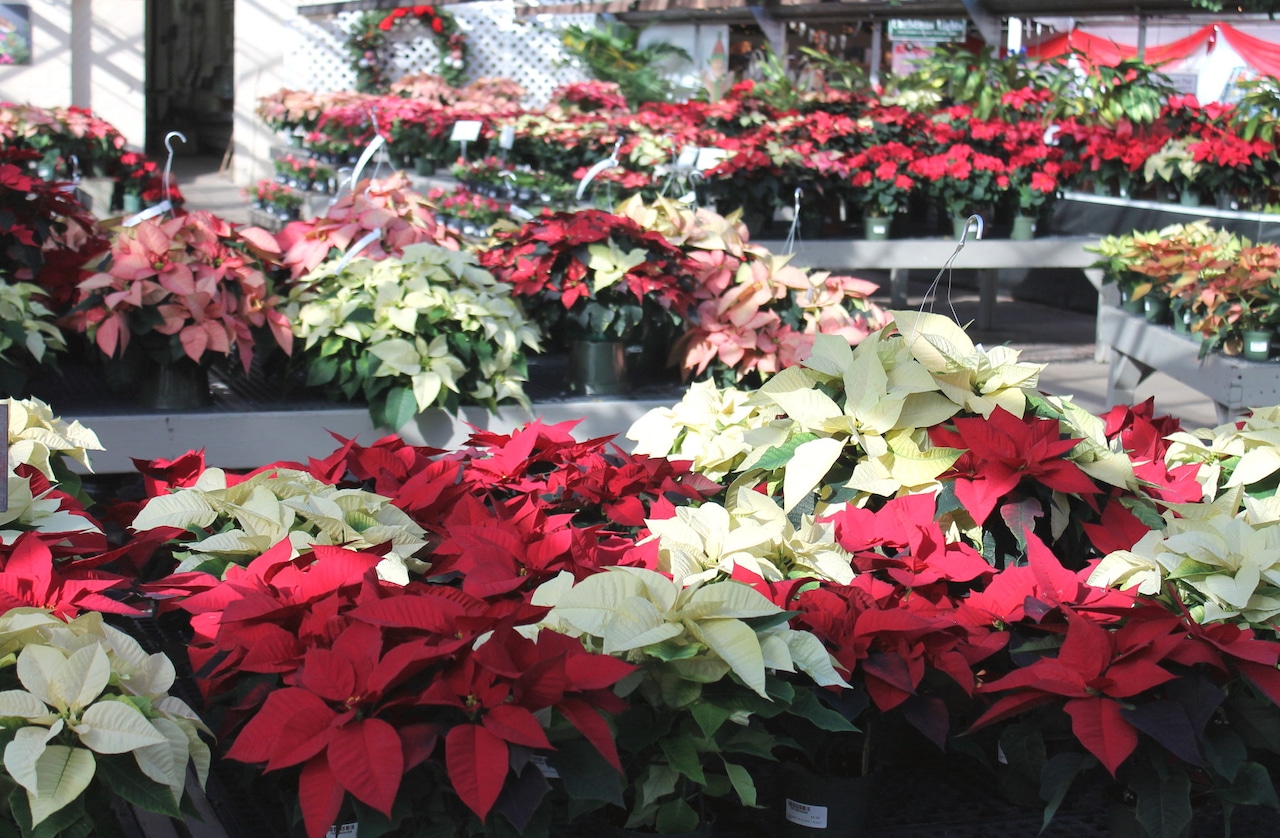 Poinsettias spell Christmas throughout America now, but the Mexicans first tied the colorful plant to Christ’s birthday celebration.George WeigelHow the poinsettia became connected to Christmas
The Aztecs were using poinsettias as early as the 14th century in warrior rituals and for dyes and wound-healing.
The first tie-in to Christmas seems to originate with a 16th-century legend in which a little Mexican girl named Pepita was too poor to buy a gift for baby Jesus on Christmas Eve. An angel told her that anything she was able to gift was worthy.
On the way to the service, Pepita picked a bunch of “weeds” from surrounding green bushes, which miraculously turned magnificent red when she placed them at the foot of the altar. The bushes growing outside supposedly turned red, too.
Ever since, the poinsettia has been known as the Flores de Noche Buena, and it became the official Christmas flower of Mexico.
By the 17th century, Franciscan friars were using poinsettias in their Christmas celebrations.
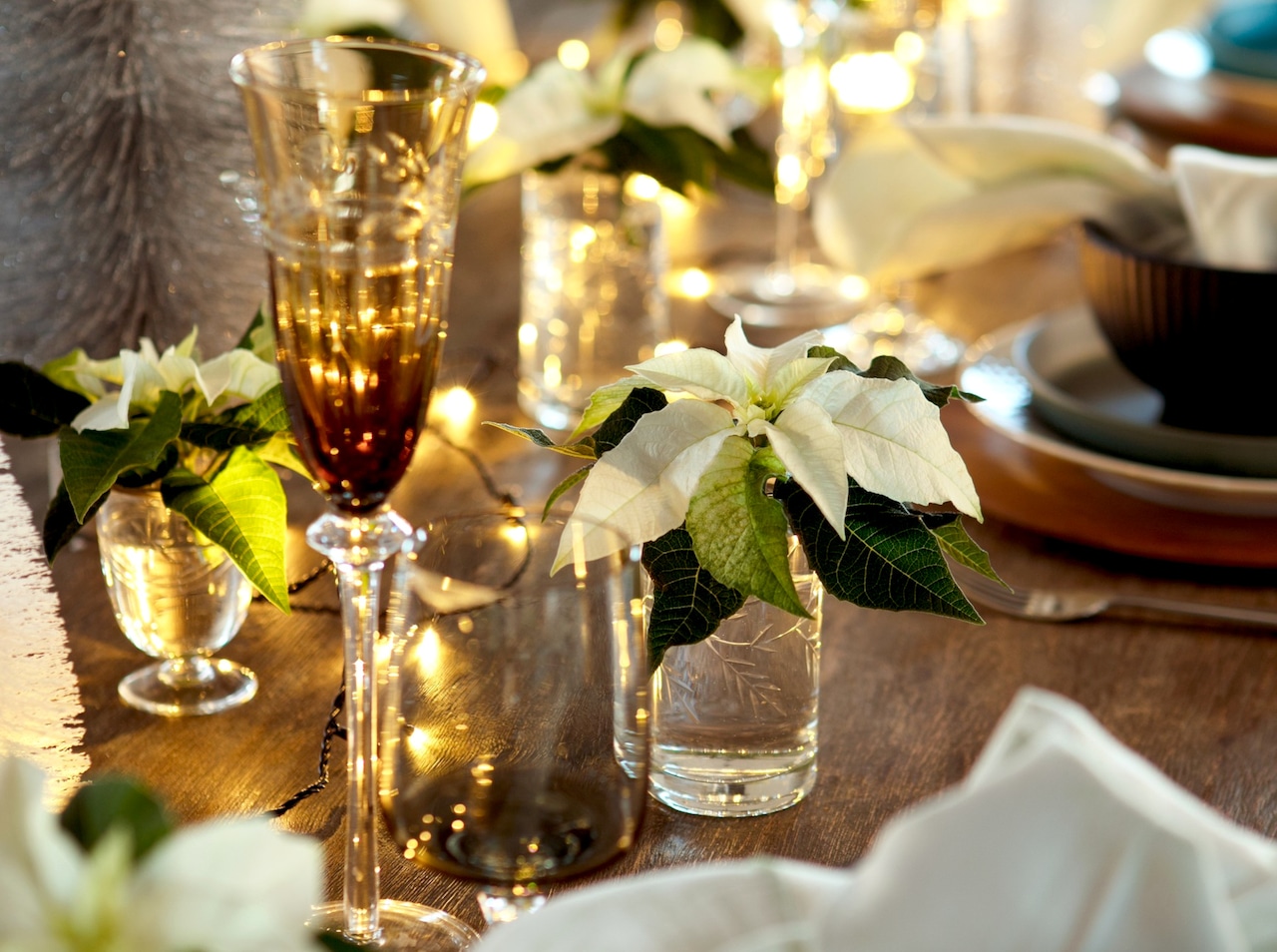 These cuttings from Princettia White poinsettias are being used in table-setting vases.Suntory FlowersHow it became our most popular Christmas plant
What paved the poinsettia’s way to holiday fame is that this plant has the good marketing sense to scream red when most of the plant world is taking a winter siesta. But a dose of horticultural and sales savvy also played a key role.
Until the 1960s, the poinsettia was a relatively obscure potted tropical, grown mainly for botanical display.
What started to turn the tables was when H. Marc Cathey at the U.S. Agricultural Research Service discovered how to keep poinsettias compact and get them to “color up” at desired times.
Around the same time, Paul Ecke Jr. of California’s Paul Ecke Ranch perfected a grafting technique to produce fuller, denser plants and techniques to help plants hold their leaves longer.
More importantly, Ecke moved poinsettia production from fields into greenhouses and began giving his beautiful red specimens to The Tonight Show, the Dinah Shore Show, and Bob Hope’s Christmas Specials. He also got them into the White House and woman’s magazines such as The Ladies Home Journal and Better Homes and Gardens.
By the time Ecke Jr. died in 2002, poinsettias were the top-selling potted plant in America. That’s the year Congress enacted National Poinsettia Day in honor of Ecke, on Dec. 12, the anniversary of Joel Poinsett’s death.
Cut stems from poinsettia plants also can be displayed in vases as table-settings and DIY holiday bouquets.
Suntory Flowers’ Delilah Onofrey says the most important step is “conditioning” the cuttings by sealing the cut ends in a boiling-water dip for 20 seconds or cauterizing the ends with a flame for a few seconds.
Then place the cuttings in a vase with cold water and replace the water every few days.
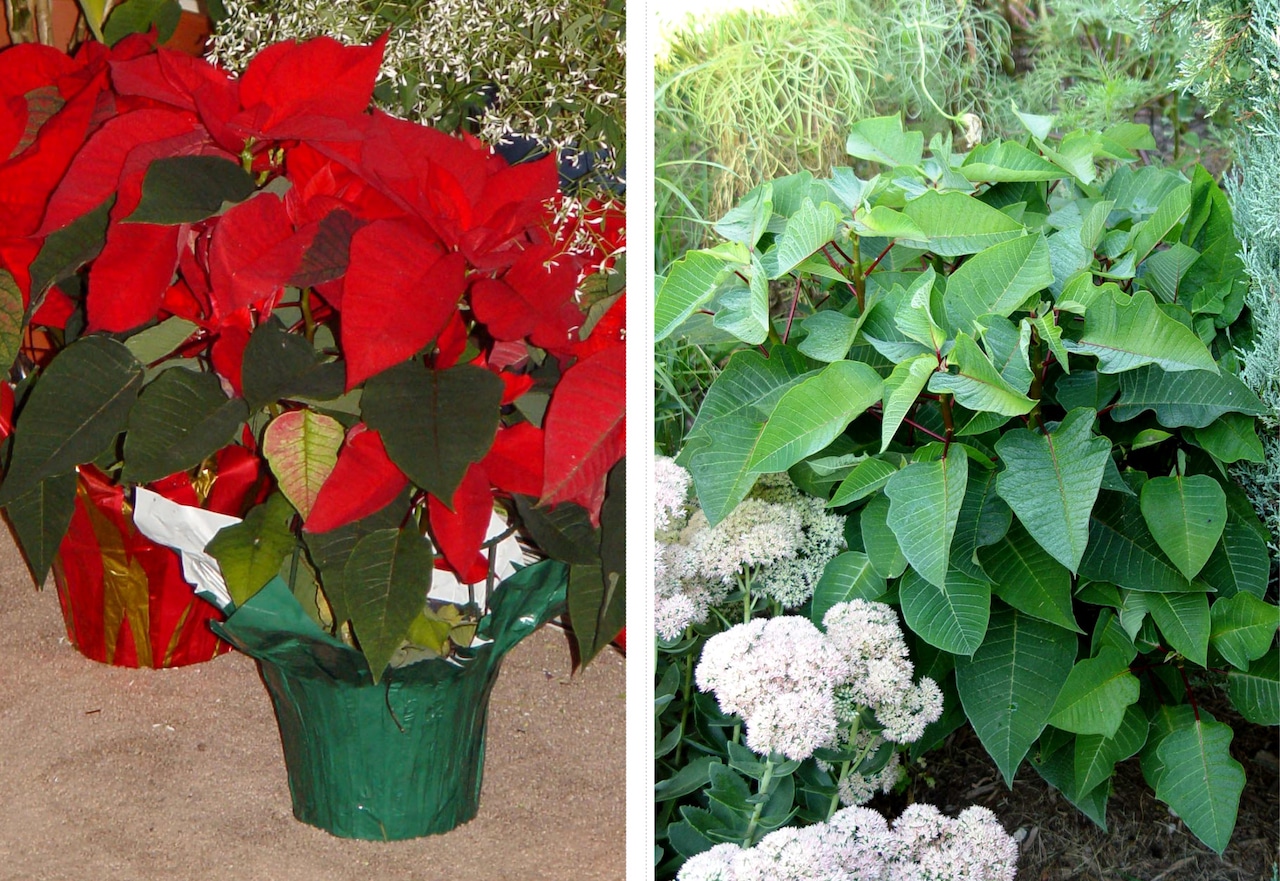 When a poinsettia’s bracts fade and drop by winter’s end, the plant can grow on as a green-leafed tropical in a summer pot outside.George WeigelWe can grow poinsettias in the ground here
Poinsettias these days can hold their color well into late winter, making them more than just a Christmas-time, two-week wonder.
Even then, they’re not necessarily done.
Keep plants alive inside through May, and they can actually be planted in the ground (or in a pot) outside throughout summer in Pennsylvania’s climate.
While poinsettias die with a freeze and even suffer when temperatures dip below 50 degrees, they “think” our hot, humid summer weather is like home.
Poinsettias grow green outside in our summers, but they give pots and beds a tropical-looking foliage plant option — one that’s already on hand at no additional charge.
Outside poinsettias do best in part-shade or dappled-light settings in moist, loose soil.
It’s possible to get poinsettias to color up again yourself
Whether you keep poinsettias alive as a houseplant or grow them outside through summer, it’s possible to get them to “color up” again for the following Christmas.
Start by cutting back plants to about six inches in spring.
At summer’s end, if you’re growing outside, hose off the poinsettia (to get rid of potential bug hitchhikers) and repot them in fresh potting mix.
In late September, give plants complete and uninterrupted darkness for 14 hours each night. Some gardeners place plants in a closet or cover them with a box to avoid stray or accidental light.
Keep the pots moist but never soggy, fertilize with a balanced fertilizer every two to three weeks, and give them bright indoor light during the day.
In about eight weeks, the bracts should begin coloring. If/when they do, bring them out into display as you would with a new store-bought plant. And pat yourself on the back.
Comments are closed.