
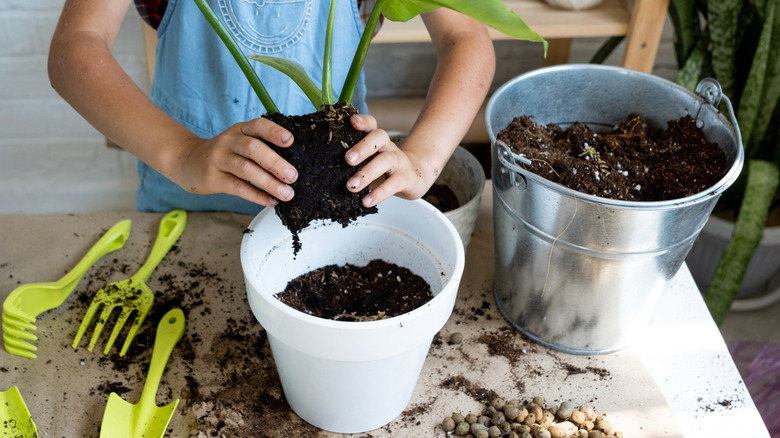
If you’ve spent the season tending your container plants, you know the drill: you have to water and feed them consistently. And, not to mention, there’s also the mid-season maintenance where you top off soil or repot the plants. When the season is over, your pots might no longer hold thriving flowers, but that doesn’t mean the work is over. Organic matter in soil creates healthy growing conditions that can give next season’s plants a strong start. However, if you don’t store it properly, you may have to replace it in spring, and you could end up wasting both soil and money. With just a few simple steps, including separating healthy soil from diseased material and sealing the healthy soil in airtight bags or bins, you can keep it in good condition over winter.
Instead of discarding your old potting soil, you can give the potting soil new life next year by properly separating and packing it. Incorrectly storing potting soil can lead to problems like mold growth or decreased soil quality. While it might seem like a chore, it’s worthwhile to store your container garden soil with care in the winter so it’s ready for next spring. That way, you can give your plants a strong start without spending a ton on new potting soil or throwing away the soil that worked for you all season.
Read more: Forgetting To Divide These 24 Perennial Plants In Spring Is A Mistake
Separate and store healthy soil in airtight bins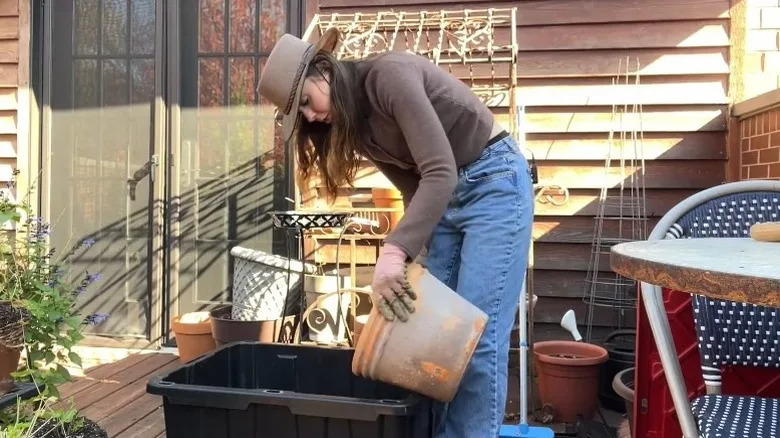
Not all soil should be kept and reused. If a plant in one of your containers showed signs of disease or pests this season, the safest thing to do is to discard that soil. Experts recommend reusing only the soil that stayed healthy. Checking which plants were healthy first makes it simple to separate soil for storage from soil that should be tossed. A video shared by Chicago Gardener on YouTube shows that this process doesn’t have to be complicated. While preparing for winter, the creator empties pots into a large plastic bin and removes any pot inserts or large root clumps. She discards soil from plants with disease, and acknowledges soil that remained healthy can be stored over winter and used again next season.
To store the soil properly, you’ll want to transfer it into heavy-duty bags or plastic bins with airtight lids. Make sure they’re sealed tightly so moisture and pests stay out. Keep your bins of soil in a dry, sheltered area such as a garage, shed, basement, or covered porch. They should be stored out of direct sunlight to protect the soil and the containers, since sunlight can degrade plastic and affect soil quality.
When spring arrives, it’s a good idea to check the condition of your soil before reusing it. Moldy or foul-smelling soil should be discarded. If the soil is depleted, you’ll likely need to refresh it with nutrients or add it to your DIY compost. With your soil stored and repurposed properly, you can provide a strong start for new plants and head into the next growing season knowing your hard work didn’t go to waste.
Enjoyed this article? Get expert home tips, DIY guides, and design inspiration by signing up to the House Digest newsletter and adding us as a preferred search source!
Read the original article on House Digest.
Comments are closed.