
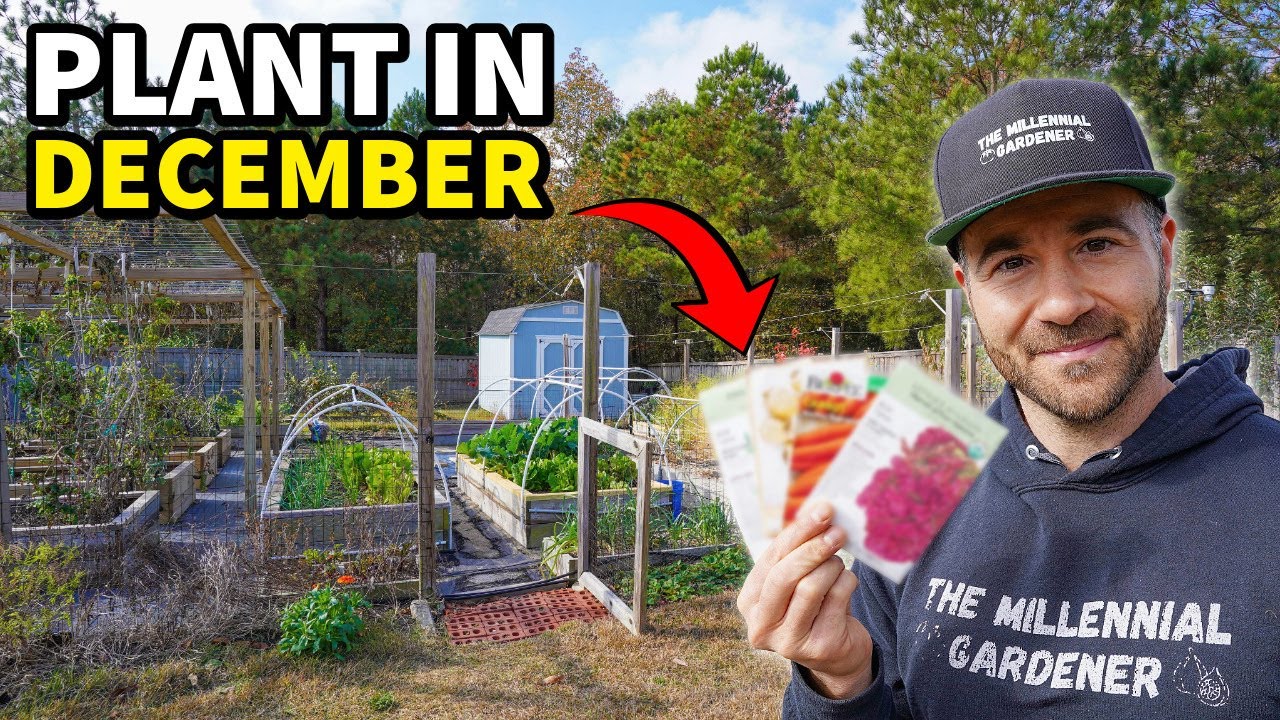
This video shares the best vegetables to plant in December. Winter gardening season begins in December, and now is the perfect time to start seeds for cold hardy crops that thrive in cold weather. These fast growing, cold hardy vegetables produce big harvests with ease: these are 10 veggies you’ll regret NOT planting in December right now!
Don’t stop gardening in winter! Growing a winter garden is fun and rewarding. These videos will make winter gardening easier:
• Build A PVC Hoop House: https://youtu.be/81ri2YEBNZc?si=L_VK5DeRhn7NHQWo
• Growing Carrots & Parsnips: https://youtu.be/Y-UmgSpPMUw?si=0audOS5k3Xq2hTUo
• Growing Onions All Year: https://youtu.be/PofS2W8hx60?si=KMxb5KFdXOqIGEJN
• 20 Vegetables To Grow In December: https://youtu.be/yRk0DcS8tHk?si=5la9Z9IyA3HDaXD9
• Purchase featured seeds** here:
Carrot ‘Nantes’: https://amzn.to/45OpS93
Parsnip ‘Harris Model’: https://amzlink.to/az0nrSkqfEKAb
Radish ‘Escala’: https://www.gopjn.com/t/8-12781-345111-269073?url=https%3A%2F%2Fterritorialseed.com%2Fproducts%2Fescala
Bok Choy ‘White Stem’: https://amzlink.to/az03agqpZLNCD
Mustard Greens ‘Southern Giant’: https://amzlink.to/az0wa2D90nDmo
Mizuna ‘Miz America’: https://www.pntrac.com/t/8-12781-345111-269073?url=https%3A%2F%2Fterritorialseed.com%2Fproducts%2Fmustard-miz-america
Escarole ‘Eliance’: https://www.pjtra.com/t/8-12781-345111-269073?url=https%3A%2F%2Fterritorialseed.com%2Fproducts%2Feliance
Broccoli Rabe: https://amzlink.to/az0QYzIIidjLj
Arugula: https://amzlink.to/az01E1Qp2W10O
Lettuce ‘New Red Fire’: https://www.pjatr.com/t/8-12781-345111-269073?url=https%3A%2F%2Fterritorialseed.com%2Fproducts%2Flettuce-new-red-fire
Lettuce ‘Red Sails’: https://www.pntra.com/t/8-12781-345111-269073?url=https%3A%2F%2Fterritorialseed.com%2Fproducts%2Flettuce-red-sails
Lettuce ‘Rouge d’Hiver’: https://amzlink.to/az0M65itMV5ww
Lettuce ‘Marvel of 4 Seasons’: https://amzlink.to/az0xLsHm7eMN8
Onion, Short Day Collection: https://amzlink.to/az0ce8F99JmQI
Bunching Onion ‘Toyko Long White’: https://amzlink.to/az06yKovDDG7D
Leek ‘Giant’: https://amzlink.to/az0FmiFrIgLD7
Leek ‘Giant Musselburgh’: https://www.pjtra.com/t/8-12781-345111-269073?url=https%3A%2F%2Fterritorialseed.com%2Fproducts%2Fleek-giant-musselburgh
Shallot ‘Davidor’: https://www.pjatr.com/t/8-12781-345111-269073?url=https%3A%2F%2Fterritorialseed.com%2Fproducts%2Fshallot-davidor
• These products* help make gardening in December easy:
Thick Row Cover, 1.5oz/yd, 10x30FT: https://amzlink.to/az0T4AqZUbkJt
Extra Thick Row Cover, 2.0oz/yd, 10x30FT: https://amzlink.to/az0WeuiamzvcM
Shade Cloth: https://amzlink.to/az01boLJy9JNI
Insect Netting: https://amzlink.to/az0H5tKMYxP2O
PVC Snap Clamps, 1/2″: https://amzlink.to/az0Ju0pmclcsZ
Weed Barrier: https://amzlink.to/az0FMvvMdjto9
Pruning Snips: https://amzlink.to/az0S6BULZGPmi
Grow Bags: https://amzlink.to/az0UDaVzkSLWi
All Purpose Fertilizer [5-4-5] (4lb): https://amzlink.to/az0hjJZgpjzCe
Alaska Fish Fertilizer [5-1-1] (Gallon): https://amzlink.to/az0Jhw8liNoe3
PlantTone Fertilizer [5-3-3] (36lb): https://amzlink.to/az0SocAgVlySv
PlantTone Fertilizer [5-3-3] (50lb): https://amzlink.to/az0dh0dYaye1l
Bone Meal (10lb): https://amzlink.to/az0KAuCOZcPgQ
Azomite Trace Minerals (44lb): https://amzlink.to/az0qPn4i34Eol
LED Grow Light: https://amzn.to/46C71j4
Heat Mat & T-stat Kit: https://amzlink.to/az0vrFvoz0Chs
• Full Amazon Store: https://amzlink.to/az0yli4Cz0iXX
TABLE OF CONTENTS
0:00 How To Grow A Garden In December
2:19 December Crops 1-2: Carrots, Parsnips
5:00 December Crop 3: Radishes
7:04 December Crop 4: Bok Choy
8:47 December Crop 5: Mustard Greens
10:31 December Crop 6: Escarole
12:21 December Crop 7: Rapini / Broccoli Rabe
14:46 December Crop 8: Arugula
16:37 December Crop 9: Lettuce
18:59 BONUS Crops 10-13: Onions, Leeks, Shallots
23:51 Seeds I’m Sowing In December
25:37 Adventures With Dale
If you are looking for vegetables to grow in December, have questions about growing fruit trees or the things I grow in my raised bed vegetable garden and edible landscaping food forest, are looking for more gardening tips and tricks and garden hacks, have questions about vegetable gardening and organic gardening in general, or want to share DIY and “how to” garden tips and gardening hacks of your own, please leave a comment!
***
WEBSITE
https://www.themillennialgardener.com/
***
VISIT MY AMAZON STORE*
https://amzlink.to/az0yli4Cz0iXX
***
MERCH!
https://shop.spreadshirt.com/themillennialgardener
***
SUBSCRIBE TO MY 2ND CHANNEL!
https://www.youtube.com/c/2MinuteGardenTips
***
SOCIAL MEDIA
→ INSTAGRAM https://www.instagram.com/millennialgardener/
→ X (@NCGardening) https://x.com/NCGardening
***
MY GARDEN
Southeastern NC, Brunswick County (Wilmington area)
Zone 8B, 34.1°N
***
*As an Amazon Associate, I earn from qualifying purchases.
**Seed links earn commission at no cost to you.
© The Millennial Gardener
#gardening #garden #gardeningtips #december #vegetablegarden
What’s going on, gardeners? December brings with it the start of winter, and it may feel like forever until we can get back out into our gardens, but I’m here to tell you that’s not true. There are many different crops that thrive in December conditions. And on today’s video, I’m going to share with you 10 easy crops that you can plant out in your garden in December right now. Don’t give up. Roll up your sleeves, get planting, and keep those winter blues away. Make sure you stay tuned until the end of this video where I will share with you a complete list of every variety of seed that I’m planting in December. If you’re new to the channel, please subscribe, hit the bell for notifications, and check out my Amazon store and Spreadshop links in the video description for everything I use in my garden and awesome custom apparel and gear. The key to success when gardening in December is to select crops that are not only cold hearty and can tolerate that frost and freeze, but also they can grow in relatively low light conditions. Because December has the shortest days of the year, so there’s limited sunlight available for photosynthesis. We want to select fast growing crops that can do a lot with a little. As a point of reference, I live on the southeastern coast of North Carolina, zone 8b. But hardiness zones don’t really matter when planting annual vegetables. They’re for perennials only. All that matters when it comes to planting your annual vegetables are your frost dates and your average temperatures. And truly, frost dates don’t even matter here because everything I’m featuring in this video is cold tolerant. So, even if you have very cold winters, you can grow a lot of these things, especially if you give them a little bit of frost protection. It goes a long way to what you can grow simply by keeping the hard frosts off the foliage. I like to build these little PVC hoop houses on my raised garden bed. I’ll link to a video both above and down in the video description that will show you how to do this. I throw a 1.5 ounce agricultural fabric over it and it protects my crops all winter long and keeps those frosts off. And even better, in the summertime, I can switch it out with things like shade cloth or insect netting and I use these hoops year round. It’s a gamecher. Over the course of this video, I will be sharing many different varieties of seed that I’m planting. And if you’re interested in these exact varieties for your convenience, I will place links to the seeds down in the video description. Vegetables one and two that you should be planting in your garden in December are carrots and parsnips. These are two of the most cold hearty crops that you can grow out in your garden. And if you plant them now, you actually get the best quality roots. These can tolerate temperatures all the way down to 10° unprotected, maybe a little bit colder and 0° if you put a row cover on top of them to give them a little bit of frost protection, maybe even below zero temperatures. Their cold hardiness is absolutely astounding. But cold hardiness aside, the thing that makes it so important to plant your carrots and parsnips right now is that the sugar content of the mature roots are inversely proportional to temperature. If all you’ve ever planted were carrots or parsnips in the spring and you’ve harvested them in late spring, early summer, well, they’re very starchy when harvested around that time. If you plant them in the late fall, early winter, and then you harvest them during winter or the very early spring when it’s still very cold, the sugar content is so much higher. They’re sweet like honey. If you’ve never had a winter harvested carrot or parsnip, you are missing out. Now, what’s great about both these crops is they are so easy to grow. You just dig a little trench that’s about an eighth of an inch deep. You sew the seeds. You make sure you overseed. So, you plant a whole lot because germination rates are usually poor. Then, when they start germinating, you can just thin them out to about 1 and 1/2 in to 2 in per plant. Or you can choose to not thin them at all and see what happens. These are carrots that I planted about 2 months ago. I decided not to thin them. And if you don’t, a lot of times they get a little bit kinkedked, but you can still get a pretty nice carrot harvest. Same thing with parsnips, even if you don’t thin them. Wow, look at them all coming out of here. There’s so many. And this is a beautiful quick little harvest of carrots right here. Now that it’s starting to get really chilly at night and we’re getting frost and freezes, I expect these to be extra sweet. So, let’s give it a taste. straight from the garden. Sweet as sugar, you don’t even need to wash the dirt off. That’s what’s so great about growing your own. And what’s incredible is as sweet as these are, and these are very sweet, the next wave of carrots that I plant are going to be even sweeter because they’re going to mature in colder weather. So, if you’ve never grown winter carrots and parsnips before, please make sure you do that. If you want more information on how to grow them to make it easier, I’ll link to a video both above and down in the video description that will show you how to grow carrots and parsnips year round. Vegetable number three that you should be planting in your garden in December are radishes. Radishes are very special because they are one of the fastest growing things that you can plant out in an annual vegetable garden. They germinate in only about 2 to 3 days and they go from seed to harvest in less than a month with most varieties. In fact, this variety right here is only 25 days to maturity and it’s not even one of the earliest. You can get earlier ones. That’s what makes growing radishes so fantastic. They germinate and they mature so quickly that it doesn’t matter what time of year it is, you can always find a way to grow them. Over the years, I’ve learned that radishes are not particularly popular to grow in most vegetable gardens, but that’s because most people aren’t growing them correctly. There’s no need to plant an entire bed of radishes because they are all going to come to maturity at the same time, and then what are you going to do with a whole bed full? The way you grow radishes is successively small plantings intermittently as needed. Radishes are so easy to grow that it doesn’t make sense not to grow them. All you have to do is find a little square of available space in your garden and then make some holes about half an inch to an inch deep that are about 2 to 3 in away from each other. And then just drop a radish seed or two in each hole. And if more than one germinates, you just thin them. You pull out the weaker seedling. Then we’ll sprinkle a very light handful of an organic fertilizer over the area. We will cover them up. lightly tamp down the soil and then water them in. And just like that, you just planted a little crop of radishes. And just repeat this process every 1 to two weeks. Go out into your garden, find a little open space, and sew 6 to 12 radish seeds. It doesn’t matter if it’s the dead of winter or the dead of summer. You can grow radishes out in your garden. And if you follow this method of successive planting, well, you’ll have a manageable, easy harvest that you’ll actually want to use. Vegetable number four that you should plant out in December is bok choy. And this is one of those crops that’s like, where have you been all my life? I absolutely love this stuff, but it took me so many years to discover it because I was lied to about bok choy. I was told by most websites on the internet that bok choy is only cold hearty to something like 25° Fahrenheit. And where I live in zone 8, North Carolina, it is way too cold for such a crop like that. But I gave it a shot anyway. And last year I grew this underneath a PVC hoop house with an agricultural fabric over it. And we had the worst winter that I’ve ever experienced here in the eight years I’ve lived in North Carolina. We got pounded by almost 4 in of ice and snow. We had five consecutive nights in the teens and under the row cover, the bok choy suffered no damage at all. None. It was completely unharmed despite all those nights in the teens. So, this is way more cold hearty than anybody’s given it credit. What makes bok choy such a standout for planting this time of year is how fast it grows. Now, here I have some Roma lettuce, which is fairly fast growing, that I planted at the exact same time as this bok choy. And look at the difference of the two. I mean, that bok choy has grown probably what, four times faster than the Roma. It’s not even close. So that is what makes bok choy so good for sewing this time of year. It can grow in the low light conditions of November, December, January. And it can take that cold with a PVC hoop house and an agricultural fabric row cover pulled over it. If you have never tried growing bok choy, please give it a try. It is delicious in soups and stews. Vegetable number five that you simply must plant in December is one of my favorites since moving to the south and that is mustard greens. I have absolutely fallen in love with growing mustard greens because it is one of the most delicious stewing greens that I’ve ever grown in my life. This is so good in soups, so good in stews, in brazes, in sautes because it’s so strong and earthy and peppery. It has flavor for miles and over the last several years I have been growing this southern giant variety and it has been a standout performer in my garden. Again, it sailed through the really harsh winter and the ice and snow that we had last year with a little row cover over it. But this year, I’m doubling down on mustard greens because I love them so much. I’m growing the same southern giant variety that I’ve learned to love over the years, but I’m also growing this really cool purple variety called Miz America. Look how beautiful that is. And I’m growing two different varieties because I want to see if there’s a difference in cold heartiness and flavor between the two. In my experience, a lot of times these these purple plants are even more cold hearty. Now, I don’t have evidence of that yet, but I’m going to give it a try and see if there is a difference. Either way, I think both of these are going to be very cold tolerant and very delicious, and the older I get, the more I want to grow mustard greens throughout the winter. They’re also one of the fastest growing things out there. They put out leaves like crazy. So, even if they get burned a little bit in a frost, they grow right back. Just give it some fish emulsion or some blood meal, something high in nitrogen, and they come back with a vengeance. So, these are definitely something that your fall, winter, and spring garden should not be without. Vegetable number six that you simply must plant out in your garden in December is one so few people are growing and I’m hoping to raise awareness and change that and that is escarole. Escarole is an incredible green. It is very cold hearty. It is extremely pest resistant, basically invulnerable to diseases. This is one that so few people are growing and I I can’t understand why because I think once people start growing it and have experience with it, they will fall in love. Escarole is actually a chory. It isn’t like a lettuce. It isn’t a brassica or many of the things that we are used to. So, because of that, it has a very unique taste and flavor. It almost tastes like it’s a cross between romaine lettuce and uh maybe mustard greens or collards or something like that. It’s like a really stronger, earthier lettuce, if that makes sense. And this is fantastic in soups and stews. If you’ve ever had something like Italian wedding soup, the green that they put in that is escarole and it is absolutely delicious. I’m Italian-American and there are a lot of soups and stews that use escarole. Another example would be chicken escarole soup. So, if you’re looking for something that you can braze, that you can stew, that you can sauté, a great green that holds up really well in soups and has good flavor but also isn’t overpowering, escoral is really something you should give a try. It’s very diverse in that sense. So again, this is super cold hearty. No problems at all in my garden. I’ve been growing this for the last several years. It takes the teens just fine, at least with a roll row cover over it. So if you’re looking for something unique, something new, something fast growing, cold hearty, pest and disease resistant that maybe you’ve never tried before in your fall, winter, or spring garden, please give Escarole a try. This stuff is really special. The seventh vegetable that you should be planting out in your garden in December is rapini, also known as broccoli rob. This is what you want to plant when the conditions are no longer right for growing broccoli. In this garden bed right here, I have a bunch of broccoli plants growing, and they are coming along beautifully. They’re going to start forming heads any day now, and I should be able to have a decent harvest of broccoli at some point, probably before Christmas. But there is a problem when it comes to growing broccoli and it is very sensitive to temperature. If it gets too warm, they bolt. But they also are not very cold tolerant. They can take a frost, but they don’t like hard frost and freezes that can damage or destroy the crown. They need protection if it’s going to be very cold. And they also have a high demand for photosynthesis because look how large and vigorous these plants are. They need a lot of sunlight. So, in the dead of winter, we usually get to the point that we can no longer grow our typical broccoli plants. But broccoli rob is different. As you can see, this is only 45 days to maturity. It reaches maturity in a fraction of the time of your typical broccoli. So, because of that, this is a great alternative to grow when we have the shorter days and we lack the photosynthesis that we get in November, December, and January. This is also more cold hearty than broccoli. I’ve had this survive in my garden down to about 15 to 20° and that was uncovered. Again, it should be even more cold hearty if you put an agricultural fabric row cover on top of it to keep those hard frosts from forming. So, if you’re like me and you get to a point in the winter where it no longer is possible to grow broccoli because it just gets too cold, broccoli rob is a great alternative because it’s more cold hearty and it grows more quickly. Now, if you’ve never had broccoli rob before, this is very popular in the Northeast and Mid-Atlantic region. This is another staple if you’re Italian-American like me. It’s a very uh earthy and strong uh brazing green. They’re great in sautes. Uh they’re great with bacon or panchetta and garlic and olive oil fried in a frying pan. They’re also good. You can chop them up and you can put them in brazes. Uh really, really interesting. They’re almost like a cross between broccoli and collard. So if you want to try something new or if you want something that’s a little bit easier to grow than broccoli but is pretty similar, I strongly recommend you give rapini a try. Vegetable number eight that you can plant in December is a rare treat that I only get to grow in this narrow window every year and that is arugula, also known as rocket. I absolutely love arugula. It has a delicious flavor to add to soups or stews or salads especially. It’s lemony. It’s peppery. It’s absolutely delicious. But it is also one of the most bolt-prone things that I have ever grown. Even more bolt-prone than cilantro. This stuff will start bolting in late February, early March if we get a big warmup. So, for that reason, I can only grow it at the time of the year when the sun is the weakest and the temperatures are consistently the coolest. But here’s the great thing about arugula. Arugula germinates and grows in no time flat. From the day you sew this seed, you’re going to be harvesting arugula in a matter of weeks. It grows like a weed because, well, that’s probably really what it is. It’s basically a ground cover. So, if you want something that is ultra cold hearty, grows ultra quickly, and also you can direct sew. This is not something that you want to uh grow in transplant trays. Well, arugula is for you. All you want to do is just dig some narrow trenches and seed them pretty heavily, pretty closely together because you’re going to grow them almost like a hedge, like a cut and come again crop. And then throughout the late fall, winter into spring, you’re going to take your scissors and you’re going to snip off the leaves of arugula that you want. If you sew a long row, you can basically harvest the row in quarters or something like that and then just add fertilizer to the area that you cut back. And by the time you reach the far end of the row, well, the original end will have grown back by then. And doing that, you can consistently harvest arugula throughout the winter until it eventually gets a little bit too warm. Vegetable number nine that you simply must plant out in your garden in December are your cold hearty leaf lettucees. Now, I have some gorgeous romaine lettuce that is growing out in my garden right now. But this only exists because we haven’t had a hard frost or freeze yet. just a couple of light frosts and freezes and Roma is actually very sensitive to cold. A hard frost will start damaging it. So, I’m going to have to harvest all of that within the next few weeks because I’m no longer going to be able to grow that out in my open garden anymore. And as for the Roma transplants that I showed you earlier in this video, well, they are not going to go out in my open garden because they are more frost sensitive than most lettucees. I’m going to grow these in a couple of grow bags pressed up against this corner of my house because it generally does not frost there up against the house. So, that’s the only place I’ll be able to grow Roma lettuce because it gets so cold in late December into January. So, the solution to that problem are your cold hearty leaf lettucees, primarily your red lettucees. But I have found that the red lettucees are typically more cold hearty than your green lettucees. Although there are some cold hearty leaf lettucees out there that are green. So the variety is red sails new red fire marvel of four seasons and roude diver have been standout performers in my garden over the years. I’ve been growing these uh mostly unprotected for six or seven years right now and they always make it through the winter. But I do recommend putting a row cover over them because if it gets into the teens, it can start uh burning the leaves. Your new red fire and your red sails varieties, these are ones that you probably want to grow in a cut and come again fashion where you grow them very tightly together in rows, almost like a carpet, and you come out and you harvest a few leaves as needed. If you want to grow heading lettucees, you’re probably better off with the Rouge Diver, which is a red Roma and the Marvel of Four Seasons. These will form some decent heads. They’re not going to be large like a green head of Roma. However, they are a good compromise for this time of year. So, these cold hearty leaf lettucees, I highly recommend them. I’ve been growing them for years, and when it gets too cold for the Roma types that we all know and love, these are, in my opinion, the best alternatives. And vegetable number 10 that you should be planting out in your garden in December are onions. But when I say onions, I really mean onions, bunching onions, shallots, and leaks. So, I guess I’m really giving you 13 vegetables in this list, aren’t I? But what you select may be dependent on where you live. First things first, it doesn’t matter where you live. I don’t care if you live in South Florida or northern Vermont, you can grow leaks. These are both extremely heat tolerant and impossibly cold tolerant. Leaks when they’re mature, they can sit out in snowpack in sub-zero temperatures indefinitely all winter long. They are nearly bulletproof. The only thing you really need to know about growing leaks is depending on where you live, if you have either extreme summers or extreme winters, you want to select your leaks very carefully. If you have very cold winters, you want to grow yourself a winter standing leak because those are going to be the most cold tolerant geared for long winters sitting in snow. Then your heat tolerant leaks, obviously they’re more resistant to bolting or bittering. You want to grow them if you have very long summers. If you live in zone 8 like I do or in a lot of the middle zones 7 8 9 maybe 6B, you can just grow an all-purpose leak because any standard leak is going to be suitable for those conditions and they can grow all summer long and all winter long. It doesn’t matter what leak variety I grow in zone 8 because our winters aren’t cold enough or our summers aren’t long enough to really make it necessary to make a an intricate selection. But depending on where you live, you may want to be selective on if you grow bunching onions or regular onions. Now, bunching onions, they basically don’t bulb. We grow these for the green tops. We call these spring onions or green onions in the grocery store. And something like this Tokyo long white bunching onion, you can grow this practically anywhere. They’ll sit in snow just like the leaks will. Very extremely cold hearty. And also, they are bolt resistant as well. So they can grow from the winter throughout the summer. So you’ll harvest these in a cut and come again fashion. You’ll take a pair of scissors and you’ll snip the greens as you want them. You’ll give them fertilizer and they will grow back continuously throughout the year. So if you love green onions, your garden is not complete without the bunching onions. However, if you live in zone 7 or warmer, you can be a little bit more flexible and you can grow a short day onion such as this. And I ran this experiment last year. I grew a bunch of short day onions offseason and I was shocked with the results. I got decentiz bulbs, not as large as you get in the summer when the days are a lot longer and the bulbs get bigger, but I still got good onion production. And this allowed me the flexibility to both intermittently and periodically harvest them as green onions or spring onions if I needed them. But I would also get a bulb harvest. And now I’m tripling down this year. And I’m trying a bunch of different varieties of short day onions over the winter to see how they do. And in this raised garden bed right here is a mix of various short day onions. And just for the fun of it, I am also growing some shallots as well because I want to see if shallots can be grown for the bulbs in the winter as well. And I don’t know if the shallots will work because they’re generally longer day. They may not bulb properly off season. But that’s why we run these garden experiments. I love to see what happens when we try something different. And worst case, all of this greenery can be periodically snipped and harvested as green onions or spring onions. Just remember, we don’t want to take too many bits of greenery from one single plant because we do need the greens to photosynthesize to form those bulbs. So, keep that in mind. If you want green onions, just take a little cutting from various different plants. Don’t harvest too much greenery from one single onion. My favorite way to grow onions is to bulk seed them in these pickle containers right here. Shout out to Grillers pickles, the best pickles in the world in my opinion. If you know, you know. But, uh, what I like to do is I like to sprinkle onion seeds on these, uh, with some seed starting mix in the bottom. And then I keep them underneath my grow lights in my office until they get about this large. And as you can see, those are clearly bulbing onions in here. These are kind of ready for transplant now. I’m just waiting to make more room in my garden to transplant them. So whether you’re growing bulbing onions, bunching onions, leaks, or shallots, I recommend this method for starting seed. If you want to see this whole experimental video that I was talking about, I’ll link to a video both above and down in the video description that will show you my favorite ways, which I think are the best ways to grow onions and their related cousins like the leaks and the shallots. Here is a list of all of the different varieties of plants that I’m starting from seed for my vegetable garden in December right now. And that right there are 10 awesome vegetables that you can plant out in your garden from seed right now. Now, just to be clear, these aren’t the only 10 vegetables that you can plant out in your garden in December. I mean, technically, I just gave you 13 on this list, but these are the 10 or 13 that I think are the easiest. They have the widest amount of tolerance to cold weather and they grow the fastest. So, if you live in a very cold zone, you should be able to grow a lot of these things. If you live in a milder zone or you’re looking for more unique and interesting things to grow that are a little bit less typical, things you don’t find in the grocery store, well, last year I made a video that included 20 vegetables that you can plant out in your garden in December. I’ll link to that both above and down in the video description if you want even more varieties and species to choose from. So everybody, I sure hope you found this video helpful. If you did, please make sure to hit the like button, subscribe to the channel, and please ring the notification bell so you’re notified when I release more videos like these. If you’re curious about any of the products or seeds that I featured in this video, I placed direct links down in the video description to those seeds and the products that I use most often for starting seeds for everything else I use in my yard and garden in real life. That is all linked in my Amazon storefront. So, expand the video description, click on the Amazon storefront link, and you’ll see everything I use in my garden in real life. And while you’re down there, check out my website, the millennialger.com, for all things gardening and custom merch if you want to support my channel. Thank you all so much for watching, and I hope to see all of you again on the next video. Hey, Han. Yeah, I’m going to take D A L E for a W A L K. Okay. Um because I feel like a slob because all I’ve been doing is filming and editing all day. I wonder if D Uhoh. Boy, you are a very good speller. You’re a very good speller and a very good smeller. Dale, do you want to go for a W A L K? Yeah. Need to come up with a new word. Something that doesn’t alert the beast. Have fun. Let’s go.
23 Comments
If you enjoyed this video, please LIKE it and leave a comment! Thanks for watching 😀 TIMESTAMPS here:
0:00 How To Grow A Garden In December
2:19 December Crops 1-2: Carrots, Parsnips
5:00 December Crop 3: Radishes
7:04 December Crop 4: Bok Choy
8:47 December Crop 5: Mustard Greens
10:31 December Crop 6: Escarole
12:21 December Crop 7: Rapini / Broccoli Rabe
14:46 December Crop 8: Arugula
16:37 December Crop 9: Lettuce
18:59 BONUS Crops 10-13: Onions, Leeks, Shallots
23:51 Seeds I'm Sowing In December
25:37 Adventures With Dale
Thanks so much🙏🏾
Love all of the information shared here. I do container gardening and I’m learning a lot
Nice! Some new stuff to try for me. Thanks! 😊
Love your frost protection, will have to give it a try this year
👏👏👏Another great video! I got burnt out in summer between life and my garden. I’ve been back in the garden now that everything has slowed down. So glad to have a list to get right back into it. My garlic and onions have been in since Nov but I’ll totally add everything else. North of you in Jacksonville NC!
Where do you live that allows winter gardening? Surely not NY.
Do you have luck direct sowing in winter my highs are in the 40s right now and lows in 30s I direct sowed some carrots radishes last week. We did have lots of freezing temps overnight last week and I'm concerned that may have hurt the seeds.
But my greens are doing great!
Hi. Thank you so much for your channel. I have been learning so much. I am a new gardener and starting with the winter vegetables that you’ve spoken about. I had a question about grow lights. I bought a set of grow lights and I’m not sure what color to put the plants on. I have one setting that is like a red white and blue ones a light yellow one is a blue. Do you have a video on grow lights and Advice?
Also, when you talk about adding fertilizer after taking a harvest, can you remind me of the video that you speak about what fertilizers to use.
I enjoy all your content thank you so much 🌱
Thank you this was helpful im a beginner
You could say that you're going on a daily constitutional, That's what Victorians said for their daily walks. Love Dale. Love you, in a motherly way. This is Mrs. Everyman. I enjoy so much watching your channel and the upbeat way you deliver all your content. Best to you.
Love watching you. Is it too late to plant garlic in 7b Columbia MD. I was going to plant them in November but broke my leg. My hard neck garlic have been in my frig since October 1. If so, is there any way to warm up the ground like using a space blanket?
Great video I love you tapping into your Italian roots. When I spent time in Sicily the arugula was wonderful.
Garlic was probably in your November video.
Alas, we're already dipping into below zero temps here in MN. No outdoor winter gardening here.
When you use row covers during the winter, do you uncover them during the day so they get natural sunlight? Or, only if i’s above freezing? Trying to figure out how the plants get the proper sunlight when covered…
Parsnip? I've never tasted one…Southern California loser apparently
Have you grown kalettes
I love how you explain and demonstrate so simply, you don’t over complicate it, thank you.
Bok Choy, Diakons, Suyo Long cucs, and other Asian varieties are the best. Whatever Asians say about a plant, I pay attention. The growth characteristics and how they effect the body is usually spot on. Some are subtle and over exaggerated but many dramatically true.
😮🧐🥳 Discovered three collards survived with NO CARE given to them (a rough summer) and they are STILL going strong in December!
My garden is covered in snow. The high expected this weekend…8 degrees. I’ll just watch you and tend my indoor plants today. ☺️
Thank you for sharing. I will try.