
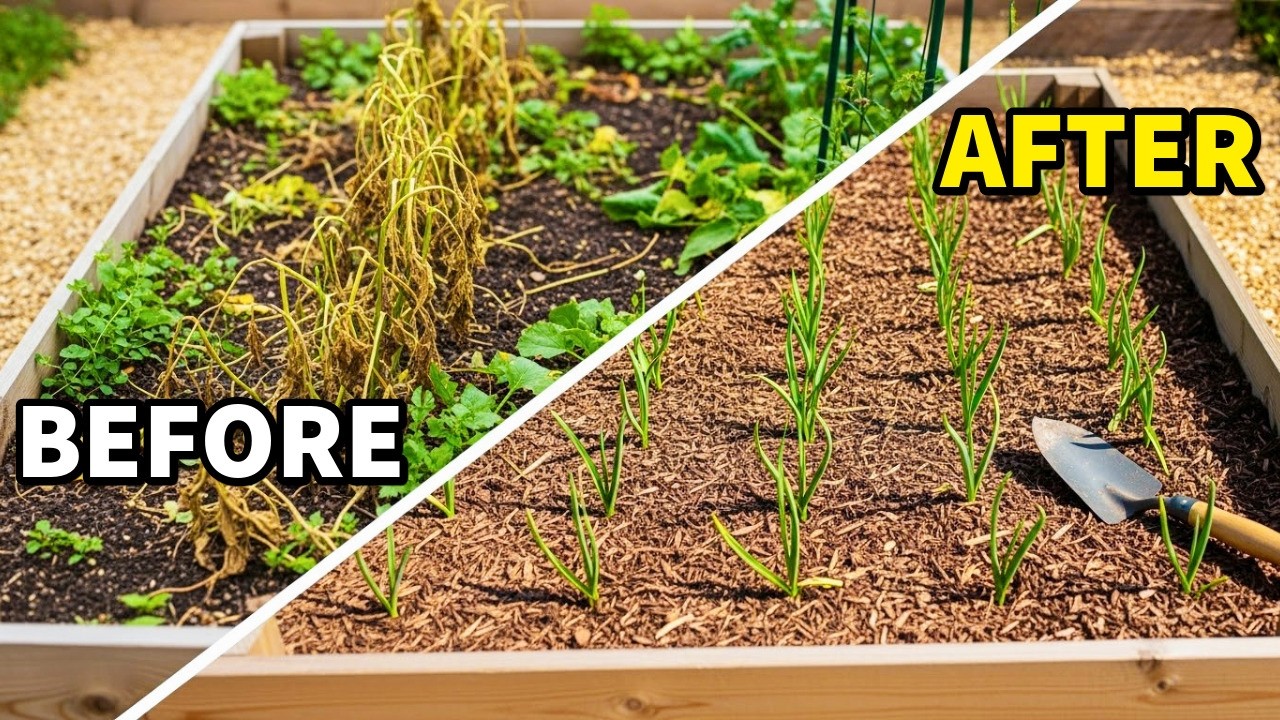
Winter is the best time to invest in our gardens, and these winter garden prep tasks are critical for big spring harvests. Winter garden preparation for spring ensures healthier soil with less weeds, pests and problems next year. These are 7 things we must do now for a better garden next spring and summer.
• TODAY’S DEALS On Amazon*: https://amzlink.to/az0QzYzAm7qTy
• 20 Vegetables To Grow In December: https://youtu.be/yRk0DcS8tHk?si=5la9Z9IyA3HDaXD9
• How To Prune Fruit Trees: https://youtu.be/UKiDItwCR_o?si=LZuy9Kg0ClS_Jbrl
• Where To Buy Seeds: https://youtu.be/7y3hPQr7Nek?si=nmixX-oFFN6KJIbB
• How To Build A PVC Hoop House: https://youtu.be/81ri2YEBNZc?si=L_VK5DeRhn7NHQWo
I use the following products* most often for gardening in December:
4FT LED Grow Light (60W): https://amzlink.to/az078BpwnhyjG
Seedling Heat Mat & Thermostat Kit: https://amzlink.to/az0vrFvoz0Chs
Thicker Row Cover, 1.5oz/yd, 10x30FT: https://amzlink.to/az0yuc0Ul92Fk
Extra Thick Row Cover, 2.0oz/yd, 10x30FT: https://amzlink.to/az0WeuiamzvcM
Japanese Bypass Pruning Shears: https://amzlink.to/az08Dzhs8BJ1x
Japanese Anvil Pruners: https://amzlink.to/az0JBFrgRFyKC
Small Japanese Pruning Saw: https://amzlink.to/az0Ad5wlMluDS
Large Japanese Pruning Saw: https://amzlink.to/az0JWVGhacoR2
Pruning Snips: https://amzlink.to/az0S6BULZGPmi
Weed Barrier: https://amzlink.to/az0FMvvMdjto9
Shade Cloth: https://amzlink.to/az01boLJy9JNI
Insect Netting: https://amzlink.to/az0H5tKMYxP2O
PVC Snap Clamps, 1/2″, 10CT: https://amzlink.to/az0Ju0pmclcsZ
True Organic All Purpose Fertilizer [5-4-5] (4lb): https://amzlink.to/az0hjJZgpjzCe
Alaska Fish Fertilizer [5-1-1] (Gallon): https://amzlink.to/az0Jhw8liNoe3
Espoma PlantTone Fertilizer [5-3-3] (36lb): https://amzlink.to/az0SocAgVlySv
Espoma PlantTone Fertilizer [5-3-3] (50lb): https://amzlink.to/az0dh0dYaye1l
Espoma Bone Meal (10lb): https://amzlink.to/az0KAuCOZcPgQ
True Organic Blood Meal (3lbs): https://amzlink.to/az0jNeCruTl6a
Azomite Trace Minerals (44lb): https://amzlink.to/az0qPn4i34Eol
Jack’s All Purpose [20-20-20] (1.5lb): https://amzlink.to/az0JG0Dv6Da0h
Jack’s All Purpose [20-20-20] (25lb): https://amzlink.to/az0F6FgxdhKjO
• Full Amazon Store: https://amzlink.to/az0yli4Cz0iXX
TABLE OF CONTENTS
0:00 Introduction
0:43 Winter Garden Prep #1
3:08 Winter Garden Prep #2
5:40 Winter Garden Prep #3
7:19 Winter Garden Prep #4
9:03 Winter Garden Prep #5
10:31 Winter Garden Prep #6
13:36 Winter Garden Prep #7
15:14 Winter Gardening Tips
16:22 Adventures With Dale
If you have any questions about how to prepare a garden for winter and spring, have questions about growing fruit trees or the things I grow in my raised bed vegetable garden and edible landscaping food forest, are looking for more gardening tips and tricks and garden hacks, have questions about vegetable gardening and organic gardening in general, or want to share DIY and “how to” garden tips and gardening hacks of your own, please leave a comment!
*******
MY WEBSITE
https://www.themillennialgardener.com/
*******
VISIT MY AMAZON STORE FOR PRODUCTS I USE MOST OFTEN IN MY GARDEN*
https://amzlink.to/az0yli4Cz0iXX
*******
CUSTOM MERCH!
https://shop.spreadshirt.com/themillennialgardener
*******
SUBSCRIBE TO MY 2ND CHANNEL!
https://www.youtube.com/c/2MinuteGardenTips
*******
SOCIAL MEDIA
→ INSTAGRAM https://www.instagram.com/millennialgardener/
→ X (@NCGardening) https://x.com/NCGardening
*******
ABOUT MY GARDEN
Location: Southeastern NC, Brunswick County (Wilmington area)
Zone 8B, 34.1°N Latitude
*******
*As an Amazon Associate, I earn from qualifying purchases.
© The Millennial Gardener
#gardening #garden #gardeningtips #vegetablegardening #vegetablegarden
December is here. The cold weather has killed off our summer garden. And now it’s officially time to go into hibernation mode for the winter, right? Not a chance. Even if you won’t be growing your own winter garden, there are several important December garden prep tasks you should be doing right now. This garden prep that we do now in December will determine how well our gardens will perform in the spring. And let’s face it, with the time change, you could probably use the vitamin D anyway. So, let’s roll up our sleeves and get to work before it gets too cold or it gets too late. If you’re new to the channel, please subscribe, hit the bell for notifications, and check out my Amazon store and Spreadshop links in the video description for everything I use in my garden and awesome custom apparel and gear. The first thing you should be doing is turning over your old summer beds. But if you’re like me, you’ve gotten a couple of frosts and freezes, and all of your old summer crops are long dead, and you have all this dead vegetation and plant matter that’s hanging all over the place. Now is the time where we want to remove these old plants and especially remove any fallen fruits. Picking up these old fallen fruits is an absolute must because if you don’t, you will get tens of thousands of of seeds germinating everywhere. You’re not going to get one or two volunteer tomatoes. You’re going to get thousands of weeds that you don’t want growing throughout your garden. And the other negative about all of these fallen fruits is they overwinter and harbor millions of pest eggs. These fallen fruits are where a lot of your your larae will be safe for the winter. So, if you pick them up and you remove them and you dispose of them, you will carry away literally millions of pest eggs that would otherwise hatch in your garden. Very little good will come from these fallen fruits rotting in your garden. And remember, I’m not going to compost these. I am going to throw them away in the trash can. Alternatively, if you do want to compost them, dig a hole and bury them deeply so all of the seeds rot, all of the pest eggs suffocate. Don’t just open air compost them. How I remove plants depends on the plant that I’m removing. Something like basil, which doesn’t really colonize many pests or diseases where I live, I don’t like ripping out the root ball because that disturbs the microbiome. So, I like to just take a pair of anvil pruners and I’ll cut the plant flush with the soil and I’ll compost the plant. Then, I will just let those roots decay and break down naturally. And all of that root material as it breaks down will refeed the soil. But for plants that have a lot of problems where I live, like tomatoes that colonize a lot of fungal diseases and also soilborn pests like root not nematodes, I actually want to pull them out of my garden. So what I do is I wait about 30 days after they’re killed by frost and freeze. And then I’ll cut them down. Now watch this. Because this tomato plant has been dead for a little while, I’ll be able to pull it out with relatively minimal soil disturbance and we’ll get those roots out of there because they may have root not nematode nodules on them. The second prep task you should be doing now is after you’re done cleaning up your beds from old summer plants and fallen fruits, you want to amend your soil. And when I say amend your soil, I don’t mean with granular processed fertilizers or things that are going to break down quickly if you won’t be planting in that soil for several months because that may wash out of the soil and no longer be there by the time you want to plant in it. I’m talking about amending the soil with slowrelease things that are going to take a long time to break down like kitchen scraps, coffee grounds, and things like compost. that is going to take months to break down, especially when your soil temperatures are cold and you want everything ready and that nutrient bank ready to go once you want to start planting things out into your garden in early spring. Right here, I have an old raised garden bed that I’m building up into a double depth raised garden bed. So, I’ve been throwing a whole bunch of old leafy greens and kitchen scraps and things like coffee grounds and eggshells on top of this soil because I’m going to continue to fill this raised bed. So, I want all of these things breaking down about 8 in underneath the new soil layer that I’m going to stack on top of it. That way, when I go to plant in this bed in a couple of months, all those nutrients will be broken down and accessible by my plants. So all of that garden soil there is going to get moved into that raised garden bed right there and it’s going to get stacked on top of all of those kitchen scraps and they are going to break down thanks to the microbiome in the soil. But even if you aren’t filling any raised garden beds, you’re still going to have to amend them with additional compost because naturally the soil itself is going to sink over time. And as you pull out old plant roots, you’re going to be taking out a significant amount of soil mass as you pull the plants. So this raised garden bed right here actually sunk about 2 to 3 in. So I’m going to have to amend it with about 2 to 3 in of compost to bring it back up to its original height. So you can layer some kitchen scraps down on top of the soil and then bury those kitchen scraps under 2 to 3 in of compost. I love doing this in the winter time. Sometimes I will also throw a tarp over them in order to help facilitate the breakdown because the tarp will make the soil get warmer and it will lock in all of those nutrients in case it rains so you don’t get any kind of wash out and all of those nutrients are preserved and well broken down for your next spring planting. Step three is to get yourself a nice little winter garden going. And there are all kinds of cold hearty root crops, herbs, leafy greens, aliums and things like that that grow great in the winter time and they have minimal pest and disease pressure because pretty much all the insects are gone for the year and fungal diseases aren’t active when it’s very cool out. Now there are very easy direct so root crops that you can grow like carrots, parsnips, radishes, turnipss, rudabggas, beets and more things like that. There are all sorts of cold hearty annual herbs like parsley, cilantro, dill, bunching onions, chives, a whole litany of things that you can grow. Countless brasacas you can grow like broccoli, cauliflower, kale, cabbage, spinach, collarded greens, all the different colors of the rainbow. All sorts of leafy greens like lettucees, spinach, escorel, endive, radikio. You can even grow a crop of winter bulbing onions if you’re in zone 7 or warmer. And I’ll link to a video both above and down in the video description that will show you tons of different things that you can plant out in your garden in December. But let’s assume for a minute you don’t want to have a big winter garden and you want to take the season off. Well, there is something that is non-negotiable that you must plant now, and that is garlic. That’s because garlic has to accumulate hundreds, sometimes thousands of chill hours throughout the winter time in order to produce big bulbs the next season. So, if you’re not planting your garlic in late fall, early winter, it will probably be too late for you and you won’t be able to sew it in the spring. So, if you’re not going to have a winter garden and you won’t plant anything else, at least plant garlic. Now, task number four is to prune your deciduous trees. Deciduous trees go into a deep period of dormcancy during the winter time. And it’s important that we prune them during that period because sap flow has moved from the branches into the roots of the tree. Now is the safest, least stressful time to prune them. But we only want to do it when we’re sure that our trees are dormant. For example, here in zone 8, it takes many frosts and freezes to get our apple trees to be dormant. They are still holding on to green leaves, so it is still too early for me to prune my apples. But trees like my Asian pear and my Asian pimmen, they are not quite as cold hearty as an apple tree. So the frost and freezes have already pretty much completely defoliated these trees. There’s just a couple of leaves hanging on, so I will probably be able to prune all of these trees in a matter of about only two to three weeks. As you can see, my peach tree isn’t ready yet because it’s still holding on to all of its leaves. But something like this grape vine right here has already gone completely dormant. So, if I want to, I am free to prune this. Now, if I wanted to prune this pawpaw tree right here, I would be free to do so because it has been completely defoliated. So, it is ready to go. Let the leaf content of the tree be your guide. If it’s been completely bare for a while, it’s probably time to prune. And if you’re like me and you have a lot of different deciduous trees to prune, well, it’s good that we do it this way and they’re at different levels of leaf drop because that way we can space things out and we don’t have an overwhelming workload ahead of us all at once. If you want to learn how to prune dormant deciduous fruit trees, I’ll link to a video both above and down in the video description that is a complete pruning guide. It is one of the most detailed ones on YouTube and it will teach you everything you need to know. Don’t be afraid to prune your trees. Task number five is to send away for seed cataloges and start making a list of all of the different varieties of seed that you want to plant next year. One of the biggest mistakes I see gardeners make is they wait until the spring to order their seeds. Online seed exchanges start restocking everything in November and December. So, the orders start rolling in well before Christmas. And if you delay, a lot of the things that you want are probably going to be sold out. Many online seed exchanges will send you a completely free seed catalog in the mail if you request one online. It’s one of my favorite things to do. And my favorite places to get free online seed cataloges are places like Baker Creek, Tomato Growers, Burpy, Territorial Seed, Johnny Seeds, Southern Exposure Seed Company, and there are many more than that. And when these seed cataloges arrive, it really makes me feel better. I feel warmer just flipping through all of the pages and getting excited for spring. So, if you’re like me and you struggle this time of year with things like seasonal effective disorder or you just long for the warmer weather, I’m telling you, looking through these seed cataloges, it’s a great way to spend the time and it does get you excited. And the beautiful pictures will really help you decide what you want to grow often a lot better than just online web pages can. So, order those free seed cataloges. It will warm up your soul. Get your list together and beat the rush. That way, you can get all of the varieties you want before they sell out. Task number six is to pre-order your bare root fruit trees that get shipped in late winter, early spring. Now, bare root fruit trees are deciduous trees that have gone completely dormant and they have been stored in cold storage. So, they’re not butdding out. They’re basically in a completely dormant state. Shipping the trees in this manner allows online nurseries to ship them at a much lower shipping cost. So, you can get a lot more trees for less money than if you ordered the trees in the spring and summer when they have to ship them in a potted soil ball because those trees are going to be actively growing because they awoke from dormcy and they’re going to be a lot larger and heavier and therefore they’re going to cost you a lot more money. As an added benefit, when you order bare root fruit trees, a lot of times there are less shipping restrictions. So certain states with large agricultural districts like California, Florida, Texas, Arizona, a lot of times you can’t ship some varieties or some species of fruit trees to those states because if they’re actively growing, they come with a soil ball and that soil could carry invasive pests or diseases. So the agricultural departments don’t let them in. And a lot of times online nurseries can sell the bare root trees across those state lines because they don’t come with any soil attached. They’ll just come wrapped up in basically plastic because they’re bare root just like I said. So, not only do you get better pricing and better selection and you can sell them to a wider variety of states, but you can lock in a wider selection of varieties than you can later in the season. Believe it or not, companies start taking pre-orders in November and December, some of them as early as October. So again, if you wait till after the holidays until late winter or early spring to start think about thinking about your garden, chances are a lot of those varieties that you may want will already be reserved and sell out. So get your list together now. Now, you may be wondering, well, where are the best places online to order bare root fruit trees? Well, there are so many different places over the years that I’ve patronized. Literally dozens. And I’ve always had positive experiences with pretty much every single one. I’ve talked about this in the past and there are so many that I’m just going to cut in some footage over this. One Green World, Just Fruits and Exotics, Rainree Nursery, Four Winds Growers, Bay Laurel Nursery, Peaceful Heritage Nursery, Bottoms Nursery, PlantMe Green, Plantogram, Bob Wells Nursery, Burnt Ridge Nursery, Cumins Nursery, Off thebeaten Path Nursery, Handpic Nursery, Bright Leaf, Edible Landscaping, Stark Brothers, Lois, Restoring Eden, Willis Orchard Co., Trees of antiquity. And my personal favorite for buying citrus is McKenzie Farms of Scranton, South Carolina. I get almost all of my citrus, all of my grafted citrus from Stan McKenzie of McKenzie Farms. But you actually have to call him to order the citrus. So I recommend you look him up on Google Maps, McKenzie Farms, Scranton, South Carolina. Give him a call and he will ship the citrus trees to you. And garden prep task number seven is one of the most important of all and that is to stock up for all of the gardening supplies that you will need next year now. That’s because things are usually being cleared out of stock at a fraction of the cost now in fall and early winter than they will be in the spring. Companies raise the prices in the high demand season of the spring. So, if you wait until March and April and May to buy all your gardening supplies, you are going to be paying top dollar. Warehouses are clearing out the leftovers from the previous season to make room for seasonal items and winter items. And all of that store room space is very precious. Fertilizers, seed starting mixes, seed trays, containers, insecticides, fungicides, battery powered sprayers, garden tools, shade cloth, insect netting. Stock all of these things now while they are relatively cheap before they hike the prices way up for spring. I do almost all of my shopping for the new garden season now in the fall and winter because I can get things like fertilizers for pennies on the dollar compared to what I’d have to pay for them in the middle of spring and summer. I also stock up on things like soil mediums. I may have gone a little bit overboard with the perlite, but I regret nothing. And this is where I store all of my things like plant covers and shade cloths for the following season. If you’re looking for very good lawn and gardening deals in my Amazon storefront, I maintain a today’s deals list where every day I go through the best deals in lawn and gardening on Amazon and I pin them to that list. You can check that list daily because it changes every day. A lot of times there are some hidden gems in there. And that right there are, in my opinion, some of the most important garden prep tasks that you should be doing every December. Whether you grow a winter garden or not, it is critical to do these things because they will influence how effective and how healthy your garden is going to be next spring. Don’t wait until it warms up in late winter, early spring to do these things. A lot of times the benefit is in doing them as early as possible. So everybody, I sure hope you found this video helpful. If you did, please make sure to hit the like button, subscribe to the channel, and please ring the notification bell so you are notified when I release more videos like these. For all of my favorite gardening products that I use to turn over my winter garden, I’ll place direct links to those items down in the video description for your convenience. For everything else I use in my yard and garden in real life, that is all linked in my Amazon storefront. So, expand the video description, click on the Amazon storefront link, you’ll see everything I use in real life. And while you’re down there, check out my website, the millennialger.com, for all things gardening and custom merch if you want to support my channel. Thank you all so much for watching and I hope to see all of you again on the next video. With all of the pimmens that I harvested this year, I decided to make some pimmen bread in a way that both Dale and I can enjoy. So in a blender, you put two cups of oats, one of the whole pimmens, maple syrup, two eggs, baking soda, and some vanilla extract and cinnamon. And you puree that. And then you pour it into a loaf pan, and you bake at 350° for 35 minutes. And you get this delicious bread that Dale is in love with. Come on, Dale. Come up. Come up here. Very good. Oh, his liquor is going out of control. Okay, wait. Okay, that’s so good. Dale, go. Okay. Oh, he’s so patient. And let me tell you, he loves this. I’ve never seen his eyes get so big. Usually, I follow this recipe for a light, healthy banana bread using three ripe bananas. But using a huge gibo pimmen. Oh my goodness, it is so moist. And I can’t wait to have mine. Except I added a little bit of granola to mine for crunchies. Enjoy Dale.
50 Comments
If you enjoyed this video, please LIKE it and leave a comment! Thanks for watching 🙂 TIMESTAMPS here:
0:00 Introduction
0:43 Winter Garden Prep #1
3:08 Winter Garden Prep #2
5:40 Winter Garden Prep #3
7:19 Winter Garden Prep #4
9:03 Winter Garden Prep #5
10:31 Winter Garden Prep #6
13:36 Winter Garden Prep #7
15:14 December Gardening Tips
16:22 Adventures With Dale
This is very, very informative!! Thank you so very much. GOD BLESS YOU!!!!!
Thanks Anthony! Just put in garlic, whew! I am pruning in January/February for what I have growing here in Idaho. Ordering seeds!! Great tips on ordering supplies, I will soon. I laughed so hard with watching Dale!! He loves this!! ❤🐶
Great idea to stock up on gardening items when they’re much cheaper. I will definitely use your amazon list. Mr. Dale looked totally different with his white t-shirt on. I thought you got another pup. I love that Mr. Dale’s bed. Thank you for sharing the video.
darn u said you would post a pruning fruit tree link, hope I can find it … love your energy and demeanor, thanx looking for how to trim lemon tree and persimmon.
This is such a great channel! Really helpful info. Especially for a newbie.
Great advice, Son! I have garlic in my raised bed that comes back every year. Will you give the recipe for your persimmon bread, it looks really yummy & Dale loved it! I don't have the big persimmons like you grow, so can I use the pulp from the smaller ones that I have frozen? Thanks Anthony.
Hi Anthony, Can I prune my Rabbiteye Blueberry now in Zone 7, Davidson Co. NC?
Placing the tarp over the garden won't kill everything in the soil?
Your channel is a genuine gold mine. It's my favorite place on YouTube to learn about vegetable gardening.
Once again…Awesome! Thank you.
Thank you. Great advice for everyone.
Dale is a peach.
Are fungal diseases still active when it is wet? Here in the PNW, the long range forecast shows rain for 9 of the next 10 days. I find that this time of year everything, including simple lettuce, just turn all mushy and wilty because it's just so wet all the time. 😕
About trees nursery – Stark Bros. – 3 years after delivered – almost all plants either dead or severely infected by pests. Cherry trees – both trees where broken in 2 years by graft line (was NOT covered with soil), apple trees – granny smith and Jonatan were infected by wooly apple aphids, roots and branches. This is very difficult to get rid of pest. Trees with infected roots I had to dig out and burn. Currants and gooseberry – stagnated, strawberry – did not grow and got rotten, raspberry – half of them died. Raintree nursery – very good plants, but expensive with expensive delivery. IMHO.
Did you get a new buddy for Dale?
Was that another dog we saw at the start?
i cant believe 2016 is less than 30 days away 😭
Oh my goodness! Dale totally melts my heart ❤️
Another great video!
Wow! This is stuff I never knew. Much gratitude for you helping us, who are trying to be self-sufficient and earth-friendly.
(I love gazing over your garden & yard: it inspires me!) 😍
Anthony, SUPER CONTENT…especially about the “larvae” — BASIL, I cut done as you do…kitchen scraps I bury in the soil — etc., yes, preparing for the Spring — THANK YOU!
Pickle the green tomatoes with garlic and dill!!! A winter treat!!
When are you going to add chickens? They are so nice to have for compost and fresh eggs, and they are lovely pets!
I have to strut a bit: YouTube says I'm in the top 0.03% of MG viewers! And my goodness, I have the garden to show for it 😊
Not willis. They dont stand be hind their products you will lose your money with this company read their review under Better business bureau in Georgia.
My husband has been getting his catalogs for awhile. I prefer free saved seeds. ❤️🙏
Camera pans over small mountain of perlite .."I may have gone a little overboard but I regret nothing"
A man after my own bargain-shopping heart.
I'm in WV the elbow of the panhandle. Been trying to plant as you have recommended but it is now too cold for any of it to grow. How do you get such large greens in Oct to Dec? I'm using raised beds and straw bales. I already cleaned out but my plantings of endive, radicchio, lettuce is tiny, and carrots won't germinate. Some radishes but they aren't growing about 1" . The garlic is about 1". Help? Right now it's all under the snow. I also have a small heated greenhouse but did not plant anything in there yet.
Almost a foot of snow sitting out here in Chicago area. Can’t do this… soon as any snow melts (usually some point during winter) I’ll have to do all this clean up 😅
Before it gets to cold? Lol my average high is supposed to be 55. It's been 30-40 degrees since Thanksgiving 🥶🥶🥶
I used to live in Suffolk VA doing my 20 in the Navy, I remember that in Dec we had already had enough cold to drive sap out of the branches and pruning could be done. Suffolk is a bit inland so you don't have as much of the warming effect from the ocean like you do in VA Beach or the cities right on the ocean.
For the people south of there best to remember that the ocean gives a moderating effect, both in the winter and summer. I remember leaving my house in Suffolk to go to work, and I'd be driving in snow covered roads, and the closer I got to the base, the warmer it would get and you didn't have snow sticking on the ground and it would be wet and dirty.
Living in the DFW area though there are still leaves on many trees in Dec and probably the best month for winter pruning here is Jan.
Aaaargh… I tried to stay strong… Resist the temptation to order way too many seeds this winter… Now YOU made me look for seed catalogs… Thanks… 🤣
Love your channel! I'll check your other channel later on.
I may or may not have a box of perlite in my shed the same size as me. I, too, regret NOTHING!
(It's my second.)
I am also a millenial gardener although a new one and fortunately here in south tx have 70 degree temps this week so lookin forward to garden tasks this week. I still have lots of basil so plan to makke some pesto soon! 1
Hey millennial gardener I love your videos and I thank you so much for all the videos they have been so helpful I have a question will you ever make a discord server or have one so its easier to communicate with fellow gardeners or you and to hang out with fellow gardeners?
Caught Alaskan fish fertilizer for half price at Walmart last in October. Trying to buy all of my gardening supplies during the off-season.
One note on fruit tree pruning—it is generally recommended to wait on dormant pruning until just before the trees break dormancy in late winter or early spring to minimize the time the open wounds are exposed to the elements as the cuts will only begin to actively heal over once the trees break dormancy. Fall pruning is ideal for some fruit trees such as stone fruit for reasons relating to the seasonality of pest and disease pressure, but needs doing at least six weeks prior to the trees entering into dormancy to allow for the pruning cuts to heal. Late fall/early winter is generally one of the worst times to prune deciduous fruit trees as the dormant tree is no longer growing so cannot actively heal over wounds and it will be months before the tree is able to do so.
Great timing! Good advice, thanks
How about Arizona?
When you add compost to your garden beds. Do you lift up your drip lines or just cover them up?
What type of peach tree do you grow?
Hey Anthony, I can’t remember what do you say you can overwinter by plucking it out and put it in a pot. Was it basil or green peppers?
November, December are the months when I work most on my garden. When the snow goes off in March, the soil should be ready for planting.
I till the sht out of my garden
It's not completely free, the cost of the marketing gets amortized across all of their products, overhead…
I love Starke Brothers. That’s where I order my fruit trees from.
1:41 The ripe ones are the best seed tomatoes.
If you haven't read The Humanure Handbook, I highly recommend it. It eliminates a lot of the myths around composting. 😉
Do you have a video of how to plant garlic? And do they like shaded areas or sunny? I