
Winter, what we gardeners call the “cool season,” is not necessarily a time of rest for south Louisiana gardeners. We enjoy long stretches of chilly to mild weather punctuated by relatively short episodes of intense cold. This allows us to stay active in our gardens through the cool season that runs from October to March.
The pace of things does slow down a bit at this time of year, though. Although we will continue to plant, prepare beds, harvest vegetables and enjoy beautiful flowers, many jobs like mowing lawns, shearing hedges, fertilizing and watering are not needed now.
Lawn grasses and shrubs are dormant, so, mowing, pruning and fertilizing are reduced or discontinued. And cooler, wetter weather lessens the need for extra irrigation.
But there are still things to do on beautiful, mild days. Here are a few suggestions for gardening activities common this time of the year.

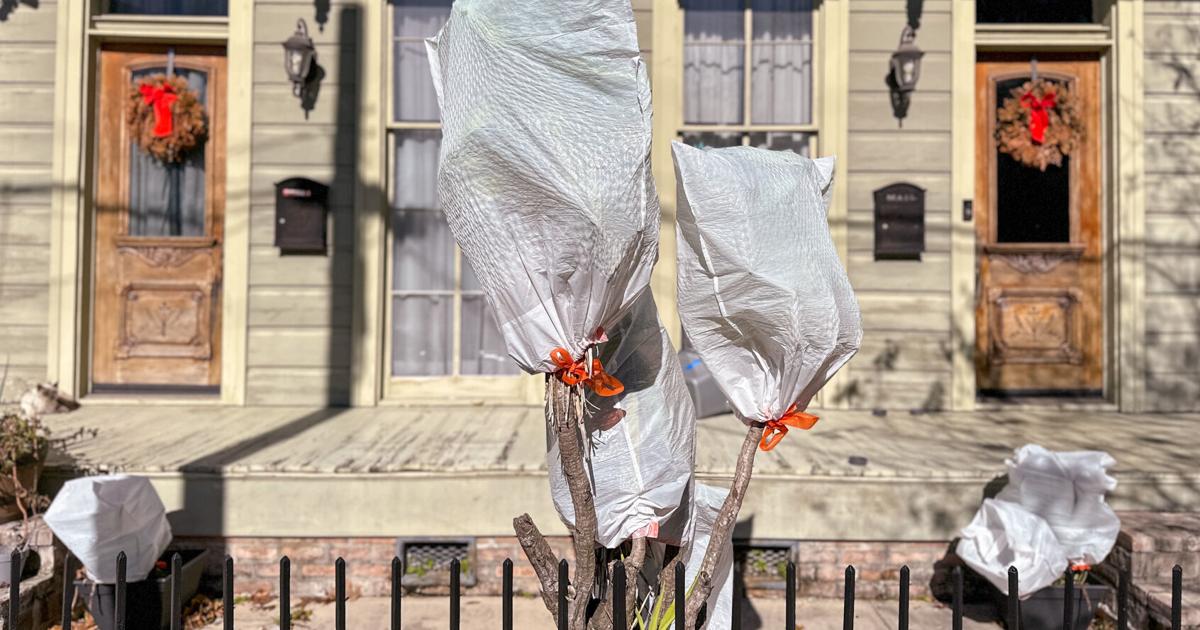
Covering plants all the way to the ground will help them survive freezing temperatures.
(Photo by Chris Granger The Times-Picayune)
1. Plan for the cold
It has already gotten cold enough to cause some damage to tropical plants in our landscapes. We are bound to get additional severe freezes this winter that will be more damaging.
It is important to protect tropicals from hard to severe freezes. Decide which plants you will continue to protect, and make sure you have enough materials on hand to cover them. You may prune off cold-damaged parts now to keep the landscape looking neat.
Move container tropicals indoors or into a garage when freezes are predicted. If you cover tropicals growing in the ground, make sure the cover extends all the way to the ground and weigh down the edges with bricks. Add incandescent Christmas lights under the cover if temperatures in the low 20s or lower are predicted to provide additional protection.
Keeps the seeds you’ve collected fresh and viable by storing in the refrigerator.
PHOTO BY ROBIN MAY
2. Save those seeds
You may have saved some seeds from your summer flowers or vegetables to plant next year. Or, you may have some packets or partial packets of seeds left over. To keep the seeds fresh and viable, place them in a plastic or glass container with a tight-fitting lid and store them in your refrigerator.
Make sure you label the seeds with the type of plant and when they were harvested or purchased. Try to use seeds within a year of harvesting or purchasing them.
Keep your garden tools cleaned and ready for the spring.
3. TLC for tools and equipment
Always clean and sharpen tools you won’t be using for a while before you put them away. It’s a good idea to wipe the metal blades with an oily cloth. Coating them with a thin layer of protective oil helps prevent corrosion (use steel wool to remove any rust before doing this). Coat wooden handles with wood sealer, tung oil or varnish to keep them in good shape.
Consult the owner’s manual of your power equipment for specific information on proper servicing and winter storage. If any piece of power equipment needs repair or service, now is a good time to get that done so everything is in good shape and ready for work when you need it next year.
Save raked leaves and use them in your compost pile.
4. Reuse fallen leaves
Don’t you dare bag up and throw away all those valuable leaves that continue to fall from deciduous trees. Add them to your compost piles or use them to mulch around shrubs, vegetables and flowerbeds. Shred the leaves by running over them with a mower (bag attached) and they will decompose faster. Commercial leaf shredders are also available online .
As you build up your compost pile, sprinkle some fertilizer that contains nitrogen over each 1-foot layer of leaves to encourage decomposition (organic gardeners can use blood meal). And don’t forget to keep the pile moist (not wet).
5. Weeds don’t take the winter off
Weeds will continue to grow here through the cool season. Don’t let these unwanted bullies take over your flowerbeds or vegetable garden. Your best defense is to keep the soil surface of beds covered with 2 to 3 inches of mulch.
Make it a point to weed beds regularly and don’t allow problems to get out of hand before acting.
In lawns, a broadleaf weed killer appropriate to use on the type of grass you have will do a good job eliminating most cool-season weeds. Spray during periods of mild weather. Cool-season annual weeds, however, don’t really cause that much trouble and disappear when the weather warms in spring and we start mowing regularly. So, treatment with herbicides is not always critical.
For spring tulips, plant the bulbs in late December to early January.
STAFF PHOTO BY SOPHIA GERMER
6. Plant spring bulbs
As the rush of the holiday season begins to slow down in late December or early January, it’s time to plant spring-flowering tulip and hyacinth bulbs that have been chilled in the refrigerator for six to eight weeks.
Plant them about 5 inches deep and 4 to 5 inches apart in sunny, well-drained beds. It is generally more effective and attractive to plant bulbs in groups or masses of five or more rather than in a single row.
You may see spring bulbs offered at low sale prices in late December or January. Avoid tulips and hyacinths as there is no time left to properly chill them. Other types of bulbs, such as daffodils and lilies, may bloom if planted that late.
Try not to get too far behind with your gardening chores during this busy holiday season. Sometimes it’s nice to get away from all the hectic activity and spend some quiet time in your gardens weeding a bed, planting some cool-season flowers or applying some mulch.
Comments are closed.