
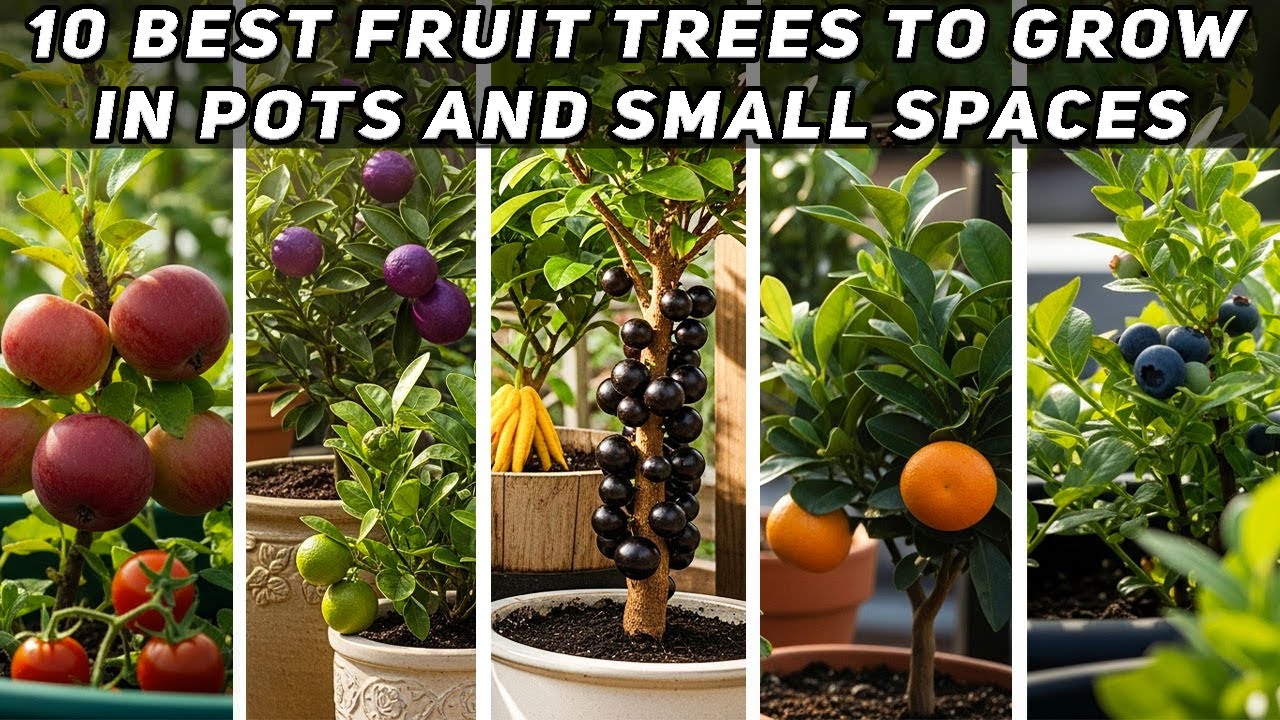
🇺🇸 🇬🇧 🇨🇦 Growing Fruit in Pots: The Complete Container Gardening Guide 🍋🍓🥑🌳
Want to grow your own fresh, organic fruit—even if you don’t have a yard? 🌿 This video reveals the Top 10 fruit trees and plants that thrive in pots and small spaces, perfect for balconies, patios, or even sunny windowsills. You’ll discover practical, money-saving gardening secrets that can turn your small space into a mini orchard! 🍎🍊
In this video, William from Hidden Gardening Secrets breaks down everything you need to know—from soil and watering to the best varieties for maximum harvests in minimal space. 🌱 Whether you live in the USA, UK, or Canada, these container fruit trees can grow beautifully in your climate with just a few smart adjustments.
🌟 What You’ll Learn:
🍌 The Banana Plant Revolution — How dwarf bananas can produce up to 100 fruits per harvest in a simple container, and how you can grow tropical fruit even in colder climates!
🍋 Meyer Lemon Magic — The self-pollinating, everbearing tree that gives you lemons year-round—and makes your patio smell like a Mediterranean citrus grove.
🍓 Strawberries in Pots — Grow sweet, juicy strawberries that taste nothing like the store-bought kind, even if you live in an apartment.
🍏 Columnar Apple Trees — The space-saving apple trees that grow straight up, not out, giving you crisp apples even on a small balcony.
🍒 Dwarf Cherry Varieties — How to grow cherries without the bird problems—plus, enjoy beautiful spring blossoms every year!
🍑 Peaches in Containers — The secrets to growing juicy, sun-ripened peaches from a self-pollinating dwarf tree that fits on your patio.
🫐 Blueberries That Thrive Anywhere — Learn how to master soil pH and grow antioxidant-rich blueberries that pay for themselves in one year.
🌿 Figs in Pots — Why container figs are more productive than ground-planted ones—and how to get fruit even after cold winters.
❤ Pomegranates: The Indestructible Tree — The surprisingly tough, drought-resistant tree that thrives in buckets and gives you dozens of fruits every season.
🥑 Avocados in Containers — Yes, it’s possible! Discover dwarf avocado trees that produce 20–30 fruits per year—worth hundreds of dollars annually.
💡 Bonus Gardening Secret:
The simple trick that makes all container fruit trees explode with growth—MULCH! 🪵 Learn how a free layer of wood chips regulates soil temperature, conserves moisture, and feeds your plants naturally.
🌍 Why This Video Matters:
Fruit prices are skyrocketing at grocery stores—but growing your own fruit in containers saves money, reduces waste, and gives you better-tasting food. 🍇 You don’t need land, experience, or fancy tools. Just pots, good soil, sunlight, and the right plants.
By the end of this video, you’ll know exactly which fruit trees to choose, how to care for them, and how to harvest like a pro—all from your balcony or backyard. 🌻
🛠 Perfect For:
✅ Apartment dwellers
✅ Small-space gardeners
✅ Budget-conscious families
✅ Urban homesteaders
✅ Beginners who want fast, visible results
🔔 Join Our Gardening Community:
🌿 Subscribe for weekly gardening strategies that save you money and boost productivity.
💬 Comment below: Which fruit tree are you planting first?
📢 Share this video with someone who loves fresh fruit but thinks they can’t grow it!
Together, we can grow abundance anywhere—even in the smallest spaces. 🌎✨
🪴 Hidden Gardening Secrets:
Helping everyday people grow extraordinary gardens—no matter the size.
👉 Subscribe now and never miss a video that could save you hundreds in grocery bills every year!
#ContainerGardening #FruitTreesInPots #UrbanGardening #SmallSpaceGardening #GrowYourOwnFood #HiddenGardeningSecrets #BalconyGarden #PottedFruitTrees #MiniOrchard #MeyerLemonTree #BananaPlant #BlueberryBush #CherryTree #AppleTree #PeachTree #StrawberryPlants #AvocadoTree #PomegranateTree #FigTree #HomegrownFruit #OrganicGardening #DIYGarden #GardeningTips #USA #UK #Canada
Listen, your grocery store fruit prices are out of control, right? But what if I told you that you could harvest fresh, delicious fruit from containers right on your balcony or patio, and some of these plants will pay for themselves in just one growing season. I’m William, and this is Hidden Gardening Secrets. We’re about to show you exactly how to do this. We’ve discovered 10 incredible container fruit plants that most people have no idea even exist. And number seven, that one literally makes money. Stick with us because by the end of this video, you’re going to realize that growing your own fruit doesn’t require a big yard or a lot of money. Before we get rolling, if you’re someone who wants to save money on groceries and grow fresh food without spending a fortune, smash that subscribe button right now. Seriously, do it. We release new gardening strategies every single week that’ll help you stretch your budget and produce better results. and turn on notifications. That way, you’ll never miss a video that could save you hundreds of dollars this year. The banana plant revolution. Why we’re starting here. Let me begin with something that’s going to blow your mind. Forget everything you know about growing fruit. The banana plant is hands down the most incredible thing you can grow in a container. And I’m not exaggerating. When most people think about bananas, they think of tropical countries or massive farms. But dwarf banana varieties like the dwarf cavendish or super dwarf banana will produce full-size bananas right in a pot in your own space. These plants are not technically trees. They’re herbaceous perennials, but that doesn’t matter one bit because they produce fruit like absolute machines. Here’s what’s remarkable. A single banana plant in a container will give you 50 to 100 bananas in one harvest cycle. That’s one plant. You’re not talking about harvesting scattered fruit here and there. You’re talking about cutting down an entire bunch of bananas that you grew yourself. The experience alone is worth it. But let’s talk about the money. Organic bananas at your local grocery store run about 80 cents to a dollar per pound. A single bunch from your banana plant might weigh anywhere from 20 to 40 pounds. Do the math. That’s between $16 and $40 from one harvest. And these plants cycle relatively fast. You’re looking at fruit within 18 to 24 months of planting, and then it keeps producing continuously. The secret with bananas and containers is that you can give them exactly what they crave: rich, nutritious soil, consistent water, and warmth. Since they’re tropical plants, in colder climates, you simply bring them inside during winter months where they go into a light dormant state and then move them back outside when temperatures warm up again. The container makes this flexibility possible. You can’t do that with a plant in the ground. Here’s an extra benefit that most people don’t know about. After the main stem produces its bananas and dies back, the plant sends up new shoots called pups. You can take these pups, pot them up individually, and suddenly you have more banana plants to keep or gift to friends. Some people even sell them because banana plants are in high demand. This single plant just became multiple plants. The lemon tree system that works yearround. Now, let’s talk about something that’s both practical and incredibly rewarding. The meer lemon. Everyone knows about lemon trees, but most people don’t understand what actually makes them work in containers or why they’re such a gamecher for home gardeners. Meer lemons are naturally semi- dwarf, which means they’re perfect for pots from the start. But here’s the real magic. They’re everbearing trees. This means at any given moment during the growing season, your single tree has flowers, developing fruit, and ripe lemons all on different branches simultaneously. It’s genuinely like having a small grocery store living on your patio. One established meer lemon tree can produce between 50 and 100 lemons every single year. At the store, lemons cost around $1.50 each, sometimes more for organic varieties. That’s incredible value from one container plant. Now, I want to share something that changes the game. Lemons in pots are actually easier to keep alive and healthy than lemons grown in the ground. Why? because you control absolutely everything. If temperatures drop too low, you bring the pot inside near a bright window. If pests start showing up, you can isolate that single container and treat it without worrying about your entire garden. If soil conditions aren’t right, you selected exactly what went into that pot so you can adjust it perfectly. Here’s a money-saving tip that will surprise you. You don’t need expensive citrus specific fertilizer for these trees. A good balanced organic fertilizer works just fine. I use a fish emulsion product every two weeks during the growing season and my Meer lemon tree is absolutely loaded with fruit. The yearly cost maybe $15. That’s incredible. Beyond the practical benefits, there’s something magical about having a Meer lemon tree. When these trees bloom, your entire patio smells like a Mediterranean citrus grove. And there’s genuine satisfaction in making fresh lemonade or adding homegrown meer lemons to your recipes. Your friends will be amazed when you tell them you grew the lemons yourself. Strawberries, the hidden productivity weapon. I need to mention something that technically isn’t a tree, but absolutely deserves a spot on this list. Container strawberries. These plants are genuine productivity machines, and they might be one of the best investment you can make if you want results fast. Everbearing strawberry varieties are champions in container settings. They produce their first fruit within just a few months of planting, and they keep producing consistently from late spring all the way through fall. Consider this. A single well-maintained container with 6 to eight strawberry plants will give you fresh berries almost daily during peak season. We’re talking pounds and pounds of delicious fruit from something that takes up less space than a standard flower pot. The space efficiency is genuinely unmatched. Let’s talk about store-bought strawberries for a moment. They’re ridiculously expensive, often $5 to $7 per pound during peak season, and honestly, they taste like disappointment. They’re picked underripe so they can survive shipping. Your container strawberries are the complete opposite. They’re grown for flavor, picked at absolute perfect ripeness, and eaten within minutes of harvesting. The taste difference is so dramatic that once you’ve experienced homegrown strawberries, store-bought ones become almost insulting by comparison. The strawberry container system is beautiful for another reason, succession planting and renewal. As older plants age out after a season or two, you replace them with runners from your best producing plants. It’s a self- sustaining system that costs you almost nothing after your initial setup investment. Think about that. Year 2, year 3, year 4, you’re getting fresh strawberries with minimal additional spending. You can get creative with strawberry growing, too. Stack containers vertically to save space. Use hanging baskets to create different levels, or build a strawberry tower that looks gorgeous and produces incredible amounts of fruit. If you’re in an apartment or have limited space, strawberry containers solve that problem completely. Dwarf apple trees for small spaces. Now, let me introduce you to columnar apples. These are like something straight out of a gardening science fiction movie. They grow straight up with barely any side branches, making them absolutely perfect for containers and small spaces. Varieties like North Pole and Golden Sentinel are the ones you want to seek out. Here’s what’s wild about these columnar varieties. They produce full-sized apples on a tree that takes up the same footprint as a small shrub. You could easily fit three or four of these trees on a modest balcony or patio and have fresh apples from late summer through fall. Each columnar apple tree produces about 15 to 25 real apples per season. Not some weird miniature variety, but actual crisp, juicy apples you’d be proud to eat or share. The trees max out at about 8 to 10 feet tall, but only 2 feet wide. That’s perfect for containers. Here’s why this matters financially. Apples store really well. You harvest your apples in September and October, store them in a cool location, and you’re eating fresh homegrown apples through December or even into January. When you calculate organic apple prices at 3 to4 per pound, your columnar apple trees save you real money over months, not just a few weeks. There’s another practical benefit to container apples that people often overlook. Pest management. With a small columnar tree in a container, you can inspect every inch of the plant quickly and catch problems early before they become serious issues. Try doing that with a full-sized apple tree where you can’t even see or reach the top branches. Container growing gives you complete visibility and control. Dwarf cherry varieties. Bird protection made easy. Let’s discuss dwarf cherries, specifically varieties like Romeo or Juliet. These trees are absolute gamechangers for container gardening, and they prove that you don’t need a massive yard to grow stone fruit successfully. Sweet cherries have a reputation for being challenging, but these specific pie cherry varieties are bulletproof and incredibly productive. Honestly, I prefer pie cherries for eating fresh anyway. They’re flavorful and interesting in a way that’s different from commercial sweet cherries. Here’s what makes cherries special in container growing. You eliminate the biggest problem that traditional cherry growers face, birds. When your cherry tree is in a pot right on your patio or balcony, you can throw bird netting over it in about 5 minutes and protect your entire crop. Try doing that with a 20ft cherry tree planted in your yard. It’s essentially impossible. Container cherries will give you 10 to 15 lbs of fruit per season once the tree is mature. That’s enough for fresh eating, baking pies, making jam, and still having surplus to freeze for later use. It’s genuinely abundant. Store-bought cherries are notoriously expensive, often $8 to $10 per pound when they’re in season, and the quality is questionable because they’re picked early for shipping hundreds of miles. Your container cherry tree produces fruit that’s worth well over $100 every single year. There’s something beautiful about cherry trees that goes beyond the fruit. They bloom early and gorgeously before your tree even produces a single fruit. It’s creating these stunning clouds of pink and white flowers that make your space look like a spring garden. Your tree is ornamental and productive at the same time, which means even non-guarders in your life will appreciate having it around. Peaches in pots breaking the impossible. Peaches and containers sound impossible. But varieties like Bonanza and El Dorado are specifically bred for container life, and they deliver phenomenally. Stone fruits have a reputation for being finicky and temperamental, but container peaches flip that script completely. These dwarf peach trees stay around 5 to 6 feet tall. They’re self-pollinating, so you only need one tree, and they produce full-sized peaches that taste dramatically better than anything you’ll ever buy at a grocery store. Why are container peaches so important? Because you can protect them from late frosts. You control their environment. You can easily net them if pests become a problem. One dwarf peach tree will give you 20 to 40 full-sized peaches per season. Organic peaches at the store run about $3 to4 per pound, and they’re often picked underripe and shipped hundreds of miles. Your peaches rip it on the tree in perfect conditions, and that makes all the difference in flavor and quality. That juice running down your chin when you bite into a tree ripened peach you grew yourself. That’s what this entire journey is about. That moment is worth far more than the money you’re saving. The trick with peaches is thinning. When you see baby fruits forming on your tree, remove about half of them. I know that sounds counterintuitive. You’re removing fruit to get better fruit, but it absolutely works. Thinning makes the remaining peaches bigger, sweeter, and keeps your entire tree healthier, and more productive long term. It’s one of those things that feels wrong when you do it, but works perfectly. Blueberries, the most forgiving fruit. Blueberries are probably the most successful fruit you can grow in containers, but most people mess them up because they don’t understand one crucial thing. Blueberries are picky about soil pH. Here’s the science. Blueberries need acidic soil, somewhere between 4.5 and 5.5 pH. Regular potting mix from a bag won’t cut it. But here’s the beauty of container growing. You have complete control over this. Mix your potting soil with Pete Moss or use an aelia and roodendrin specific mix and suddenly you’re growing blueberries better than commercial farms do. Varieties like top hat and peach sorbet are absolutely perfect for pots. They stay under 3 ft tall. They’re genuinely gorgeous with fantastic fall color and they produce heavily year after year. A single mature blueberry bush in a container can give you 3 to 5 lbs of berries per season. Have you looked at organic blueberry prices recently? You’re looking at $5 to $7 per pound. Do the math. One plant pays for itself completely in the first year. After that, every berry is profit. But here’s what makes blueberries brilliant for container growing. You can move them. If they’re not getting enough sunlight, you roll them to a better location. If a late frost is threatening, you bring them closer to your house or inside temporarily. If you need to adjust the soil or add amendments, you’re working with a container, not trying to amend an entire garden bed, that flexibility is worth its weight in gold. Figs, the productivity surprise. Figs are where things get genuinely interesting because most people don’t realize that figs actually prefer being slightly rootbound. When you put a fig tree in a container, you’re giving it the exact conditions it loves, and the result is more fruit arriving earlier in the season than you’d expect. Look for varieties like Petite Necra or Chicago Hardy. These aren’t just smaller trees. They’re specifically bred to produce heavy crops in confined spaces. I’ve seen single container figs produce over 100 fruits in one season. That’s not an exaggeration. The beautiful thing about figs is that they fruit on new growth. This means even if you’re in a colder climate and the tree dies back during winter, it’ll come back and still give you fruit the same year. You can’t say that about most other fruit trees. Here’s a trick that’ll make you look like a gardening genius. Stress your fig tree slightly by letting it dry out between waterings during the fruiting season. This concentrates the sugars and makes the figs taste incredible, like nature’s candy, but you made it happen. Fresh figs at the store, if you can even find good ones, run about $6 to $8 for a tiny container. Your potted fig tree will produce fruit that makes those store-bought ones taste like cardboard in comparison. The flavor difference is night and day. Pomegranates, the indestructible option. Let me start with something that’ll blow your mind. Number 10 on our list is the pomegranate. Pomegranates in pots sound fancy and complicated, right? But here’s the kicker. These trees are practically indestructible. We’re talking about dwarf varieties like nana or state fair and their absolute beasts in containers. What makes pomegranates special for pot growing is their natural root system. Unlike other fruit trees that want to spread out extensively, pomegranates have a more compact root structure. They’re perfectly happy thriving in a 15 to 20 gallon container, which you can literally get for free from local restaurants or bakeries if you ask nicely. Those big food grade buckets that bakeries throw away, they’re perfect for pomegranates. The fruit you get from these container varieties is just as good as the fruit from full-size trees. We’re talking deep red arerrols with that sweet, tangy flavor that’s impossible to find in most stores. Honestly, one tree will give you anywhere from 15 to 30 fruits per season once it’s established. At grocery store prices, you’re looking at saving maybe $50 to $75 per year. And that’s being conservative. Here’s my favorite part about pomegranates. They’re drought tolerant once established. You can forget to water them for a few days and they’ll forgive you completely. That’s huge for busy people or if you’re still learning this whole gardening thing. Avocados. Patience pays off. This is where people think I’m crazy, but hear me out. Dwarf avocado varieties like warts or little co will absolutely fruit in containers. And when they do, you’re getting avocados that cost5 to $8 each at the store. One tree can produce 20 to 30 avocados per year once it’s mature and established. Yes, avocados take patience. You’re looking at 3 to 4 years before significant fruiting begins. But here’s the thing to consider. You’re planting the tree anyway, or you’re buying avocados forever. Which sounds better? The secret with avocados in containers is drainage and patience. Use a well- draining potting mix specifically designed for this. Don’t overwater. Give them time. These trees are self-pollinating in the dwarf varieties, which means you don’t need two trees. You need one good tree, the right conditions, and patience. What makes avocados special on this list is the payoff. When your tree starts producing, you’re getting organic avocados perfectly ripe at zero cost for decades. The tree in a pot can live and produce for 20 plus years. Do the math on that scenario. Even at conservative estimates, you’re looking at thousands of dollars worth of avocados over the life of one tree. Because they’re in a container, you can bring them inside during cold snaps if you’re in a marginal climate. That flexibility means people in zones that technically can’t grow avocados are successfully growing them anyway. The secret that changes everything. I promised you a bonus, and this one’s absolutely huge. The secret that makes all of these container fruit trees work better is something almost nobody talks about. Mulch. Put 2 to 3 in of wood chips or straw on top of the soil in your containers. This does three things that’ll change your results dramatically. First, it regulates soil temperature, keeping roots cooler during hot summer months and warmer during cooler seasons. This temperature regulation reduces stress on your plants. Second, it retains moisture in your soil. That means you water less frequently, your trees stress less from inconsistent watering, and you spend less time managing irrigation. Third, the mulch slowly breaks down over time and feeds your trees organic matter. As it decomposes, it releases nutrients and improves soil structure. I started doing this 3 years ago, and my container trees absolutely exploded in productivity. It’s such a simple thing, costs almost nothing, and the difference is dramatic. Here’s a tip. Go to your local tree service company and ask for wood chips. Most will give them to you completely free because they’re trying to get rid of them anyway. You’re actually solving their storage problem. Your action plan starts now. There you have it. 10 fruit trees and plants that’ll thrive in containers, save you serious money, and give you fresh fruit that’s dramatically better than anything you’ll buy in a store. Whether you’ve got a tiny balcony or a sprawling patio, you can absolutely grow your own fruit without breaking the bank. The beauty of container gardening is that it’s accessible to everyone. You don’t need acres of land. You don’t need experience. You don’t need expensive equipment. You need containers, soil, plants, and patience. If this video has been helpful to you, I need your help right now. Hit that subscribe button if you haven’t already. Ring the bell notification so you don’t miss the next video in this series. We’re releasing more container gardening strategies that’ll save you hundreds of dollars this year. Drop a comment below telling me which tree or plant you’re starting with. I read every single comment and I genuinely love hearing from you and learning what you’re growing. Share this video with someone who needs to see it. Someone in your life is buying expensive produce at the grocery store when they could be growing it themselves. Help them discover what you’ve just learned. Thanks for spending time with me here on hidding gardening secrets. Now get out there and grow something absolutely amazing. I’ll see you in the next video.
45 Comments
Growing regular bananas in Florida is like planting weeds.
Where is the best place ti buy these types of trees?
😃😃🥰🥰🥰🥰🥰🥰❤❤❤🤌🤌🤌🤌🤌🤌🤌🤌🤌🤌🤌🤌
Send me a catalog Pamela Vargo to 1107 11th St NW Apt 54 Washington DC 20001 USA translate to English
Quite surprised how good the video was.
Was only just wondering about dwarf pomegranates.
Running out of sunny spaces so now i am thinking about "roof gardening".
Hi can you send the link how I produce this tree and New York when I can start working with the
Hi new York I can do that
Hello, just found your video on container gardening I live in zone seven a in Springfield Missouri area which today as of 12 o’clock and it’s about 65° outside anyway I don’t have a big backyard I converted at least quarter of it to a garden but I like to convert it over to container planning fruit trees, blueberries, etc. I do have a fig tree that I bought last fall and only grew a few inches still in a 3 gallon pot plus I bought two Tekapo Orange trees from Bakers Creek, which is about an hour east of me. And I’m thinking about doing the same thing with some rhubarb if I can find somebody who has plants already growing. Joe
Hi I am impressed with your information, I am living in Canada how or where I can get these plant.
I want to grow them All hehe ( researching decent, Larger, sturdy pots ) fyi loved your video!
Do you know if these dwarf varieties of fruits come in non-GMO, open-pollinated heirloom seeds? if so would you know where to buy these from?
It’s fine but no bees not one.
Awesome information I’m going to start doing this 😮😂
Thank you for this , I am planning to start growing fruits in 2026
Wow! Thank you ❤!
You not talking about how groing them!….so …
You talking about price…and …
❤❤❤❤❤ Very Nice Info. Searching for the DWARF Varities. Thanks for the information you Shared with us.
Great ideas i feel inspired
Love 🤩 all of them 🎉‼️
I would love to know how often you need to repot these small trees , they are heavy !
Lie
Rating , figs are pears
I’m practicing gardening too…some with the seeds & some with the cuttings…with the fingers crossed…will see…but it’s therapeutic for me too…TY…
🪔🙏🌺🤍🙌💛🌷🕉️☮️💐…
I got some "white strawberry seeds" off Temu a while back, I need to get them planted and growing to see if that's what they actually are, lol. Also got "pink pineapple seeds" the same way.
Plz…make sure U use STRAW…not Hay…hay grows MOLD…
Had no idea! Thanks 😊
Thank you for this video… This is awesome!!!
THE Other Prof X🎉
How to grow Bananas ???
I thought Lemons are grown
in cold countries ???
We are Living in a hot Climate
Can we still grow cold fruits???
I don't think so
Sweet Potatoes can it be
grown in Containers ???
We don't have Winter
We don't have Spring
We are Summer whole year round
How ???
Hi, I'm trying to for blueberry.
Thank you
Are dwarf fruit trees as healthy as non dwarf?
I am starting with citrus! So I am starting with a Meiwa Kumquat (sweet flesh/sweet pulp), Limequat (little bitty limes), and the Dwarf Meyer Lemon! I live in a colder climate and come December/January I need a vitamin boost. In my yard I already have full size apples, peaches, sweet cherries, and pears. I do like the idea of hanging baskets of strawberries, especially since my front porch is south facing. Great video! Thanks for the info! Good luck on your growing journey!
Will any of these produce fruit indoors?
I will like to start with growing Meyer lemon and fig container trees in zone 7. What varieties do you recommend and what soil? Thank you.
in fact, plants have more nutrients than animals
Thanks for the valuable information. I'm going to a couple of restaurants & bakery to collect pots. Then I'm going to carve out of spot of the wood chips. I will likely start with about 4 or 5 plants from the list you gave. I wrote them all down! My yard has 2 oak trees & I have a few other things growing, but with about .5 acre, there's still room. 😉 I'm in Florida, so no better time then the present. I'm growing a lemon tree given to me & Papaya from seeds given. Gardening has become my new passion. Thanks again! ❤
You’re showing all these plants in one patio, isn’t there a problem with them cross pollinating among each other?
Are you growing from seed!
Planting is golden