
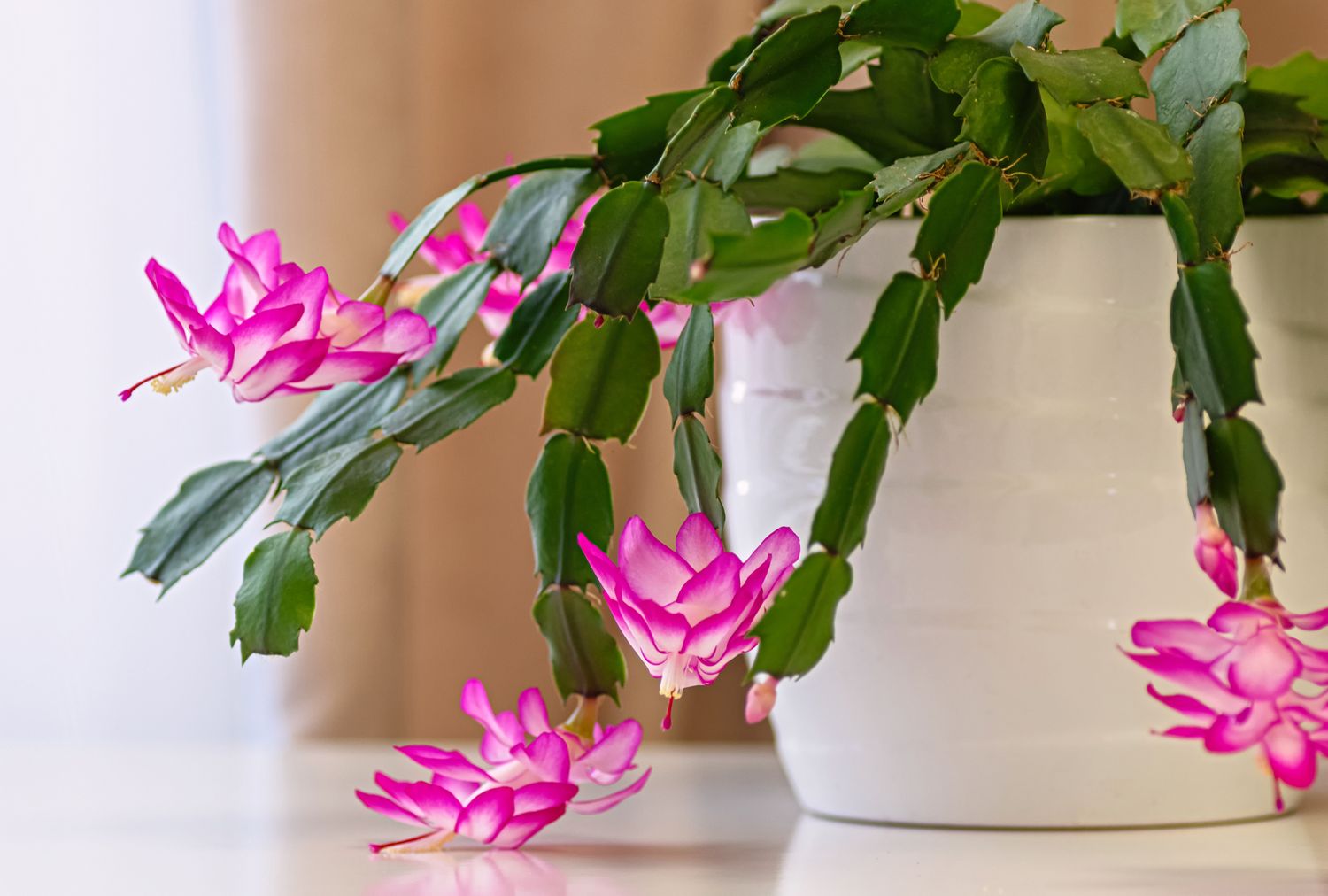
The Christmas cactus is a popular houseplant that comes to life in December, filling homes with holiday cheer thanks to its beautiful blooms. But if yours is producing wilted foliage instead of festive flowers, you may be wondering where you went wrong. While the Christmas cactus is relatively low-maintenance, there are some issues that can cause its leaves to droop. To help you revive a wilting Christmas cactus, we consulted gardening experts who shared the common reasons your plant is struggling, and the easiest ways to save it.
Overwatering
Christmas cacti are sensitive to overwatering. “Constant wetness suffocates roots, leading to root rot. Once the roots are damaged, the plant can’t absorb water, and the stems wilt,” says Kelly Funk, president and CEO of Jackson & Perkins.
To fix this, she says to let the soil dry out partially before watering again, and ensure the pot has drainage. “If rot is suspected (yellow, mushy, foul-smelling roots), trim damaged roots and repot into fresh, well-draining soil,” she says.
Underwatering
On the other hand, not giving your Christmas cactus enough water can also cause problems. “Christmas cactus stores water in its leaves and stems. However, if the cactus goes too long without enough water, it begins to draw on its stored reserves. If the soil is dry, the plant becomes dehydrated and starts to wilt,” says Linda Langelo, horticulture specialist at Colorado State University Extension. To keep your plant perfectly hydrated, she recommends checking the soil every two to three weeks and water when the top 2 inches feel dry.
Disease
Fungal diseases, such as root rot, fusarium wilt, and stem blight, will cause a Christmas cactus to lose its luster. These infections damage tissues that transport water and nutrients, says Funk, adding that bacterial diseases can also lead to tissue collapse and sudden wilt.
To prevent fungal and bacterial infections, Langelo says to avoid overwatering, maintain appropriate humidity levels, and improve air circulation. If your plant is already suffering from one of these diseases, Funk recommends removing infected areas with sterile roots and repotting the plant in a fresh, sterile potting mix.
Pests
A Christmas cactus can suffer from certain pests that may cause wilting. “Pests such as mealybugs, fungus gnats, spider mites, or scale feed on sap or damage roots. This reduces water uptake and weakens the plant, causing drooping and shriveled segments,” says Funk.
To nurse your plant back to health, isolate the plant, remove pests with alcohol swabs, and treat with insecticidal soap or neem oil. “Allow the soil to dry slightly between waterings to deter fungus gnats,” Funk adds.
Lack of Sunlight
These plants need bright, indirect light to thrive. “Insufficient light weakens the plant’s ability to photosynthesize and maintain firm tissue. Over time, the plant can become pale, leggy, and limp,” says Funk. If you notice your Christmas cactus has started to wilt, Funk says to place the plant in bright, indirect light, near a north- or east-facing window. “Avoid harsh midday sun, which can scorch segments,” she adds.
Overfertilizing
Fertilizer can encourage your Christmas cactus to produce more foliage and flowers, but overfertilizing can cause problems. “Excess fertilizer burns roots and disrupts nutrient balance, preventing proper water uptake,” says Funk. “This stress leads to drooping, softening, and discoloration.”
Luckily, there is a way to fix issues caused by too much fertilizer. “Flush the soil with clean water to remove excess salts, and avoid fertilizing for several weeks,” says Funk. “Resume feeding sparingly, about once a month during the growing season with a diluted balanced fertilizer.”
Incorrect Temperature
Christmas cactus prefers temperatures between 60 and 75 degrees Fahrenheit. Letting temperatures drop too low or get too high can weaken the foliage. “Extreme heat dries out the plant quickly, while cold drafts can shock the segments,” says Funk. “Christmas cacti prefer stable temperatures; sudden changes weaken tissue and cause wilting or bud drop.” The solution is to maintain ideal temperatures for the Christmas cactus when it’s inside and avoid placing it near heaters, air conditioning vents, or drafty windows.
Shock or Stress
Shock or stress brought on by sudden environmental changes, such as new light conditions, temperature shifts, or root disturbance, can temporarily stress the plant. “This stress disrupts normal water uptake, causing brief drooping or soft segments,” says Funk. To avoid these disturbances, place the plant in stable, indirect sunlight, provide adequate water, and keep its temperature consistent.
Poor Soil Quality
High-quality soil is essential for the health of your Christmas cactus. “Soil that is compacted or overly dense restricts airflow around the roots and often holds too much moisture,” says Funk. “This leads to oxygen deprivation or root rot, which results in limp, weak segments.”
If you think this is the problem, Funk says to replace the soil with a light, airy mix containing perlite, bark, or a cactus or succulent blend. “Ensure the pot drains well and avoid packing the soil too tightly,” she notes.
Rootbound Conditions
A Christmas cactus needs to be repotted when it starts to outgrow its current container. “When a Christmas cactus becomes rootbound, the roots circle tightly and can no longer expand or efficiently absorb water and nutrients,” says Funk. “This leads to dehydration and stress, causing the plant to wilt even when you water it.”
To revive a rootbound cactus, repot it into a container that is 1 to 2 inches larger than the current one, filling it with fresh, well-draining soil. “Gently loosen the root ball so the roots can spread and recover,” Funk says.
Comments are closed.