
Welcome to Episode 1 and my first YouTube video, I’m delighted to have you here!
I’m starting the redesign of the garden from the beginning, and when you are gardening in the Scottish climate you have to be adaptable and comfortable with working in the rain. We can often get multiple seasons of weather in a single day! Speaking of seasons, I’ll be carrying out the jobs in the garden by listening to the seasons and the changes they can bring.
In this video I will be:
0:00 – Intro
1:19 – Taking you through the plans for my garden – ‘The Redesign’.
5:04 – Removing the greenhouses.
6:06 – Pruning birch trees – Betula utilis var. jacquemontii ‘Trinity College’.
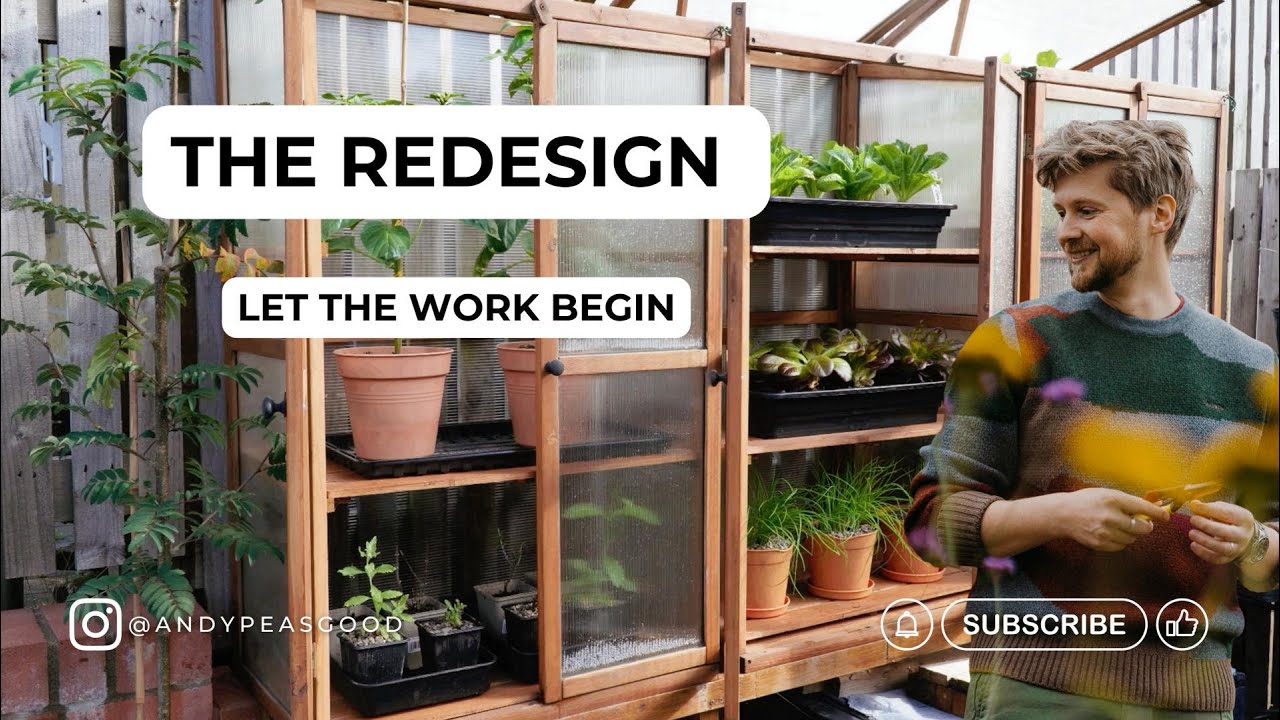
9:01 – Repairing the coldframes.
14:07 – What’s next?
SUBSCRIBE NOW and thank you for watching.
▪︎ ▪︎ ▪︎ ▪︎ ▪︎ ▪︎ ▪︎ ▪︎ ▪︎ ▪︎ ▪︎ ▪︎ ▪︎ ▪︎ ▪︎ ▪︎ ▪︎ ▪︎
My Social Media Profiles:
https://www.instagram.com/andypeasgood
@andypeasgoodgardens
▪︎ ▪︎ ▪︎ ▪︎ ▪︎ ▪︎ ▪︎ ▪︎ ▪︎ ▪︎ ▪︎ ▪︎ ▪︎ ▪︎ ▪︎ ▪︎ ▪︎ ▪︎
I am a former award nominated Principal Dancer with Scottish Ballet (Royal Ballet trained), passionate gardener, horticultural writer & presenter, and, a garden design student.
I have spent my entire life in the creative world performing in theatres across the globe, from the USA and China, to London and South Korea. Now my creative journey brings my focus to the garden and outdoors where I tackle many garden projects and discover the horticultural world.
Join me as I redesign my new build garden in Scotland, share my gardening advice/tips/techniques that have been shared to me from some of the UK’s finest horticulturists and designers, explore the people and places in horticulture, and finally, my road into designing gardens.
#andypeasgood #garden #gardening #horticulture #gardendesign #gardeningtips #gardenadvice #plantcare #growyourown #coldframerepair #birchtreepruning #wildlife #nature #plants #flowers
Welcome to my very first YouTube video. For the past couple of years, I’ve been filming lots of garden projects and advice from my very own garden here in central Scotland. As well as that, I’ve been visiting private gardens and public gardens, interviewing the gardeners, and speaking to a host of other people across the wider landscape of horiculture. But right now feels like the right time to pull all that together into one place. And so I’ve created this YouTube channel. This channel will be the new home for documenting everything that I get up to. And I’m really happy that you’re here. For those of you that are new to my work, I used to be a principal dancer with Scottish Ballet and I got to travel the globe performing on some of the world’s greatest stages. But now I’m channeling that creativity into something else. And I’m starting right here in my very own garden. If you’d like to help me, you can do so by liking this video and subscribing to my channel. that way you can help it grow. Okay, so let’s get to it. We’re gonna head inside to talk about the redesign of my very own garden. The garden’s on a new build property and measures 6x 8 m, so not particularly large. And it’s awkwardly placed on the side of the house. But what that does give me is this additional growing space. I have borders which wrap around the house and I can use that to try out different plants, different planting combinations and so I use them as my habaceous perennial borders. The back garden however lacks that kind of identity and that’s because it’s built up from various projects. They’re projects that have been developed over the last few years that have been inspired by public and private gardens, things I’ve seen online and things that I’ve come up with myself. But when you amalgamate it all together in that small space, it doesn’t gel and there’s no flow to it. it feels very bitty. So, what I’d like to do is reduce it all back, create some repetition, create a calmer space, and then kind of most importantly for me right now is to have a place that’s got lower maintenance. So, as I move forward with my garden design studies and eventually having my own studio, I need to have a little bit more time. And to do that, reducing the maintenance level of the garden is going to really help, as well as wanting a more cohesive space. So, this is what I’m doing. This is the current garden. We’ve got the house here and then the garden and then a long driveway and my cold frames at the end here. This whole area up top is where we have a hawthornne hedge which runs along the perimeter of the fence line, a wee path that takes us from the driveway all the way up to the front door and then three patches which have wild flowers and spring bulbs in them. In the garden we have a patio and path which is Indian sandstone and some gravel areas here and here. This is the herb corner which is a little seating area and essentially shelves for herbs. We have some containers, the summer house and then a water feature which is a solar panled water feature and a border built in there that is flanked with another border. Over here we have a post and rail fence. And then we come into the kitchen garden which has growing space here, here, and then three DIY green houses, potting shed, pond, and then which is a little bit of a grand bug hotel. And it’s really good because that serves as habitat, but also as screening as it’s built into the fence. With the garden having a stronger identity and lower maintenance as priorities, the first thing I’m going to do is remove the kitchen garden here. Whilst it’s been really fun growing, it’s really not a priority right now and I can use that space to expand the borders and simplifying really is the biggest aim. So this is the new design and it’s just block planned here. These are two trees that we’ve already got in the garden is a birch trinity college and a Rowan sheer water seedling. I’m going to add in two more birches of the same Trinity College here and here. And then here I have a crab apple that is in a container and that’s going to go into the garden. This was border number one. Here was border number two. And what I’m going to do is expand it through to where the green houses are on the other side of the fence. So the fence is nestled in between. Here in front of the bug hotel, I’m going to add another border. A little one over here, which I’ve got a beautiful euphoria wolfini eye for. And then another one here instead of the herb corner. Bringing the crab apple into the middle of the garden here is going to act as a feature. And then with those three birch trees here, one, two, and three, we’re going to get more privacy, but because they don’t have a heavy canopy, they’re still going to get light through to the new borders. We’ve expanded those borders and then added a new one. So 1 2 3 4 5. And I’m really excited about that because that gives me more opportunity for planting, more opportunity for repetition and flow through the garden, and therefore more identity. So it all feels like the right thing to do here in terms of bringing the maintenance level down and then getting some continuity. Right. So, I’m standing in the old kitchen garden, and as you can see, it’s now been cleared. This is what it looked like before. And then here’s some video of it coming down. It was the first space to be cleared because it was always going to be cleared and I needed space to store any plants that I’ve bought for the new borders, to store any containers, and just having some space to work from. But these mini green houses were a fantastic solution, and it’s definitely something I will come back to in the future. They were made from recycled wood. So, shout out to Glasgow Wood. And then covered in polyine, which is the same material used for poly tunnels. We grew tomatoes, corettes, onions, cucumbers, chili peppers, sweet peppers. They’re really versatile. So, if you’re looking for a garden project for green houses that is DIY friendly, budget friendly, and you can build custom to the space you have, then this is a really good solution. You can find a video under my story highlights on my Instagram of me building these and that’s labeled mini green houses. One of the priorities for the garden was to introduce more trees. So I’ve got two of these birch trees here and this is Bula Trinity College which is from a tree that originated at Trinity College in Dublin. You get that beautiful white bark and also you get those characteristics from the jaconti. I’m looking forward to planting these out in the garden where they can establish themselves and become part of the new ecosystem in the garden. But they arrived with a problem. The nursery I got them from, whether it was in postage or packaging, they arrived damaged. So the main stem, the leader stem was broken. And in general, they’re just not in very good nick. So I need to do a bit of work on them. We need to train a new leader. So, a new main stem and then to give them a prune. I’m going to prune the tree now in November, which is when it’s in its docy season. If you prune it outside of its docy season, the birch tree will bleed sap when you make that cut. So, you really want to make sure that you do it when the tree is dominant. So, here you’ve got the main stem and this is where they’ve made a previous cut and then created a new leader here. This is where we have our break. So, what I’m going to have to do is take a new side stem here and then attach it with a cane and then this can become the new leader. And so, with some sharp secrets, I’ve made that cut and I’m just taking some twine and I’m going to tie it to the new cane, which is going to help support. And then with a figure of eight, I’m going to loop round and then tie it in. I’ll leave this support on indefinitely. It will be when I feel it is time to take that off. And then I’ll do another one up here and then keep going all the way up to the top. So now I’ve done that, I’m just going to lie the tree down and then cut away here with some sharp shears. Trim the top off here. W That was strong. And then lift the tree back up. And that is a much better shape for us to go by. It’s pruned to lots of outward growing shoots, which is the same as when you’re pruning roses. And that way it grows outwards and not inwards. And then we’ve just started this new leader which um by all means is very thin at the moment but over the next years that will thicken up very quickly and then this will mature and become very secure. I’ve had the same situation happened before with this crab apple which I’ll show you here. And as you can see that was pruned and then a new leader was put in there. These are my cold frames and I absolutely love them. They do really well for me for seed sewing, for keeping salad leaves, for protecting plants over winter. They’re a really good solution if you’ve got a narrow space. Now, I bought them in the sale. They’re about £50 each when I bought them. And then I put them on this timber structure and then lifted them up, secured them against the fence. That way they get more light and I get extra storage underneath. So, like I said, it’s a really good solution if you’re short on space. Part of the issue is with them is that they’re made from Douglas fur, which is whilst it’s really good for outside, it’s a strong soft wood. What happens is that once something breaks from it, it can rot very quickly. So, there’s kind of no turning back from that. And I made the mistake of when we had one of our last storms and we’re in the central belt of Scotland, so we get really high winds. Um, today’s quite a calm day. Um, I left the vents up and the wind just took them. So, it’s my own fault and they’re broken. So, I need to replace these polycarbonate panels which I’ve got here. As you can see already, it takes like take the wind so easily. Um, so I need to replace them and then fix these frames. The problem is, like I said before, it’s the fur, it’s the soft wood, and they’re not going to go back together where I can open them up and close them again. Part of the problem as well is that the hinges for that vent are on the back side. So, it’s in between the fence. And there’s enough space for them to open, but there’s not enough space for me to access it now unless I take the whole thing down. And I’m not confident that if I take the whole thing down, it’s going to be as secure afterwards when I put it back up. So, I’m going to replace the polycarb panels, wood glue all the kind of the the timber batterns into place, and then I’m going to secure the whole lid down onto here. And essentially, it will just act like a ceiling. It won’t be able to be used as a vent anymore. And I’m fine with that because come spring, come summer, I can find solutions to be able to have these doors open and have them secured. And I just need to remember to close them. That’s my own fault, really. So, I’m going to head inside cuz it’s raining. and going to cut out these polycar panels and then head back outside and secure it all and get it all done. Of the three top panels, two of them were broken in the storm. So, I’m replacing them with a like for like and that is 5 mil polycarbonate sheeting. This is an original panel and I’ve brought it in because I can make my job much simpler by using as a template, laying it straight on the new sheeting, drawing around it, and then cutting it. I’ve bought a new one here. This is a large sheet that I got from BNQ for £15. It’s pretty reasonable price. They vary in width and that can really adjust the price so they can get quite expensive. So, it’s always worth shopping around a little bit. So, for here, I’ve got my template. I’ve got a piece I already had, my new piece, and I need to cut out two new panels. That’s these top panels now repaired. We’ve got brand new polycarbonate sheeting in and these frames are now fully secure to the cold frame itself. At a later date when it’s dry, I need to take a aquatic sealant and then just cut a bead of sealant all the way around the edge. which I’m going to use aquatic cuz then it’s got really good waterproof properties and it needs to be there because here we’ve got a couple of grooves along the top and that’s for if water builds up then it can run off but without any sealant there it’s actually just going to seep back into the unit itself. So it’s really important that I do that otherwise over time this will just rot away. So an aquatic sealant is what I recommend for outdoors. I’ve used them on water features before as well and that way it also releases no toxins. A little bead across the top on each one and we’ll be good to go. It’s Thursday morning and it has finally stopped raining here in Scotland and I’ve taken delivery of my spring bulbs and it’s a really good variety. Here we’ve got different tulips, chona dox, pushkinia, muscari and also some paper whites for indoors. My next video is solely focused on spring bulbs where I’ll be preparing the spring bulb borders and then planting all of this out ready for spring. I hope you’ve enjoyed me for this first YouTube video where we’ve begun the redesign of this garden and really kicked off this new YouTube channel. And I hope that you will join me for the next video which is all about spring bulbs.
4 Comments
Love the cold frames, and yay to trees in small gardens!
The diagram explaining the old/new garden layout was fantastic – looking forward to your next video! 🌳
Looking forward to seeing your garden evolve 😊
All the Best 👍 and from INDIA 😊