
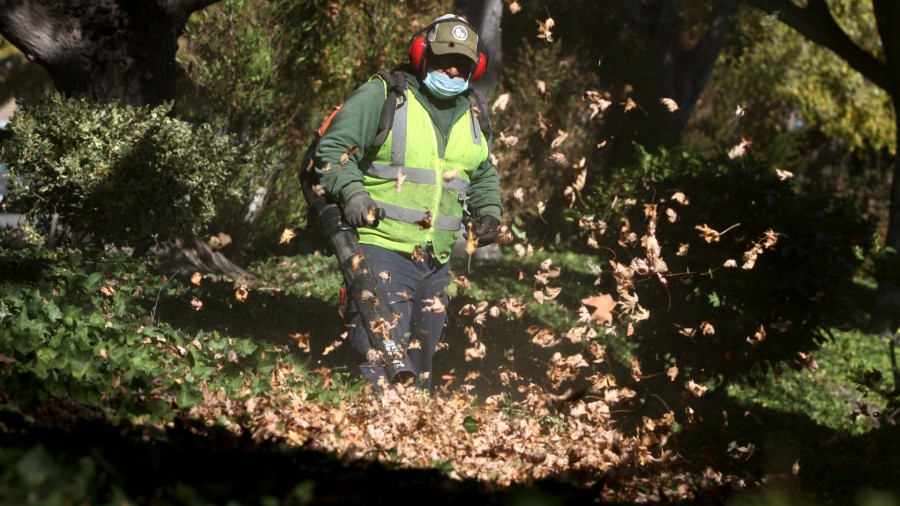
Portland’s ban on gas-powered leaf blowers will take effect Jan. 1, 2026, covering both public and private property, according to KING 5. The City Council unanimously approved the ordinance in March 2024 after years of debate, with supporters claiming it will reduce noise, improve air quality, and protect landscaping workers from prolonged exposure.
But the rollout comes with exemptions: for the first two years, gas blowers may still be used in October, November, and December to handle heavy, wet leaf piles. In 2028, the ban becomes year-round. KING 5 reports that Portland Parks and Recreation expects to spend up to $1.6 million transitioning its own equipment. The city opted for a phased approach because the electric alternatives weren’t powerful enough to handle fall debris when the ordinance passed.
Violators will first be warned, with fines ranging from $250 to $500 for subsequent offenses and up to $1,000 for repeat violations.
So much for equity?
While Portland leaders frame the ordinance as a public-health win, similar policies elsewhere have raised steep equity and economic concerns.
When Washington Democrats pushed a comparable statewide ban, Seattle Red host Jason Rantz noted that industry data showed 22.8% of landscaping companies nationwide are Hispanic-owned and 14.7% are black-owned — meaning the financial burden of switching equipment falls disproportionately on minority-owned small businesses.
Rantz also highlighted that commercial-grade electric equipment can cost 15% to 300% more upfront, citing the Orange County Register. Once batteries, chargers, and electrical upgrades are added, smaller landscaping firms — the bulk of the industry — struggle to absorb the cost. Larger companies, meanwhile, can transition more easily, giving them an advantage in bidding and long-term survival.
The concerns extend beyond price
Electric blowers still lag behind gas models in power and battery life, especially during demanding fall cleanup. Rantz argued this makes the mandates “anti-business,” forcing slower, more expensive work while policymakers grant exemptions for themselves.
And while Portland officials pitch the ban as environmental leadership, critics warn it reflects the kind of “lazy environmentalism” that prioritizes symbolic regulation over practical solutions. As Rantz wrote, political leaders increasingly “love the power to change people’s behaviors” rather than investing in education, incentives, or technology improvements that would make voluntary adoption feasible.
Public commenters in Portland largely supported the ban, KING 5 reported, with some pushing for an even faster timeline. But for the workers and small businesses who will shoulder most of the transition costs, the real-world effects will become clear long before city leaders feel any impact themselves.

Comments are closed.